



Bridge Width and Nose Pad Styles: Finding the Right Match for Low Bridge Fit
If your glasses tend to slide down or sit low, learning how to choose bridge width for a low bridge fit starts with bridge construction rather than a single number. Choose a fixed acetate keyhole bridge when a frame already sits at the right height and stays centered without help. Choose adjustable metal nose pads when the frame needs to be raised, leveled, or repositioned after you get it.
When you choose bridge width for a low nose bridge, treat that measurement as an initial screening step. It cannot tell you whether a frame will stay in place or keep your eyes centered in the lenses, so compare it alongside overall frame geometry.
Key Takeaways
- Pick a fixed keyhole bridge only when its natural, unadjusted position already sits level and centered on your face.
- Pick adjustable metal nose pads when a frame drops, tilts, or needs side-to-side correction after fitting.
- A single bridge-width number, including a 16 millimeter listing, does not guarantee low-bridge fit on its own.
- Compare lens width, bridge width, temple length, and your eyes' as-worn position against a frame you already know fits well.
- After any pad adjustment, recheck where the lenses sit relative to your pupils instead of assuming the adjustment finished the job.
The Fast Choice: Stable Keyhole Bridge or Adjustable Pad Arms?
Start by asking whether your fit problem is about initial shape or ongoing correction. A fixed keyhole bridge works when the frame already rests at the intended height and doesn't slide, while adjustable metal pad arms work better when the frame keeps moving out of position.
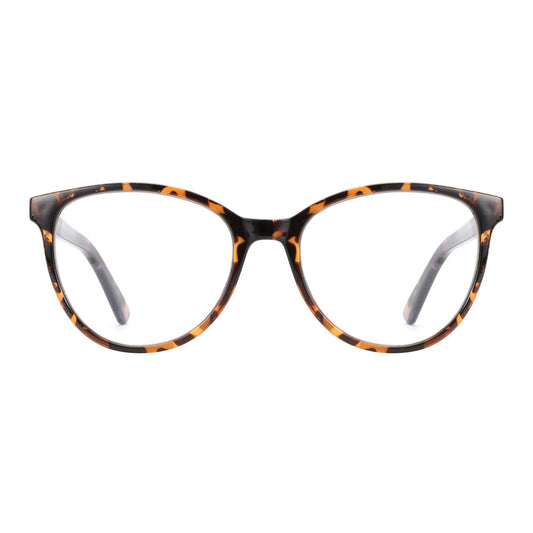
A keyhole bridge contacts the sides of the nose in a fixed shape, and that shape tends to sit lower on the face than other bridge styles of the same size. On a flatter or wider nasal bridge, that geometry can leave the frame sitting too low or sliding during the day, according to bridge fitting guidance from opticians. Adjustable pad arms avoid that limitation because the pads can be moved up, down, or apart to change height and spread.
Neither construction is a universal fix. A keyhole bridge can suit a narrower or more prominent nose bridge perfectly well, and adjustable pads still need the right lens width and temple length underneath them. The construction choice narrows your search; the full measurement check in a later section confirms it.
How the Two Bridge Constructions Change Fit
The two constructions differ mainly in how much correction you get after the frame arrives. A fixed keyhole bridge asks you to get the initial match right, while adjustable pad arms let you fine-tune position later.

| Construction | What it can change or hold | Choose it when | Main limitation |
|---|---|---|---|
| Fixed acetate keyhole bridge | Holds one integrated shape and contact point | Your face shape already keeps it level and centered | No independent height or spread adjustment |
| Adjustable metal pad arms | Height, spread, and angle of the pads | The frame drops, tilts, or sits unevenly | Still needs correct lens width and temple length to work well |
Adjustable pad arms generally offer more room to correct a frame that slides or sits crooked, but that flexibility does not replace choosing the right overall size. If a frame's other dimensions are wrong, moving the pads will not fix lens width or temple fit.
How to Read Bridge Width Without Treating It as a Guarantee
Bridge width tells you how wide the gap between the lenses is at the nose, and that number alone can't confirm fit. There is no published bridge-width range that reliably predicts a good low-bridge fit for every wearer, so use it to compare similar frames rather than to select a frame on its own.
Bridge width is a screening measurement
Use the listed bridge width, or the distance between lenses (sometimes shown as DBL), to compare one frame listing against another similar frame. A smaller number is not automatically the better choice if the lens width, overall front width, or bridge shape ends up placing the frame incorrectly on your face.
Frame position matters more than the label
What actually matters is whether the frame stays at the intended height once you put it on, with your eyes sitting where the lens design expects them. Moving the nose pads, or a frame that simply sits low, changes that relationship between the lenses and your pupils, which is the outcome you should be checking, not the printed spec.
Check the Complete Frame Before Ordering
Before you order online, compare the full set of frame measurements against a pair you already know fits, not just the bridge number. Optical fitting guidance for eyewear checks width, bridge comfort, and temple fit together because each affects where your eyes land in the lenses.
- Pull out a current pair that fits well, or note its measurements, as your baseline for comparison.
- Compare the new listing's lens width and bridge width (or DBL) against that baseline.
- Compare temple length and, where listed, overall front width, since both affect how the frame sits on your ears and nose.
- Identify whether the bridge is a fixed keyhole style or built with adjustable metal pad arms, since that changes what you can still correct after delivery.
- If you can try the frame on, or check a fitted photo, confirm your eyes look centered in the lenses; if the listing only gives you a bridge number with no other dimensions, hold off rather than guessing.
This sequence matters because evaluating overall frame fit gives a far more complete picture than any single measurement, and it lines up with how you'd compare frame measurements against a pair that already works for you.
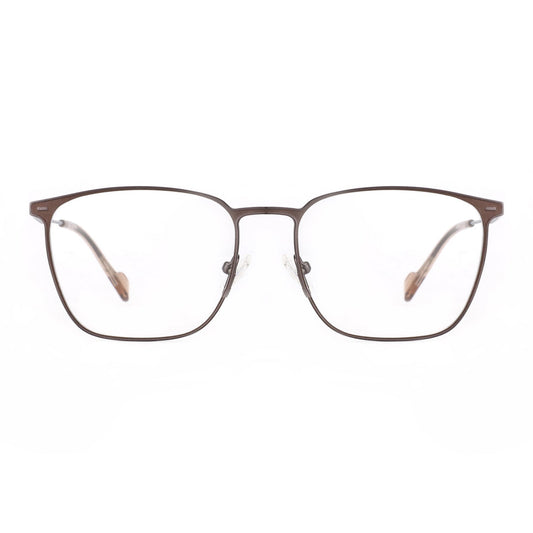
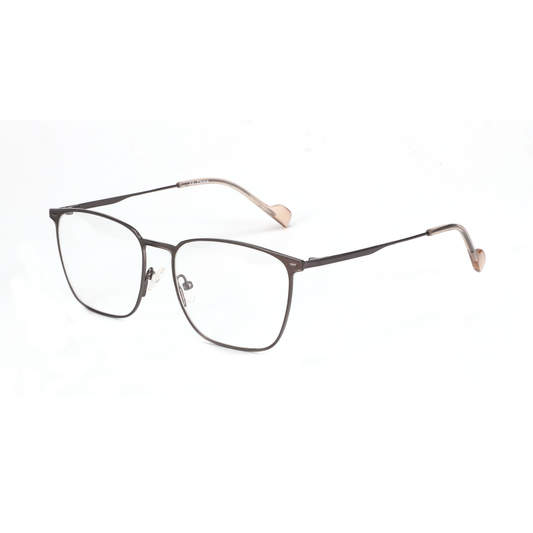
If your fit problem is a frame that keeps dropping or sitting unevenly, an adjustable-pad frame gives you more room to correct that after it arrives. Our Zenottic Janet eyeglasses are a metal full-rim cat-eye frame with adjustable nose pads, a 16 millimeter bridge, a 53 millimeter lens width, and 138 millimeter temples. Those numbers are useful for comparison against your own known-good pair; they are not a guarantee that a 16 millimeter bridge suits every low-bridge face, so run them through the same checklist above before you order.

If Glasses Slip: Adjust the Cause, Then Recheck Position
If your glasses keep slipping, first figure out whether the frame sits evenly low or unevenly to one side, since that points to different next steps. Then use whatever adjustment the construction allows before you decide the frame is wrong for you.
Identify whether the frame is low or uneven
A frame that drops evenly on both sides usually points to overall height or bridge shape, while a frame that tilts or sits lower on one side points to an uneven fit between the two sides of the face. In both cases, check where the lenses actually sit relative to your pupils, since that position is the real problem to solve, not the slipping itself.
Adjust only when the construction allows it
Adjustable metal pad arms let you raise, lower, spread, or angle the pads to correct height or leveling, and moving them up typically raises the frame while moving them apart typically lowers it. Once you make a change, recheck the finished pad position against your pupils rather than assuming the adjustment worked. If you have a fixed keyhole frame that keeps sliding or sitting low no matter what you try, that is a sign to re-select a different frame or have it professionally fitted rather than attempting a workaround, since the bridge shape itself isn't adjustable. For more day-to-day fixes, our guide on how to stop glasses slipping covers additional causes worth ruling out.
FAQs
Can a fixed keyhole bridge be adjusted like adjustable nose pads?
No. A fixed keyhole bridge doesn't have separate pad arms, so you can't independently raise, lower, spread, or angle it after purchase. Because of that, confirm the frame already sits level and centered before you order rather than counting on adjustment afterward.
What if one side of my glasses sits lower than the other?
An uneven, one-sided low position often points to a need for side-specific correction rather than a bridge-width change. If your frame has adjustable metal pad arms, one side can typically be leveled or angled independently; either way, recheck the finished position against your pupils instead of guessing at a new bridge size.
Does a smaller bridge number automatically mean a better low-bridge fit?
No. A listed bridge number, including a 16 millimeter example, does not by itself establish that a frame will fit a low bridge well. Compare the complete dimensions, including lens width and temple length, along with the frame's as-worn position, against a pair you already know fits before you decide.
