




Inside the Lab: How 1.74 High-Index Lenses Are Cut for Your Frames
Inside the Lab: How 1.74 High-Index Lenses Are Cut for Your Frames
If you wear a strong prescription, you've likely experienced how standard lenses can turn stylish frames into heavy, thick-edged glasses. 1.74 high-index lenses are engineered to solve this by delivering significant thinning and weight reduction. However, the final result depends heavily on whether the manufacturing process—from material casting to precision edging—is optimized for your specific prescription and frame choice. Understanding these lab steps helps you determine if the upgrade offers a genuine improvement in comfort and aesthetics or if a lower index might suffice.
The transformation of a raw 1.74 lens blank into finished eyewear involves several controlled stages. Most modern labs utilize high-refractive-index resins, such as thiourethane-based polymers, which bend light more efficiently than standard CR-39 plastic. This allows the lens to be physically thinner while maintaining the same corrective power.
From Blank to Precision Lens: The Manufacturing Stages
Lens production begins with casting the high-index material into a semi-finished blank that has one curved surface already formed. The lab then employs computer-controlled generators to grind the second surface according to your sphere, cylinder, axis, and prism values. For 1.74 index lenses, this step requires high precision; the material is denser and more sensitive to thermal changes during the grinding process than lower-index plastics.
After generating the prescription curves, the lens undergoes fine grinding and polishing. Using increasingly fine abrasives, the lab removes microscopic imperfections to ensure high light transmission. Because high-index materials naturally reflect more light, an anti-reflective (AR) coating is considered essential rather than optional. This coating reduces surface glare and improves visual contrast, which is particularly beneficial for night driving or digital screen use.

Once the optical surfaces are finalized, the lens moves to the edging station. A digital edger traces the exact dimensions of your frame using 3D scan data. The machine then cuts the lens and applies a specific bevel or groove. High-index materials can be more prone to "starring" or chipping if the feed rate or coolant flow isn't perfectly calibrated, which is why experienced labs use specialized settings for 1.74 substrates.
Final finishing includes ultrasonic cleaning and the application of a hard coat for scratch resistance. While timelines vary based on coating complexity and lab volume, a 24 to 72-hour processing window is a typical industry benchmark for high-index orders.
Why 1.74 Index Delivers Thinner Results for Strong Prescriptions
The 1.74 refractive index allows light to bend more sharply, meaning less physical material is required to achieve a specific focal point. Industry experience suggests that for prescriptions stronger than -6.00 D (nearsightedness) or +4.00 D (farsightedness), the reduction in edge or center thickness becomes clearly visible. However, these gains are conditional: a smaller, well-centered frame will always yield a thinner result than a large, oversized frame, regardless of the index.
Beyond aesthetics, 1.74 lenses offer a weight advantage. By reducing the volume of the lens material, the pressure on the bridge of the nose and behind the ears is minimized during all-day wear. One trade-off to consider is the Abbe value; 1.74 materials have a lower Abbe value than standard plastic, which can occasionally cause slight color fringing (chromatic aberration) in the peripheral vision. High-quality AR coatings are used to help mitigate the visual impact of these reflections.
How Lenses Are Cut and Fitted to Your Frames
Custom cutting is the critical bridge between a generic lens blank and a functional pair of glasses. The lab verifies your pupillary distance (PD) and, for progressive lenses, the segment height. Digital tracers capture the frame's internal groove profile with sub-millimeter accuracy to ensure a secure fit.
For 1.74 lenses, the edging process often involves specialized diamond wheels and slower speeds to maintain structural integrity. In rimless or semi-rimless designs, holes are drilled and polished to eliminate stress points that could lead to cracking. A final inspection under polarized light checks for internal tension or coating defects before the lenses are mounted.
This level of precision is why accurate measurements are vital for online orders. Even the highest-quality 1.74 material will appear unnecessarily thick or cause visual distortion if the optical center is misaligned with your pupils.

When 1.74 Lenses Are Worth the Upgrade
Whether 1.74 high-index lenses justify the additional cost depends on the intersection of your prescription strength and frame style. The upgrade provides the most value when the frame design exposes the lens edges or when the wearer is highly sensitive to the weight of their glasses.
The following radar chart provides a heuristic comparison of how 1.74 performs across key categories. Note that these scores are illustrative models based on typical optical trade-offs and are not derived from specific laboratory test data.
When 1.74 Lenses Are Worth It
Illustrative decision aid for 1.74 high-index lens selection by prescription and frame conditions.
View chart data
| Series | Thinness Gain | Weight Relief | Cost Justification | Fit Ease | Glare Control with AR |
|---|---|---|---|---|---|
| Low Rx / small frame | 2.0 | 2.0 | 4.0 | 5.0 | 3.0 |
| Moderate Rx / standard frame | 4.0 | 3.0 | 3.0 | 3.0 | 3.0 |
| High Rx / larger frame | 4.0 | 4.0 | 3.0 | 2.0 | 3.0 |
| High Rx / small frame | 5.0 | 5.0 | 5.0 | 1.0 | 3.0 |
Modeled heuristic based on optical industry guidelines and provided insight modules for reader decision aid. Scores express relative decision usefulness on a 1-5 scale, not measured performance. Higher values indicate stronger reason to choose 1.74.
As the model suggests, the primary benefits are concentrated in "Thinness" and "Weight." However, "Fit Ease" may decrease slightly because thinner edges require more exacting beveling. The "Cost Justification" is highest for those with strong prescriptions where the cosmetic difference is most pronounced.
Common Misconceptions About High-Index Manufacturing
A common myth is that a higher index number guarantees a thinner lens in every scenario. In reality, a poorly chosen large frame with a 1.74 lens may still result in thicker edges than a well-proportioned small frame with a 1.67 lens. Another misconception is that 1.74 lenses are inherently fragile; while they require specific handling during the lab phase, modern 1.74 resins are highly durable for daily use once properly coated and mounted.
Many shoppers also assume that the manufacturing process automatically compensates for poor measurements. Even the most advanced digital edger cannot correct for an inaccurate PD or an incorrectly measured segment height provided by the customer.
How to Choose and Order 1.74 Lenses Without Regrets
To ensure your 1.74 lenses meet expectations, consider this checklist:
- Prescription Check: Confirm your prescription is typically within the range where 1.74 offers a noticeable benefit (generally -6.00 D / +4.00 D or stronger).
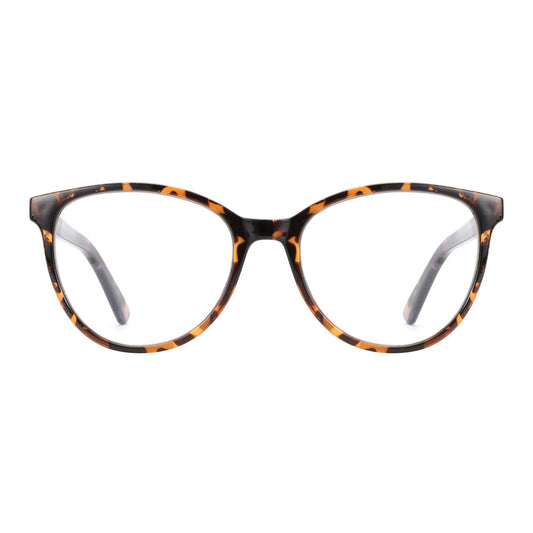
- Frame Selection: Opt for frames with smaller lens widths and sturdy materials (like acetate) that can help mask any remaining edge thickness.
- Coating Inclusion: Ensure the lenses include premium anti-reflective and scratch-resistant coatings, as high-index materials are more reflective than standard plastic.
- Measurement Accuracy: Provide a precise, professional PD measurement to ensure the optical center aligns perfectly with your line of sight.
If your prescription is moderate, a 1.67 index often provides the majority of the cosmetic benefit at a lower price point. However, for those seeking the absolute thinnest profile possible for high-power corrections, 1.74 remains the gold standard.
Disclaimer: This article discusses lens manufacturing and general eyewear comfort. It does not constitute medical advice, diagnosis, or treatment. Always consult with a qualified eye care professional regarding your specific prescription and vision needs.
Understanding the lab journey behind your 1.74 lenses helps you set realistic expectations. When manufacturing precision aligns with proper frame selection, the result is a pair of glasses that is lighter, thinner, and more comfortable for daily wear.
Ready to experience the difference? Explore our collection of prescription eyeglasses designed to showcase the slim profile of 1.74 high-index lenses. For men seeking sharp style with strong prescriptions, check the men's eyeglasses that pair beautifully with ultra-thin optics.
Learn more about selecting the right material in our guide When 1.74 High-Index Lenses Are Actually Worth the Upgrade. Frame choice matters too—see The Best Frames for 1.74 Lenses to Minimize Edge Thickness for practical recommendations.
High-prescription wearers tired of bulky glasses or contact lens fatigue can also read Contact Lens Fatigue: Why High-Prescription Wearers Are Switching to 1.74 Glasses for real-world insights.
For those ready to upgrade, browse our best selling products featuring 1.74 lens options, or save with 20% off any lenses. Quality acetate styles are available in the acetate frames collection.
Additional technical background is available in the Technical Guide to High-Index Lens Materials and Standards.
