



Prescription Glasses for Pilots: FAA Standards & Lens Tech
Pilots face strict FAA vision standards that corrective lenses can help meet, provided the eyewear supports clear instrument reading, maintains color discrimination, and stays comfortable under headsets during long flights. Choosing the right prescription glasses involves more than basic correction—it requires balancing acuity requirements, cockpit display compatibility, and practical usability in varied lighting conditions.

Aviation demands reliable vision for everything from scanning instruments to reading charts and spotting traffic. The FAA sets clear benchmarks for visual acuity, but the actual choice of lenses and frames is left to the pilot and their eye care professional. This guide walks through FAA vision rules, recommended lens technologies, why polarized options often create problems in the cockpit, and frame considerations that improve headset comfort.
FAA Vision Standards for Pilots
The FAA requires pilots to meet specific vision criteria for medical certification. For first-class medical certification, distant visual acuity must be 20/20 or better in each eye separately, with or without corrective lenses. Similar standards apply to other classes with slight variations in near and intermediate vision requirements.
According to 14 CFR Part 67, the focus remains on whether the pilot can safely perform flying duties. Corrective lenses are explicitly permitted to achieve these standards. The FAA Medical Examiner guide further evaluates for any diseases or defects that could impair visual function in flight.
Pilots need strong near vision for reading charts, maps, and frequency settings, plus intermediate vision for checking aircraft instruments. This makes a precise, up-to-date prescription essential rather than relying on off-the-shelf options. Regular eye exams help ensure correction remains accurate for both distance and close tasks inside the cockpit.
Why Non-Polarized Lenses Are Usually Preferred
Many aviation sources caution that polarized lenses can interfere with glass cockpit displays and may reduce visibility of reflections pilots rely on for safety cues. While not universally banned, polarized lenses often create practical issues with LCD screens, HUDs, and certain instrument panels where visibility changes with head angle.

This FAA pilot vision brochure and related guidance emphasize maintaining consistent readability. Non-polarized lenses avoid these risks while still allowing coatings that control glare without altering display appearance. For most pilots flying modern avionics, non-polarized remains the safer default choice.
That said, some pilots in analog-heavy or VFR-only aircraft report minimal issues with polarized lenses outdoors. The decision should match your typical flying environment rather than follow a blanket rule.
Lens Materials and Technologies for Cockpit Use
Lens material choice significantly affects weight, durability, optical quality, and comfort during extended wear. Common options include polycarbonate, Trivex, and high-index materials.
Polycarbonate offers excellent impact resistance, making it suitable for the dynamic cockpit environment. Trivex provides a strong balance of clarity, low chromatic aberration, and impact protection while remaining lightweight. High-index lenses (such as 1.67 or 1.74) reduce thickness for stronger prescriptions but can trade off some impact resistance and introduce more chromatic aberration in certain conditions.
Our technical guide to high-index lens materials explains how refractive index, Abbe value, and material chemistry influence performance. For pilots, prioritizing higher Abbe values helps preserve color accuracy and reduce distortion around cockpit edges.
Anti-reflective (AR) coatings prove particularly valuable. They minimize internal reflections from cockpit lights at night and reduce glare from side windows during daytime flight. Our comparison of night driving glasses versus anti-reflective coatings highlights how AR coatings improve contrast without the color shifts sometimes seen in tinted lenses.
Scratch-resistant and UV-protective treatments further enhance durability for frequent use in varying weather conditions.
Pilot Lens Material Tradeoffs for Cockpit Use
Heuristic comparison for cockpit-relevant lens material tradeoffs; not a measured ranking or official FAA scoring.
View chart data
| Series | Impact resistance | Light weight | Optical clarity | Headset compatibility | Glare/contrast suitability |
|---|---|---|---|---|---|
| Polycarbonate | 5.0 | 4.0 | 3.0 | 4.0 | 3.0 |
| Trivex | 5.0 | 5.0 | 4.0 | 5.0 | 4.0 |
| High-index | 3.0 | 3.0 | 5.0 | 3.0 | 4.0 |
Heuristic/illustrative scores synthesized from FAA-related guidance (20/20 acuity; non-polarized preference) plus internal lens-tech notes on polycarbonate, Trivex, and high-index tradeoffs. Scores express relative suitability for cockpit use, not laboratory measurements or official standards.
This radar chart offers a heuristic view of how common lens materials perform across cockpit-relevant factors. Scores are illustrative only and should guide discussion with your optician rather than serve as absolute rankings.
Frame Styles That Work with Aviation Headsets
Long flights with headsets make frame comfort critical. Thick temples or bulky designs can create pressure points against earcups, leading to headaches or distraction.
Low-profile temples and lightweight materials help frames sit comfortably under headsets. Adjustable nose pads allow precise positioning so the optical center stays aligned with your pupils during head movements. Our men's prescription glasses frames collection includes options with slim temples and ergonomic features that many professionals find suitable for extended wear.
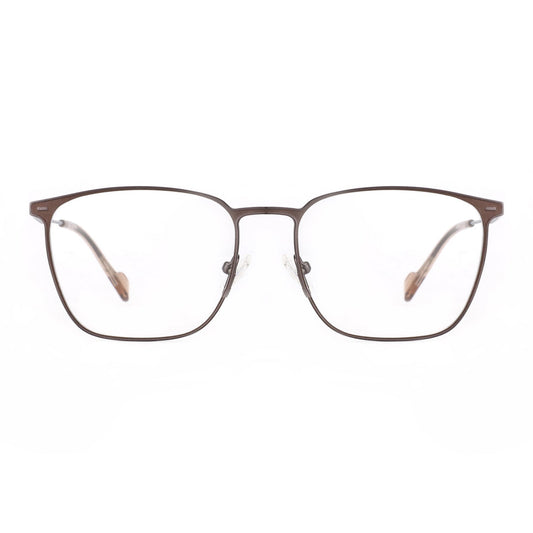
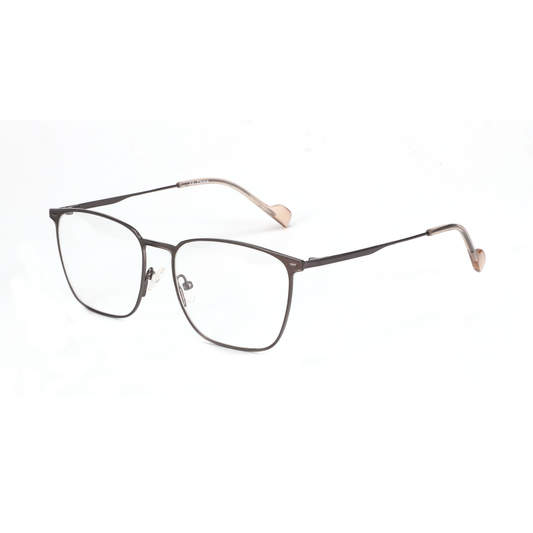
Semi-rimless or metal frames often provide the slim side profile preferred by pilots. Avoid overly wide or heavy plastic frames that may interfere with headset seal or cause shifting during turbulence.
Common Myths About Pilot Eyewear
Several misconceptions circulate in pilot communities about aviation eyewear requirements.
Myth: Pilots must buy "FAA-approved" glasses or specific brands. Reality: The FAA certifies pilots based on meeting vision standards, not on particular eyewear products. No consumer glasses carry official FAA product approval for corrective use.
Myth: Polarized lenses are always prohibited. Reality: They are not universally banned, but they frequently interfere with glass cockpit displays and HUDs. Non-polarized options reduce this risk in most modern aircraft.
Myth: Darker tints or specialized "aviation" tints automatically improve safety. Reality: Excessive tint can reduce instrument visibility and contrast, especially at night. Clarity and accurate color perception matter more than cosmetic darkening. Our guide to polarized versus tinted sunglasses explores these tradeoffs in detail.
Choosing Lenses for Day, Night, and Mixed Conditions
Flight conditions dramatically influence optimal lens choices.
In daytime VFR with strong glare, non-polarized lenses paired with anti-reflective coatings and light gray or neutral tints help maintain instrument readability while controlling brightness. Our polarized sunglasses guide explains glare management principles that still apply when selecting non-polarized options.
Night flying requires maximum light transmission and contrast. Avoid any tint that dims the view. Anti-reflective coatings become especially important to cut reflections from panel lights. Related guidance in our night driving glasses article applies directly to cockpit use after dark.
For pilots transitioning between day and night operations, photochromic lenses or multiple pairs optimized for different conditions often provide the most flexibility. High prescriptions benefit from thinner high-index materials to reduce weight and edge distortion, as detailed in our high-index lens technical guide.
Practical Checklist for Buying Prescription Aviation Eyewear
Use these checkpoints to evaluate options:
- Does the prescription meet your current FAA medical requirements for distance, near, and intermediate vision?
- Are the lenses non-polarized or confirmed compatible with your aircraft's displays and HUD?
- Do the frames feature thin temples and adjustable pads for comfortable headset fit over long flights?
- Have you selected coatings for anti-reflective, scratch resistance, and UV protection?
- Does the lens material balance your prescription strength with impact resistance and optical clarity needs?
- Have you tested the glasses in your actual cockpit or with a similar headset to check for pressure points or visual distortions?
Avoid buying purely based on style or price. The wrong choice can create discomfort, reduce display readability, or fail to provide adequate correction during critical phases of flight.
What to Avoid in 2026
Steer clear of generic online retailers that skip proper fitting measurements or fail to offer professional lens customization. Cheap polarized options marketed as "driving glasses" often create cockpit compatibility problems.
Skip heavy, oversized frames that won't work with headsets. Be wary of heavily tinted lenses marketed specifically for aviation without clear performance data on color fidelity and instrument visibility.
Finally, never use outdated prescriptions. Vision can change gradually, and even small shifts affect instrument scan efficiency and depth perception.
This article discusses comfort, setup, and performance considerations for eyewear in aviation environments. It does not constitute medical advice, diagnosis, or treatment. Vision standards and medical certification remain the responsibility of qualified Aviation Medical Examiners. If you experience persistent visual discomfort, changes in vision, or have existing eye conditions, consult an eye care professional and your Aviation Medical Examiner.
Pilots who fly regularly should discuss their specific aircraft, flight profiles, and prescription needs with both their eye doctor and AME. The right combination of lenses and frames supports safer, more comfortable flying without compromising regulatory compliance or cockpit performance.
