



The Best Frames for 1.74 Lenses to Minimize Edge Thickness
Why Frame Choice Matters More Than You Think for 1.74 Lenses
While 1.74 high-index lenses are engineered to be significantly thinner than standard plastic, the frame you choose acts as the final "filter" for how that thickness is perceived. The refractive power required for high prescriptions naturally creates edge thickness in myopic (nearsighted) lenses. However, the frame determines how much of that edge is visible to the world.
A common pattern we see is buyers assuming that the 1.74 index alone solves the "coke bottle" effect. In reality, even the thinnest lens material can look bulky if paired with an oversized or poorly shaped frame. Smaller, more compact frame openings generally help lenses look thinner because they require a smaller "cut" from the original lens blank, leaving the thickest peripheral edges behind.
This guide draws on optical heuristics and practical selection strategies to help you choose frames that complement 1.74 lenses. Whether you are managing astigmatism or simply want a lighter feel, these guidelines focus on the most effective decisions you can make during the shopping process.

Common Myths About Frames for High-Prescription Lenses
Misconceptions often lead shoppers toward frames that inadvertently highlight lens thickness. Here are a few common misunderstandings corrected:
-
Myth: 1.74 index makes edge thickness a non-issue.
- Reality: High-index materials reduce bulk, but frame size remains a dominant factor. A large frame can still reveal noticeable edges even with premium 1.74 material.
-
Myth: Any trendy frame works if the lenses are thin enough.
- Reality: Fashionable oversized or very shallow designs often expose more of the lens edge. Compact, balanced shapes typically yield the most refined look.
-
Myth: Thick acetate is the only way to hide a high Rx.
- Reality: While acetate rims can conceal edges, a large acetate frame may actually add unnecessary weight. Modern thin metal frames can look equally sleek if the lens size is kept small.
-
Myth: Rimless styles are always the most flattering.
- Reality: Rimless designs offer a "weightless" look, but they leave the lens edges completely exposed. For very high prescriptions, this can make the thickness more apparent unless the lens size is strictly controlled.
Frame Size and Fit: The Rule of Thumb for High Index
In the world of high-prescription eyewear, size is often more important than style when it comes to aesthetics. Smaller frames consistently deliver better cosmetic outcomes with 1.74 lenses. By reducing the lens diameter, you limit the area where thickness builds up at the outer edges.
The "50mm" Heuristic As a general rule of thumb, many high-prescription wearers find that frames with a lens width between 45mm and 50mm offer the best balance. When the lens width exceeds 50mm, the "effective diameter" of the lens increases, which usually results in thicker edges.
Centration and PD Proper fit ensures your pupils are centered within the lens. If a frame is too wide for your face, the lenses must be "decentered" to align with your pupillary distance (PD). This often results in uneven thickness, where the outer edge of the lens becomes significantly thicker than the inner edge. Matching your PD carefully to the frame dimensions is essential for both visual comfort and a thinner appearance.
Best Frame Shapes to Minimize Edge Thickness
Certain shapes are naturally better at "hiding" the geometry of a high-minus lens.
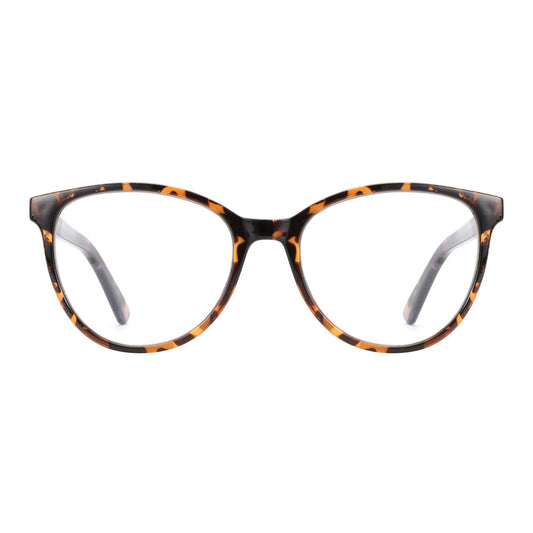
- Small Round or Oval Frames: These are often considered the "gold standard" for high prescriptions. Because the distance from the center of the lens to the edge is more uniform in a circle, there are no sharp corners where thickness can "pool."
- Soft Square or "Wayfarer" Lite: If you prefer a more rectangular look, choose frames with rounded corners. Sharp, 90-degree angles in the bottom corners of a frame are where lens thickness is often most visible.
- Full-Rim Designs: A continuous rim provides a physical boundary that masks the lens edge. This creates a cleaner profile compared to semi-rimless or rimless styles where the polished edge of the 1.74 lens is visible from the side.
Explore rimless glasses if you prioritize a minimal weight, but be aware that for prescriptions above -6.00, the edge thickness will be a visible design element.
Frame Materials: Metal vs. Acetate
The choice between metal and acetate involves a trade-off between weight and concealment.
- Acetate (Zyl): These frames typically have thicker rims, which can act as a "sleeve" for the lens. If the lens edge is 5mm thick and the acetate rim is 4mm thick, only 1mm of the lens will protrude. This makes acetate a favorite for those who want to hide the "rim" of the lens entirely.
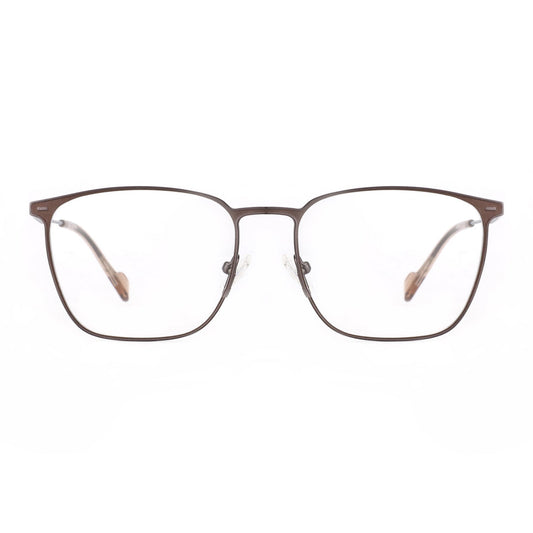
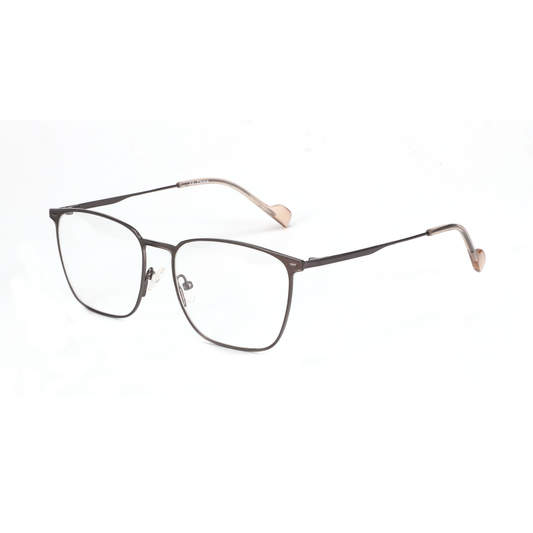
- Metal and Titanium: These frames offer a much slimmer profile. While they don't "hide" the lens edge as well as acetate, they are often significantly lighter. When paired with 1.74 lenses and a small frame size, the result is an incredibly lightweight pair of glasses that feels "barely there."
For more details on this comparison, see our guide on metal vs acetate frames.
Trade-Offs Between Different Frame Types
The following table illustrates the general trade-offs observed when pairing 1.74 lenses with different frame styles. These are illustrative estimates based on common optical tendencies.
Frame Type Tradeoffs for High-Index Lenses
Illustrative comparison of frame types for edge concealment and wearability
View chart data
| Category | Relative Edge Visibility | Weight Impact | Style Flexibility |
|---|---|---|---|
| Small Full-Rim | 3.0 | 4.0 | 7.0 |
| Large Full-Rim | 7.0 | 7.0 | 6.0 |
| Rimless | 9.0 | 2.0 | 5.0 |
| Semi-Rimless | 6.0 | 4.0 | 5.0 |
| Acetate | 4.0 | 6.0 | 7.0 |
| Metal | 5.0 | 3.0 | 6.0 |
Heuristic, bounded modeling from the provided insights only. Lower Relative Edge Visibility is better for concealing thick edges in high prescriptions; values reflect qualitative comparison, not measured data. Small full-rim frames are modeled as more concealment-friendly than large full-rim frames; rimless is modeled as least concealing; acetate is modeled as slightly better for hiding edges than metal; semi-rimless sits between full-rim and rimless. Weight and style flexibility are illustrative tradeoffs for reader comparison.
Note: "Relative Edge Visibility" is a heuristic score where lower numbers indicate better concealment of the lens edge.

How to Choose the Right Frame: A Practical Checklist
When shopping for your next pair of 1.74 high-index glasses, use this checklist to ensure the best result:
- Check the Lens Width: Aim for 45mm–50mm for the best thickness-to-weight ratio.
- Look for "Bridge" Fit: Ensure the bridge (the part over your nose) fits securely so the glasses don't slide down, which can expose the thicker upper edges of the lens.
- Prioritize Rounded Corners: Avoid frames with deep, sharp corners.
- Consider the Side View: If you are sensitive about thickness, look for frames with slightly thicker temples (arms) or deeper rims to provide side-angle coverage.
- Verify PD Alignment: Ensure the frame's "Frame PD" (Lens width + Bridge width) is close to your actual PD to minimize lens decentration.
For those with astigmatism, compact frames are particularly beneficial as they help maintain the precise axis alignment required for clear vision. You can find optimized options in our astigmatism glasses collection.
Recommended Frame Styles at Zenottic
We have curated several styles that pair exceptionally well with the 1.74 high-index lens:
- The Cleveland Eyeglasses: A classic, compact design that excels at keeping lens edges discreet.
- The Ariana Frames: These offer a refined, narrow profile that complements the thinness of 1.74 material.
- The Shirley Cat Eye: A stylish choice that uses a balanced upsweep to maintain a manageable lens area.
For a deeper dive into lens technology, you may also find our comparison of 1.67 vs 1.74 high-index lenses or our technical guide to high-index materials helpful.
Final Advice for High-Prescription Eyewear
The most flattering frames for 1.74 lenses are those that respect the physics of the prescription while reflecting your personal style. By prioritizing smaller, well-centered, full-rim designs, you can maximize the benefits of high-index technology.
Disclaimer: This article provides general eyewear selection advice. It does not constitute medical advice or diagnosis. Always consult with an eye care professional for specific clinical recommendations regarding your prescription and eye health.
