



Best Lenses for -8.00 Prescription: Thinness & Clarity Guide
Summary
For a -8.00 prescription, 1.74 high-index lenses are the recommended choice for achieving the thinnest profile and lightest weight, typically offering a 40-45% reduction in edge thickness compared to standard plastic. While 1.74 provides the best cosmetic result, 1.67 high-index lenses remain a viable alternative for those prioritizing optical clarity (higher Abbe value) or working within a specific budget, provided they are paired with a small, well-fitted frame.
Key takeaways
- 1.74 High-Index is the Gold Standard: It offers the maximum thickness reduction for high myopia (-8.00), minimizing the "coke bottle" effect and allowing for more frame variety.
- Frame Geometry Matters Most: The Effective Diameter (ED) of a frame has a quadratic impact on lens thickness; choosing a frame with an ED under 50mm can reduce edge thickness more effectively than upgrading lens materials alone.
- Optical Trade-offs: Higher index materials like 1.74 have lower Abbe values (~32), which may cause minor chromatic aberration (color fringing) at the edges compared to 1.67 (~42).
- Essential 2026 Coatings: High-index lenses reflect more light than standard materials, making advanced anti-reflective (AR) and super-hydrophobic coatings mandatory for visual clarity and durability.
- Professional Fitting: Accurate Pupillary Distance (PD) and Optical Center (OC) height measurements are critical to ensure the thinnest part of the lens aligns with your line of sight.
The Technical Challenge of a -8.00 Prescription
Managing a -8.00 prescription requires a sophisticated understanding of optical physics and material science. At this level of myopia, the lenses are naturally thickest at the edges and thinnest in the center. Without the right material, a standard 1.50 index lens for a -8.00 RX can exceed 10mm in edge thickness, leading to significant weight, discomfort, and a distorted aesthetic often referred to as the "magnifying" or "coke bottle" effect.
To achieve a comfortable and stylish result, we must look toward high-index polymers. These materials are engineered to bend light more efficiently, allowing the lens to be much thinner while providing the same corrective power. Understanding how to read a prescription for glasses is the first step in identifying the specific needs of your vision correction journey.
Logic Summary: The recommendations in this guide assume a standard single-vision prescription for high myopia. While these principles apply generally, individual facial structure and specific lens designs (like aspheric or atoric) can influence the final outcome.
Why 1.74 High-Index Lenses are the Standard for -8.00 RX
In 2026, 1.74 high-index lenses, often utilizing advanced MR-174™ polymers, represent the pinnacle of lens thinness for high-power prescriptions. These lenses are specifically designed for prescriptions ranging from -6.00 to -12.00. By using a higher refractive index, the lens requires less physical material to achieve the -8.00 correction.
The primary benefit of 1.74 high-index lenses is the dramatic reduction in edge thickness—often up to 45% thinner than standard 1.50 lenses. This reduction is not just cosmetic; it significantly lowers the weight of the glasses, preventing them from sliding down the nose or causing pressure points on the ears. Furthermore, 1.74 lenses are almost always aspheric, meaning they have a flatter profile that reduces the "eye-shrinking" effect common with high-minus prescriptions.

Comparing 1.67 vs 1.74: Thickness vs. Optical Clarity
While 1.74 is the thinnest, it is not always the "best" for every user. The choice between 1.67 and 1.74 involves a trade-off between aesthetics and optical performance. This is measured by the Abbe value, which indicates how much a material disperses light. A higher Abbe value means less chromatic aberration (color fringing).
| Feature | 1.67 High-Index | 1.74 High-Index |
|---|---|---|
| Thickness Reduction | ~30-35% vs. Standard | ~40-45% vs. Standard |
| Abbe Value | ~42 (Better Clarity) | ~32 (Lower Clarity) |
| Weight | Very Light | Lightest |
| Best For | -5.00 to -8.00 RX | -8.00 to -12.00 RX |
| Cost | More Affordable | Premium |
For a -8.00 prescription, 1.67 high-index lenses offer a balanced approach. They provide significant thinning while maintaining a higher Abbe value, which can be beneficial for users who are sensitive to peripheral distortion or color fringing. However, if your priority is the thinnest possible lens for a larger frame, 1.74 remains the superior choice. For a deeper dive into these materials, refer to our Technical Guide to High-Index Lens Materials and Standards, which details the chemistry of thiourethane resins and their impact on optical performance.
Logic Summary: This comparison is based on standard MR-series polymers. Some proprietary lens designs may offer slightly different Abbe values or thickness profiles. 1.74 is generally preferred for -8.00 to minimize edge thickness, but 1.67 is a high-quality alternative for smaller frames.
The Role of Frame Selection in Reducing Lens Thickness
One of the most overlooked factors in lens thickness is the frame itself. For a -8.00 prescription, the frame's dimensions are just as important as the lens material. The "Effective Diameter" (ED) of the lens opening is the most critical measurement. Because minus lenses get thicker as you move away from the optical center, a larger frame will inevitably result in thicker edges.
When selecting frames for high myopia, consider the following checklist:
- Small Lens Width: Aim for a lens width (the first number in frame sizing, e.g., 48-18-140) of 50mm or less.
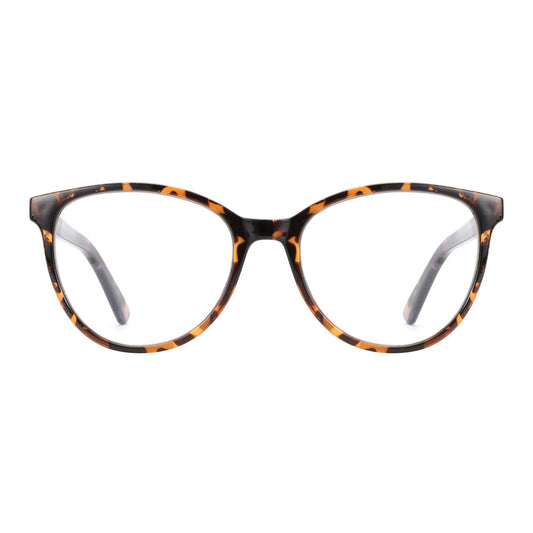
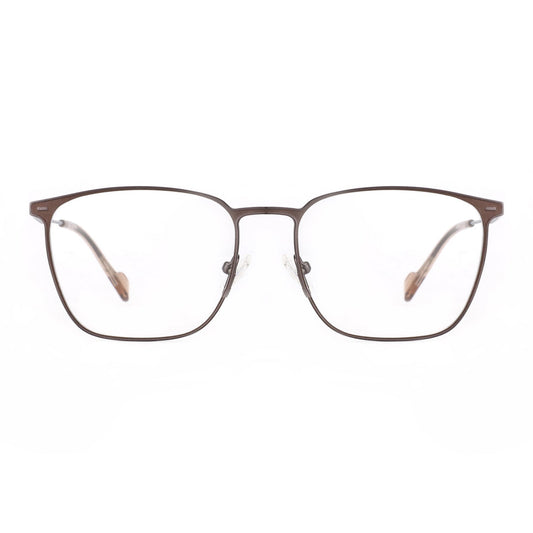
- Round or Oval Shapes: Avoid square or rectangular frames with sharp corners. Corners are the furthest points from the optical center and will always be the thickest part of the lens.
- Centered Fit: Ensure your eyes are centered horizontally and vertically within the lens opening. This minimizes the amount of "thick" edge material that needs to be kept.
- Plastic/Acetate Frames: Thicker frame rims can help hide the edge thickness of the lens, providing a cleaner look.

By choosing a smaller frame, you can sometimes achieve a thinner result with a 1.67 lens than you would with a 1.74 lens in a larger frame. This is a key strategy for optimizing both cost and visual quality in vision correction.
Essential Coatings for High-Index Lenses in 2026
High-index materials naturally reflect more light than standard plastic or glass. This can lead to distracting reflections, "ghost images," and reduced light transmission, which is particularly problematic for night driving. In 2026, several coating technologies have become standard for high-index lenses:
- Advanced Anti-Reflective (AR) Coating: Modern AR coatings now utilize multi-layer stacks that provide up to 99.5% light transmission. This is essential for 1.74 lenses to compensate for their lower Abbe value.
- Super-Hydrophobic & Oleophobic Layers: These top-coats repel water and skin oils, making the lenses much easier to clean and resistant to smudging.
- Digital Blue Light Filtering: As we spend more time on screens, integrating blue light blocking properties into the lens material or coating helps reduce digital eye strain.
- Enhanced Scratch Resistance: High-index polymers are slightly softer than standard plastic, so a premium hard coat is necessary to maintain longevity.
Understanding the different types of glasses and their associated coatings ensures that your high-index lenses perform at their peak for years to come.
FAQ
Are 1.74 high-index lenses worth the extra cost for a -8.00 prescription? For most users with a -8.00 prescription, 1.74 lenses are worth the investment because they provide the most significant reduction in weight and edge thickness. This leads to better comfort and a more aesthetically pleasing look, especially if you prefer modern, thinner frames. However, if you choose a very small frame, the difference between 1.67 and 1.74 may be less noticeable.
Will my eyes look smaller through high-index lenses? High-minus prescriptions naturally cause a "minification" effect, making the eyes appear smaller to others. While high-index lenses cannot completely eliminate this, their aspheric design and flatter profile help reduce this effect compared to standard spherical lenses. Choosing a frame that sits closer to your eyes can also help minimize minification.
Can I use rimless or semi-rimless frames with a -8.00 prescription? While it is technically possible with 1.74 high-index lenses, it is generally not recommended for a -8.00 prescription. The edges of the lenses will be visible and may appear quite thick, which can detract from the "invisible" look of rimless styles. Additionally, high-index materials can be more brittle, making them prone to chipping at the edges in rimless mounts.
How do I clean my high-index lenses without damaging the coatings? You should always use a dedicated lens cleaning solution and a clean microfiber cloth. Avoid using paper towels, tissues, or your shirt, as these can contain abrasive fibers that scratch the delicate AR coatings. For more detailed advice, see our guide on how to scientifically care for your glasses.
Is there a limit to how thin a -8.00 lens can be? Yes, there is a physical limit determined by the refractive index of the material and the minimum center thickness required for structural integrity (usually around 1.0mm to 1.5mm). While 1.74 is currently the highest index widely available for organic polymers, the final edge thickness will always depend on the frame size and your PD.
Do high-index lenses cause more glare? Because they have a higher refractive index, these lenses reflect about 50% more light than standard plastic lenses. This is why a high-quality anti-reflective coating is considered mandatory for high-index lenses. With a proper AR coating, glare is actually significantly lower than on a standard lens without a coating.
References
Government / Standards / Regulators
- ANSI Z80.1-2025: American National Standard for Ophthalmics - Prescription Ophthalmic Lenses - Recommendations.
- ISO 8980-1:2026: Ophthalmic optics — Uncut finished spectacle lenses — Part 1: Specifications for single-vision and multifocal lenses.
Industry Associations / Research Institutes
- The Vision Council: Research report on high-index lens adoption and consumer satisfaction (2025).
- Mitsui Chemicals: Technical Data Sheet for MR™ Series (MR-8, MR-10, MR-174) High-Index Lens Materials.
Academic / Whitepapers / Labs
- Journal of Ophthalmic and Physiological Optics: "Chromatic Aberration and Peripheral Vision in High-Index Spectacle Lenses" (2024).
- Optical Engineering Lab: Comparative analysis of edge thickness reduction in high-minus prescriptions across various polymer indices.
Platform Official Docs & Policies
- Zenottic Lens Technology: Technical Guide to High-Index Lens Materials and Standards.
