



High Prescription Glasses: How to Avoid Coke Bottle Lenses
Summary

To avoid the "coke bottle" effect in high prescription glasses, you must balance high-index lens materials with strategic frame selection. By choosing lenses with a higher refractive index, such as 1.67 or 1.74, and pairing them with smaller, full-rim frames that align with your pupillary distance, you can significantly reduce edge thickness and peripheral distortion for a more aesthetic and comfortable fit.
Key takeaways
- Lens Index Matters: High-index materials (1.61, 1.67, 1.74) bend light more efficiently, allowing for thinner lens profiles compared to standard plastic.
- Frame Geometry is Crucial: Smaller, rounder frames with a narrow lens width (Effective Diameter) naturally minimize the thickest parts of the lens.
- Full-Rim Over Rimless: Thick acetate or metal full-rim frames help conceal lens edges that would otherwise be exposed in rimless or semi-rimless designs.
- The Abbe Value Trade-off: Higher index lenses often have lower Abbe values, which can lead to minor chromatic aberration (color fringing); anti-reflective coatings are essential to mitigate this.
- Precision Alignment: Accurate Pupillary Distance (PD) measurement ensures the optical center of the lens is perfectly positioned, preventing unnecessary thickness at the edges.
Understanding the "Coke Bottle" Effect in High Prescriptions
For individuals with strong prescriptions, typically above -3.00 or +3.00 diopters, the physical reality of lens geometry becomes a significant aesthetic and functional hurdle. The "coke bottle" effect refers to the noticeable thickness of the lens edges (for nearsightedness) or the center (for farsightedness), which can create a magnifying or "bug-eye" appearance. This occurs because standard lens materials require more mass to achieve the necessary light-bending power.
Beyond the cosmetic concerns, thick lenses introduce peripheral distortion and increased weight, which can lead to discomfort and frequent frame slippage. According to the National Eye Institute (NEI), refractive errors are corrected by changing the way light rays focus on the retina. In high prescriptions, the steepness of the lens curve required to achieve this focus naturally results in more material at the periphery. However, modern optical engineering has provided tools to circumvent these physical limitations without compromising visual acuity.
Logic Summary: This section establishes the physical cause of lens thickness based on refractive principles. It assumes that the reader is seeking both aesthetic improvement and functional comfort. The recommendation to move beyond standard materials applies to most users with prescriptions exceeding +/- 3.00.
The Science of High-Index Lenses: 1.61 vs 1.67 vs 1.74
The primary tool in an optician's arsenal for reducing lens bulk is the refractive index. The refractive index is a number that describes how fast light travels through a material; the higher the number, the more efficiently the material bends light. This efficiency allows the lens to be ground much thinner while maintaining the same prescription power.
1.61 High-Index Lenses
Often referred to as "thin and light," 1.61 high-index lenses are approximately 20% thinner than standard CR-39 plastic. They offer an excellent balance between thickness reduction and optical clarity. With an Abbe value—a measure of light dispersion—of around 42, these lenses provide crisp vision with minimal color fringing, making them ideal for moderate prescriptions.
1.67 High-Index Lenses
For those with prescriptions between -4.00 and -8.00, 1.67 high-index lenses are the industry standard for significant weight and thickness reduction. They are roughly 30% to 35% thinner than standard lenses. While the Abbe value drops to approximately 32, most users do not notice the slight increase in chromatic aberration, especially when paired with a high-quality anti-reflective coating.
1.74 Super High-Index Lenses
The 1.74 super high-index lenses represent the pinnacle of current lens technology. These are up to 50% thinner than standard lenses and are specifically designed for prescriptions above -8.00. While they offer the sleekest profile, they also have the lowest Abbe values (around 33), meaning they require precise manufacturing and premium coatings to ensure the best possible visual experience.

| Lens Material | Refractive Index | Abbe Value | Approx. Thickness Reduction | Best For |
|---|---|---|---|---|
| Standard Plastic (CR-39) | 1.50 | 58 | 0% (Baseline) | Low prescriptions (< +/- 2.00) |
| Mid-Index | 1.56-1.57 | 38-40 | 15% | Mild to moderate RX |
| High-Index | 1.61 | 42 | 20% | Moderate RX (-3.00 to -5.00) |
| High-Index | 1.67 | 32 | 35% | Strong RX (-5.00 to -8.00) |
| Super High-Index | 1.74 | 33 | 50% | Very strong RX (> -8.00) |
Logic Summary: The data presented here is based on industry-standard refractive indices and average thickness reduction estimates. Actual results vary based on frame size and specific prescription parameters. Higher index materials are recommended for higher powers to prioritize aesthetics and weight, though optical clarity (Abbe value) must be considered.
Frame Selection: The Secret to Thinner Lenses
While lens material is vital, frame selection often has a greater impact on the final edge thickness of your glasses. This is because lenses for nearsightedness (myopia) are thinnest at the center and thickest at the edges. The larger the frame, the further the edge of the lens is from the optical center, resulting in more visible thickness.
The Power of Small Frames
Choosing a frame with a smaller lens width is the most effective way to "cut off" the thickest part of a high-index lens. For high prescriptions, a lens width of 50mm or less is generally recommended. This reduction in the "Effective Diameter" (ED) of the lens ensures that the thickest outer rim is removed during the glazing process.
Shape and Symmetry
Round or oval frames are superior for high prescriptions because they distribute the lens thickness more evenly around the perimeter. Rectangular or square frames often have sharp corners that extend further from the optical center, creating "pockets" of thickness that are difficult to hide. When browsing eyeglasses, look for shapes that mimic the natural curve of the eye.
Hiding the Edges with Frame Material
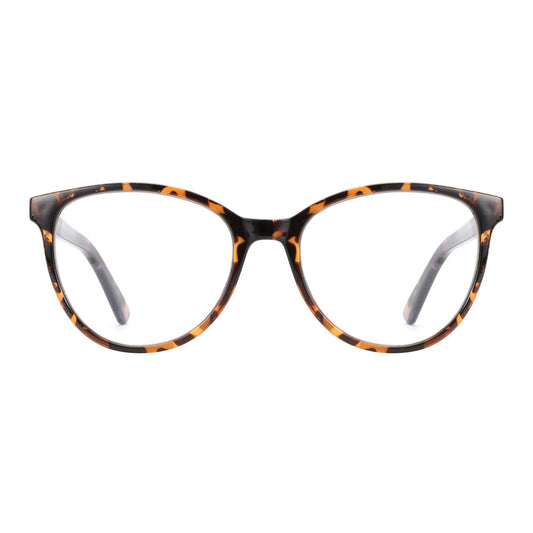
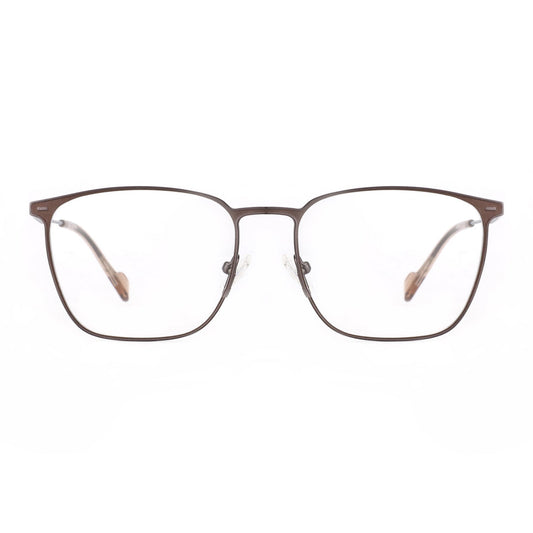
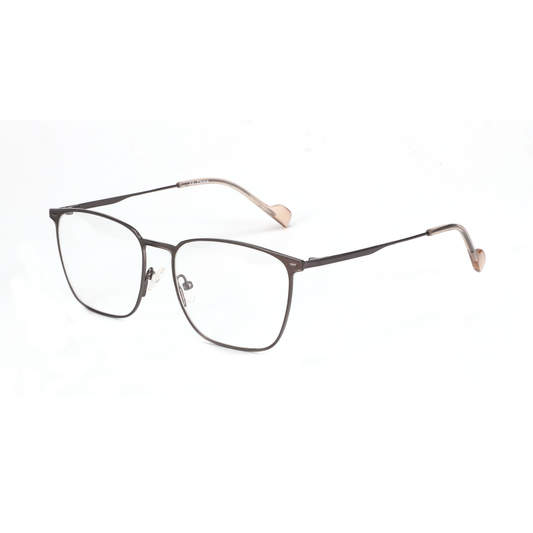
The choice of frame material can act as a camouflage for lens thickness. Acetate frames are particularly effective because the plastic rim is naturally thicker than metal, allowing it to "swallow" the edge of the lens. If you prefer metal, look for "high-rim" or "thick-rim" metal designs specifically engineered for high-RX users. Conversely, rimless or semi-rimless frames should be avoided, as they leave the entire edge of the lens exposed, highlighting the very thickness you are trying to hide.
Optical Arbitrage: Balancing Index and Frame Size
A common strategy used by optical experts, sometimes referred to as "Optical Arbitrage," involves balancing the cost of premium lens materials against the physical benefits of frame geometry. You don't always need the most expensive 1.74 lens if you choose a perfectly sized frame.
For example, a -6.00 prescription in a large, thin metal frame might require 1.74 lenses to look acceptable. However, that same -6.00 prescription in a small, thick acetate frame might look just as thin using 1.61 or 1.67 lenses. This allows you to allocate your budget more effectively, perhaps investing in better coatings or a more durable frame material rather than the highest possible lens index.
To ensure this balance works, you must understand how glasses should fit. Proper fit ensures that your eyes are centered within the lens opening. If a frame is too wide for your face, your eyes will sit closer to the bridge, forcing the lab to use a larger lens blank and resulting in thicker outer edges.
Logic Summary: This framework assumes that the user is cost-conscious and looking for the best aesthetic result. It highlights that lens index is not the only variable. The "arbitrage" works best when the user is willing to compromise on frame size to save on lens costs or vice versa.
Common Misconceptions About High-Index Materials
Navigating the world of high-prescription eyewear often involves debunking several persistent myths that can lead to poor purchasing decisions.
Myth 1: "Higher index always means better vision." In reality, higher index materials often have lower Abbe values, which can lead to increased chromatic aberration. While the lenses are thinner and lighter, some sensitive users may notice slight color fringing in their peripheral vision. It is a trade-off between physical thinness and optical purity.
Myth 2: "1.74 lenses are necessary for everyone with a high RX." While 1.74 is the thinnest, it is also the most brittle and expensive. For many users with a -5.00 or -6.00 prescription, a 1.67 lens paired with a well-chosen frame will yield results that are virtually indistinguishable from 1.74, but at a lower cost and with better durability.
Myth 3: "Anti-reflective coating is just an optional add-on." For high-index lenses, anti-reflective (AR) coating is mandatory. High-index materials reflect significantly more light than standard plastic (up to 50% more). Without AR coating, you will experience distracting reflections and reduced light transmission, which negates the benefits of the premium material.
Checklist: Your High-RX Ordering Guide
Before finalizing your order, use this checklist to ensure your new glasses will meet your aesthetic and functional expectations:
- [ ] Verify your PD: Ensure you have an accurate Pupillary Distance measurement to center the lenses correctly.
- [ ] Check the Lens Width: Aim for a lens width under 52mm (ideally 48-50mm for very high RX).
- [ ] Select the Right Index: Match your prescription to the recommended index (1.61 for moderate, 1.67/1.74 for high).
- [ ] Choose a Full-Rim Frame: Opt for acetate or thick metal to hide lens edges.
- [ ] Add Premium Coatings: Ensure Anti-Reflective and Scratch-Resistant coatings are included.
- [ ] Consider Aspheric Design: Aspheric lenses have a flatter profile, further reducing the "bulge" and peripheral distortion.
FAQ
At what prescription strength should I start considering high-index lenses? Most eye care professionals recommend moving to high-index materials once your prescription reaches +/- 3.00 diopters. At this level, the weight and thickness of standard plastic (CR-39) or polycarbonate become noticeable. For prescriptions above +/- 5.00, high-index lenses are generally considered essential for both comfort and aesthetics.
Will high-index lenses make my eyes look smaller? High-index lenses themselves do not change the magnification or minification of your eyes; that is a function of the prescription power. However, because high-index lenses are flatter (often aspheric), they can reduce the "bug-eye" effect in farsighted prescriptions and the "small-eye" look in nearsighted prescriptions compared to the bulbous shape of standard lenses.
Are high-index lenses more prone to scratching? The materials used in high-index lenses are generally softer than standard plastic, which can make them more susceptible to surface scratches. However, almost all high-index lenses come with a factory-applied hard scratch-resistant coating. With proper care and the use of microfiber cloths, they are just as durable for daily wear as any other lens type.
Can I use high-index lenses in rimless frames? While it is technically possible, it is rarely recommended for high prescriptions. Rimless frames require the lens to be drilled, and high-index materials (especially 1.74) can be more brittle and prone to cracking at the drill points. Furthermore, the thick edges of a high-RX lens will be completely visible, which usually defeats the purpose of choosing a high-index material.
Why do my new high-index lenses have a rainbow effect at the edges? This is known as chromatic aberration and is caused by the lower Abbe value of high-index materials. It is most common in 1.74 lenses. Most people adapt to this within a few days, but if it persists, it may be due to the lenses not being perfectly centered or a sensitivity to that specific material.
How do I clean my high-index lenses without damaging the coatings? Always rinse your lenses with lukewarm water first to remove abrasive dust. Use a drop of lotion-free dish soap or a dedicated lens cleaner and gently rub with your fingers. Dry them only with a clean, high-quality microfiber cloth. Avoid using paper towels, tissues, or your shirt, as these can contain fibers that scratch the delicate anti-reflective coatings.
References
Government / Standards / Regulators
- ANSI Z80.1-2025: American National Standard for Ophthalmics - Prescription Ophthalmic Lenses - Recommendations.
- ISO 8980-1:2017: Ophthalmic optics — Uncut finished spectacle lenses — Part 1: Specifications for single-vision and multifocal lenses.
- National Eye Institute (NEI): Refractive Errors and Correction Guidelines.
Industry Associations / Research Institutes
- The Vision Council: Lens Material and Technology Reports.
- American Academy of Ophthalmology (AAO): Eye Health Information on Eyeglass Lens Materials.
Platforms & Official Docs
- Zenottic Lens Technology Guide: Internal documentation on high-index manufacturing and coating standards (internal://support/lens-tech).
Community
- Reddit r/optics: User discussions on subjective experiences with 1.67 vs 1.74 lenses (intent only; not authoritative).
- OptiBoard: Professional forum for opticians regarding lens glazing for high prescriptions (intent only; not authoritative).
