


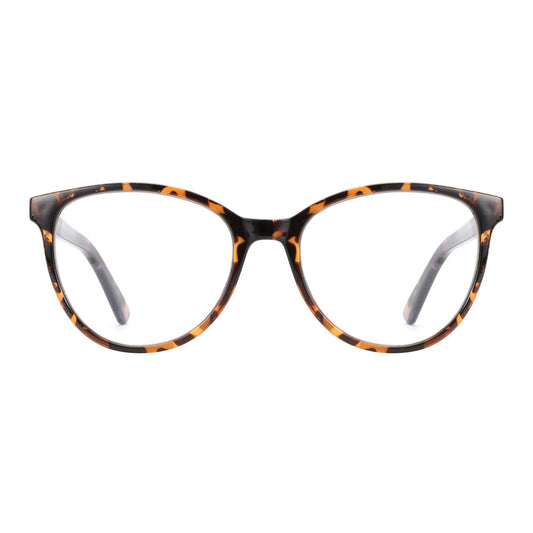

Can a Hot Car Damage Eyeglasses?
Yes, a hot car can damage eyeglasses. The clearest risk is to the lens coatings, the thin layers that cut glare or resist scratches. Excessive heat can make those layers crack or separate.
That doesn't mean every pair left in a parked car is ruined. No single temperature or time limit applies to every pair. A pair that looks fine afterward may still have been exposed to more heat than it should be, so a hot car is a poor place to keep glasses.
Can Heat in a Parked Car Damage Eyeglasses?
Heat can damage the coated part of your lenses, and a sunny dashboard is one of the worst spots in a car. The FAA's pilot sunglasses brochure warns that excessive heat can cause delamination or crazing in coated lenses. Delamination means the coating lifts or separates from the lens. Crazing means a network of fine cracks forms in the coating.
The warning names excessive heat in general. It doesn't give a car-specific temperature or say how long is too long. A lab Q&A in Eyecare Business, using heat information from iCoat Company, makes the car link more direct. It reports that excess heat can cause crazing or early deterioration of anti-reflective coatings, and that eyewear should never be left on an automobile dashboard on hot, sunny days.

Frames are a separate question. These coating warnings are about lenses, so they don't tell you what heat does to a particular frame material. Eyeglass heat damage on the lens side is the risk with direct support behind it, and it's what you should look for first.
How Can Heat Affect Lens Coatings?
Heat attacks the coating layers, not just the lens underneath. Most modern lenses carry one or more coatings, such as anti-reflective (AR) or scratch-resistant layers. The FAA ties excessive heat to two specific failures in these layers: delamination and crazing.
Crazing is the one most people notice. It shows up as fine lines or cracks across the coated surface. Tokai Optical, a lens manufacturer, describes a case where fine cracks appeared in the coating in a reported heat test after lenses were heated under controlled conditions. The same report includes a temperature reading from one parked car. Treat it as one manufacturer's example. It shows what this kind of damage can look like. It does not predict what any car will do to your pair.
The Eyecare Business report, again citing iCoat Company, adds that even a high-quality premium AR coating can craze or deteriorate early with too much exposure to a strong heat source. In other words, paying more for an AR coating doesn't make it heatproof.
These findings cover coated lenses. If your lenses have no coating, or your worry is the frame, this explanation doesn't settle the question. Coated lenses are the part with documented heat risk.
What Should You Check After Glasses Were Left in a Hot Car?
Start with the lenses. Fine cracks in the coating are the visible sign tied to heat. A clean lens and good light make it easier to tell crazing apart from smudges or ordinary scratches.
- Look for fine lines across the lens surface. Tilt each lens under a bright light. Crazing looks like a web or pattern of thin cracks, similar to a manufacturer-reported example of fine coating cracks. It doesn't look like one random scratch.
- Check for coating that looks lifted, flaky, or patchy. This fits the delamination the FAA describes, where the coating separates from the lens.
- Clean before you judge. Smudges and residue can hide cracks or look like them. Use safe cleaning steps for AR lenses so you don't add new marks while you inspect.
- Photograph anything you find. Clear photos taken right away help if you later raise the issue. Our guide to documenting peeling coatings for warranty claims shows what to capture.
- Look at the frame on its own terms. If an acetate frame looks dull or white, our explainer on why acetate frames turn white helps you tell surface residue from lasting change.

Finding fine cracks tells you the coating has changed. Not finding them is less certain. A pair that looks normal hasn't been proven unaffected, and a quick look at home isn't a full assessment. If your vision through the lenses seems different, or you're unsure what you're seeing, have an eyecare professional look at the pair.
How Should You Respond and Prevent Repeat Exposure?
Get the glasses out of the heat now, and stop using the car as storage. The FAA's guidance is simple: keep coated lenses away from excessive heat. Every extra hot afternoon in a parked car adds to that exposure.
For prevention, the most specific advice comes from the Eyecare Business report: avoid leaving eyewear on a hot, sunny car dashboard. The dashboard sits under the windshield in direct sun, which makes it the clearest spot to avoid. That doesn't make the glove box, door pocket, or center console safe by default. None of these spots has been shown to stay cool enough. A case protects against scratches and drops, but don't count on it to block heat.
If you want a spare pair for driving, keep it with you and carry it into the house, the office, or the store. That way it never sits in a closed car all afternoon. The same habit works for prescription sunglasses, which often have coatings too.
If you see cracks or peeling on a pair you bought from us, reach out to our team with your photos and order details. We'll help you work out the next step. Eyeglass heat damage often can't be undone, so the habit that matters most is not leaving glasses in a hot car again.
FAQs
Is there a specific temperature that damages glasses in a car?
No single temperature applies to every pair. The FAA warns about "excessive heat" without naming a number. Tokai Optical's report includes a reading from one parked car, but that is a single example. Car temperatures vary with sun, weather, and parking spot, and lenses and coatings vary too.
Are coated sunglasses at risk too?
Yes. The FAA warning about delamination and crazing comes from a brochure about sunglasses for pilots, and it applies to coated lenses. Mirror, AR, or other coated sunglass lenses fall under the same heat precaution as coated clear lenses.
Can heat-crazed lens coating be fixed?
There's no simple home fix for a crazed coating. Polishing or rubbing the lens won't restore the cracked layer and can add scratches. Ask your optician or lens provider about your options, which may include a warranty claim or new lenses, depending on the pair.
Does eyeglass heat damage happen right away or over time?
It can go either way, and you may not be able to tell which. Eyecare Business describes heat as causing "early deterioration" of AR coatings, which points to wear that builds up, not only sudden failure. Repeated hot-car exposure is worth avoiding even if one hot afternoon left no visible marks.
