



Temple Length Measurement: How to Prevent Glasses From Slipping or Pinching Behind Ears
A temple length is right when it reaches behind the ear without sticking out too far, and the bend sits close to where the ear meets the skull without pressing a sore spot. The millimeter number printed on a frame is only a starting specification. It cannot tell you, by itself, whether the bend and curve will match your head.
To check fit, compare three things: a pair of glasses that already fits well, the hinge-to-ear path on your own head, and where the candidate frame's temple actually bends. A matching number on a spec sheet is a good sign, not a guarantee.
How to Know If Temple Length Is Right on Glasses
A temple is doing its job when it reaches behind the ear without excessive overhang and without creating one concentrated pressure point. That result matters more than the printed number.
Two frames can list the same temple length and still feel different once worn. The reason is usually the bend, not the total length: if the bend starts too high, too low, or too tight against the head, the temple can slide or pinch even when the overall number is correct. Treat the spec sheet as a first filter and the as-worn result as the final check.
The most reliable reference is a pair you already own that fits well. Compare its printed temple length, its bend location, and how it feels after a few hours of wear against any frame you are considering online. For general fit context beyond the temple itself, our guide on overall frame fit covers bridge and lens position as well.
How to Measure the Hinge-to-Ear Path
You can get a useful comparison reference in a few minutes with a flexible tape measure or a strip of string and a ruler. This is a comparison aid, not a formula that hands you an exact temple-length number.
Start With a Pair That Fits Well
Pick out the glasses that stay in place all day without sliding down or leaving a sore spot behind your ears. Check the inside of the temple for a printed number, usually in millimeters, and write it down. Treat that number as a reference point, not proof that any frame listing the same figure will fit the same way.
Trace the Hinge-to-Ear Path
Work through these steps on one side, then repeat on the other:

- Find the hinge, the small metal joint where the temple arm meets the front of the frame.
- Locate the top of your ear, where the temple naturally starts to bend downward.
- Lay the tape or string loosely along the path from the hinge toward that point, without pulling it tight against your head.
- Repeat on the other side and note any difference. Many people have slightly different left and right measurements, and a frame that fits one side better can still cause pressure on the other.
Record the Comparison, Not a Promise
Write down both side measurements, the well-fitting pair's printed temple number, and where that pair's temple begins to bend. Use this record when you compare candidate listings, and ask the seller for the missing spec if a listing does not show temple length at all. Adding this measurement to your notes does not calculate a guaranteed correct number for a new frame; it gives you a stronger basis for comparison than the printed figure alone.
How to Read Temple Length on a Frame Spec Sheet
Read the listed temple-length number as the frame's overall length from the hinge toward the tip, not as the curved distance around your ear. Under the ophthalmic frame measurement convention, overall temple length is measured from the hinge reference to the temple tip, so it already includes the bend and the drop section behind the ear.
Compare candidates in millimeters first, since that is the standard notation on most spec sheets. An inch figure is a convenience conversion, not a separate measurement: a temple listed at 145 mm converts to about 5.7 in, but that conversion does not change how the frame sits on your head.
| What the listing shows | What it means | How to use it |
|---|---|---|
| Millimeter number (e.g., 145 mm) | Overall hinge-to-tip length | Compare directly against your known-good pair's number |
| Inch equivalent (e.g., ~5.7 in) | Same measurement, converted for reference | Use only as a convenience check, not a separate fit test |
| Missing or unclear spec | Temple length not documented | Ask the seller for the number instead of guessing |
A candidate with the same listed number as your known-good pair can still feel different if the bend, drop shape, or hinge design differs. When a listing does not show temple length, compare a different documented frame or request the missing spec before ordering.
Why Glasses Slip or Pinch Behind the Ears
If glasses slide forward, check the bend before assuming the temple length is wrong. If they pinch, look for a specific pressure point rather than blaming the total length on its own.
If the Glasses Slide Forward
- Check whether the behind-ear bend starts where it should, roughly where the top of the ear meets the head, rather than higher up the temple.
- Compare the frame against your known-good reference pair before deciding the listed length itself is the problem.
- Avoid diagnosing the cause from the temple-length number alone; bend placement is the first thing worth inspecting.
An educational review of common frame adjustments identifies improper temple bend as a leading check for glasses that slip, ahead of assuming the overall length is wrong.
If They Pinch Behind the Ears
- Look for a concentrated pressure point near the bony area behind your ear, or a temple that seems to pull on the soft tissue there.
- Treat a poor bend location or contour as a fitting issue for a professional to assess, not a reason to reshape the temple yourself at home.
- If pressure behind the ear is a recurring problem beyond this specific frame, our article on behind-ear pressure covers related comfort checks in more depth.
The same educational review links poor bend location or pressure near that bony area with temples that feel too tight, alongside overall bend quality.
Choose the Next Action
If the bend observation explains the symptom, ask an optician or trained fitter to look at that exact frame. If the spec sheet and your as-worn reference genuinely do not line up, compare a different documented frame instead of guessing. If sliding or pinching continues after these checks, treat the fit as unresolved rather than forcing a purchase decision on a frame that has not been confirmed to work for you.
Where the Temple Should Bend—and When to Get Fitting Help
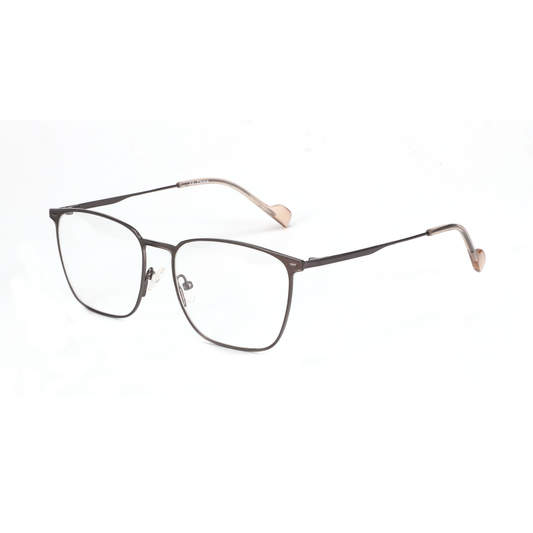
A workable bend point sits close to where the top of the ear meets the skull, letting the remaining temple follow the head's contour without pressing hard on one spot. Frame designs vary, so treat this as a visual check rather than a fixed rule.
Background fitting guidance describes a conventional bend occurring just beyond the top of the ear, with roughly 30 to 45 mm of temple remaining past that point to follow the head. That figure is a background reference for typical frame construction, not a requirement every frame must meet. What matters more is the outcome: gentle contact along the ear's curve, no pulling on soft tissue, and no single spot carrying all the pressure.

If a candidate frame's bend does not land near that ear-to-skull junction, or if it presses uncomfortably no matter how you adjust its position on your face, that is a signal to get help from a trained fitter rather than bending the temple yourself. Home bending can shift alignment in ways that are hard to reverse. When you are ready to compare documented specifications side by side, you can check our glasses collection to see listed temple lengths before you decide, and we are glad to answer a specific question about one of our listings if the printed number and your own observation do not resolve the choice.
FAQs
Does the temple-length number include the bend in the glasses arm?
Yes. The listed temple length is measured as the overall distance from the hinge to the temple tip, which means it already includes the bend and the drop section behind the ear rather than only the straight part. That is why two frames with the same number can still feel different: the number covers total length, not the exact shape or angle of the bend.
How do I compare temple length in millimeters with inches?
Keep the frame specification in millimeters, since that is the standard unit on most spec sheets, and use an inch figure only as a converted convenience. A 145 mm temple converts to about 5.7 in, but the conversion does not add fit certainty. Always compare the millimeter number against a known-good pair rather than relying on the inch version alone.
Can the right temple length still feel wrong?
Yes. A matching printed number does not guarantee a matching fit, because bend placement, frame position on your face, and how closely the temple follows your ear's contour can all change the result. If a frame with the "right" number still slips or pinches, inspect the bend point and pressure areas next instead of assuming the specification itself is at fault.
Should I bend my glasses temples at home?
We would not recommend it. If bend placement or pressure near the bony area behind the ear looks like the cause of discomfort, have a trained fitter inspect and adjust that specific frame, or confirm that a different temple length or design would fit better. Home bending can misalign the frame in ways that are difficult to correct afterward.
