



1.67 vs. 1.74 High-Index Lenses: Is the Upgrade Worth It?
If you have a strong prescription between -6.00 and -12.00, the choice between 1.67 and 1.74 high-index lenses often comes down to whether the extra thinness of 1.74 is noticeable enough in your chosen frame to justify the higher cost. For many people in this range, 1.67 already delivers a solid reduction in bulk, while 1.74 provides a modest additional benefit that becomes more relevant above -8.00 or in larger frames.
Higher refractive index materials bend light more efficiently, which allows manufacturers to produce thinner lenses for the same prescription power. This basic principle explains why high-index options are popular for strong prescriptions, but the real-world difference between 1.67 and 1.74 is smaller than many shoppers expect once frame size and shape are factored in.
Understanding High-Index Lens Materials
High-index lenses are designed specifically for people who need stronger vision correction. The refractive index number tells you how effectively the material bends light. A higher number means the lens can be made thinner while still providing the same corrective power.
For prescriptions around -6.00 D and stronger, lens thickness and weight become much more noticeable, which is why high-index choices deserve a closer look. Most wearers in the -6.00 to -12.00 range start considering these materials because standard plastic or glass lenses would result in noticeably thick edges.
The two most common high-index options in this category are 1.67 and 1.74. The jump from 1.67 to 1.74 sounds significant on paper, but the actual thickness savings depends heavily on your exact prescription, the frame you choose, and how the lenses are edged.
How Much Thinner Are 1.74 Lenses?
In practice, 1.74 lenses are thinner than 1.67 lenses for the same prescription, particularly at the edges of higher-minus powers. However, the visible difference is often modest until you reach stronger prescriptions or choose larger frames.
Around -8.00 D is squarely in high-myopia territory, so it is reasonable to compare higher-index lens options more seriously. At this level and beyond, many people notice that 1.74 lenses reduce the “Coke bottle” look more effectively. Below -8.00, the improvement can be hard to see unless you are comparing the lenses side by side or have selected a wide frame.
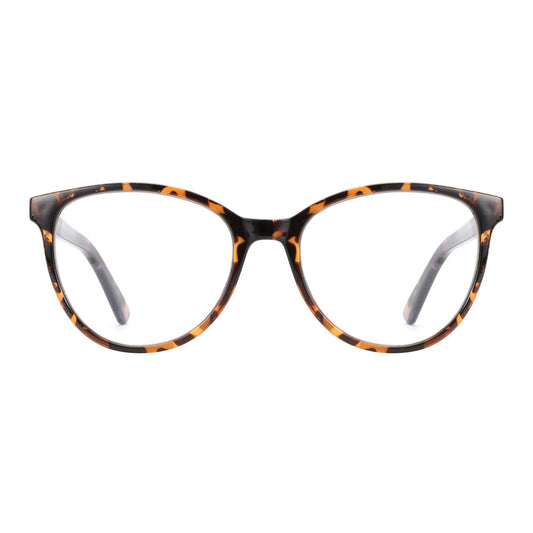
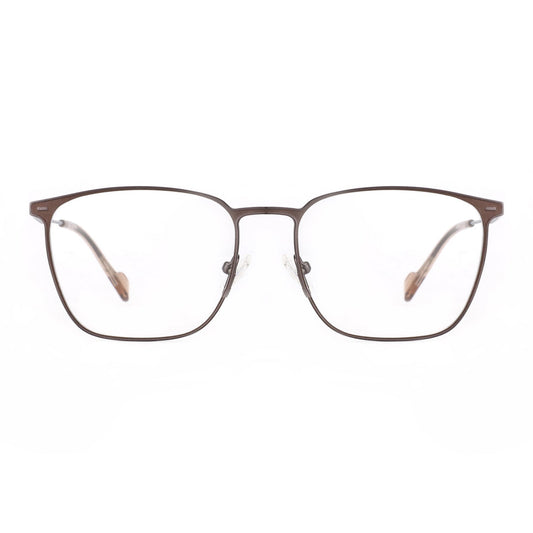
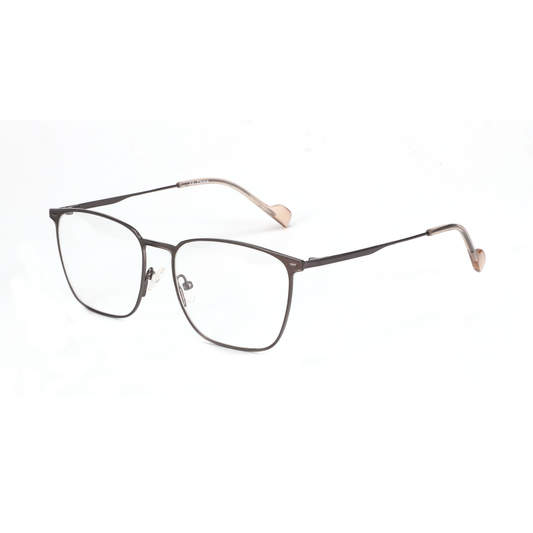
Frame size and lens shape can change how thick your glasses look, sometimes more than a small index upgrade does. A smaller, well-fitted frame can make 1.67 lenses appear almost as slim as 1.74 lenses in a larger frame. This is one reason why many opticians recommend optimizing your frame choice before automatically upgrading the lens index.
Chromatic Aberration and Optical Clarity Concerns
As lens index goes up, Abbe value usually goes down, which can increase color fringing or chromatic aberration in some situations. This is the main reason some people hesitate to choose 1.74 lenses. The lower Abbe value means light of different wavelengths bends slightly differently, which can create subtle rainbow effects at the lens periphery, especially when looking off to the side.
In forum discussions, the most common concern with very high-index lenses is more noticeable color fringing or reduced optical comfort. Not everyone experiences this, and modern lens designs with aspheric shaping help minimize the issue. Still, if you have previously noticed color fringes with high-index lenses or are particularly sensitive to visual quality, 1.67 may feel more comfortable for daily wear.
The thinnest lens is not always the best lens; the right choice depends on prescription strength, frame size, and how sensitive you are to visual tradeoffs.
When Is the 1.74 Upgrade Worth the Extra Cost?
The decision often hinges on your exact prescription and priorities. For prescriptions closer to -6.00 to -7.50, 1.67 is frequently the more practical choice because the thickness difference is small and the price premium for 1.74 may not deliver visible improvement in most frames.
Once you reach approximately -8.00 and stronger, the additional thinning from 1.74 becomes more noticeable, especially if you prefer larger or more fashion-forward frames. At these powers, the cosmetic benefit can be worth the upgrade for people who are self-conscious about lens thickness.

Here is a rule-of-thumb guide to help you evaluate your situation:
Rule-of-Thumb Thresholds for Choosing 1.67 vs 1.74 High-Index Lenses
Illustrative decision thresholds only; not a measurement chart.
View chart data
| Category | 1.67 lens choice value | 1.74 lens choice value | Relative aberration risk (1.67) | Relative aberration risk (1.74) |
|---|---|---|---|---|
| Under -6.00 D | 4.0 | 2.0 | 2.0 | 3.0 |
| -6.00 to -8.00 D | 3.0 | 4.0 | 3.0 | 4.0 |
| -8.00 D and stronger | 1.0 | 5.0 | 4.0 | 5.0 |
Illustrative rule-of-thumb synthesis from the provided modules: under -6 D, 1.67 is usually enough; -6 to -8 D is frame-dependent; -8 D and stronger makes 1.74 more worthwhile. Thickness is shown as a relative proxy, not an exact percentage. Aberration risk reflects the general Abbe trade-off: higher index tends to lower Abbe and raise distortion/aberration sensitivity.
This chart uses illustrative scores based on community patterns and optical principles. Higher “choice value” indicates a more suitable option for typical cosmetic and comfort goals in that prescription range. Note that aberration risk increases slightly with higher index, reflecting the typical Abbe value tradeoff.
How Frame Choice Affects Your Final Look
Many buyers focus exclusively on lens index while overlooking frame dimensions. A smaller frame reduces the lens diameter, which dramatically cuts edge thickness regardless of whether you choose 1.67 or 1.74. Conversely, a large or wide frame can make even 1.74 lenses look bulkier than expected.

This is why experts often recommend selecting your frames first and then evaluating lens thickness. Rimless or semi-rimless styles can also hide thickness better than full-rim designs, sometimes making the index upgrade less necessary.
If you are shopping online, consider ordering frames that have a smaller lens width or a shape that minimizes the distance from the optical center to the edge. This single change frequently has a bigger impact on appearance than moving from 1.67 to 1.74.
Checklist: How to Decide Between 1.67 and 1.74
Use this practical checklist to evaluate your own situation:
- Prescription strength: If your sphere is between -6.00 and -7.50 and you are not extremely concerned about thickness, start with 1.67.
- Frame size: Measure or estimate the lens width. Larger frames (wider than 50mm) make 1.74 more worthwhile.
- Thickness sensitivity: If you feel self-conscious about lens edges or have received comments on thick glasses before, lean toward 1.74 at -8.00 and above.
- Optical comfort: If you have noticed color fringing with previous high-index lenses, test 1.67 first or ask about aspheric design options that can reduce aberrations.
- Budget: The price difference is usually noticeable. Calculate whether the cosmetic improvement is worth the premium for your specific needs.
- Frame style: Rimless or narrow frames reduce the need for the highest index. Full-rim or fashion frames may benefit more from 1.74.
Common Myths About 1.74 Lenses
One widespread belief is that 1.74 lenses are always dramatically thinner. In reality, the difference is incremental and most obvious only in stronger prescriptions or suboptimal frames. Another myth suggests that higher-index lenses always cause more distortion. While the risk of chromatic aberration does increase, good lens design and proper fitting minimize this for most wearers.
Some shoppers also assume that the most expensive lens is automatically the best. Optical quality involves many factors beyond refractive index, including coatings, aspheric shaping, and material purity. A well-made 1.67 lens with quality anti-reflective coating can outperform a basic 1.74 lens in everyday visual comfort.
Recommendations for Zenottic Shoppers
At Zenottic, we offer both 1.67 High-Index lenses and 1.74 options so you can choose exactly what fits your prescription and budget. Our technical guide to high-index lens materials provides deeper information on the MR-series polymers we use and how they balance thickness, weight, and optical performance.
For those exploring strong prescription options, our collection of eyeglasses includes many styles that work particularly well with high-index lenses. Styles such as the Zenottic Enoch or Claire frames pair nicely with either index depending on your Rx.
Final Thoughts
The upgrade from 1.67 to 1.74 high-index lenses can be worthwhile for stronger prescriptions in the -8.00 to -12.00 range, especially when paired with larger frames or when cosmetic appearance is a top priority. For prescriptions closer to -6.00 to -7.50, 1.67 often provides an excellent balance of thinness, clarity, and value.
This article only discusses comfort and setup advice related to lens selection. It does not constitute medical advice, diagnosis, or treatment. Lens performance depends on individual factors including exact prescription, frame fit, and personal visual sensitivity. If you experience persistent visual discomfort or have existing eye conditions, consult a qualified eye care professional.
Ultimately, the best choice depends on your specific prescription, frame selection, and how you prioritize appearance versus optical comfort. By considering frame size first and using the thresholds above, you can make a more confident decision without overpaying for marginal gains.
For more guidance on high prescriptions, read our companion article on when to invest in high-index lenses.
