



1.74 High-Index Lenses: Weight vs. Thickness Explained
Summary
1.74 high-index lenses provide the maximum possible thickness reduction for high prescriptions, typically appearing up to 50% thinner than standard plastic lenses. However, because the material (MR-174™) is significantly denser than lower-index resins, weight reduction only occurs when the volume of the lens is reduced enough to offset its higher specific gravity, a threshold usually reached at prescriptions of -6.00 diopters or stronger.
Key takeaways
- Thickness vs. Density: 1.74 lenses are the thinnest available but use the densest material (Specific Gravity ~1.47), meaning they aren't always the lightest option for mild prescriptions.
- The Weight Threshold: For most users, the "weight-saving" benefit of 1.74 high-index lenses becomes noticeable only at -6.00D or higher; below -4.00D, a 1.60 or 1.67 lens may actually feel lighter.
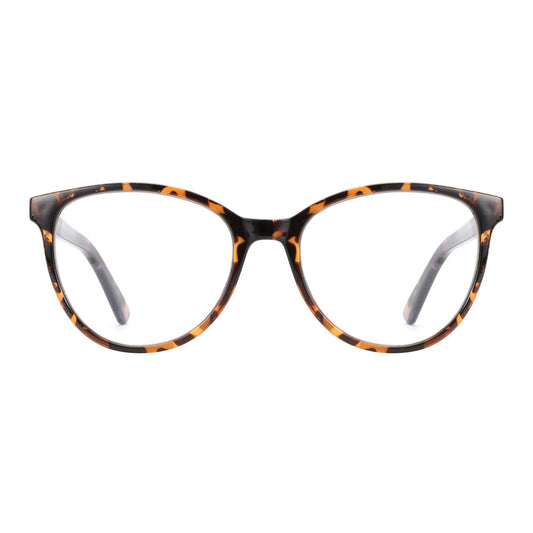
- Frame Impact: Choosing a smaller, rounder frame significantly enhances weight reduction by allowing the heaviest part of the lens (the edges) to be cut away during the glazing process.
- Optical Clarity: 1.74 lenses have a lower Abbe value (approx. 33) than 1.60 lenses (approx. 41), which can lead to slight color fringing (chromatic aberration) in the peripheral vision.
The High-Index Paradox: Thinner Doesn't Always Mean Lighter
In the world of optics, there is a persistent myth that the thinnest lens is automatically the lightest. While 1.74 high-index lenses are undoubtedly the gold standard for aesthetic thinness, the relationship between thickness and weight is governed by material science rather than simple geometry. As the refractive index of a lens material increases, its ability to bend light becomes more efficient, allowing for a flatter curve and a thinner profile. However, the chemical composition required to achieve this efficiency—specifically the use of thiourethane resins—results in a denser material.
For individuals with high prescriptions (typically above -6.00 diopters), the volume of material removed to achieve a 1.74 profile is so significant that the resulting lens is both thinner and lighter. But for those with moderate prescriptions, the "density penalty" of high-index materials can lead to a lens that looks sleek but feels surprisingly heavy on the bridge of the nose. Understanding this trade-off is essential for anyone looking for the ultimate guide to high prescription eyewear to ensure they don't over-index for their specific needs.
Material Science: Specific Gravity and the MR™ Series
To understand why weight varies, we must look at the specific gravity of the materials used in modern lens manufacturing. Most high-index lenses are made from the MR™ (Mitsui Resin) series, which has set the industry standard for optical polymers.
As detailed in our Technical Guide to High-Index Lens Materials and Standards, which explores the chemistry of thiourethane resins and compliance with ANSI Z80.1-2025, the specific gravity increases alongside the refractive index. Specific gravity is a measure of density; a higher number means the material is heavier for a given volume.
| Material Index | Common Resin | Specific Gravity (g/cm³) | Abbe Value | Thickness Reduction (vs. 1.50) |
|---|---|---|---|---|
| 1.50 | CR-39 | 1.32 | 58 | 0% (Baseline) |
| 1.60 | MR-8™ | 1.30 | 41 | ~20% |
| 1.67 | MR-10™ | 1.37 | 32 | ~35% |
| 1.74 | MR-174™ | 1.47 | 33 | ~50% |
Logic Summary: These values are based on standard Mitsui Chemicals specifications for MR-series resins. "Thickness reduction" is a heuristic estimate for a -6.00D lens; actual results vary based on frame size and pupillary distance (PD).

The Diopter Threshold: When to Choose 1.74
The "crossover point" is the prescription level where a 1.74 lens becomes lighter than its 1.67 counterpart. Based on optical lab data and material density calculations, this point typically occurs around -6.00 diopters.
For prescriptions between -4.00 and -6.00, a comparison between 1.67 and 1.74 high-index lenses reveals that while the 1.74 lens is roughly 10-15% thinner at the edges, the weight difference is negligible—often less than a single gram. In some cases, if the frame is very small, the 1.67 lens may actually be lighter because it is less dense.
However, once you exceed -8.00D, 1.74 becomes the clear winner. At these high powers, the edge thickness of lower-index lenses becomes so extreme that the sheer volume of material adds significant weight. By switching to 1.74 high-index lens options, you reduce that volume enough to overcome the density of the MR-174™ material, resulting in a noticeably more comfortable pair of glasses.
How Decentration and Frame Choice Negate Thinness
Even the most advanced 1.74 lens can fail to deliver weight benefits if the frame choice is poor. This is due to a phenomenon called "decentration." In a perfect world, your pupil would sit exactly in the geometric center of the lens. In reality, most frames require the lens to be "decentrated" (shifted) to align the optical center with your eye.
When a lens is decentrated, the lab must use a larger "blank" to cut the lens, which often leaves more of the thick outer edge intact. This is why avoiding thick 'coke bottle' lenses is as much about frame selection as it is about lens index.
Best Practices for Weight Reduction:
- Prioritize Small Lens Widths: A 48mm lens will always be lighter and thinner than a 54mm lens of the same prescription.
- Choose Round or Oval Shapes: Sharp corners in rectangular frames require thicker edges to maintain structural integrity.
- Check Your PD: Ensure the frame's "Bridge + Lens Width" (Frame PD) is close to your actual Pupillary Distance to minimize decentration.

Cost vs. Performance: Is the Upgrade Worth It?
Because 1.74 lenses require specialized manufacturing and more expensive raw materials, they carry a premium price tag. When evaluating the cost comparison for 1.74 high-index lenses, it is important to weigh the aesthetic benefit against the functional gain.
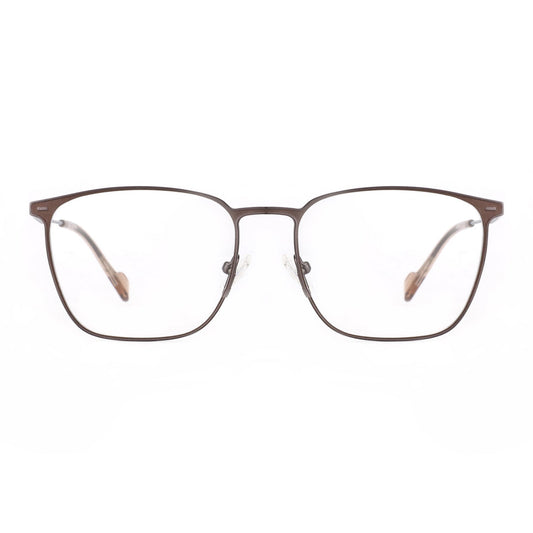
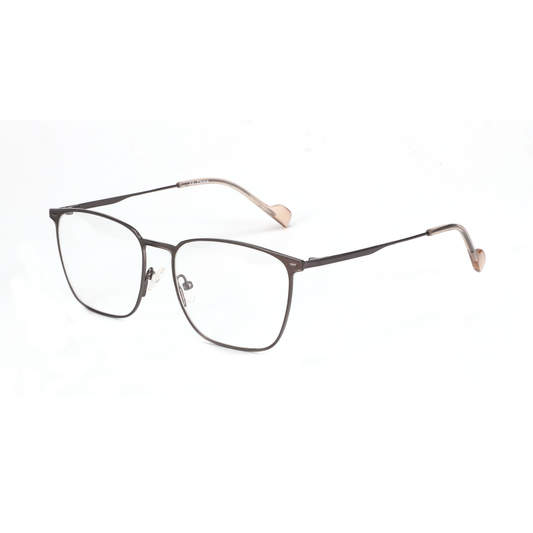
If your primary goal is to hide the edge of the lens within a thin metal frame, 1.74 is the only choice. If your primary goal is weight reduction and you have a moderate prescription (-3.00 to -5.00), you may find that a 1.60 or 1.67 lens paired with a lightweight titanium frame offers a better balance of comfort and value.
FAQ
Are 1.74 high-index lenses always the lightest option? No, 1.74 lenses are not always the lightest. Because the material (MR-174™) has a higher specific gravity (1.47) than 1.60 (1.30) or 1.67 (1.37) resins, they are denser. For lower prescriptions, the thickness reduction isn't enough to offset this density, meaning a 1.60 or 1.67 lens might actually weigh less.
At what prescription should I switch to 1.74 lenses? Most optical professionals recommend 1.74 high-index lenses for prescriptions of -6.00 diopters or stronger. At this level, the volume reduction achieved by the 1.74 index is significant enough to make the glasses both thinner and lighter than lower-index alternatives.
Do 1.74 lenses have more distortion than 1.67? 1.74 lenses have an Abbe value of approximately 33, which is very similar to the Abbe value of 1.67 (32). This means both materials have a similar potential for chromatic aberration (color fringing). However, 1.60 high-index lenses have a higher Abbe value of 41, providing superior optical clarity for those sensitive to peripheral distortion.
Can I put 1.74 lenses in any frame? While technically possible, 1.74 lenses perform best in full-rim frames. Because the material is slightly more brittle than 1.60 or Trivex, it is prone to chipping in rimless or semi-rimless designs. Additionally, choosing a large frame can negate the thickness benefits of the 1.74 material due to decentration.
Why do my 1.74 lenses still look thick at the edges? Edge thickness is determined by three factors: your prescription, the lens index, and the size of the frame. If you have a very high prescription and choose a large, wide frame, even a 1.74 lens will have visible edge thickness. To minimize this, always pair high-index lenses with the smallest possible frame that fits your face comfortably.
Is there a 1.80 or 1.90 high-index lens? In the United States and many other regions, 1.74 is the highest index available for plastic (organic) lenses. While glass lenses are available in indices up to 1.90, they are significantly heavier than plastic and are rarely used today due to safety concerns and the weight of the glass material itself.
References
Government / Standards / Regulators
- ANSI Z80.1-2025: Ophthalmics - Prescription Ophthalmic Lenses - Recommendations
- ISO 8980-1:2017: Ophthalmic optics — Uncut finished spectacle lenses
Industry Associations / Research Institutes / Market Reports
- The Vision Council: High-Index Lens Market Analysis
- Mitsui Chemicals: MR™ Series Technical Data Sheets
Academic / Whitepapers / Labs
- Journal of Ophthalmic and Physiological Optics: Material Properties of High-Index Polymers
- Optical Laboratory Association (OLA): Lens Material Selection Guide
