



The Ultimate Guide to Ultra-Thin Lenses for -6.00 Prescriptions and Above
Overcoming the "Coke-Bottle" Effect in High Prescriptions
If you wear a -6.00 prescription or stronger, you already know the frustration of thick, heavy lenses that create a "coke-bottle" look. The good news is that combining the right high-index lens material with smart frame choices and careful online ordering can significantly reduce visible thickness and weight without sacrificing clarity.
Related Resources
- Contact Lens Fatigue: Why High-Prescription Wearers Are Switching to 1.74 Glasses
- How to Order High-Prescription Glasses Online Without Regrets

The key is treating lens thinness as a system decision. Higher refractive index materials bend light more efficiently, letting the lens be physically thinner, but the final appearance depends heavily on frame size, shape, and how accurately you measure your fit. A common pattern we observe is wearers overpaying for the highest-index lens while choosing a large frame that negates much of the benefit.
Understanding High-Index Lenses for Strong Prescriptions
High myopia, typically defined as -6.00 diopters and above, makes standard plastic or glass lenses noticeably thicker at the edges. High-index lenses are commonly chosen in this range because they can reduce both thickness and weight, improving appearance and comfort.
The refractive index tells you how efficiently the material bends light. A 1.74 index lens, for instance, needs less material than a 1.50 standard lens to deliver the same prescription power. This translates into thinner edges and a lighter overall pair of glasses.
However, higher index is not automatically better for everyone. These materials can introduce slightly more chromatic aberration or color fringing in some wearers, and they often cost more. The visual performance and aberration profiles in high myopia show that while thickness and weight improve, optical trade-offs should be considered rather than assuming the highest index always wins.
Lens Index Options: 1.61, 1.67, or 1.74?
For prescriptions around -6.00 and stronger, the most common high-index choices are 1.61, 1.67, and 1.74. Each step up reduces thickness further, though the cosmetic returns can diminish if you choose a very small frame.

- 1.61 index: A common entry-level upgrade for -6.00 to -7.50. It noticeably thins the lens compared with standard materials while remaining reasonably priced.
- 1.67 index: Often considered the sweet spot for -7.00 and stronger. It provides excellent thickness reduction in most frame sizes without jumping to the premium price of 1.74.
- 1.74 index: Typically the thinnest practical option for very strong prescriptions (-8.50 and above) or when maximum cosmetics matter most. The extra cost is most justified in larger frames or when every millimeter of edge thickness counts.
The right choice depends on your exact prescription, chosen frame, and budget. Many wearers find that 1.67 delivers a balanced mix of thinness, clarity, and value.
Frame Choice Matters More Than You Think
Even the highest-index lens will look bulky in an oversized frame. Smaller, more compact frames usually make strong prescriptions look thinner because less lens edge is exposed, according to expert guidance on choosing frames for high myopes.
When shopping for high prescription glasses, prioritize these frame characteristics:
- Eye size (lens width) under 50 mm when possible
- Narrower bridge and lower lens height
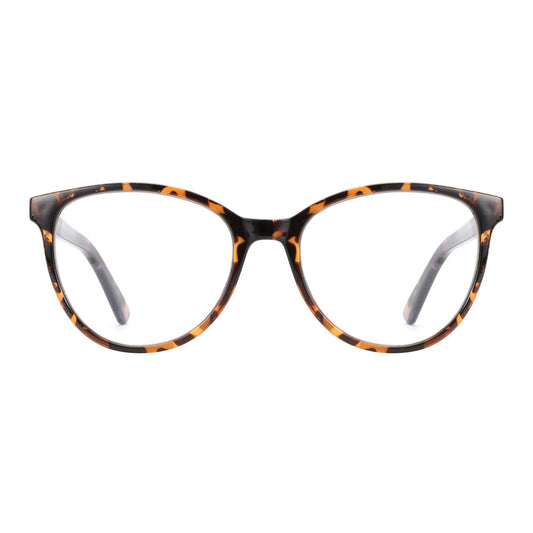
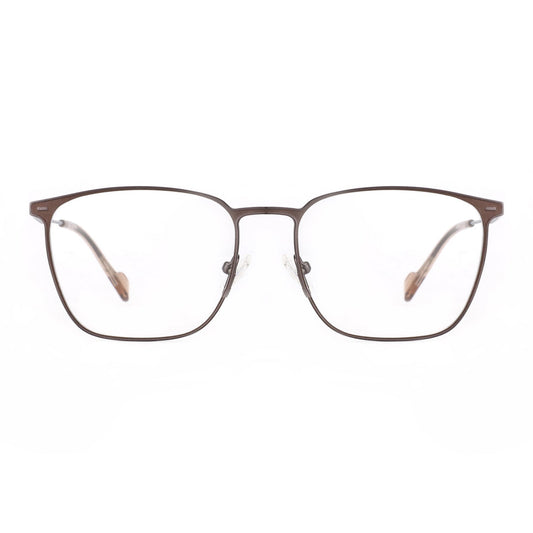
- Round or soft rectangular shapes rather than oversized squares or aviators
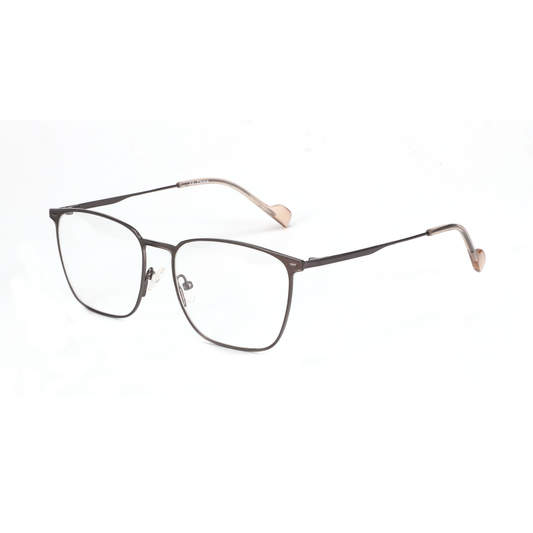
- Metal or thin plastic rims that hide edges better than thick acetate
Large or wraparound styles can make even 1.74 lenses appear thicker and may complicate proper optical centering. This guide to choosing frames for high myopes explains how geometry affects final appearance.
Visualizing Lens Thickness by Prescription and Frame Size
Heuristic lens-tier guide by prescription band and frame size
Illustrative relative thickness scores only; lower means thinner. Use as a decision aid, not measured data.
View chart data
| Category | 1.61 | 1.67 | 1.74 |
|---|---|---|---|
| -6.0 to -7.0 D small frame | 92 | 82 | 74 |
| -6.0 to -7.0 D large frame | 100 | 90 | 82 |
| -7.0 to -8.5 D small frame | 76 | 66 | 58 |
| -7.0 to -8.5 D large frame | 84 | 74 | 66 |
| -8.5+ D small frame | 63 | 53 | 46 |
| -8.5+ D large frame | 70 | 60 | 53 |
Heuristic/illustrative model built from the provided thresholds: -6.00 D concern threshold; 1.61 as baseline, 1.67 for stronger thinning, 1.74 for maximum thinness. Scores are relative thickness indices (100 = thickest baseline) and reflect the stated direction that smaller frames reduce visible thickness more than index alone; not measured results or official statistics. Cost/aberration tradeoffs are encoded only as upgrade guidance, not quantified.
This chart uses illustrative relative scores to show how lens tier, prescription band, and frame size interact. Smaller frames consistently appear thinner across all index levels. The biggest cosmetic gains from upgrading index occur with stronger prescriptions or larger frames.
How to Estimate Lens Thickness Before Buying
A lens thickness calculator can give you a helpful preview, but results are only estimates unless they incorporate your exact frame dimensions, pupillary distance (PD), and lens design. Treat any online calculator as a starting point rather than a guarantee.
The most reliable approach combines:
- Choosing a smaller frame first
- Selecting index based on the typical ranges mentioned above
- Using accurate measurements when ordering
Online Ordering Tips for High Prescriptions
Buying high prescription glasses online requires extra care. Frame measurements matter because size and geometry directly affect both comfort and how thick the lenses appear.
Measure your current glasses or visit an optician for PD and fitting details. Double-check the frame's lens width, bridge size, and temple length. Consider ordering from retailers that offer easy returns or virtual try-on tools.
When in doubt, start with a smaller, classic style and 1.67 index for most -6.50 to -8.00 prescriptions. This combination usually delivers excellent cosmetics without unnecessary expense.
Common Myths About Ultra-Thin Lenses
Myth: The highest index lens will always make my glasses look dramatically thinner. Reality: Index is only one factor. A 1.74 lens in a large frame can still show noticeable edges, while a 1.67 lens in a small, well-fitted frame often looks sleeker overall.
Myth: All high-index lenses feel the same. Reality: Materials differ in weight, clarity, and susceptibility to reflections. Anti-reflective coatings become especially important with higher-index lenses because they reflect more light.
Myth: You must choose the most expensive option for strong prescriptions. Reality: Many wearers achieve satisfying thinness with 1.67 index plus optimized frames, avoiding the premium cost of 1.74 unless their prescription is very high or they specifically need the thinnest possible edge.
Checklist: Choosing the Right Setup for Your Prescription
Before placing your order, run through this quick audit:
- Is my chosen frame's eye size 50 mm or smaller? (Smaller is better for thinness.)
- Does my prescription fall into the -6.00 to -7.50 range (1.61–1.67 often sufficient) or stronger (consider 1.67–1.74)?
- Have I measured and double-checked my PD and frame fit?
- Am I prepared for possible minor color fringing with very high-index materials?
- Does the total cost make sense for the expected cosmetic improvement?
Answering these questions helps avoid disappointment and ensures your new glasses look and feel as thin and light as possible.
Balancing Thinness, Clarity, and Cost
Thinner lenses can look better, but they may cost more and can come with trade-offs in visual performance depending on the material and design. The goal is finding the combination that delivers noticeable improvement without overpaying for marginal gains.
For many people with -6.00 to -8.00 prescriptions, 1.67 high-index lenses in a smaller frame provide the best overall value. Those with stronger prescriptions or who prioritize the absolute thinnest profile may find 1.74 worth the upgrade, especially when paired with premium anti-reflective coatings.
Final Recommendations and Next Steps
Achieving ultra-thin lenses for strong prescriptions is entirely possible when you prioritize frame geometry first, then select the appropriate index, and order with accurate measurements. Smaller frames and mid-to-high index materials (1.67 or 1.74) consistently deliver the most satisfying cosmetic results.
Explore our best-selling frames designed to work well with high prescriptions, or browse the full eyeglasses collection to find styles that support thinner-looking lenses. For more specific guidance, read our companion articles on when 1.74 high-index lenses are actually worth the upgrade and the best frames for 1.74 lenses to minimize edge thickness.
Comfort and Medical Disclaimer: This article discusses lens materials, frame selection, and setup advice to help improve cosmetic appearance and perceived comfort for high prescriptions. It does not constitute medical advice, diagnosis, or treatment. Lens choices affect individual visual experience differently. If you experience persistent discomfort, headaches, or changes in vision, consult a qualified eye care professional. Results depend heavily on your specific prescription, frame fit, and lens quality.
Remember that even the thinnest lens option performs best when the entire system—lens, frame, and measurements—works together. Take time to choose thoughtfully, and your new glasses can look noticeably sleeker and feel lighter every day.
