



The Master Guide to High-Index Lenses for Strong RX
Summary
High-index lenses are the definitive solution for individuals with strong prescriptions, utilizing advanced MR™ series polymers to provide significantly thinner and lighter eyewear without compromising optical integrity. By selecting the optimal refractive index—typically 1.61, 1.67, or 1.74—users can eliminate the "coke-bottle" effect and enjoy enhanced comfort through weight reduction and aspheric design.
Key takeaways
- Thickness Reduction: High-index materials bend light more efficiently, allowing lenses to be up to 35% thinner than standard 1.50 plastic.
- Material Excellence: Modern high-index lenses primarily use thiourethane-based MR™ resins, which offer superior impact resistance and tintability.
- The Abbe Trade-off: Higher refractive indices generally lead to lower Abbe values, meaning users must balance lens thinness with potential chromatic aberration.
- Frame Synergy: The final aesthetic and weight of high-prescription glasses depend as much on frame geometry and "effective diameter" as they do on the lens material itself.
- Essential Coatings: Anti-reflective (AR) coatings are mandatory for high-index lenses to counteract their naturally higher reflectance and ensure visual clarity.
Understanding the Science of High-Index Materials
For decades, individuals with high refractive errors—whether myopia or hyperopia—faced the aesthetic challenge of thick, heavy lenses. The breakthrough came with the development of high-index materials, which possess a higher "refractive index" than standard CR-39 plastic (1.50) or polycarbonate (1.59). In simple terms, a higher index means the material is more efficient at bending light, requiring less physical mass to achieve the same corrective power.
Most premium high-index lenses today are crafted from the MR™ series of polymers developed by Mitsui Chemicals. These thiourethane resins, including MR-8 (1.60/1.61), MR-7/MR-10 (1.67), and MR-174 (1.74), have become the industry standard due to their balance of optical clarity, mechanical strength, and lightweight properties. For a deeper dive into the molecular chemistry and manufacturing standards of these materials, including compliance with ANSI Z80.1-2025, we recommend consulting our Technical Guide to High-Index Lens Materials and Standards.
Logic Summary: The recommendation for high-index materials is based on the physical law of refraction (Snell's Law). By increasing the material's refractive power, we can reduce the curvature and edge thickness required for high-diopter corrections.
Comparing 1.61, 1.67, and 1.74: Which is Right for You?
Choosing between different indices is a matter of balancing your specific prescription strength, budget, and sensitivity to peripheral color fringing. While it is tempting to always choose the thinnest possible option, the "best" lens is often the one that provides the most comfortable visual experience for your unique diopter range.
| Lens Index | Prescription Range (Recommended) | Thickness Reduction (vs. 1.50) | Key Benefit |
|---|---|---|---|
| 1.61 High-Index | +/- 2.00 to +/- 4.00 | ~20% | High Abbe value (36-41); excellent clarity. |
| 1.67 High-Index | +/- 4.00 to +/- 6.00 | ~30% | Best balance of thinness and cost-efficiency. |
| 1.74 High-Index | Over +/- 6.00 | ~35% or more | Maximum aesthetic appeal for extreme RX. |
For those with moderate prescriptions, 1.67 high-index lenses are often the "sweet spot," offering a noticeable reduction in edge thickness without the premium price tag of ultra-high-index materials. However, if your sphere (SPH) value exceeds -6.00, upgrading to 1.74 super high-index lenses is the most effective way to minimize the "minification" effect where your eyes appear smaller behind the lenses.

The Critical Role of Frame Selection for High Prescriptions
A common misconception is that high-index lenses alone will solve the problem of thick edges. In reality, the frame you choose plays a massive role in the final result. Because high-prescription lenses for nearsightedness are thinnest at the center and thickest at the edges, a larger frame will inevitably capture more of that thick outer edge.
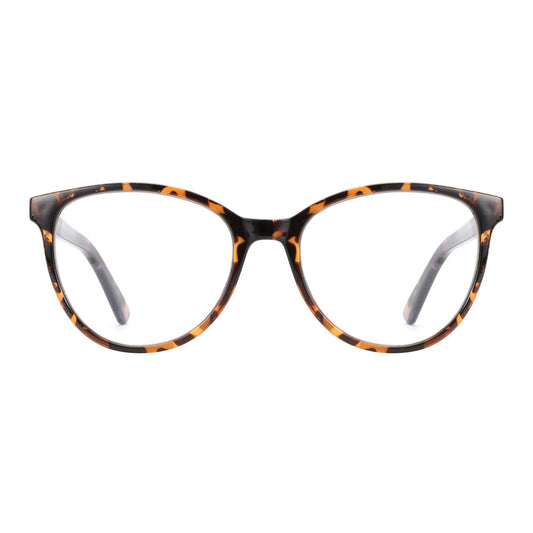
To achieve the best results, look for frames with a small "eye size" (the first number in your frame measurements). Additionally, round or oval shapes are superior to rectangular or aviator styles for high prescriptions. This is because the "effective diameter"—the distance from the optical center to the farthest corner of the frame—is minimized in rounded shapes, allowing the lab to cut away the thickest parts of the lens blank.
When you read your glasses prescription, pay close attention to your Pupillary Distance (PD). If your PD is narrow but you choose a wide frame, the lenses must be "decentered" to align with your pupils, which significantly increases the edge thickness on the outer side of the glasses.
Maximizing Optical Clarity: Aspheric Design and Abbe Values
Beyond thickness, high-index lenses offer improved visual performance through aspheric geometry. Standard lenses are spherical, meaning their front surface has a constant curve. Aspheric lenses, however, have a complex front surface that gradually changes curvature from the center to the edge. This flatter profile reduces peripheral distortions and makes the lens appear even thinner.
However, there is a technical trade-off known as the Abbe value. The Abbe value measures how much a material disperses light into its component colors (chromatic aberration). Standard plastic has a high Abbe value (~58), while 1.74 high-index has a lower value (~32). Some sensitive users may notice "color fringing" or blurriness when looking through the periphery of ultra-high-index lenses. To mitigate this, high-quality AR coatings and precise digital surfacing (Freeform technology) are utilized to ensure that the visual field remains as crisp as possible.

Long-Term Durability and Coating Care for High-Index Lenses
High-index materials are generally denser and more brittle than polycarbonate, making them highly resistant to scratches but potentially more prone to "star-cracking" if mounted improperly in rimless frames. Furthermore, because high-index materials reflect more light than standard plastic (up to 8% or more), an anti-reflective coating is not just an add-on—it is a functional necessity.
To maintain the integrity of these coatings in 2026, it is vital to avoid harsh chemicals. Modern AR coatings are multi-layered and can be damaged by the heat of a car dashboard or the acidity of certain household cleaners. Always use a pH-neutral lens spray and a clean microfiber cloth. If you are looking for versatility, consider prescription sunglasses with reading segments that utilize high-index materials, ensuring you have the same thin profile and UV protection outdoors.
Logic Summary: These maintenance recommendations assume the use of premium hydrophobic and oleophobic top-coats. Without proper care, the high surface energy of high-index resins can lead to faster coating degradation compared to standard materials.
Cluster map
To help you navigate the complexities of lens technology and frame selection, we have organized our most relevant resources below:
| Resource Type | Topic | Link |
|---|---|---|
| Foundational | Understanding Myopia & Hyperopia | Vision Correction Guide |
| Technical | High-Index Materials & Standards | Technical Whitepaper |
| Practical | How to Read Your Prescription | Prescription Guide |
| Product | 1.67 High-Index Lenses | Shop 1.67 Lenses |
| Product | 1.74 Super High-Index Lenses | Shop 1.74 Lenses |
FAQ
Are high-index lenses worth the extra cost? For individuals with prescriptions stronger than +/- 3.00 diopters, high-index lenses are generally considered a worthwhile investment due to the significant improvement in both comfort and aesthetics. The reduction in weight prevents the glasses from sliding down the nose, while the thinner profile eliminates the "bug-eye" or "minified" look associated with thick lenses. However, for very mild prescriptions, the benefits are negligible, and standard 1.50 or 1.57 lenses are often sufficient.
What is the difference between 1.67 and 1.74 lenses? The primary difference lies in the refractive index, which dictates how thin the lens can be. 1.74 lenses are approximately 5-10% thinner than 1.67 lenses for the same prescription. While 1.67 is suitable for most moderate-to-high prescriptions, 1.74 is the premium choice for extreme prescriptions (typically above -6.00 SPH). It is important to note that 1.74 lenses also tend to have a slightly lower Abbe value, meaning 1.67 may actually offer slightly better peripheral clarity for some users.
Do high-index lenses scratch more easily? While the base material of high-index lenses is actually quite hard and scratch-resistant, they are almost always paired with multi-layer anti-reflective coatings. These coatings are what users typically perceive as "scratching" if they are cleaned with abrasive materials or exposed to extreme heat. With proper care using microfiber cloths and dedicated lens cleaners, high-index lenses can maintain their clarity just as long as standard lenses.
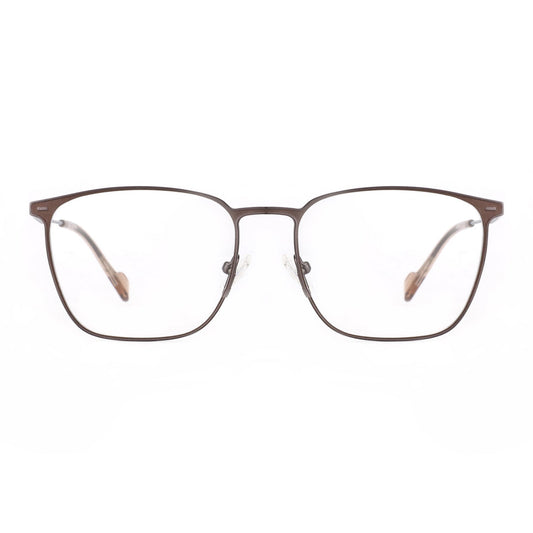
Can I get high-index lenses in any frame? Technically, yes, but certain frames are much better suited for high-index lenses than others. Full-rim acetate or metal frames are ideal because they can hide some of the remaining edge thickness. Rimless or semi-rimless frames are possible with high-index materials (especially MR-8 or MR-7 due to their tensile strength), but the thick edges of a high prescription will be fully visible, which may negate the aesthetic benefits of the high-index material.
Why do my eyes look smaller with high-index lenses? This effect, known as "minification," is a natural result of minus lenses used to correct nearsightedness. While high-index lenses cannot completely eliminate this optical reality, they help by being flatter (aspheric) and positioned closer to the eye. By reducing the distance between the lens and the cornea (vertex distance) and using a thinner material, the minification effect is noticeably less pronounced than it would be with standard, bulkier lenses.
Do high-index lenses provide UV protection? Yes, one of the inherent benefits of high-index materials like the MR™ series is that they naturally block 100% of UVA and UVB rays. Unlike standard 1.50 plastic lenses, which often require an additional UV coating, high-index materials provide this protection as a built-in feature of the polymer itself. This makes them an excellent choice for clear daily glasses as well as prescription sunglasses.
References
Government / Standards / Regulators
- ANSI Z80.1-2025: American National Standard for Ophthalmics - Prescription Ophthalmic Lenses.
- ISO 8980-1:2025: Ophthalmic optics — Uncut finished spectacle lenses — Part 1: Specifications for single-vision and multifocal lenses.
Industry Associations / Research Institutes
- The Vision Council: Annual Consumer Reports on Lens Material Trends (2025-2026).
- Mitsui Chemicals: MR™ Series Technical Data Sheets and Material Properties.
Academic / Whitepapers
- "Optical Performance and Patient Adaptation in High-Index Aspheric Designs," Journal of Optometry and Vision Science (2024).
- "Comparative Analysis of Thiourethane vs. Polycarbonate Substrates in Ophthalmic Applications," Polymer Engineering & Science.
Platform Official Docs
- Zenottic Technical Guide: Technical Guide to High-Index Lens Materials and Standards.
Community
- r/Optometry: Discussions on patient adaptation to 1.74 index chromatic aberration (Intent only; not authoritative).
- OptiBoard: Professional forums regarding lab processing of ultra-high-index resins (Intent only; not authoritative).
