


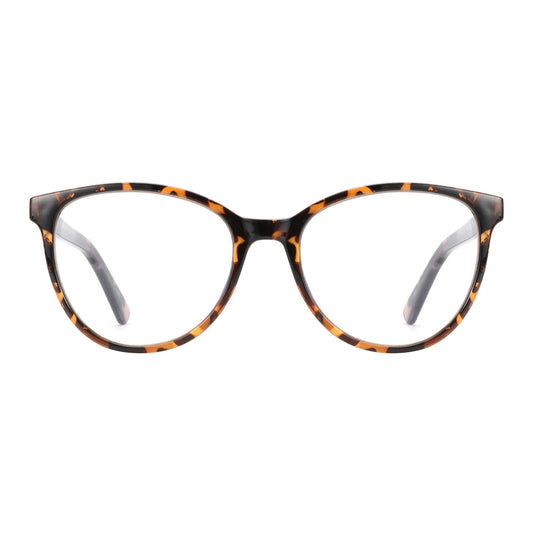

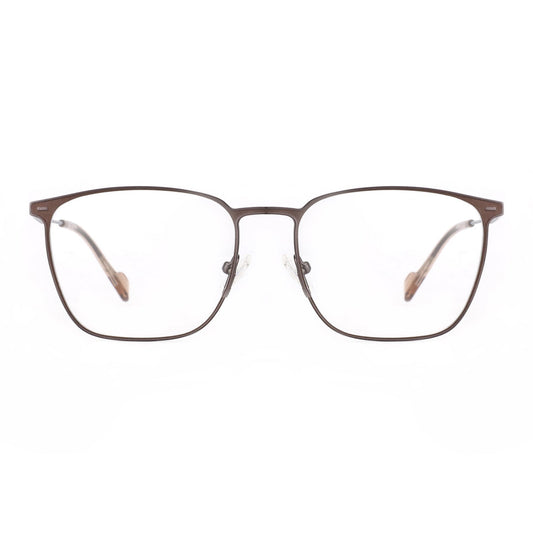
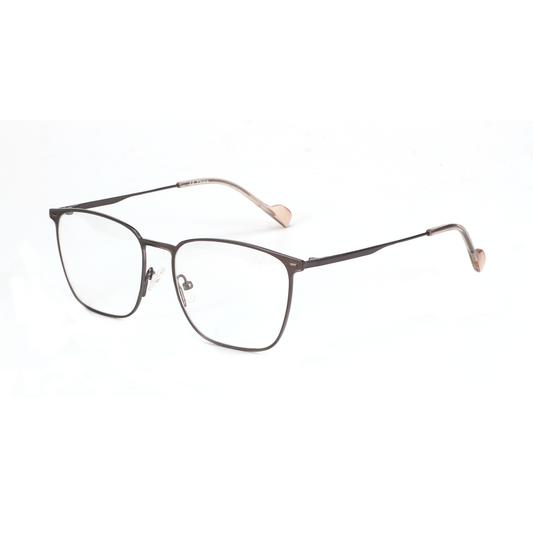
How Can Frame Shape Balance Close-Set or Wide-Set Eyes?
Frame shape can't move your eyes, but bridge details can change how far apart your eyes seem. For close-set eyes, a thin or clear bridge is one styling option to try. For wide-set eyes, a colored bridge is another, and both are looks to test rather than guaranteed fixes.

Keep that style choice separate from your pupillary distance (PD), the measurement used to center prescription lenses. Picking frames for eye spacing should never mean changing your PD.
What Frame Shape and Bridge Details Can Influence
The clearest styling advice for eye spacing is about the bridge, the part of the frame that crosses your nose. La Pine Eyecare Clinic's eyeglass tips pair one bridge look with each situation:
| Eye spacing | Bridge look to try | Possible visual effect |
|---|---|---|
| Close-set | Thin or clear bridge | May suggest more width |
| Wide-set | Colored bridge | May make eyes look closer |

Think of these as optical illusions you can test in the mirror or a photo. They change the impression your frames give. They don't change your actual eye spacing, and they won't look the same on every face.
Lens size can matter in one specific case. Optometrist Palmer R. Cook describes a wearer with a relatively narrow PD of 29/30 and notes that her narrow PD would be more obvious in larger lenses. That's one person's example. Not everyone who sees their eyes as close-set has that PD, and the example doesn't mean smaller lenses will give you a set result.
Overall outlines are a different matter. No reliable rule says round, square, cat-eye, or other shapes make eyes look closer or farther apart. The same goes for color placed on the temples or outer corners of a frame. There's also no matching lens-size rule for wide-set eyes, so don't assume the reverse of Cook's example applies. Treat the outline as a personal preference you test on your own face, using the method below.
How to Compare Frame Shapes Without Chasing a Fix
Change one thing at a time, then judge the result on your own face. This keeps a personal preference from feeling like proof that one shape works for everyone.
- Start with frames that fit. Cook recommends eyewear about as wide as the widest part of the face. Use that as a starting width, not a strict standard. Our face-shape frame guide can help you shortlist outlines worth trying.
- Compare outlines with the bridge held steady. Pick two or three shapes with a similar bridge color and thickness. When you compare eyeglass frames online, line them up this way so the outline is the main difference you're judging.
- Swap the bridge look next. Keep the outline and lens size as close as you can, then compare a thin or clear bridge with a colored one. Now the bridge is the only big change.
- Judge from a normal viewing distance. Cook points out that people notice new eyewear from 10 feet or more, and he suggests a phone photo as a non-mirror way to decide. Take each photo in the same spot, light, and angle so the pictures are fair to compare.
- Choose from the frames that still fit. If your favorite look pinches, presses, or slides, look for another frame with a similar bridge and outline. If slipping is the issue, our guide to low bridge fit glasses covers frames designed for lower nose bridges.
The result is a choice based on what you like seeing in your photos, made among frames that sit comfortably. That's a better goal than hunting for one shape that "corrects" your eye spacing.
How Styling Choices Differ From Prescription PD
No. Your bridge or frame choice does not change your PD. PD is the distance between the centers of your pupils, measured in millimeters, and it's used to line up the optical centers of your eyeglass lenses with your pupils.
That makes PD a lens-positioning number, not a style setting. A clear bridge, a colored bridge, or a bigger lens changes how the frame looks on your face. None of them changes where your pupils sit. So if you want your eyes to look farther apart or closer together, change the frame, never the PD on your order. Enter the PD from your prescription or a careful measurement, even if you pick a frame purely for its look.
If your prescription doesn't list it, you can measure your PD at home with our step-by-step guide. Once you have the number, our article on matching your PD to frame size explains how it relates to the frame width you choose.
FAQs
Can glasses actually change how far apart my eyes are?
No. Glasses only change how your eyes look to other people. A bridge's color or thickness can shift that impression, but your real eye spacing stays the same. That's why the bridge tips work best as looks to try, not results to expect.
Does color on the temples or frame corners affect eye spacing?
There's no reliable guidance tying temple color or corner details to how close-set or wide-set eyes look. The bridge advice is the most specific tip available. If you like a frame with bold side accents, judge it with the same photo test you'd use for any other frame.
Do I have to follow the bridge tips to look good in glasses?
No. They're optional styling ideas. Many people simply like a frame that ignores them, and that's a fine choice. What matters more is that the frame fits comfortably and your lenses are made with your correct PD.
Can my PD number tell me if my eyes are close-set?
PD is an optical measurement, not a style label. In Cook's example, a PD of 29/30 was described as relatively narrow, but one number alone won't tell you how your eyes look on your face. Your face width, features, and frame all shape that impression, so let photos guide the style choice and let PD guide the lenses.
