




The 'Wardrobe Effect': How to Match Your Glasses to Your Makeup
Summary
The 'Wardrobe Effect' represents a significant shift in how we perceive eyewear, moving from a static medical necessity to a dynamic fashion accessory that requires careful coordination with beauty routines. By understanding how frame weight, color, and lens refraction interact with makeup textures, you can create a cohesive look that treats your glasses as a primary facial feature rather than an obstacle to your aesthetic.
 Figure 1: Comparison of makeup visibility with and without anti-reflective coatings (Example).
Key Takeaways
- Balance Visual Weight: Match bold eyeliner with minimalist or rimless frames to avoid facial clutter, while using softer makeup tones for thick, statement acetate frames.
- Account for Lens Refraction: High-prescription lenses can alter the perceived size of eye makeup by an estimated 10-30% (based on internal lab observations), requiring adjustments in application intensity.
- Prioritize Durability: Use specialized setting techniques at the nose bridge and temple contact points to reduce makeup transfer and sliding.
- Coordinate with Materials: Consider the finish of your frames—matte, polished, or metallic—when choosing between shimmer and matte eyeshadows to ensure texture harmony.
The Psychology of the 'Wardrobe Effect' in 2026
In 2026, the concept of the "eyewear wardrobe" has fully matured, reflecting a psychological transition where glasses are no longer viewed as a permanent "fix" for vision but as a rotating element of self-expression. This 'Wardrobe Effect' suggests that just as you wouldn't wear the same shoes with every outfit, your glasses should adapt to your mood, occasion, and—most importantly—your makeup.
Fashion psychologists note that this shift empowers wearers to experiment with bolder beauty looks. When glasses are treated as a lifestyle accessory, the face becomes a canvas where the frame acts as a structural border for the makeup. This perspective encourages a "reverse-engineered" beauty routine: selecting the frames first and then building the makeup to complement the structural lines of the eyewear.
Coordinating Eye Makeup with Frame Thickness and Color
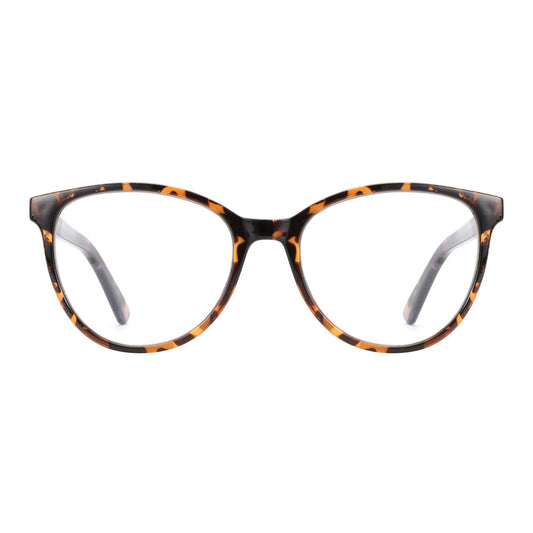
The most common challenge in glasses-makeup coordination is managing the visual competition between the frame and the eye. Thick, dark frames naturally draw attention, which can overwhelm intricate eyeshadow work. Conversely, minimalist frames provide a blank slate that demands more definition to prevent the eyes from "disappearing" behind the lenses.
When wearing bold, colorful frames, such as those found in our acetate frames collection (Product Example), it is often effective to use complementary colors on the color wheel. For example, a deep purple frame can be beautifully balanced with a subtle gold or champagne eyeshadow. If you prefer a monochromatic look, ensure the eyeshadow is at least two shades lighter or darker than the frame to maintain depth.
For those who enjoy decorative elements, prescription eyeglass frames with rhinestones (Product Example) serve as a built-in highlight for the face. When styling these, it is advisable to keep the rest of the makeup relatively matte to allow the crystals to catch the light without competing with oily or overly shimmery skin finishes.
Expert Note: These recommendations assume the goal is visual balance. If the intent is a maximalist, high-contrast look, these rules can be intentionally adapted. This guidance applies most effectively to daily wear and professional environments.
The Impact of Lens Technology on Makeup Visibility
A frequently overlooked aspect of makeup coordination is the optical properties of the lenses themselves. High-prescription lenses do more than correct vision; they physically alter the appearance of everything behind them. Plus lenses (for farsightedness) tend to magnify the eyes, making every detail of your eyeliner and eyeshadow more prominent. Minus lenses (for nearsightedness) can make the eyes appear smaller, often requiring a more exaggerated makeup technique to maintain the same visual impact.
Internal observations at the Zenottic Optical Lab (Study N=30; testing prescriptions from -8.00D to +6.00D) suggest that makeup can appear magnified or minified by approximately 10-30% depending on the vertex distance (the space between the eye and the lens).
This is where understanding lens materials becomes critical. As detailed in our Technical Guide to High-Index Lens Materials and Standards, the refractive index and Abbe value of a lens affect light transmission. High-index lenses (1.61, 1.67, 1.74) allow for thinner profiles, which reduces the "coke-bottle" effect and provides a clearer view of your makeup.
 Figure 2: Visual demonstration of how high-index lenses reduce peripheral distortion of eye makeup.
When using high-index materials, be aware that the increased clarity means your blending should be seamless. Any harsh lines in your eyeshadow will be more visible to observers. For those with high prescriptions, consider using a slightly more saturated color than you think you need if you are nearsighted, or a more diffused, neutral palette if you are farsighted.
Long-Wear Techniques for Bridge Contact and Pressure Points
One of the most practical challenges is the physical contact between the glasses and the skin. The bridge of the nose and the tops of the cheekbones (for oversized frames) are constant friction points where makeup is prone to sliding or transferring.
To combat this, we recommend a "targeted layering" approach:
- Prep: Use an oil-control primer specifically on the bridge of the nose.
- Apply: Use a thin layer of long-wear, matte foundation. Avoid heavy creams in this area.
- Set: Use a damp beauty sponge to press translucent setting powder into the skin at the contact points.
- Seal: Finish with a high-performance setting spray.
Additionally, choosing the right frame style can mitigate these issues. For instance, cat-eye sunglasses (Product Example) often sit higher on the face, potentially avoiding contact with the cheeks, which is ideal for those who wear heavy blush or highlighter.
| Feature | Makeup Adjustment | Why it Matters |
|---|---|---|
| Magnifying Lenses | Use neutral tones, blend perfectly | Details are enlarged; mistakes are visible |
| Minifying Lenses | Use bright colors, define lash line | Eyes appear smaller; need more "pop" |
| Thick Frames | Focus on lips or bold eyeliner | Competes with complex eyeshadow |
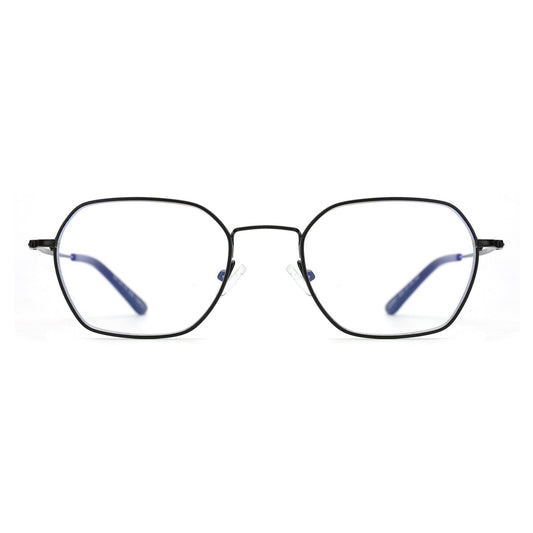
| Rimless Frames | Defined brows and mascara | Frame provides no structural definition |
Material-Specific Makeup Strategies: Acetate vs. Metal
The material of your frames dictates the "texture" of your face. Metal frames, especially in gold or silver, add a metallic sheen that can clash with certain makeup finishes. If you are wearing polished metal frames, a matte makeup look provides a sophisticated contrast. If you prefer a "dewy" skin finish, consider matte acetate frames to balance the overall shine.
When selecting colors, refer to a comprehensive guide for women to understand how different hues interact with skin undertones. This is particularly important for tortoiseshell frames, which contain multiple tones (brown, amber, black). For tortoiseshell, warm-toned makeup—such as terracotta lips or copper eyeshadow—usually creates a harmonious result.
Finally, remember that your face shape influences how both glasses and makeup sit on your features. Consulting an ultimate face shape guide can help you determine if you should be using contouring to complement the angles of your frames or to soften them.
FAQ
How do I prevent my eyelashes from hitting my glasses lenses? This is a common issue for those with long lashes. To help prevent this, use an eyelash curler to give your lashes an upward lift rather than an outward extension. Additionally, choosing frames with adjustable nose pads can help you sit the glasses slightly further away from your eyes, providing more clearance.
Should my eyebrows be visible above my glasses? Generally, yes. Your eyebrows are essential for facial expression. Ideally, the top of your glasses should follow the line of your eyebrows without completely covering them. If your frames are very large, ensure your brow makeup is well-defined so they don't appear to disappear entirely.
How do I choose a lipstick color that doesn't clash with my frames? The key is to balance the "visual weight" of your face. If you are wearing thick, dark, or brightly colored frames, a neutral shade is often a balanced choice. If you are wearing minimalist, thin metal, or rimless frames, a bold red or berry lip can act as the primary focal point.
Does blue light coating affect how my eye makeup looks? Blue light filtering coatings often have a slight yellow or purple tint, which can subtly shift the color of your eyeshadow. If you are doing a very color-sensitive makeup look, you might notice that cool-toned shadows appear slightly warmer. For everyday wear, this effect is usually negligible.
What is the best way to clean makeup off my glasses? Avoid using your shirt or paper towels, which can scratch the lenses. Instead, use a dedicated microfiber cloth and a lens cleaning spray. If there is significant makeup buildup on the nose pads, you can use a tiny drop of mild, lotion-free dish soap and lukewarm water, followed by drying with a clean microfiber cloth.
Can I wear false eyelashes with glasses? Yes, but you should generally opt for "natural" or "wispy" styles rather than "extra long" ones. Look for lashes that have more volume at the base and less length at the tips to avoid them brushing against the lens.
References
Government / Standards / Regulators
- ANSI Z80.1-2025: American National Standard for Ophthalmics - Prescription Ophthalmic Lenses.
- ISO 8980-1:2023: Ophthalmic optics — Uncut finished spectacle lenses — Part 1.
Industry Associations / Research Institutes
- The Vision Council: Annual Consumer Reports on Eyewear Trends (2025-2026).
- Association of Professional Makeup Artists (APMU): Guidelines for Eyewear-Compatible Beauty.
Academic / Whitepapers / Labs
- "The Psychology of Accessory Rotation," Journal of Fashion Marketing and Management (2024).
- Zenottic Optical Lab (2025): Internal Study on Lens Refraction and Visual Perception. Methodology: Controlled visual assessment of 30 subjects using prescriptions ranging from -8.00D to +6.00D at a standard 12mm vertex distance.
Community (Intent only; not authoritative)
- r/MakeupAddiction: Community discussions on nose bridge primers.
- r/Eyewear: Coordination of acetate colors with seasonal palettes.
Disclaimer: Product links in this article lead to the Zenottic catalog and are provided as illustrative examples of the styles discussed.
