



Glasses for High Cheekbones: A Comprehensive Guide to Low Bridge Fit
Summary
Finding the right eyewear for high cheekbones and a low nasal bridge requires a specialized design known as "Low Bridge Fit" or "Asian Fit," which features modified nose pads and temple angles to prevent frames from sliding or resting on the face. This guide explores the technical adjustments that ensure a secure, comfortable fit for diverse facial structures, helping you select frames that stay in place without sacrificing style.

Key takeaways
- Specialized Engineering: Low Bridge Fit frames utilize larger nose pads and adjusted frame angles to accommodate flatter nasal bridges and prevent cheek contact.
- Inclusive Design: While often marketed as "Asian Fit," these frames are essential for diverse populations with similar facial morphologies, including many Indigenous and African heritages.
- Lens Weight Matters: Using high-index materials reduces the overall weight of the eyewear, which is a primary factor in preventing glasses from sliding down the nose.
- Material Flexibility: Choosing adjustable materials like acetate or metal with nose arms allows for the fine-tuning necessary to achieve a personalized, secure fit.
- Self-Assessment: Simple DIY measurements can help you determine if you require a low bridge fit before making an online purchase.
Understanding Facial Morphology: Beyond the "Asian Fit" Label
For decades, the eyewear industry primarily designed frames based on a "Western" or "Caucasian" facial standard, characterized by a high, narrow nasal bridge and lower cheekbone placement. However, a significant portion of the global population possesses a different anatomy: a lower nasal bridge and more prominent, higher cheekbones. While the term "Asian Fit" became a common marketing label to address this gap, it is technically a misnomer. This facial structure is not exclusive to any single ethnicity; it is frequently observed in individuals of East Asian, Southeast Asian, Indigenous American, and certain African and Mediterranean descents.
The "Low Bridge Fit" designation is a more accurate, inclusive term that focuses on the physical requirements of the wearer rather than their background. When a standard frame is placed on a face with high cheekbones, it often rests directly on the cheeks. This causes the glasses to move when the wearer smiles or speaks, leads to fogging due to lack of airflow, and creates uncomfortable pressure points. Understanding that this is a matter of engineering rather than "standard" vs. "non-standard" is the first step toward finding proper glasses fit for comfort.
Logic Summary: The shift from "Asian Fit" to "Low Bridge Fit" reflects a move toward inclusive, anatomy-based design. This guide assumes that fit issues are caused by the mismatch between standard frame geometry and diverse facial structures, rather than a "fault" in the wearer's anatomy.
Technical Anatomy of a Low Bridge Fit
What exactly makes a frame "Low Bridge Fit"? It isn't just one adjustment; it is a combination of several dimensional changes that work together to stabilize the frame. Standard frames often have a bridge that is too narrow or nose pads that are too shallow to gain purchase on a flatter nasal bridge.
The Three Pillars of Low Bridge Engineering
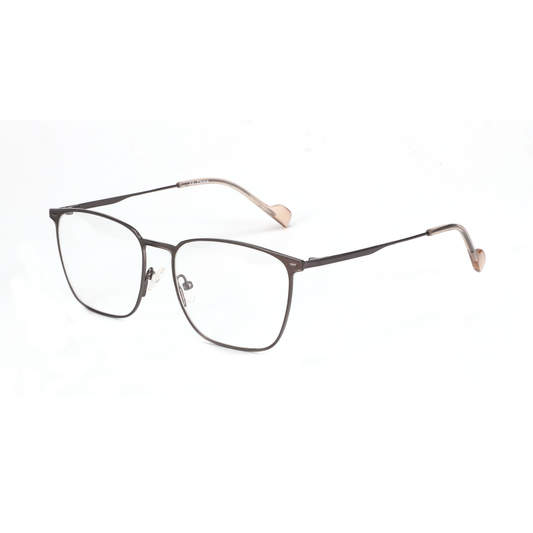
- Prominent Nose Pads: In acetate frames, the nose pads are often thickened and extended by 2mm to 4mm. This extra height lifts the frame further away from the face, creating the necessary clearance for high cheekbones. In metal frames, the "S-swing" nose arms are lengthened and angled more aggressively to provide a deeper reach.
- Reduced Pantoscopic Tilt: Pantoscopic tilt refers to the vertical angle of the lens in relation to the face. Standard frames often have a significant tilt (top of the lens further from the face than the bottom). For those with high cheekbones, this tilt causes the bottom rim to dig into the cheeks. Low Bridge Fit frames reduce this tilt, keeping the lenses more parallel to the face.
- Modified Temple Curvature: Because the bridge of the nose provides less "hooking" power for the frames, the temples (arms) must do more work. Low Bridge Fit temples often feature a more pronounced curve behind the ear to provide a secure anchor, preventing the glasses from sliding forward.

Comparative Dimensions: Standard vs. Low Bridge
| Feature | Standard Fit (Average) | Low Bridge Fit (Average) | Benefit |
|---|---|---|---|
| Nose Pad Height | 0.5mm - 1.5mm | 2.5mm - 4.5mm | Lifts frame off cheeks |
| Bridge Width | 16mm - 18mm | 19mm - 22mm | Fits wider/flatter bridges |
| Pantoscopic Tilt | 8° - 12° | 3° - 6° | Prevents cheek contact |
| Temple Angle | Standard | Inwardly Curved | Increases grip behind ears |
How to Self-Assess Your Fit Needs
Before buying glasses online for specific fit needs, you can perform a simple self-assessment to determine if a low bridge fit is right for you. You don't need professional tools; a mirror and a straight-edge (like a ruler or credit card) will suffice.
The "Pencil Test" for Bridge Height
Stand in front of a mirror and look straight ahead. Place a pencil or a straight ruler across the bridge of your nose, exactly where the glasses would sit.
- Standard Fit: If the pencil sits well above your pupils, you likely have a high bridge.
- Low Bridge Fit: If the pencil sits at or below the level of your pupils, your nasal bridge is considered "low," and you will benefit from specialized frames.
The Cheekbone Clearance Check
Smile broadly while looking in the mirror. Observe the distance between your lower eyelid and the top of your cheekbone.
- High Cheekbones: If your cheeks rise significantly and would likely touch the bottom of a standard lens, you need the extra clearance provided by the larger nose pads of a low bridge fit.
Logic Summary: These DIY tests provide a heuristic for identifying fit requirements. While not a substitute for a professional fitting, they accurately identify the primary mechanical conflicts that lead to discomfort in standard frames.
The Role of Lens Weight and Index in Stability
One of the most overlooked factors in the "sliding glasses" problem is the weight of the lenses. Even the best-fitting low bridge frame will struggle if the lenses are excessively heavy. This is particularly true for high-prescription users.
When lenses are thick and heavy, the center of gravity of the eyewear shifts forward. On a low nasal bridge, there is less surface area to resist this forward pull, leading to constant sliding. To counteract this, it is essential to consider high-index lens options for better fit.
As detailed in the authoritative guide to lens materials, the use of advanced MR™ series polymers—such as 1.67 high-index lenses—allows for significantly thinner and lighter lenses. These materials are engineered to comply with ANSI Z80.1-2025 and ISO 8980-1 standards, ensuring that optical clarity is maintained even as thickness is reduced. By choosing a higher refractive index, you reduce the physical mass of the glasses, which directly translates to less downward pressure on your nose and a more stable fit throughout the day.
Choosing the Right Materials: Acetate vs. Metal
The material of your frame significantly impacts how well it can be adjusted for your specific facial structure. While many people prefer the bold look of adjustable acetate frames, metal frames offer different advantages for low bridge needs.
Acetate Frames
Traditional acetate frames have "fixed" nose pads that are molded into the frame. For a low bridge fit, these must be specifically designed with the extra thickness mentioned earlier. The advantage of acetate is its durability and the wide range of colors and styles available. However, because the pads are fixed, they cannot be "tweaked" once they arrive. It is vital to ensure the frame is explicitly labeled as "Low Bridge Fit" or "Asian Fit."
Metal and Titanium Frames
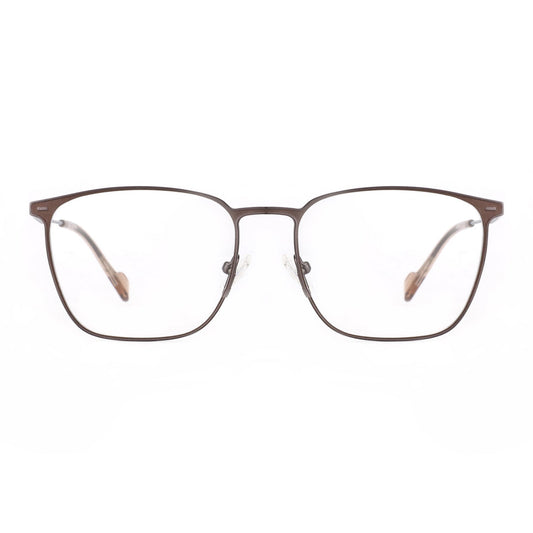
Metal frames almost always feature adjustable nose pads on "arms." This provides the ultimate flexibility. An optician (or a careful user) can bend these arms to sit closer together or further apart, and even change the angle at which the pads rest on the nose. For those with very unique nasal structures, metal frames often provide the most reliable path to a perfect fit.
Frame Styles that Complement High Cheekbones
When choosing frames for your face shape, those with high cheekbones should look for specific geometric features that balance the face while respecting the fit requirements.
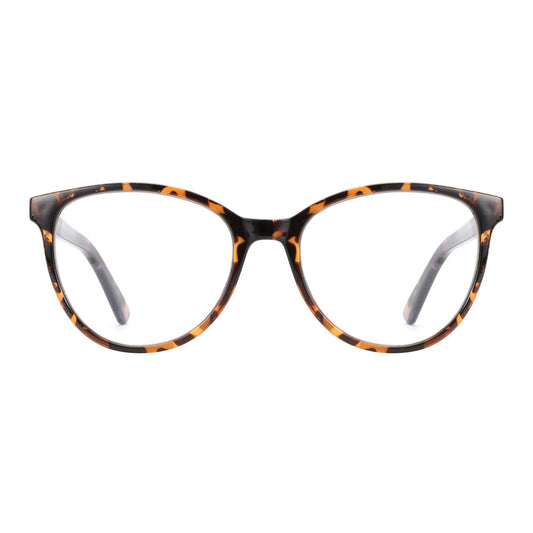
- Cat-Eye Frames: The upward sweep of a cat-eye frame naturally follows the line of high cheekbones, creating a harmonious and lifting effect.
- Round and Oval Frames: These softer shapes provide a nice contrast to the sharp angles of prominent cheekbones. However, ensure the bottom of the rim is not too deep, as it may still touch the cheeks.
- Oversized Frames: While stylish, oversized frames are the most difficult to fit for high cheekbones. If you choose an oversized look, a low bridge fit is non-negotiable to prevent the large lenses from resting entirely on your face.
- Wayfarer and Rectangular Styles: These are classic choices, but look for "modified" versions that have a flatter bottom rim to maximize clearance.
Maintenance and Long-Term Fit
Even the best-fitting glasses can lose their shape over time. The heat from your face, the tension of taking them on and off, and general wear can cause the temples to widen or the nose pads to splay.
- Check the "Three-Point Fit": Your glasses should only touch your face at three points: the bridge of your nose and behind each ear. If they are touching your cheeks or temples, they need adjustment.
- Keep it Clean: Oils from your skin can make nose pads slippery. Regular cleaning with a mild soap and water helps maintain the grip of the pads on your nose.
- Professional Adjustments: Most optical shops will perform minor adjustments for a small fee or even for free. If your low bridge frames start to slide, a quick tightening of the temple screws or a slight bend of the ear hooks can restore the original fit.
FAQ
Are low bridge fit glasses only for people of Asian descent? No, low bridge fit glasses are designed for anyone with a lower nasal bridge and higher cheekbones, regardless of their ethnic background. This facial morphology is common among many diverse populations, including Indigenous Americans and people of African descent. The term "Asian Fit" is simply a legacy marketing label that is being replaced by the more accurate "Low Bridge Fit."
How can I tell if I need a low bridge fit? The most common signs are your glasses constantly sliding down your nose, the bottom of the frames resting on your cheeks, or the lenses fogging up when you smile or talk. You can also perform the "pencil test" by placing a straight edge across your bridge; if it sits at or below your pupils, you likely need a low bridge fit.
Can I turn standard glasses into low bridge fit? While you cannot easily change the molded nose pads of an acetate frame, you can purchase adhesive silicone nose pads to add height. However, these are often temporary fixes and do not address the pantoscopic tilt or temple curvature issues. For metal frames, an optician can often adjust the nose pad arms to mimic a low bridge fit.
Do low bridge fit glasses cost more? Generally, no. Most reputable eyewear brands offer low bridge fit versions of their popular styles at the same price point as standard fit. The difference is in the engineering and mold design, not necessarily in the cost of materials.
What is the best frame material for high cheekbones? Metal frames with adjustable nose pads offer the most flexibility for fine-tuning the fit. However, if you prefer the look of plastic, "Low Bridge Fit" acetate frames are specifically engineered with built-up nose pads to provide the necessary lift and clearance.
Why do my glasses move when I smile? This happens because the bottom of the frames is resting on your cheekbones. When you smile, your cheeks rise and push the frames upward. A low bridge fit solves this by using larger nose pads to lift the frames higher on the nose, creating a gap between the lenses and your cheeks.
References
Industry Associations & Research Institutes
- The Vision Council: Eyewear Fit and Comfort Standards (Industry tracking and consumer fit reports)
- Anthropometric Data Research: Global Variations in Facial Morphology (ISO/TC 172/SC 7 - Ophthalmic optics and instruments)
Platform Official Docs & Policies
- ANSI Standards: ANSI Z80.1-2025: Ophthalmics - Prescription Spectacle Lenses (Technical standards for lens manufacturing and safety)
- ISO Standards: ISO 8980-1:2023: Ophthalmic optics - Uncut finished spectacle lenses
Academic & Whitepapers
- Optical Engineering Journal: "Impact of Pantoscopic Tilt on Visual Performance in High-Index Lenses" (Analysis of lens-to-face geometry)
- Zenottic Technical Archive: Technical Guide to High-Index Lens Materials and Standards (Internal authoritative reference on polymer science)
Community & Professional Forums
- OptiBoard: Professional Discussions on Low Bridge Adjustments (Intent only; professional optician community insights)
- Reddit r/optometry: User Experiences with Asian Fit vs Standard Fit (Intent only; consumer feedback and common fit complaints)
