



How to Order High-Prescription Glasses Online Without Regrets
Ordering high-prescription glasses online can deliver significant savings and convenience when you control the key variables that commonly cause disappointment. For prescriptions around -6.00 or stronger, the difference between a successful pair and one that feels thick, distorted, or poorly fitted often comes down to accurate measurements, appropriate lens index selection, frame compatibility, and retailer policies rather than the prescription strength alone.

By following a structured process to verify your prescription, measure pupillary distance, choose suitable frames, and review lens options, most adults with strong nearsighted prescriptions can confidently order online. This approach minimizes risks such as incorrect pupillary distance entry, unexpectedly thick lenses, or frames that exacerbate edge thickness.
Understanding Your Prescription and When High-Index Lenses Become Essential
Before placing any order, start by carefully reviewing your latest eye prescription. Key values include sphere (SPH), cylinder (CYL), axis, and pupillary distance (PD). Errors in these numbers are among the most frequent reasons online orders require remakes.
This guide to reading your eye prescription explains common abbreviations like OD, OS, CYL, and AXIS in detail and references the FTC Eyeglass Rule that protects online shoppers. For prescriptions stronger than -6.00, high-index lenses are usually necessary to reduce thickness and weight. Standard plastic lenses (index 1.50) become impractically thick at these powers, leading to heavier glasses and a “coke bottle” appearance.
High-index materials such as 1.67 and 1.74 offer progressively thinner profiles. The choice depends on your exact prescription strength and frame dimensions. As a general rule, 1.67 works well for moderate-to-high prescriptions, while 1.74 provides noticeably better thinness for -8.00 and stronger.
This comparison of 1.67 vs 1.74 high-index lenses breaks down thickness, weight, and clarity differences for prescriptions -6.00 and above. Always confirm the retailer’s lens availability and any prescription limits displayed on product pages before adding to cart.
Choosing the Right Lens Index: A Practical Decision Framework
Lens index selection involves balancing thinness, optical clarity, cost, and potential chromatic aberration. Higher-index materials (1.74) reduce edge thickness dramatically but may introduce slightly more color fringing in the lens periphery for some users.

The chart below illustrates heuristic preferences for lens index and frame suitability across common prescription ranges. Higher scores indicate stronger relative preference or pressure in that category. These are illustrative guidelines synthesized from material performance patterns, not clinical standards.
Lens Index Choice Thresholds by Prescription Strength
Use as a bounded guidance graphic after the lens choice section; do not frame as a clinical standard.
View chart data
| Category | 1.67 preferred | 1.74 preferred | Frame suitability pressure |
|---|---|---|---|
| -4.0 to -5.99 D | 4.0 | 1.0 | 1.0 |
| -6.0 to -7.99 D | 2.0 | 3.0 | 2.0 |
| -8.0 to -10.0 D | 1.0 | 4.0 | 3.0 |
| Large frame / wider PD mismatch | 2.0 | 2.0 | 4.0 |
| Compact frame / average PD fit | 1.0 | 1.0 | 1.0 |
Illustrative decision chart built from internal comparison notes on 1.67 vs 1.74 and frame-size sensitivity. Thresholds are heuristic, not official medical rules. Higher scores indicate stronger fit preference or stronger need for the choice.
For prescriptions near -8.00 or stronger, prioritize 1.74 high-index lenses paired with anti-reflective coating to maximize clarity and reduce glare. Check product pages for explicit compatibility warnings or maximum prescription limits.
Measuring Pupillary Distance and Other Critical Fit Values Accurately
Incorrect PD is one of the top reasons online high-prescription orders fail to deliver sharp vision. PD should be measured as monocular (distance from each pupil to the center of the nose) whenever possible, though many retailers accept a single binocular PD value.
This step-by-step guide to measuring pupillary distance at home shows reliable methods using a ruler, mirror, or smartphone apps. Aim for a recent measurement taken while wearing your current glasses if possible.
In addition to PD, note your frame fit preferences. Frame width should roughly match your PD plus a small allowance for lens centering. Frames that are too narrow can increase edge thickness and induce unwanted prism effects in strong prescriptions.
Why frame size matters when matching PD to glasses provides practical rules for reducing distortion and lens thickness through better dimensional compatibility.
Selecting Frames That Work Well With Strong Prescriptions
Not every frame style suits high prescriptions. Narrow or small frames force the lenses to become thicker at the edges because the lens blank must be cut from a smaller area. Wider frames with sufficient lens height generally produce thinner-looking results.
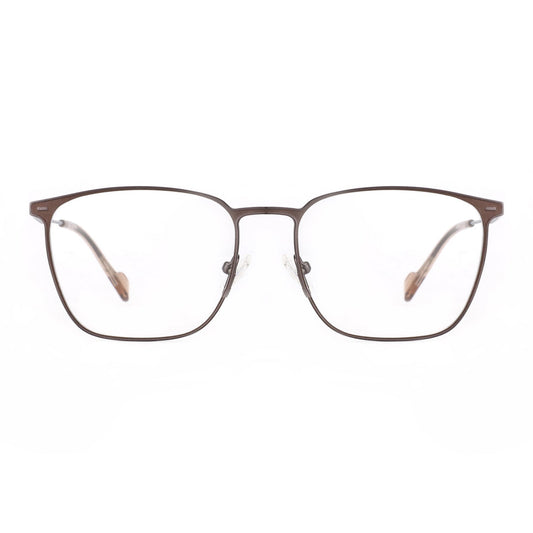
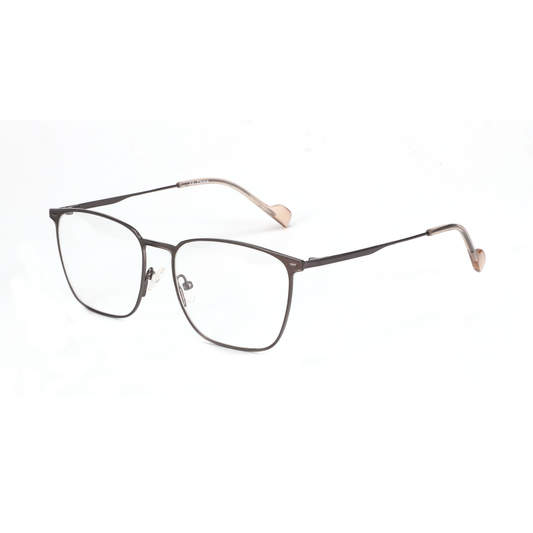
Metal frames often conceal thick lens edges better than bulky acetate styles due to their minimal rim profile. However, acetate can provide a more modern aesthetic when paired with high-index lenses that minimize the visible bevel.
Compare options in metal vs acetate frames for hiding thick lenses. Look for frames labeled as suitable for high prescriptions or with generous lens dimensions on the product page.
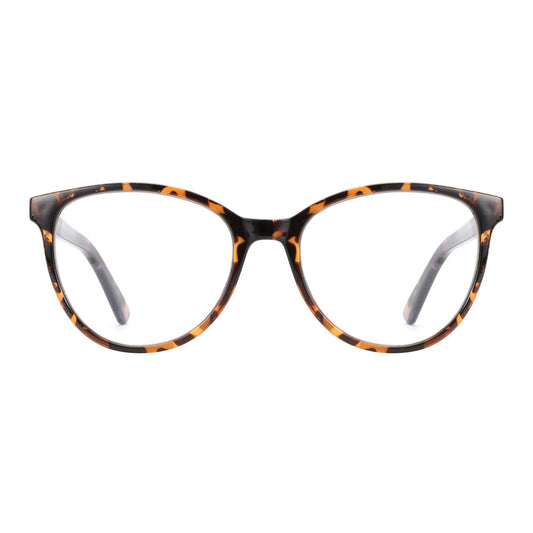
Recommended styles for high Rx include classic rectangles, subtle rounds with adequate width, and lightweight designs. Avoid overly trendy narrow cat-eye or small vintage frames unless you specifically confirm lens thickness projections with the retailer.
Zenottic offers several options optimized for high prescriptions, such as the Zenottic Nicholas designer frames featuring 1.74 high-index lenses and the Zenottic Diana prescription glasses with premium thin lens technology.
What to Verify Before Adding to Cart
Carefully review the following before completing your purchase:
- Lens material and index availability for your exact prescription
- Included coatings (anti-reflective, anti-scratch, UV protection)
- Return, remake, and satisfaction policies
- Prescription entry fields and any warnings about complex Rx
- Estimated lens thickness preview if offered
Many reputable online retailers display maximum sphere and cylinder limits per frame. For prescriptions around -8.00 or stronger, confirm the site can accommodate your numbers without additional fees.
Explore the 1.74 Super High-Index lens collection to see compatible options. Collections like Acetate frames and general Eyeglasses make it easy to filter by style while ensuring high-index compatibility.
Common Myths About Ordering High-Prescription Glasses Online
Myth: High prescriptions cannot be ordered online safely. Reality: Online ordering works well when measurements are accurate, frames are chosen thoughtfully, and the retailer offers strong remake support. The primary risks stem from measurement errors or unsuitable frame choices rather than the prescription itself.
Myth: Lens thickness is the only concern. Reality: Comfort, centering accuracy, and visual distortion from poor PD matching often create more noticeable problems.
Myth: All online retailers handle strong prescriptions equally. Reality: Policies on remakes, lens availability, and customer support vary significantly. Always verify these details upfront.
When You Should Consider an In-Store Purchase Instead
Online ordering may not be the best choice in these situations:
- Your prescription is outdated or has changed significantly
- You lack accurate PD or other fit measurements
- This is your first pair of glasses and must be perfect immediately
- You have high astigmatism or prism correction that requires professional verification
- You cannot tolerate the possibility of a remake or return process
In these cases, visiting an optical shop for professional fitting provides peace of mind. For most repeat buyers with stable prescriptions and known measurements, however, online ordering offers excellent value.
Final Checklist for Ordering High-Prescription Glasses Online
Use this practical checklist to reduce regret:
- Confirm your prescription is current (ideally less than 24 months old).
- Measure and double-check your PD at home.
- Select frames with appropriate width and sufficient lens height.
- Choose the recommended high-index material for your prescription strength.
- Add essential coatings, especially anti-reflective.
- Review the retailer’s remake and return policy carefully.
- Enter all values slowly and verify before submitting.
Following these steps helps ensure your online glasses provide clear vision and comfortable wear comparable to in-store purchases, often at a much lower cost.
Important Note on Vision and Comfort: This article provides general guidance on ordering and setup considerations for high-prescription eyewear. It does not constitute medical advice, diagnosis, or treatment. Lens selection and fit can affect perceived comfort and visual quality in ways that vary by individual. If you experience persistent discomfort, headaches, distorted vision, or have existing eye conditions, consult a qualified eye care professional. Results depend heavily on accurate measurements, proper frame selection, and individual facial characteristics.
Many customers successfully order their high-prescription glasses through platforms like Zenottic by paying close attention to these details. Browse current promotions in the 20% off any lenses collection or check limited-time deals in the Flash sale to combine quality lenses with attractive pricing.
Additional helpful reading includes the ultimate guide to styling high-prescription glasses and women’s eyeglasses or men’s glasses collections for style inspiration that works with thinner high-index lenses.
With careful preparation, ordering strong prescription glasses online can be a reliable, cost-effective alternative to traditional retail. Take time with measurements and frame selection, and you can enjoy clear, comfortable vision without the retail markup.
References
- How to Read Your Eye Prescription
- 1.67 vs 1.74 High-Index Lenses Comparison
- ANSI Z80.1 standards for eyewear (industry reference)
- ISO 8980-1 lens material guidelines
