



Lens Decentration Explained: Why Frame Size Matters for High Rx
If you have a strong prescription and want the thinnest-looking glasses possible, the frame you choose often matters more than the lens index alone. Lens decentration—the offset between your pupil and the lens optical center—can make even premium 1.74 high-index lenses appear bulky at the edges when the frame is too wide. Understanding this relationship helps you select frames that actually deliver the slim profile you expect.

High-prescription wearers frequently assume that upgrading to high-index material will automatically produce thin lenses. In reality, minus lenses are inherently thicker at the edge, and larger frames increase the distance from the optical center to that edge. This makes decentration and frame geometry critical variables that can undermine the benefits of advanced materials.
What Is Lens Decentration?
Lens decentration occurs when the optical center of the lens does not align with the wearer’s line of sight, which can introduce prism and visual imbalance. This misalignment is common in online frame purchases because the geometric center of the frame lens opening rarely matches the exact position of your pupils.
In ophthalmic optics, lens thickness and sizing are defined around the optical center and boxed lens dimensions. The greater the decentration, the farther the lens must be edged from its blank center. For minus prescriptions, this typically exposes more of the thicker peripheral zone, resulting in visibly heavier edges.
Why Frame Size Drives Edge Thickness in High Rx
Frame size is one of the main factors that influences how thick a minus lens will look at the edge. Minus lenses are thicker at the edge, so a larger frame can make the edge thickness more noticeable. Even with 1.74 high-index lenses, a wide frame requires a larger lens blank and often forces the optical center to shift inward, amplifying the edge profile.
Many shoppers believe high-index material alone solves thickness for strong prescriptions. The correction is that thickness is also driven by frame size and lens decentration, so a thin material in a large frame can still look bulky. Professional training materials teach that frame selection should account for lens thickness and material, yet online buyers often prioritize style over these technical constraints.
This creates the high-index paradox: you pay for thinner material only to see disappointing results because the frame geometry works against the lens design. Accurate optical-center placement is important in eyeglasses fitting and dispensing, which is why frame dimensions should be evaluated against your pupillary distance (PD) before purchase.
The Simple Math of Decentration
Calculating decentration is straightforward and helps predict cosmetic outcomes. The formula is: decentration per lens (mm) = (frame PD − your PD) / 2.
Typical adult PD ranges from about 54–74 mm. If your PD is 62 mm and you select a frame with a 68 mm PD, each lens shifts 3 mm from its geometric center. For high minus prescriptions, this shift can noticeably increase edge thickness.
Here is a heuristic illustration of how frame width and decentration affect relative edge thickness for a fixed −8.00 D prescription in 1.74 index lenses:
Illustrative Edge Thickness vs Frame Width and Decentration
Heuristic illustration only: relative edge thickness increases as frame width or decentration increases for a fixed -8.00D 1.74 index lens.
View chart data
| Category | Decentration 0 mm | Decentration 3 mm | Decentration 5 mm |
|---|---|---|---|
| 44 mm | 100.0 | 112.0 | 122.0 |
| 48 mm | 110.0 | 124.0 | 136.0 |
| 52 mm | 122.0 | 137.0 | 150.0 |
| 56 mm | 135.0 | 151.0 | 166.0 |
Illustrative, not measured data. Built from the qualitative rule that minus lenses are thicker at the edge, and that larger frame width / greater decentration increases edge thickness demand for the same -8.00D prescription in 1.74 index lenses.
The chart shows relative values only. Larger frame widths and higher decentration generally produce thicker-looking edges, confirming that frame size remains a primary driver even with high-index materials.
High-Index Lenses: Material Helps But Does Not Eliminate Frame Effects
High-index lenses reduce center thickness and overall weight, yet they cannot override the geometry of a large frame. As this technical guide to high-index lens materials explains, refractive index improvements must be paired with appropriate frame dimensions to achieve optimal cosmetic results.
When comparing options, remember that 1.67 vs 1.74 high-index lenses both benefit from smaller frames. The material advantage becomes most visible when decentration stays low and lens width remains modest.
Practical Rules for Choosing Frames with High Prescriptions
Use these thresholds to screen frames before ordering:
- Keep lens width under 50 mm when possible for prescriptions −6.00 D and stronger.
- Calculate expected decentration using your PD and the frame’s listed PD or lens width.
- Prefer round or oval shapes over wide rectangular ones, as they often minimize the maximum distance from center to edge.
- Avoid frames where the bridge is too wide for your face, forcing excessive inward decentration.
A poorly aligned frame can reduce optical performance, so fit matters as much as frame shape. Frame choice has to match both the wearer and the prescription, not just the style preference.
How to choose in your case:
- Measure or recall your PD (most adults fall between 58–68 mm).
- Check product specifications for frame PD or individual lens width.
- Estimate decentration: if it exceeds 3–4 mm per lens with a strong prescription, consider a narrower alternative.
- Prioritize small or medium frames from collections designed for better fit.
- Test the combination mentally: smaller lens opening + high-index material usually yields the slimmest result.
If the frame is wide and the Rx is −6.00 D or stronger, thickness concerns often outweigh style benefits. This is the point where a “looks good” frame can stop being a good technical choice.

Common Myths About High-Prescription Glasses
Myth: High-index alone solves thickness for strong prescriptions.
Reality: Thickness is also driven by frame size and lens decentration, so a thin material in a large frame can still look bulky.
Myth: Once you buy high-index lenses, frame size is mostly a style decision.
Reality: Frame size changes how much lens edge is exposed, so it directly affects the final thickness impression. Avoid oversized frames if the main goal is to minimize visible lens bulk.
These misconceptions lead many budget-conscious buyers to experience technical disappointment after receiving their order. Selecting frames with lens thickness in mind prevents costly remakes.
Frame Recommendations and Next Steps
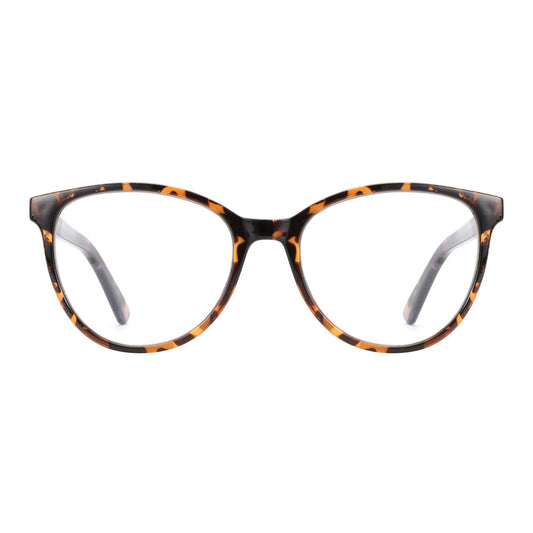
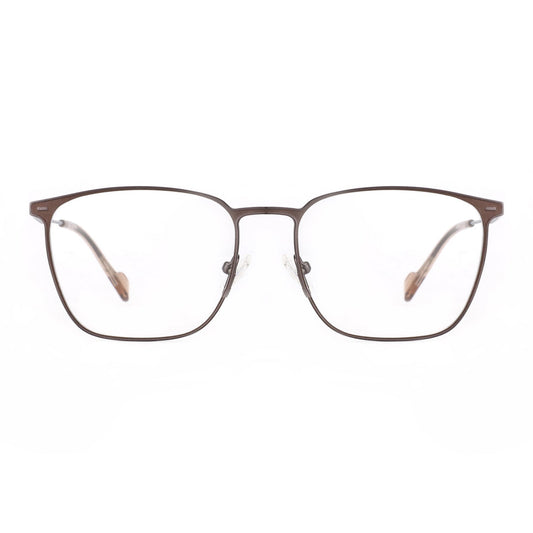
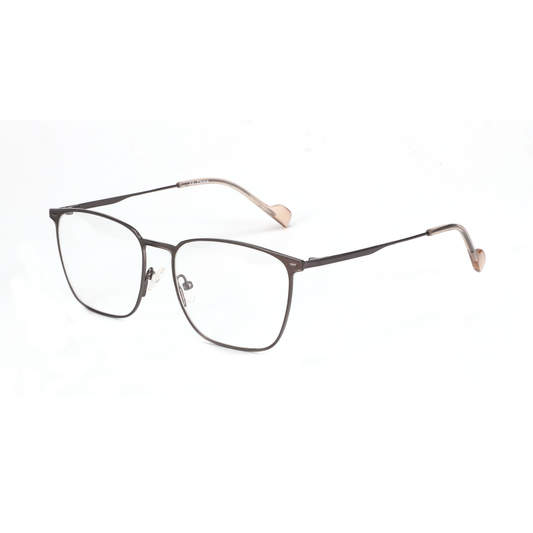
For high prescriptions, narrower frames from the small sunglasses collections or acetate frames often deliver better cosmetic outcomes. Models such as the Zenottic Eyeglasses Arno or Zenottic Eyeglasses Kari pair well with 1.74 lenses when their dimensions keep decentration low.
Review our guide on when to invest in high-index lenses for additional material selection advice, and explore the 1.67 vs 1.74 comparison to understand performance trade-offs.
Important comfort and safety note: This article discusses setup and cosmetic considerations for eyeglass lenses. It does not constitute medical advice, diagnosis, or treatment. Lens decentration and thickness affect appearance and may influence comfort, but individual visual needs vary. If you experience persistent discomfort, distortion, or have existing eye conditions, consult a qualified eye care professional. Proper fitting by an optician remains the gold standard for optimal vision correction.
By focusing on frame size first, then selecting high-index lenses, you can avoid the high-index paradox and achieve thinner-looking glasses that match your prescription and style expectations. Measure your PD, check lens widths, and choose accordingly—the few minutes spent on these details often determine whether your new glasses look sleek or surprisingly thick.
