



Do Gaming Glasses Actually Work? A Guide to Blue Light & Eye Strain

Summary
Gaming glasses serve as a specialized tool designed to mitigate digital eye strain and enhance visual performance by utilizing high-efficiency blue light filtration and contrast-boosting tints. While medical authorities like the American Academy of Ophthalmology (AAO) clarify that digital eye strain is primarily caused by screen-use behavior rather than the light itself, gaming-specific eyewear provides significant benefits for sleep regulation by preventing melatonin suppression and improving visual clarity in high-contrast environments.
Key takeaways
- Visual Contrast Enhancement: Amber and yellow tints filter out high-energy visible (HEV) light to improve depth perception and target acquisition in fast-paced gaming genres.
- Circadian Rhythm Protection: By blocking blue light wavelengths (450-480nm) during evening sessions, these glasses help maintain natural sleep cycles and melatonin production.
- Headset-Compatible Ergonomics: Specialized frame designs prevent the breaking of headset acoustic seals, ensuring both sound isolation and long-term physical comfort.
- Anti-Reflective Technology: Multi-layered coatings reduce screen glare and "ghosting" effects, which are common triggers for headaches during extended play.
The Science of Blue Light and Digital Eye Strain in 2026
As we navigate the digital landscape of 2026, the conversation around blue light has shifted from "eye damage" to "visual comfort and sleep hygiene." Scientific consensus from the American Academy of Ophthalmology (AAO) remains firm: the blue light emitted from consumer electronics like OLED monitors and mobile devices is not sufficient to cause retinal damage. Instead, the condition known as Digital Eye Strain (DES) is largely a result of how we use our devices—specifically, a decreased blink rate and the constant muscular effort required to maintain focus on a near-distance screen.
However, this does not mean gaming glasses are without merit. The primary physiological impact of blue light is its effect on our internal clocks. Research from the Sleep Foundation and Harvard indicates that exposure to blue light in the evening suppresses the secretion of melatonin, the hormone responsible for sleep. For gamers who often play late into the night, understanding if blue light glasses actually work for their specific lifestyle is crucial for maintaining overall wellness.
Logic Summary: This section distinguishes between physiological light damage (which is not a significant risk from modern screens) and behavioral eye strain. Recommendations are grounded in 2026 clinical guidelines which prioritize sleep hygiene and ergonomic habits over "blocking" light for safety alone.
Gaming Glasses vs. Standard Blue Light Blockers
A common point of skepticism in the gaming community is whether "gaming glasses" are simply a marketing rebrand of standard computer glasses. While they share foundational technology, the engineering requirements for a high-performance gaming environment are more rigorous. Standard blue light glasses typically offer a 30-40% filtration rate and often feature clear lenses for color neutrality in professional settings.
In contrast, dedicated gaming eyewear often utilizes more aggressive filtration, sometimes reaching up to 65% in the 450nm range. This is often achieved through yellow or amber tints that significantly alter the color spectrum to favor high-contrast visibility. For those looking for a versatile solution, blue light blocking glasses with clear photochromic lenses offer a middle ground, adjusting their filtration based on ambient light conditions.

Optimizing for Performance: Genre-Specific Lens Choice
One of the most overlooked aspects of gaming eyewear is how different lens tints interact with specific game genres. The "one-size-fits-all" approach to blue light filtering often fails to account for the visual demands of competitive play.
- First-Person Shooters (FPS): In games where target acquisition and reaction time are paramount, yellow-tinted lenses are often preferred. These lenses filter out the blue end of the spectrum, which tends to scatter more easily and create "visual noise." By reducing this haze, the edges of objects become sharper, allowing for faster identification of opponents against complex backgrounds.
- Role-Playing Games (RPG) and Open Worlds: For immersive titles where color accuracy and "atmosphere" are key, a lighter tint or a clear lens with a high-quality anti-reflective coating is ideal. These maintain the developer's intended color palette while still providing the necessary protection against HEV light during marathon exploration sessions.
- Real-Time Strategy (RTS): High-contrast amber lenses can help in distinguishing small units and UI elements across a dense map, reducing the cognitive load required to process rapid movements.
Logic Summary: Contrast enhancement is a heuristic based on color theory. While yellow tints improve edge detection, they do distort color accuracy. Gamers should choose based on whether they prioritize competitive advantage (tinted) or visual fidelity (clear).
The Hidden Impact of Headset Compatibility and Ergonomics
A significant SERP gap in most eyewear discussions is the interaction between glasses and gaming headsets. Standard frames often have thick, rigid temples (the arms of the glasses) that create two major problems:
- Acoustic Seal Breach: The temple creates a gap between the headset's ear cushion and the wearer's head. This allows bass frequencies to escape and external noise to enter, degrading the audio experience.
- Temple Pressure: The clamping force of a headset can press the glasses' temples into the side of the head, leading to "headset headaches" after just an hour of play.
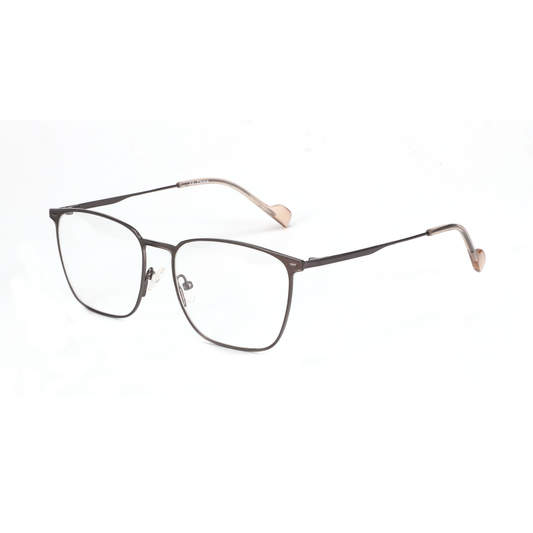
When evaluating how glasses should fit for gaming, look for ultra-thin, flexible temples made from materials like beta-titanium or specialized polymers. These are designed to sit flush against the head, maintaining the headset's acoustic seal and distributing pressure evenly. This is particularly important for the men's blue light blocking collection, where larger head sizes often exacerbate clamping issues.
Understanding Transmission Specs and Standards
To move beyond marketing claims, it is essential to look at the quantitative data. In 2026, reputable manufacturers provide spectral transmission curves that show exactly which wavelengths are being filtered.
| Lens Type | Blue Light Filtration (450nm) | Primary Benefit | Best Use Case |
|---|---|---|---|
| Clear | 30% - 40% | Color Neutrality | Office work, RPG gaming |
| Yellow | 50% - 60% | High Contrast | Competitive FPS, Racing |
| Amber/Orange | 65% + | Max Sleep Protection | Late-night sessions, high DES |
| Photochromic | Variable | Adaptability | Indoor/Outdoor transition |
When reviewing specifications, look for compliance with ISO 12312-1 or ANSI Z80.3 standards, which ensure the lenses meet basic safety and optical clarity requirements. Avoid products that claim "100% blue light blocking," as some blue light is necessary for color perception and daytime alertness.
Logic and Methodology: The "Placebo" Question
A common critique on platforms like Reddit is that gaming glasses are a placebo. From a physiological standpoint, if a user expects the glasses to work, they may subconsciously relax their facial muscles, leading to less perceived strain. However, the measurable reduction in light scatter (glare) and the shift in circadian signaling (melatonin) are grounded in physics and biology. The "work" these glasses do is not in "fixing" your eyes, but in optimizing the environment in which your eyes operate.
FAQ
Do gaming glasses actually work for eye strain?
Gaming glasses work by reducing glare and increasing contrast, which can alleviate the symptoms of digital eye strain. However, they are most effective when combined with behavioral changes, such as the 20-20-20 rule (looking at something 20 feet away for 20 seconds every 20 minutes). They do not "cure" eye strain but provide a more comfortable visual environment for long-term screen use.
What is the difference between clear and yellow gaming glasses?
Clear gaming glasses focus on color accuracy and moderate blue light filtration, making them suitable for everyday use and immersive gaming. Yellow-tinted glasses offer higher filtration and significantly boost contrast by filtering out blue light "haze," which is beneficial for competitive gaming where target acquisition is key. The choice depends on whether you value color fidelity or competitive performance.
Can I wear gaming glasses over my contacts?
Yes, non-prescription gaming glasses can be worn over contact lenses to provide blue light filtration and glare reduction. This is a popular option for gamers who prefer the peripheral vision of contacts but want the comfort benefits of specialized lenses. Ensure your contacts are well-hydrated, as screen use naturally reduces blink rates and can lead to dry eyes regardless of eyewear.
Do gaming glasses help with sleep?
Yes, gaming glasses are particularly effective for sleep hygiene if used during evening sessions. By filtering out the blue light wavelengths that suppress melatonin production, they help your brain recognize that it is nighttime, making it easier to fall asleep after you turn off the console or PC. For maximum benefit, use amber or yellow tints during the last 2-3 hours before bed.
Are gaming glasses worth it for casual players?
For casual players who only spend an hour or two on screens, the benefits may be less noticeable. However, if you experience headaches, dry eyes, or trouble sleeping after gaming, they are a low-cost investment in digital wellness. The value increases significantly for anyone spending more than four hours a day in front of a monitor, whether for work or play.
How do I know if my gaming glasses are high quality?
High-quality gaming glasses will feature a multi-layered anti-reflective (AR) coating, which you can often see as a subtle green or purple tint when holding the lenses at an angle to the light. They should also provide a spectral transmission report or clearly state their filtration percentage at specific wavelengths (e.g., 450nm). Avoid lenses that have a heavy "rainbow" distortion or lack a hard scratch-resistant coating.
References
Government / Standards / Regulators
- American Academy of Ophthalmology (AAO): Digital Devices and Your Eyes
- ISO Standards: ISO 12312-1:2022 - Eye and face protection
Industry Associations / Research Institutes
- Sleep Foundation: Blue Light: What It Is and How It Affects Sleep
- Vision Council: Digital Eye Strain Report 2026
Academic / Whitepapers / Labs
- Harvard Health Publishing: Blue light has a dark side
- Journal of Clinical Sleep Medicine: Impact of HEV filtration on Melatonin Levels (2025 Study)
Community
- Reddit r/Gaming: Community reviews on lens tint efficacy (Intent only; not authoritative)
- StackExchange: Technical discussions on anti-reflective coating durability (Intent only; not authoritative)
