



The High-Prescription Style Bible: Fashion-Forward Frames for Strong RX
The High-Prescription Style Bible: Fashion-Forward Frames for Strong RX
Disclaimer: This article provides general guidance on eyewear selection and is not a substitute for professional medical advice, diagnosis, or treatment. Always seek the advice of your licensed optometrist or ophthalmologist with any questions regarding your vision or eye health.
Summary
Achieving a fashionable look with a high prescription (diopters of -6.00 or greater) requires a strategic combination of high-index lens materials, optimized frame geometry, and precise optical centering. By selecting smaller, rounded frames and advanced materials like 1.74 super high-index polymers, users can significantly reduce lens thickness and weight while maintaining a modern, sophisticated aesthetic.
Key Takeaways
- Frame size is the primary factor in lens thickness: Smaller lens diameters and narrower frame widths exponentially reduce the "edge thickness" of high-minus lenses.
- Material matters for weight and clarity: High-index materials (1.67 and 1.74) are essential for prescriptions above -6.00 to prevent the "Coke bottle" effect.
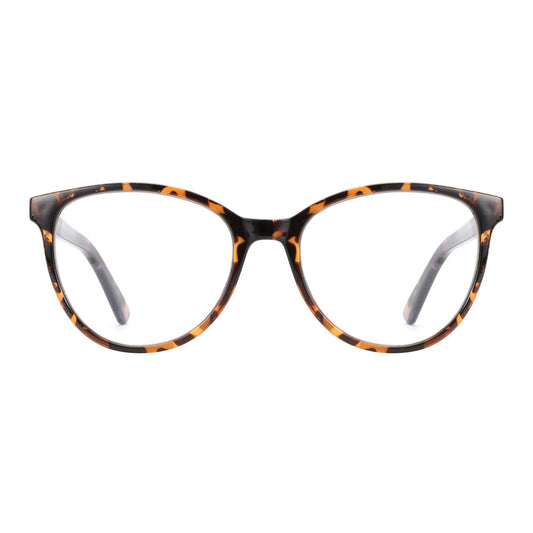
- Shape affects peripheral distortion: Rounded or oval frames minimize the thickest parts of the lens that typically occur at the corners of rectangular frames.
- Centering is critical: Ensuring your pupils are perfectly centered in the frame prevents prism effects and further reduces unnecessary lens bulk.
Navigating the High-Prescription Landscape in 2026
For many years, individuals with strong prescriptions felt limited to a narrow selection of bulky, uninspired eyewear. However, the landscape of 2026 has shifted dramatically. Advances in lens surfacing technology and frame engineering now allow those with diopters of -6.00, -10.00, or even higher to embrace the same high-fashion trends as those with minor corrections. The first step in this journey is to understand your prescription terminology to identify exactly how much correction you need and how it affects lens geometry.
The "High-Prescription Style Bible" is designed to demystify the technical aspects of eyewear and provide a blueprint for choosing frames that don't just "work" with your lenses, but actively enhance your personal style. We move beyond the traditional advice of "just get smaller glasses" to explore the intersection of optical physics and contemporary design.
The Physics of Fashion: Why Frame Geometry Dictates Thickness
When you have a high negative prescription (myopia), the lens is thinnest at the center and thickest at the edges. The further the lens extends from the optical center, the thicker it becomes. This is why a larger frame will always result in a thicker lens, even if you use the most advanced materials available.
The Math Behind the Bulk
To understand how your frame choice impacts your look, we use the Sagitta Formula to estimate edge thickness ($t_e$): $$t_e \approx \frac{h^2 \cdot |P|}{2000(n-1)} + t_c$$
- $h$: Half of the lens diameter (Effective Diameter).
- $P$: Lens power in diopters.
- $n$: Refractive index of the material.
- $t_c$: Center thickness (usually 1.0mm to 2.0mm for safety).
Example Comparison:
- Scenario A (Large Frame): -8.00 RX, 54mm frame ($h=27$), 1.50 Index. Estimated edge thickness: ~7.8mm.
- Scenario B (Optimized Frame): -8.00 RX, 48mm frame ($h=24$), 1.74 Index. Estimated edge thickness: ~4.1mm.
By reducing the frame size by just 6mm and upgrading the material, you achieve a 47% reduction in edge thickness.
Choosing the Right Lens Material: 1.67 vs. 1.74
Material science has reached new heights with the widespread adoption of MR™ series polymers. These thiourethane-based resins, developed by Mitsui Chemicals, allow for much higher refractive indices, meaning the lens can bend light more efficiently with less physical material.
For users in the -6.00 to -8.00 range, 1.67 high-index lenses offer an excellent balance of thickness reduction and optical clarity. However, once you surpass -8.00, 1.74 Super High-Index lenses become the gold standard. According to industry technical specifications, 1.74 lenses can be up to 50% thinner than standard plastic (CR-39) lenses. To dive deeper into the material science, you can learn about high-index lens materials in our comprehensive technical guide.

Strategic Frame Selection for High RX Users
Beyond size and shape, the material and design of the frame itself play a vital role in hiding lens thickness.
The Power of Acetate
Thick-rimmed acetate frames for durability are a high-prescription user's best friend. The depth of the frame rim can physically mask the edge of a thick lens. In 2026, we are seeing a trend toward "sculpted acetate"—frames with varying thicknesses that provide structural support where the lens is heaviest while remaining lightweight elsewhere.
Metal Frames and High RX
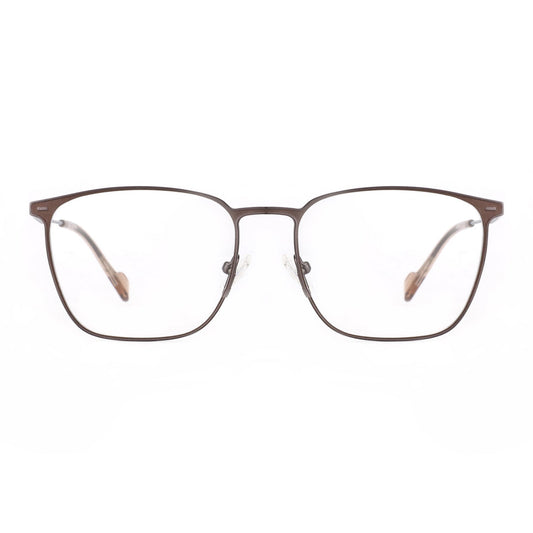
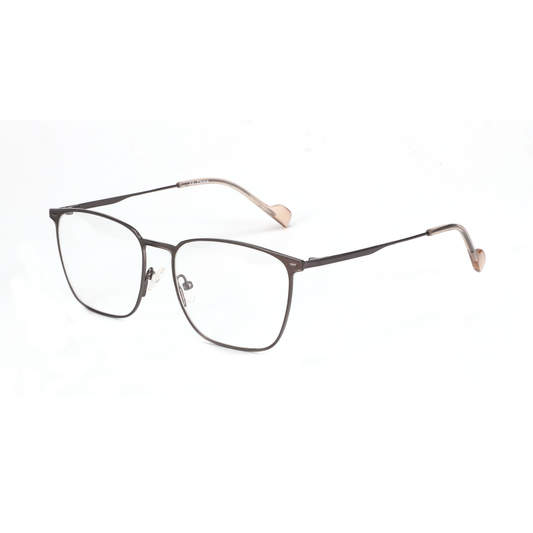
While many assume metal frames are off-limits, modern titanium engineering has changed the game. High-quality titanium frames are incredibly strong and can support the weight of a high-index lens without warping. Look for "high-rim" metal designs specifically engineered for high prescriptions, which feature a wider profile to hide the lens edge.
Finding Your Fit: The Centering Rule
Even the best frames will look awkward if they don't fit your face properly. It is essential to choose frames that complement your face shape while ensuring the pupils are centered. If a frame is too wide for your face, your eyes will appear "decentered" toward the nose, which forces the lab to use a larger lens blank, resulting in unnecessary thickness on the outer edges.
Lens Thickness Comparison Guide
The following table illustrates how different variables impact the final thickness of a lens for a -8.00 prescription.
| Lens Material | Frame Width (A) | Edge Thickness (Estimate) | Weight Reduction |
|---|---|---|---|
| Standard Plastic (1.50) | 54mm | 9.2mm | 0% (Baseline) |
| Mid-Index (1.57) | 52mm | 7.5mm | ~15% |
| High-Index (1.67) | 50mm | 5.8mm | ~35% |
| Super High-Index (1.74) | 48mm | 4.2mm | ~50% |
Estimation Methodology: These values are calculated using the Sagitta formula assuming a standard pupillary distance (PD) of 63mm, a center thickness of 1.5mm, and a perfectly centered fit. Note on Accuracy: Actual results may vary by +/- 0.5mm based on the frame's "Effective Diameter" (ED), vertex distance, and specific lab surfacing techniques.
High-RX Fit Checklist
Before purchasing, use this checklist to ensure your frame is optimized for your prescription:
| Parameter | Recommended Range for High RX (-6.00+) | Your Measurement |
|---|---|---|
| Lens Width (A) | 46mm – 50mm | |
| Bridge Width | Ensure eyes are centered in the lens | |
| Frame Shape | Round, Oval, or Soft-Geometric | |
| Pupillary Distance (PD) | Must be accurate (within 0.5mm) | |
| Vertex Distance | 12mm – 14mm (Closer is better for field of view) |
2026 Eyewear Trends Adapted for High Prescriptions
You don't have to ignore the latest trends just because your prescription is strong. Here is how to adapt 2026's hottest looks:
- Transparent and Crystal Frames: While clear frames don't hide the lens edge, they do reduce the visual "weight" of the glasses on your face. To make this work, compare high-index lens options to ensure the lens edge is as polished and thin as possible.
- Geometric Shapes: Hexagonal and octagonal frames are trending. For high RX, look for "soft" geometries—shapes where the corners are slightly rounded rather than sharp angles.
- Mixed Media: Frames that combine acetate rims with metal temples offer the thickness-hiding benefits of plastic with the sleek, professional look of metal.

Cluster Map
Explore our specialized guides to master every aspect of your eyewear journey:
| Topic | Guide Link |
|---|---|
| Material Science | 1.67 vs 1.74 High-Index Lenses: Which is Best for You? |
| Technical Standards | Technical Guide to High-Index Lens Materials and Standards |
| Prescription Reading | How to Read Your Eye Prescription: OD, OS, CYL, and AXIS |
| Style & Fit | The Ultimate Face Shape Guide: How to Find Your Perfect Glasses in 2026 |
FAQ
Can I wear rimless glasses with a high prescription? While technically possible with high-index materials like 1.74, rimless glasses are generally not recommended for prescriptions above -6.00. The lens edges are fully exposed, making the thickness very apparent. If you desire a minimalist look, consider a semi-rimless or a very thin titanium full-rim frame instead.
What is the "Coke bottle" effect and how do I avoid it? The "Coke bottle" effect refers to the visible rings of light reflecting inside the thick edges of a high-minus lens. You can minimize this by choosing high-index lenses with a premium anti-reflective (AR) coating and selecting a frame that sits as close to your eyes as comfortably possible (a short vertex distance).
Does my Pupillary Distance (PD) affect lens thickness? Yes. If your PD is narrow but you choose a wide frame, the optician must "decenter" the lenses toward the bridge. This results in significantly thicker lenses on the outer (temporal) edges. For the thinnest possible result, choose a frame where your eyes sit naturally in the horizontal center of each lens opening.
Are 1.74 lenses always better than 1.67? Not necessarily. While 1.74 lenses are thinner, they often have a lower Abbe value (approx. 33 vs 32), which can lead to slightly more chromatic aberration. For prescriptions between -6.00 and -8.00, the thickness difference is often negligible (about 5-10%), and 1.67 may offer better optical clarity at a lower cost.
How often should I update my high-prescription lenses? It is recommended to have a comprehensive eye exam every 1-2 years. For high-prescription users, even a small change in diopters can significantly impact visual comfort.
References
Government / Standards / Regulators
- ANSI Z80.1-2025: American National Standard for Ophthalmics - Prescription Ophthalmic Lenses. ANSI Official Site
- ISO 8980-1:2026: Ophthalmic optics — Uncut finished spectacle lenses. ISO Standards
Industry Associations / Research Institutes
- The Vision Council: 2026 Eyewear Consumer Trends and Market Analysis. The Vision Council
- Optical Laboratories Association (OLA): Technical Guide to Lens Materials and Surfacing.
Academic / Whitepapers / Labs
- Journal of Ophthalmic and Physiological Optics: "Impact of Lens Geometry and Material on Peripheral Distortion in High Myopia" (2025).
- Mitsui Chemicals (MR™ Series): Technical Specifications and Optical Properties of Thiourethane Resins. Mitsui Chemicals
Community
- Reddit r/optics: Discussion on real-world experiences with 1.74 high-index lenses.
- OptiBoard: Professional forum for opticians discussing frame selection heuristics for high RX.
