



Say Goodbye to Bug Eyes: Minimizing Lens Distortion
If you have a strong prescription, the magnification or minification caused by your lenses can make your eyes look unnaturally large or small. The good news is that choosing the right combination of high-index materials, aspheric designs, and well-fitted frames can noticeably reduce this cosmetic effect and help your eyes appear closer to their natural size.

High prescriptions often create the "bug eyes" look in strong minus lenses or the "tiny eyes" effect in plus lenses. This happens because spectacle lenses act like small magnifying or minifying glasses. As this university ophthalmology optics review explains, strong prescriptions can make eyes look larger or smaller behind glasses because spectacle lenses magnify or minify the image. The amount of eye-size distortion depends on prescription strength and lens shape, including curvature and thickness.
How Lens Distortion Affects Appearance in High Prescriptions
The visible change in eye size is driven by several optical factors. Lens power is the biggest driver: higher diopters create more magnification or minification. Curvature and thickness also play key roles, as thicker lenses with steeper curves tend to exaggerate the effect. Frame geometry matters too—larger frames or those that sit farther from the face increase the distance between the lens and the eye, which can make distortion more obvious.
High-index lens materials address part of this problem by bending light more efficiently. High-index lenses are generally thinner and lighter than standard-index lenses for the same prescription, according to eye-care education resources. This reduction in thickness and weight can improve both comfort and appearance. Similarly, the American Academy of Ophthalmology's guidance on refractive errors notes that high-index lenses can help reduce thickness and weight in strong prescriptions, which may improve comfort and appearance.
Aspheric lens designs take this further. Instead of a perfectly spherical curve, aspheric lenses flatten toward the edges. This same AAO source states that aspheric lenses are designed to reduce certain aberrations and can improve optical performance compared with conventional spherical designs. The result is often less noticeable edge distortion and a more natural-looking eye size, especially for prescriptions above ±4.00 D or ±6.00 D.

However, no single upgrade completely eliminates the issue. Prescription spectacles can produce optical distortions, so no lens design removes every effect for every wearer, as highlighted in clinical studies on new glasses adaptation. Results always depend on your exact prescription, pupillary distance, vertex distance, frame choice, and face shape.
What Matters Most: A Priority Framework for Reducing Distortion
When minimizing the bug-eye or tiny-eye effect, not all choices deliver equal cosmetic improvement. Prescription strength typically has the largest influence, followed by how the frame fits your face. Lens design and material come next, while some cosmetic change remains unavoidable.
Relative Impact Factors on Apparent Eye Size Distortion
Use this ranked view to show which levers usually matter most when readers want to reduce apparent eye-size distortion from high prescriptions.
View chart data
| Category | Relative impact score |
|---|---|
| Prescription strength | 40.0 |
| Frame size & fit | 25.0 |
| Lens design | 20.0 |
| Lens material | 15.0 |
| Residual limits | 10.0 |
Illustrative relative impact modeled from optical principles summarized in cited sources (UIowa Optics Review, Vision Council Dispensing Guide, AAO, Look After Your Eyes, PMC). Scores reflect a bounded planning heuristic for ranking, not measured effect sizes. Actual outcomes vary by individual prescription, face shape, frame choice, and fitting.
This illustrative chart ranks the relative influence of each factor based on optical principles. It helps you focus effort where it counts most instead of over-relying on premium materials alone. Frame size and fit often matter more for appearance than many shoppers realize, because geometry and lens placement change the final appearance, per industry dispensing guidelines.
High-Index Lenses: When They Deliver Real Cosmetic Gains
Switching to a higher refractive index is one of the most effective ways to reduce lens thickness and the associated magnification effects. Materials rated 1.67 or 1.74 bend light more strongly than standard 1.50 glass or plastic, allowing the lens to be physically thinner while delivering the same correction.
For prescriptions of -6.00 D and stronger, the difference is often visible both in profile and in how the eyes appear. Our Ultimate Guide to Ultra-Thin Lenses for -6.00 Prescriptions and Above explores the practical benefits in detail. Lens materials differ in thickness, weight, light transmission, and optical performance, according to the Vision Council's dispensing resources, so balancing these factors is essential.
That said, a higher index alone does not guarantee the best-looking lens in every case. Very high-index materials can sometimes introduce more chromatic aberration due to lower Abbe values, which may appear as slight color fringing at the lens edges. The cosmetic improvement must be weighed against these optical trade-offs.
The Added Benefit of Aspheric Designs
Aspheric lenses complement high-index materials by flattening the lens curve toward the periphery. This reduces the bulging that contributes to the bug-eye appearance in minus prescriptions and can lessen the minification effect in plus lenses.
Many wearers notice that aspheric high-index combinations produce a more natural eye look at conversational distances. They also tend to reduce certain aberrations, leading to clearer peripheral vision. Our guide When 1.74 High-Index Lenses Are Actually Worth the Upgrade helps you decide if the step up from 1.67 is justified for your needs.
Frame Choice and Fitting: The Often-Overlooked Cosmetic Lever
Even the best lens technology performs better in the right frame. Smaller, well-centered frames reduce the lens diameter, which limits edge thickness and keeps the optical center closer to your pupils. This geometry can dramatically cut the visible distortion compared with oversized or deep frames.
Look for frames with adjustable nose pads or those designed specifically for high prescriptions. Proper pupillary distance measurement and vertex distance also matter—lenses that sit too far from the eyes amplify magnification effects. Our article on The Best Frames for 1.74 Lenses to Minimize Edge Thickness offers targeted recommendations that pair beautifully with thin-lens technology.
Hidden Tradeoffs You Should Consider
While high-index aspheric lenses improve cosmetics for many, they are not without compromises. Lower Abbe values in some high-index materials can increase chromatic aberration, especially noticeable in strong prescriptions or wide frames. Aspheric surfaces may introduce a different peripheral feel that requires a short adaptation period.
Some wearers report needing time to adjust to the changed optics. If you are highly sensitive to color fringing or have had trouble adapting to new glasses before, discuss these factors with your eye care provider. The technical guide to high-index materials on our site dives deeper into these material science considerations.
Practical Checklist: How to Choose Lenses That Minimize Distortion
Use this step-by-step process when shopping for high-prescription glasses online or in-store:
- Confirm your exact prescription strength. Prescriptions of ±6.00 D and above usually benefit most from high-index and aspheric options.
- Measure your pupillary distance (PD) accurately. Our guide How to Order High-Prescription Glasses Online Without Regrets shows easy at-home methods.
- Choose smaller or medium-sized frames first. Avoid oversized styles that increase lens diameter and edge visibility.
- Select at least 1.67 index, preferably 1.74 for very strong prescriptions. Pair with aspheric design whenever available.
- Request proper centering and minimal vertex distance. Good fitting reduces magnification effects more than many expect.
- Test in person if possible, or order from retailers with strong return policies. Adaptation and final appearance can only be fully judged when worn.
This checklist translates optical principles into actionable buying steps so you avoid common regrets.
Who Benefits Most and When to Consider Alternatives
High-index aspheric lenses shine for adults and teens with strong myopia or hyperopia who feel self-conscious about their eye appearance in social or professional settings. They are especially helpful when replacing thick, heavy lenses that previously created obvious magnification or minification.
However, if your prescription is moderate or you primarily need the lightest possible weight for all-day comfort, standard-index options in small frames may suffice. Those with very high prescriptions should understand that some residual effect is likely regardless of lens choice. In those cases, combining thin lenses with strategic makeup techniques or considering contact lenses for certain occasions can provide additional confidence.
Our piece on Makeup for High Prescriptions: Flawless Looks Behind Lenses shares practical tips for counteracting any remaining minification.
Finding the Right Balance of Aesthetics, Clarity, and Comfort
Ultimately, minimizing lens distortion is about smart trade-offs rather than a single perfect product. High-index materials reduce bulk, aspheric designs refine optics, and thoughtful frame selection controls geometry. Together they can deliver a noticeably more natural appearance for most high-prescription wearers.
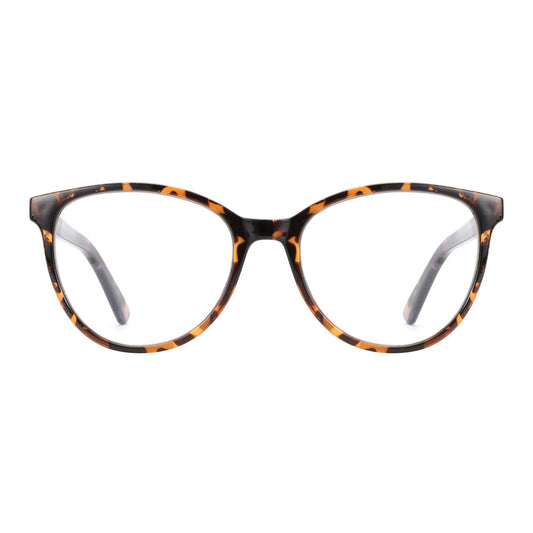
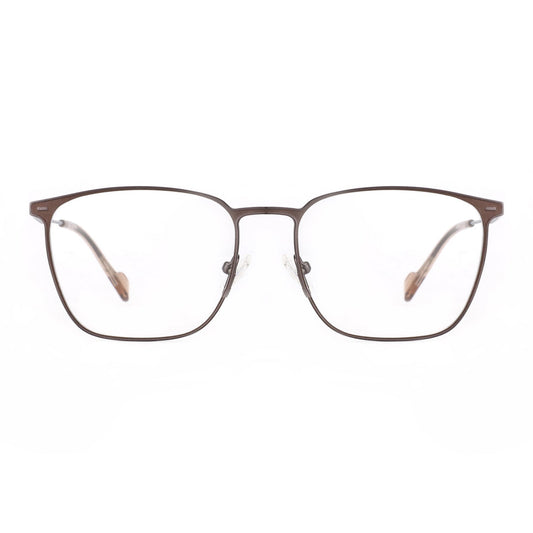
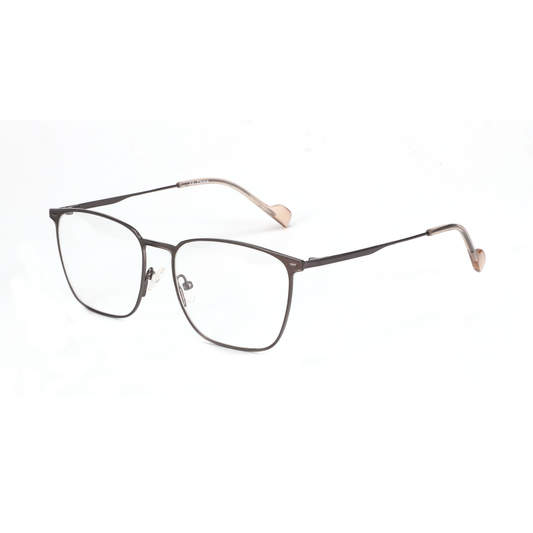
Explore Zenottic's range of stylish frames that pair perfectly with 1.74 high-index lenses. The Cliff collection offers modern looks at factory-direct prices, while the Mamie frames provide versatile everyday style. For bolder personalities, check the Afra or Joanne options that support ultra-thin lenses without compromise.
Men seeking refined designs should browse our men's eyeglasses collection. Acetate frames also make an excellent pairing with thin lenses—see the full acetate frames selection. Take advantage of current savings with 20% off any lenses to make the upgrade more accessible.
Important Note on Comfort and Vision: This article discusses cosmetic appearance and setup considerations for high-prescription eyewear only. It does not constitute medical advice, diagnosis, or treatment. Lens choices involve trade-offs in optical performance, and individual results vary. If you experience persistent discomfort, visual distortion, or have existing eye conditions, consult a qualified eye care professional for personalized guidance.
By focusing on the factors that matter most—prescription-aware lens selection, proper frame geometry, and accurate fitting—you can move closer to the natural-looking eyes you want while maintaining excellent vision correction.
