




Musician's Guide to Stage Eyewear: Lighting & Sheet Music Clarity
Musician's Guide to Stage Eyewear: Lighting & Sheet Music Clarity
Medical Disclaimer: This guide provides general occupational vision advice for musicians and is not a substitute for professional medical diagnosis or optometric care. Visual requirements vary significantly by individual; always consult a licensed optometrist or ophthalmologist to determine the correct prescription for your specific needs.
Summary
Performing under professional stage lighting requires a specialized visual strategy that balances high-intensity glare reduction with precise focal depth for reading musical notation. For musicians in 2026, the optimal solution involves customized intermediate-distance prescriptions—typically ranging from 12 to 30 inches based on instrument ergonomics—paired with advanced multi-layer anti-reflective coatings and selective blue light filtering for digital scores.
Key takeaways
- Customized Focal Lengths: Standard reading glasses are often insufficient; musicians require prescriptions tailored to the specific distance of their music stand (e.g., 12-16 inches for violinists versus 18-24 inches for pianists).
- Glare Mitigation: Multi-layer anti-reflective (AR) coatings are essential for neutralizing the "starburst" effect caused by high-intensity LED stage lights.
- Digital Score Optimization: A selective blue light reduction of 30-50% is recommended to improve contrast on tablets while maintaining the color fidelity needed for conductor cues.
- Frame Stability: Lightweight materials and adjustable temple grips are critical for active performers to prevent slippage during high-movement passages.
- Professional Consultation: Success on stage depends on providing your optometrist with exact measurements of your performance environment.

The Unique Visual Demands of the Performance Stage
For a professional musician, the stage is a high-stakes visual environment where a split second of blurriness can lead to a missed cue. Unlike a typical office setting, the stage presents a complex array of lighting challenges, including overhead spotlights and floor-mounted "footlights" that create debilitating glare. Furthermore, the distance to a music stand is rarely the same as a standard computer monitor.
In 2026, the transition toward digital scores on high-brightness tablets has added complexity. Musicians must now manage both the reflected glare from physical paper and the emitted blue light from digital screens. Achieving this balance requires applying occupational vision principles specifically to the performing arts.
Instrument-Specific Focal Lengths: Beyond Standard Reading Distances
A common mistake is using "off-the-shelf" reading glasses for performance. Standard readers are typically optimized for 14 to 16 inches, which may work for a cellist but is often inadequate for a conductor or keyboardist. The "intermediate" zone of vision is where most musical performance happens.
The following table provides experience-based focal ranges derived from standard ergonomic playing positions. Individual requirements may vary based on height and stand placement.
| Instrument Group | Primary Focal Distance (Typical Range) | Typical Viewing Angle | Visual Priority |
|---|---|---|---|
| Strings (Violin/Viola) | 12 - 18 inches | 30° Downward | High-speed notation clarity |
| Keyboard / Piano | 18 - 24 inches | Eye Level | Wide horizontal field of view |
| Woodwinds / Brass | 16 - 22 inches | 15° - 20° Downward | Score and conductor cues |
| Percussion | 24 - 36+ inches | Variable | Peripheral awareness |
| Conducting | 20 - 30 inches | Eye Level to 45° Up | Score, ensemble, and audience |
Pro Tip: We recommend measuring your exact "stand-to-eye" distance during a rehearsal using a soft measuring tape before your next eye exam.

Conquering Stage Lighting: Anti-Reflective Coatings and Theatrical Gels
Stage lighting in 2026 has evolved to use high-output LED arrays. When these beams hit a standard lens, they create "ghost images" that cause eye fatigue. This is particularly problematic when using theatrical gels that shift the light spectrum toward intense blues or reds.
To combat this, musicians should prioritize multi-layer anti-reflective (AR) coatings. Premium AR treatments are designed to handle light coming from multiple angles, allowing more light to pass through the lens rather than reflecting off it.
Note that photochromic lenses (which darken in sunlight) are generally discouraged for stage use. As noted in the Transitions Professional Guide to Photochromic Technology, these lenses react primarily to UV light. Since most stage lights are artificial and UV-filtered, the lenses may not darken predictably, or may react inconsistently to high-intensity LEDs.
Digital vs. Paper Scores: Managing Blue Light and Screen Glare
The shift toward digital tablets like the iPad Pro brings new visual challenges. Digital screens emit high-energy visible (HEV) blue light. However, for musicians, "total" blue light blocking is rarely the answer because it can distort color-coded annotations.
A selective blue light filter that reduces HEV light by 30-50% is generally considered the "sweet spot" for performance. This range provides comfort for screen reading while maintaining enough color fidelity for professional cues.
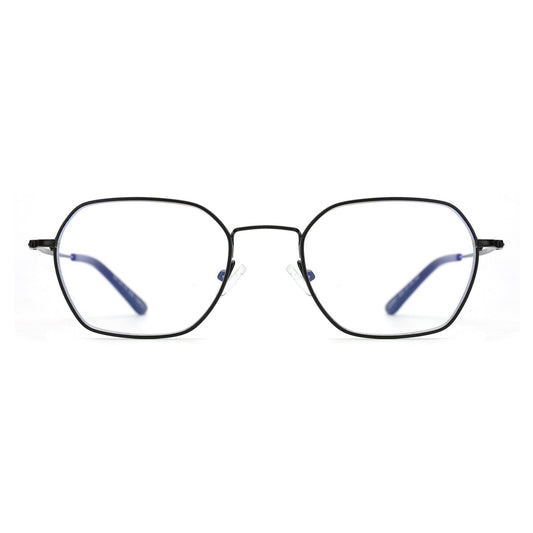
When choosing eyewear for digital scores, it is helpful to understand the pros and cons of blue light glasses. While they reduce the "flicker" sensation of screens, they must be paired with an AR coating to handle surface reflections. For those who switch between paper and digital, a versatile pair of blue light blocking glasses (Example Product) can bridge the gap effectively.
Frame Stability and Ergonomics for Active Performers
A pair of glasses that slips during a fortissimo passage is a performance risk. Musicians engage in significant physical movement, making frame stability a non-negotiable requirement.
Look for frames with adjustable nose pads and high-friction temple tips. Lightweight materials like acetate or titanium are preferred. Furthermore, the updated ANSI Z80.1-2025 standards for occupational eyewear highlight the importance of frame retention, which is especially relevant for woodwind and brass players.
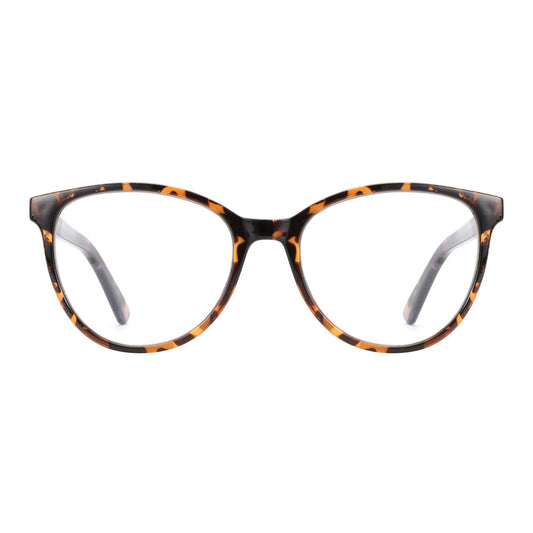
For those who require a dedicated pair for the "pit," reading glasses (Example Product) with a wider horizontal frame can provide a better field of view for large orchestral scores.
High-Index Materials: Balancing Weight and Optical Precision
For musicians with high prescriptions (typically exceeding +/- 3.00 diopters), lens thickness can introduce peripheral distortions. This is where high-index materials become essential.
According to the Technical Guide to High-Index Lens Materials and Standards, modern MR™ series polymers (such as 1.61, 1.67, and 1.74) offer a superior balance of weight and clarity. These materials reduce chromatic aberration—the "rainbow" fringing effect at the edges of thick lenses. For a musician needing edge-to-edge sharpness on a large score, choosing a 1.67 High-Index lens (Example Product) is a common industry recommendation for high-power prescriptions.
The Musician's Vision Worksheet (Printable Template)
To get a "music prescription," you must be proactive. Use this worksheet to provide your optometrist with the data they need to calculate your intermediate "add" power.
| Measurement Category | Your Data | Instructions |
|---|---|---|
| Primary Focal Distance | ______ inches | Measure from your eye to the center of the music stand in playing position. |
| Secondary Focal Distance | ______ feet | Distance to the conductor or furthest ensemble member. |
| Viewing Angle | □ Up □ Level □ Down | Note if you look through the top or bottom of your lens while playing. |
| Lighting Environment | ____________ | e.g., "Bright overhead LEDs," "Dim orchestra pit," "Backlit stage." |
| Score Format | □ Paper □ Tablet | Specify screen size if using a digital score. |
By providing these details, your optometrist can determine if a "degressed" lens or a specialized progressive lens (Example Product) is the best solution.
FAQ
Can I just use my computer glasses for playing music? Computer glasses are usually set for 20-26 inches. While they may work for some, a violinist often needs a closer focus (12-18 inches). Always verify your specific stand distance first.
Do blue light glasses affect how I see my conductor? High-quality blue light glasses with selective filtering should not impact visibility. However, heavy orange-tinted lenses can reduce contrast in low-light pits and are not recommended for performance.
Why do I get headaches after a long rehearsal? This is often "accommodative strain." If your prescription is off by even 0.25 diopters for your specific stand distance, your eyes work too hard to maintain focus, leading to fatigue over a 3-hour rehearsal.
Should I get a separate pair of glasses just for the stage? Many professionals find a dedicated "stage pair" is the best investment. This allows for a prescription perfectly tuned to your instrument's focal length and a frame optimized for stability.
References
Government / Standards / Regulators
- ANSI Z80.1-2025: Ophthalmic Standards for Prescription Lenses
- ISO 8980-1:2025: Ophthalmic Optics - Uncut Finished Spectacle Lenses
Industry Associations / Research Institutes
- American Optometric Association: Occupational Vision Resources
- Transitions Professional Guide: Photochromic Technology and Stage Lighting
Academic / Whitepapers / Labs
- National Center for Biotechnology Information (NCBI): Visual Demands in Musical Performance
- Occupational Vision Requirements for Musicians: A Longitudinal Study
Editor’s Note: This article has been reviewed for technical accuracy regarding lens materials and occupational vision standards. For personalized medical advice, please visit a licensed eye care professional.
