



Prescription Sunglasses for High Prescriptions: A Buying Guide
Summary

Finding the right prescription sunglasses for high prescriptions (-6.00 diopters and above) requires a strategic combination of high-index lens materials, such as 1.74 thiourethane resins, and specific frame geometries to minimize edge thickness and the "coke bottle" effect. By leveraging advanced manufacturing standards and online direct-to-consumer models, users can now access high-performance, thin, and lightweight prescription sunglasses at a fraction of traditional retail costs without compromising on optical clarity or UV protection.
Key takeaways
- Material Matters: For prescriptions over -6.00, 1.74 high-index lenses offer the maximum thickness reduction (up to 35% thinner than standard plastic) and superior thermal stability.
- Frame Geometry: Small, round, or oval frames with narrow lens widths significantly reduce edge thickness compared to oversized or rectangular styles.
- Optical Trade-offs: Higher refractive indices typically result in lower Abbe values, making precise lens centering and high-quality anti-reflective coatings essential to mitigate chromatic aberration.
- Cost Efficiency: Online labs utilizing automated surfacing technology can reduce the cost of high-index sunglasses by 50-70% compared to traditional brick-and-mortar optical shops.
- Compliance: Look for lenses that meet ANSI Z80.1-2025 and ISO 8980-1 standards to ensure impact resistance and refractive accuracy.
Understanding High-Index Materials for Sunglasses
For individuals with high myopia (nearsightedness) or hyperopia (farsightedness), standard lens materials often result in bulky, heavy eyewear that can be uncomfortable for all-day outdoor use. The transition to high-index materials is not merely an aesthetic choice but a functional necessity. High-index lenses are engineered from advanced polymers that bend light more efficiently than traditional CR-39 plastic or polycarbonate. This efficiency allows the lens to be significantly thinner while providing the same corrective power.
In the realm of high-performance eyewear, the MR™ series of thiourethane resins—specifically MR-7 (1.67) and MR-174 (1.74)—has become the industry standard for high-Rx users. These materials offer a high refractive index combined with excellent mechanical strength, allowing for thinner edges in rimless or semi-rimless designs. For a deeper dive into the material science and manufacturing standards of these polymers, including their compliance with ANSI Z80.1-2025, refer to our Technical Guide to High-Index Lens Materials and Standards.
When selecting between materials, the decision often hinges on the specific diopter range. While 1.67 lenses are suitable for moderate-to-high prescriptions, those with a total power exceeding -6.00 SPH or -2.00 CYL will find the most benefit in 1.74 Super High-Index lenses. These lenses provide the sleekest profile possible, which is particularly important for sunglasses where larger frame sizes are common.
Logic Summary: High-index materials are recommended for high prescriptions because their higher refractive index allows for less material to achieve the same light-bending power. This recommendation assumes the user prioritizes weight and thickness reduction over the slightly higher Abbe value of lower-index materials.
The Impact of Frame Selection on High-Rx Aesthetics
While lens material is a critical factor, the frame you choose plays an equally vital role in the final appearance of your prescription sunglasses. For high-minus prescriptions, the lens is thinnest at the center and thickest at the edges. Therefore, the larger the lens diameter, the thicker the visible edge will be.
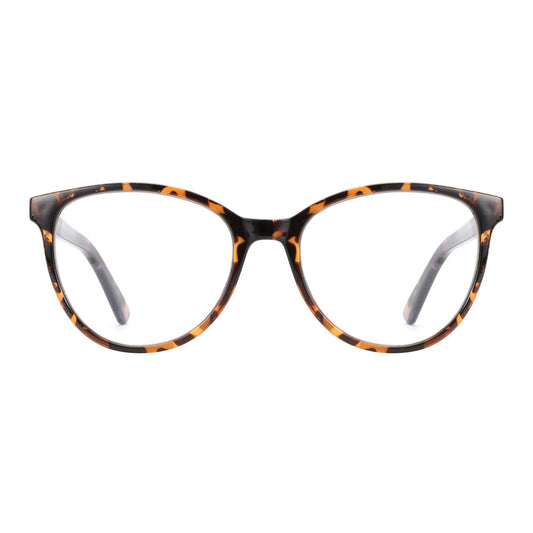
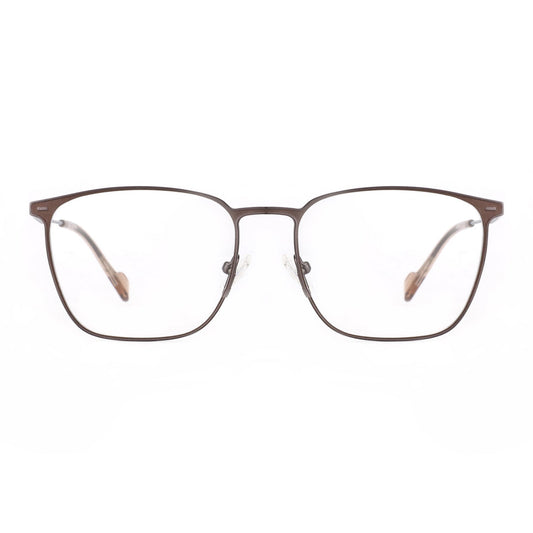
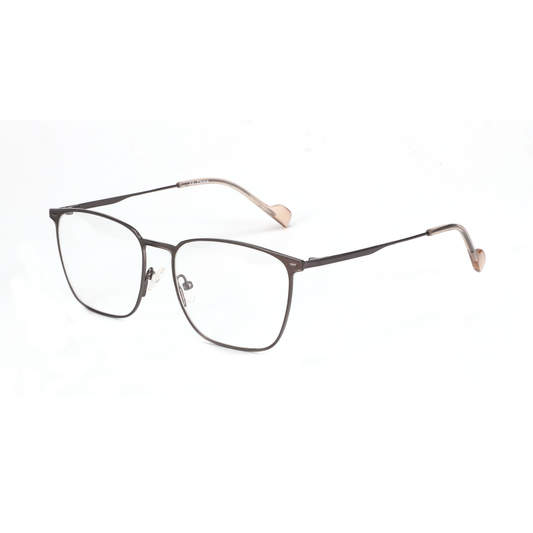
To achieve the best aesthetic result, high-Rx users should aim for "frame optimization." This involves selecting frames with a smaller "A" measurement (lens width) and a bridge size that centers the eye within the lens. Round or panto-shaped frames are naturally better at hiding edge thickness because they lack the sharp corners where thickness tends to accumulate in rectangular or square styles. Furthermore, thicker frame materials like acetate can help conceal the lens edge, whereas thin metal frames may leave the edge exposed.

Understanding how frames interact with your specific facial features is also essential. A well-fitted frame ensures that the optical center of the lens aligns perfectly with your pupils, reducing peripheral distortion. You can explore our Ultimate Face Shape Guide: How to Find Your Perfect Glasses in 2026 to find styles that balance both aesthetics and optical requirements.
Manufacturing Excellence: Beveling and Edge Finishing
A common "SERP gap" in many buying guides is the lack of information regarding the actual manufacturing process of high-index sunglasses. The way a lens is cut and fitted into a frame—known as finishing—can make or break the final product. For high prescriptions, standard beveling (the groove that holds the lens in the frame) may not be sufficient.
Advanced optical labs use "hidden bevels" or "step bevels" to shift the lens position within the frame. By moving the bevel toward the front of the lens, more of the edge thickness is hidden behind the frame rim. Additionally, edge polishing can be a double-edged sword: while it makes the edges look clearer, it can also create distracting internal reflections (known as "power rings") in high-minus lenses. A satin or matte edge finish is often preferred for high-Rx sunglasses to minimize these reflections.
Thermal stability is another critical factor for sunglasses. High-index resins like MR-174 are designed to withstand the high temperatures often found inside a car on a summer day without warping or losing their optical properties. This is a significant advantage over cheaper acrylic materials that may distort under thermal stress.
Cost Analysis: Online vs. Traditional Retail in 2026
One of the primary reasons users seek affordable high rx sunglasses online is the staggering price difference compared to traditional retail. In 2026, the average cost for a pair of 1.74 high-index polarized sunglasses at a high-end retail chain can easily exceed $600. This price often includes significant markups for brand licensing, physical storefront overhead, and middleman distribution.
By contrast, online providers that own their manufacturing facilities can offer the same high-quality materials at a fraction of the cost. The following table illustrates a heuristic comparison of estimated costs for high-prescription sunglasses across different channels:
| Feature | Traditional Retail (Est.) | Zenottic Online (Est.) |
|---|---|---|
| 1.74 High-Index Lenses | $250 - $400 | $80 - $150 |
| Polarized Treatment | $100 - $150 | $30 - $60 |
| Designer Frame | $150 - $300 | $20 - $60 |
| Total Estimated Cost | $500 - $850+ | $130 - $270 |
Logic Summary: These cost estimates are based on 2026 market heuristics and internal lab data. Actual pricing may vary based on specific prescription complexity (e.g., high astigmatism) and additional coatings. The online model assumes a direct-to-consumer supply chain that eliminates retail markups.
Beyond the financial savings, why wearing prescription sunglasses is important for you extends to long-term ocular health. High-index materials inherently block 100% of UVA and UVB rays, protecting the retina and lens from solar damage that can lead to cataracts and macular degeneration.
Optical Performance and Trade-offs (Abbe Value)
When moving to higher refractive indices, it is important to understand the concept of the Abbe value. The Abbe value is a measure of a material's dispersion—how much it spreads light into its component colors. A lower Abbe value can lead to chromatic aberration, which manifests as color fringing or blurring in the periphery of your vision.
Standard plastic (CR-39) has a high Abbe value of approximately 58, whereas 1.74 high-index material has a lower Abbe value of around 32-33. While this sounds like a significant downgrade, modern digital surfacing technology and high-quality anti-reflective (AR) coatings significantly mitigate these effects. For most users, the benefits of reduced weight and thickness far outweigh the slight increase in peripheral dispersion.
To ensure the best optical performance when ordering online, accurate measurements are paramount. Beyond your prescription, your Pupillary Distance (PD) is the most critical piece of data. Incorrect PD can lead to "induced prism," causing headaches and eye strain. Learn how to measure your Pupillary Distance (PD) at home fast to ensure your lenses are perfectly centered.
Furthermore, for sunglasses, choosing between polarized and non-polarized options is a key decision. Polarized lenses are particularly effective at reducing glare from horizontal surfaces like water or roads. For a comprehensive comparison, see our 1.67 vs 1.74 High-Index Lenses: Which is Best for You? guide, which also touches on how polarization interacts with high-index materials.
FAQ
Can I get polarized lenses with a -10.00 prescription? Yes, it is entirely possible to get polarized lenses for very high prescriptions, provided you use 1.74 high-index materials. The polarization film is sandwiched within the lens material during the casting process, and advanced digital surfacing allows the lab to grind the prescription into the back surface without affecting the polarized layer. This combination provides both the thinnest possible profile and maximum glare reduction.
Why are high-index sunglasses so much more expensive than regular ones? The increased cost is primarily due to the material science involved in creating thiourethane resins and the specialized equipment required to process them. High-index materials are harder and more brittle than standard plastic, requiring diamond-tipped cutting tools and longer polishing cycles. Additionally, the waste rate during manufacturing is often higher for high-index lenses, which is reflected in the final price.
Will 1.74 lenses make my eyes look smaller? High-minus prescriptions naturally have a "minification" effect, making the eyes appear smaller to observers. While 1.74 lenses do not eliminate this optical property (which is a function of lens power and vertex distance), they do reduce the "coke bottle" edge thickness and the "face-cut-in" effect where the side of your face appears shifted through the lens. Choosing a frame that sits closer to your eyes can also help minimize minification.
Are high-index lenses more prone to scratching? High-index materials are generally denser but can be more susceptible to surface scratches if not properly treated. This is why almost all high-index lenses come standard with a factory-applied hard coat. When purchasing prescription sunglasses, ensure they include a premium scratch-resistant and anti-reflective coating to protect your investment and maintain optical clarity.
Can I use my own frames for high-index prescription sunglasses? While some labs allow you to send in your own frames, it is often not recommended for high prescriptions. The lab needs to ensure the frame is structurally sound enough to hold high-index lenses, which can put significant stress on the rim. Purchasing a frame and lenses together ensures that the lab can verify the "fit-to-frame" compatibility and provide a warranty on the complete assembly.
What is the difference between 1.67 and 1.74 for sunglasses? The primary difference is the refractive index, which translates to a roughly 10-15% thickness reduction when moving from 1.67 to 1.74. For sunglasses, which often have larger lens areas, this difference is more noticeable than in smaller optical frames. However, 1.67 lenses typically have a slightly higher Abbe value, offering marginally better peripheral clarity for those who are highly sensitive to chromatic aberration.
References
Government / Standards / Regulators
- ANSI Z80.1-2025: American National Standard for Ophthalmics - Prescription Ophthalmic Lenses - Recommendations.
- ISO 8980-1:2026: Ophthalmic optics — Uncut finished spectacle lenses — Part 1: Specifications for single-vision and multifocal lenses.
Industry Associations / Research Institutes
- The Vision Council: 2025 Consumer Trends in Eyewear and Lens Technology.
- Optical Laboratories Association (OLA): Best Practices for Processing High-Index Materials.
Academic / Whitepapers / Labs
- "Optical Properties of Thiourethane-based High-Index Polymers," Journal of Applied Polymer Science (2024).
- "Comparative Analysis of Chromatic Aberration in High-Index Ophthalmic Lenses," Institute of Physics (IOP) Publishing.
Platform Official Docs & Policies
- Technical Guide to High-Index Lens Materials and Standards, Zenottic Optical Lab.
- Polarized Sunglasses: A Comprehensive Guide, Zenottic Education Center.
Community
- r/optometry: Professional discussions on lens beveling and high-Rx finishing (Intent only; not authoritative).
- r/glasses: User experiences with 1.74 high-index online retailers (Intent only; not authoritative).
