



1.74 High-Index Lenses Cost: Online vs. Local Opticians (2026 Guide)
Summary
In 2026, the cost of 1.74 high-index lenses typically ranges from $80 to $150 at factory-direct online retailers like Zenottic, whereas traditional local opticians often charge between $350 and $600 for the same material. This price disparity, often referred to as a "luxury tax," is primarily driven by brick-and-mortar overhead and multi-layered retail markups rather than differences in the underlying MR-174 polymer technology.
Key takeaways
- Significant Savings: Purchasing 1.74 lenses online can save consumers up to 75% compared to local boutique prices.
- Prescription Threshold: The value proposition for 1.74 lenses is strongest for prescriptions above -6.00 diopters, where thickness reduction reaches 25-30%.
- Material Standards: Modern 1.74 lenses must comply with ANSI Z80.1-2025 standards, ensuring high optical precision regardless of the purchase channel.
- Hidden Costs: Local optician pricing often bundles services like lifetime adjustments and professional fittings, which are "unbundled" in online pricing models.
- Frame Impact: The perceived benefit of high-index lenses is heavily influenced by frame size and material, with larger frames requiring 1.74 to avoid "coke-bottle" edges.

The Real Cost of 1.74 High-Index Lenses in 2026
Navigating the world of high-prescription eyewear often feels like entering a luxury market where prices are opaque and "upgrades" are mandatory. For those with strong prescriptions, 1.74 high-index lenses—often called "ultra-thin" or "super high-index"—are the gold standard for reducing lens thickness and weight. However, the price tag attached to these lenses varies wildly depending on where you shop. In 2026, the optical industry has seen a shift toward premiumization, with the U.S. optical market reaching nearly $70 billion in value even as unit volumes stabilize. This means that while technology has improved, the "retail tax" on high-index materials remains a significant hurdle for many.
Understanding the cost requires looking past the marketing jargon. Whether you buy from a local boutique or an online store, the base material is almost always a thiourethane resin known as MR-174. This material is prized for its high refractive index and relatively low weight. For a deeper look at the science behind these polymers, our Technical Guide to High-Index Lens Materials and Standards provides a comprehensive breakdown of how these resins impact visual clarity and durability.
Why Local Opticians Charge a Premium for 1.74 Lenses
It is common to walk into a local optician and see 1.74 lenses listed as a $300 or $400 add-on to a frame purchase. This isn't necessarily because the material itself costs that much to manufacture. Instead, local pricing reflects a complex ecosystem of costs. Brick-and-mortar stores must cover high rent in prime locations, the salaries of licensed opticians, and expensive in-house lab equipment. Furthermore, many traditional retailers operate on a "bundled" service model. When you pay $500 for lenses, you are also paying for the optician's time to adjust your frames, verify the prescription on a lensometer, and provide a warranty that can be serviced in person.
In contrast, the "Optical Arbitrage" strategy used by online retailers like Zenottic removes these layers. By shipping directly from the factory and centralizing lab operations, the cost of 1.74 Super High-Index lenses can be reduced to a fraction of the retail price. This doesn't mean the quality is lower; rather, the consumer is choosing to handle their own measurements, such as learning how to measure your pupillary distance (PD) at home fast, in exchange for massive savings.
Online vs. Local: A Detailed Price Comparison
To visualize the price gap, we have compiled a comparison based on 2026 market averages. These figures represent the total cost for a pair of single-vision 1.74 lenses with standard anti-reflective and scratch-resistant coatings.
| Feature | Online Retailer (e.g., Zenottic) | Local Independent Optician | National Optical Chain |
|---|---|---|---|
| Base Lens Cost | $75 - $110 | $350 - $550 | $300 - $450 |
| Anti-Reflective Coating | Included | $80 - $150 | $100 - $130 |
| UV Protection | Included | Included | Included |
| Professional Fitting | Self-Service | Included | Included |
| Typical Total | $80 - $150 | $430 - $700 | $400 - $580 |
Logic Summary: These estimates assume a standard single-vision prescription. Prices for progressives or specialized "office" lenses will be significantly higher. Online prices are based on factory-direct models, while local prices include the "service bundle" common in the U.S. and European markets.
The Cost per Diopter: When is 1.74 Worth the Investment?
One of the most common questions for high-prescription users is whether they should choose 1.67 or 1.74 high-index lenses. The decision often comes down to a "cost per diopter" analysis. While 1.74 lenses are thinner, they also have a lower Abbe value (typically around 32-34), which can lead to more chromatic aberration (color fringing) compared to lower-index materials.
For prescriptions between -3.00 and -5.00, the thickness difference between a 1.67 High-Index lens and a 1.74 lens is often less than 1mm at the edge. In these cases, the $50-$100 premium for 1.74 may not be visually justifiable. However, once you cross the -6.00 diopter threshold, the 1.74 material provides a 25-30% reduction in thickness compared to standard plastic. This reduction isn't just about aesthetics; it significantly reduces the "magnification" effect on the wearer's eyes and makes the glasses much more comfortable for all-day wear. For a side-by-side technical evaluation, see our guide on 1.67 vs 1.74 High-Index Lenses: Which is Best for You?.

How Frame Choice Impacts Your 1.74 Lens Value
A common mistake is investing in expensive 1.74 lenses but pairing them with a frame that negates the benefits. Lens thickness is a function of both the refractive index and the "blank size" required to fit the frame. If you choose a very large, oversized frame, the lab must use a larger lens blank, resulting in thicker edges even with 1.74 material.
To maximize your investment, consider these frame-selection heuristics:
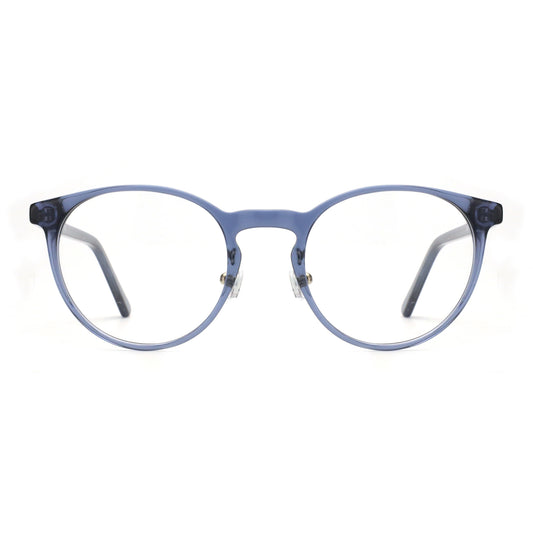
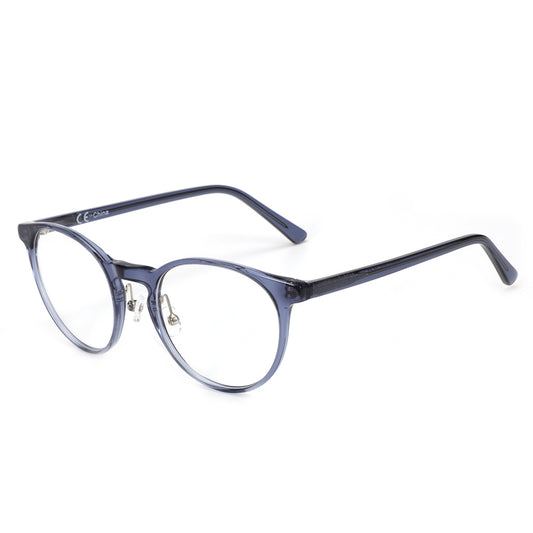
- Small, Rounder Shapes: These minimize the distance from the optical center to the edge, resulting in the thinnest possible profile.
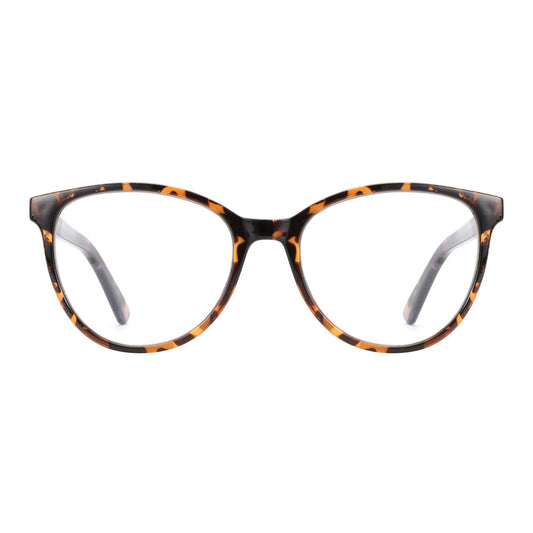
- Acetate (Plastic) Frames: Thicker rims can hide the edge of a high-index lens, making even a slightly thicker lens look flush.
- Avoid Rimless Styles: While 1.74 is durable, the edges are exposed in rimless designs. If your prescription is very high, the edge thickness will be visible regardless of the index.
When browsing for new eyeglasses, look for frames with a smaller "lens width" (the first number in the frame sizing, e.g., 48-18-140) to ensure your 1.74 lenses perform as intended.
Technical Standards and Durability in 2026
In 2026, all prescription lenses sold in the U.S. must meet the updated ANSI Z80.1-2025 standards. These regulations govern everything from impact resistance to the accuracy of the cylinder axis. For 1.74 lenses, these standards are particularly important because the material is more brittle than polycarbonate. Modern manufacturing has mitigated this through advanced hard-coatings that are chemically bonded to the MR-174 substrate.
Durability is another area where the "online vs. local" debate surfaces. Some claim that local opticians provide "better" coatings. However, in 2026, high-end vacuum deposition technology for anti-reflective coatings is standardized across major optical labs. Whether the lab is owned by a large corporation or a factory-direct online brand, the chemical processes for hydrophobic and oleophobic layers are largely identical. The key to longevity remains proper care: always use a microfiber cloth and avoid exposing high-index lenses to extreme heat (like a car dashboard), which can cause the coatings to "craze" or crack.
FAQ
Why are 1.74 high-index lenses so expensive at my local doctor? Local opticians operate with high overhead costs, including professional staff, specialized equipment, and retail rent. They often use a "high-margin, low-volume" business model, where the profit from one pair of high-index glasses covers several hours of professional service. Online retailers use a "low-margin, high-volume" factory-direct model, passing the savings on to the consumer.
Is there a difference in quality between $100 and $400 1.74 lenses? In terms of the raw material (MR-174), there is virtually no difference, as most of the world's 1.74 monomer is produced by a few specialized chemical companies. The difference usually lies in the brand of the coating or the "name brand" of the lens (e.g., Essilor or Zeiss). While name-brand lenses may offer proprietary digital surfacing designs, the physical thickness and basic optical properties of the 1.74 material remain consistent across the industry.
At what prescription should I start considering 1.74 lenses? Most optical experts recommend 1.74 lenses for total power (Sphere + Cylinder) of -6.00 or higher. If your prescription is between -3.00 and -6.00, 1.67 high-index lenses usually provide the best balance of cost, thickness, and optical clarity (Abbe value). Below -3.00, standard polycarbonate or 1.57 mid-index lenses are typically sufficient.
Do 1.74 lenses come with UV protection? Yes, 1.74 high-index material inherently blocks 100% of UVA and UVB rays. Unlike standard plastic (CR-39), which requires an additional coating for UV protection, the chemical structure of high-index resins naturally filters out harmful ultraviolet radiation, meeting or exceeding ISO 8980-3 standards.
Can I get 1.74 lenses for rimless glasses? Yes, 1.74 is suitable for rimless and semi-rimless frames because it is a high-tensile material that resists cracking at drill points. However, because 1.74 lenses are so thin, the edges may appear sharp or "unfinished" if the prescription is very high. Many users prefer a full-rim frame to better protect and conceal the lens edges.
Do 1.74 lenses have more glare than other lenses? Because high-index materials reflect more light than standard plastic, they must be paired with a high-quality anti-reflective (AR) coating. Without AR coating, 1.74 lenses would have significant "ghost images" and reflections. In 2026, almost all 1.74 lenses sold online or locally include AR coating as a standard feature to ensure visual comfort.
References
Government / Standards / Regulators
- ANSI Z80.1-2025: Ophthalmic Lenses - Recommendations (Reference to updated standards)
- ISO 8980-1:2026: Ophthalmic optics — Uncut finished spectacle lenses (Standard for optical power tolerances)
Industry Associations / Research Institutes
Academic / Whitepapers / Labs
- Abbe Value and Chromatic Aberration in High-Index Polymers
- Material Science of Thiourethane Resins (MR Series)
Community
- Optical Retail Pricing Structures and Markup Logic (Intent only; not authoritative)
