



Asian Fit and High Myopia: Securing Thick Lenses on Low Nose Bridges
If you have a low nose bridge and a strong prescription, you know how frustrating it is when heavy glasses constantly slide down, press on your nose, or sit too low and touch your cheeks. Low-bridge or Asian Fit frames combined with 1.74 high-index lenses can often improve stability and reduce visible bulk, but only when the frame geometry truly matches your face and the lens size is kept compact.

Why Standard Frames Fail on Low Nose Bridges with High Prescriptions
Standard eyeglass frames are typically designed with a higher nose bridge and nose pads positioned for average Caucasian facial geometry. On a lower nose bridge, these frames often sit too low, tilt forward, or slide down easily. When you add thick lenses from a strong prescription, the extra front weight makes the problem worse. The glasses become front-heavy, increasing pressure on the nose and ears while compromising visual alignment.
Bridge shape, nose-pad placement, and frame angle all affect how securely the glasses rest. As this high bridge vs low bridge guide explains, mismatched geometry leads to constant slipping or cheek contact, especially during movement or when looking down. For people with high myopia, the added lens thickness and weight amplify these issues, turning everyday wear into an annoyance that requires frequent readjustments.
Many online shoppers also face challenges with small faces or narrow pupillary distances. Oversized frames popular in fashion can make high-prescription lenses appear even thicker at the edges and feel heavier overall. This combination often leads to regret after purchase when the glasses fail to deliver the secure, comfortable fit promised.
What Asian Fit or Low-Bridge Frames Actually Mean
Asian Fit, also called low-bridge fit, is a retail term describing frames shaped to accommodate lower nose bridges. These designs typically feature lower nose-pad placement, a more curved or adjusted bridge area, and proportions better suited to smaller faces or lower bridge heights. The goal is to help the frame sit higher and more securely without sliding or resting on the cheeks.
However, the label alone does not guarantee success. As noted in fit guidance from eyewear manufacturers, low-bridge fit frames are designed to sit more securely on lower nose bridges and can help reduce slipping when the frame geometry matches the wearer's face. Success depends on bridge height, pupillary distance, face width, lens weight, and overall frame proportions rather than identity labels alone.
Adjustable nose pads often play a key role. They allow customization that can improve stability for some low-bridge wearers, though results vary based on how well the base bridge shape aligns with your anatomy.

The Role of 1.74 High-Index Lenses in Managing Thick Lenses
High-index lenses, particularly 1.74 material, significantly reduce thickness and weight compared with standard plastic or lower-index options for strong prescriptions. This thinning helps minimize edge bulk and front-heavy feel that contributes to slipping on low nose bridges.
Lens thickness depends on prescription strength, frame size, and pupillary distance, so frame choice matters when you have a strong prescription. High-index lenses can reduce thickness and weight for stronger prescriptions, though the result still depends on prescription and frame choice. Choosing smaller frames with 1.74 lenses often delivers the most noticeable improvement in both appearance and comfort.
That said, 1.74 lenses are not a standalone fix. If the frame is oversized or poorly matched to your face, the lenses can still feel heavy or create pressure points. Our technical guide to high-index lens materials details how refractive index, Abbe value, and frame selection interact for optimal results in high prescriptions.
Key Tradeoffs and Hidden Costs
While the combination of low-bridge frames and 1.74 lenses addresses many common complaints, several tradeoffs deserve attention. Higher-index materials can introduce slightly more chromatic aberration or edge distortion for some users, though this is often less noticeable than the bulk they replace. Frame materials also matter: lighter options may feel better but could require more frequent adjustments, while more durable materials add subtle weight.
A major hidden cost is ongoing maintenance. Even a good low-bridge fit may need periodic nose-pad or temple tweaks if your face shape or prescription creates sensitivity. Oversized fashionable frames can erase much of the thickness and weight benefit, leaving you with glasses that look bulkier than expected and still slide.
Cost is another factor. Upgrading to 1.74 lenses adds expense that only pays off when your prescription and frame size make the thinning visibly worthwhile. Choosing the wrong combination can mean spending more without solving the core slipping or comfort issues.
Low-Bridge / Asian Fit + 1.74 Lens: Trade-off Map
Illustrative comparison of fit and value trade-offs for high myopia on low nose bridges.
View chart data
| Series | Bridge Stability | Thickness/Weight Reduction | Face Proportion Match | Daily Maintenance | Overall Value |
|---|---|---|---|---|---|
| Ideal Low-Bridge + 1.74 Match | 5.0 | 4.0 | 4.0 | 3.0 | 4.0 |
| Oversized Fashion Frame | 2.0 | 2.0 | 1.0 | 2.0 | 2.0 |
| Standard High-Bridge Frame on Low Nose | 1.0 | 3.0 | 2.0 | 3.0 | 2.0 |
Illustrative comparison based on common fit factors and writer evidence modules; actual results depend on individual face and Rx. The scores are heuristic trade-off ratings for decision support, not measured outcomes.
When Low-Bridge Frames with 1.74 Lenses Work Best — And When They Don't
Low-bridge or Asian Fit frames deliver the most benefit when your primary issue is sliding due to bridge height and your prescription is strong enough that thinner lenses meaningfully reduce weight. In these cases, a properly proportioned frame with 1.74 lenses can feel secure, look sleeker, and require fewer adjustments.
The choice flips when lens bulk or face proportions are the bigger problem. Oversized frames, even with low-bridge design, often fail to offset the weight of very thick lenses. Similarly, if your pupillary distance and chosen frame width create excessive decentration, edge thickness increases regardless of bridge style.
Do not assume Asian Fit is the automatic answer if the frame still sits on your cheeks, slides with normal movement, or has a large lens area that makes thickness noticeable. In these situations, prioritizing smaller frame sizes, better PD matching, or alternative shapes may provide more practical improvement than bridge geometry alone.
This guide on the best frames for 1.74 lenses offers additional strategies for minimizing edge thickness with strong prescriptions.
Practical Buyer Checklist for Secure Fit with Thick Lenses
Use this self-check before purchasing to improve your chances of a successful fit:
- Does the frame sit without sliding when you move your head or look down?
- Are the nose pads positioned to rest comfortably on your lower bridge without creating pressure points?
- Is the lens width and overall frame size small enough to keep high-prescription lenses compact?
- Does your pupillary distance align well with the frame to avoid excessive edge thickness?
- Would you describe the glasses as stable without pinching your temples or resting heavily on your cheeks?
If most answers are yes, a low-bridge frame paired with 1.74 lenses is likely worth considering. If several are no, focus first on frame size, PD accuracy, and lens index before relying on the Asian Fit label.
Our article on ordering high-prescription glasses online provides step-by-step advice for measuring and selecting to avoid common regrets.
Choosing the Right Frames and Lenses at Zenottic
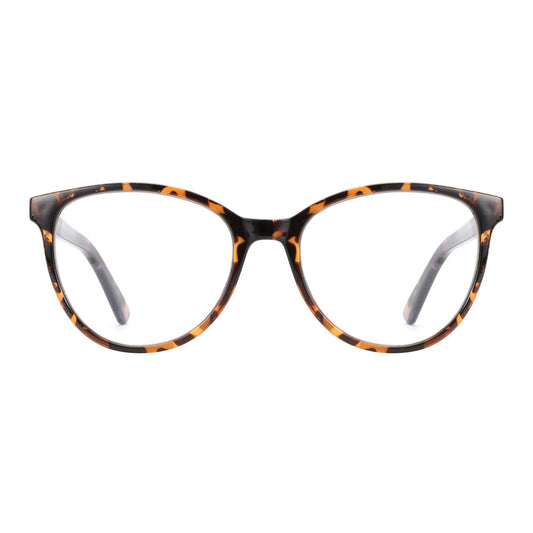
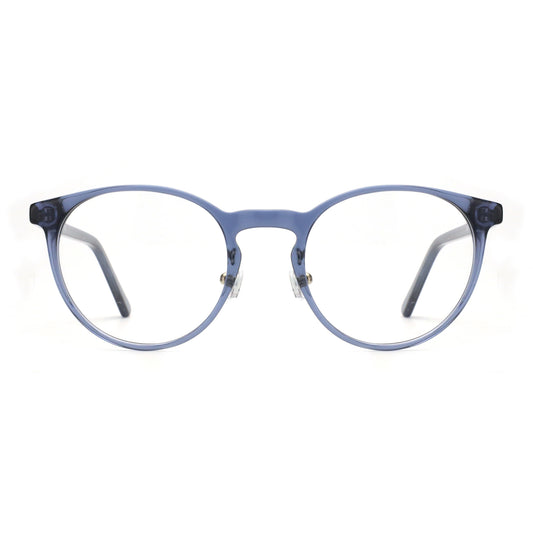
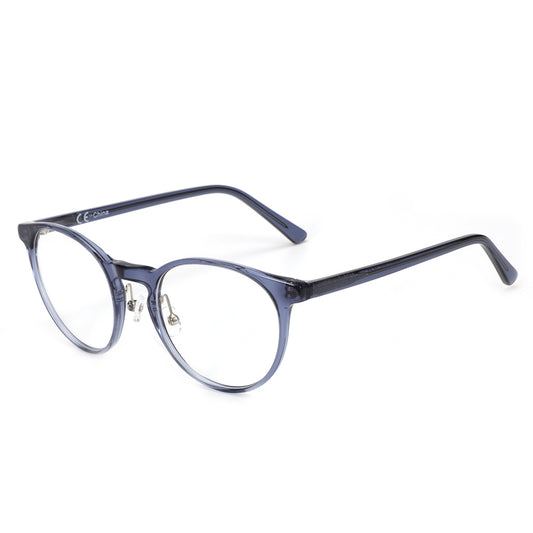
Zenottic offers several styles suitable for low nose bridges and high prescriptions. Look for frames with adjustable nose pads and compact proportions when pairing with 1.74 high-index lenses. Popular options include the Zenottic Eyeglasses Hubery and Zenottic Eyeglasses Daphne, which work well with thin lenses for strong prescriptions.
For men seeking secure everyday wear, consider styles from the Men Eyeglasses collection. Acetate frames can provide durability while maintaining lightweight feel when properly sized. Browse the full Eyeglasses collection to compare options designed for comfort and style.
Additional helpful reads include how to stop heavy high-prescription glasses from sliding and when 1.74 high-index lenses are worth the upgrade.
Comfort Disclaimer
This article discusses eyewear fit, frame geometry, and lens material considerations for improved comfort and stability. It does not constitute medical advice, vision diagnosis, or treatment recommendations. Glasses fit depends heavily on individual facial features, exact prescription, and personal tolerance. If you experience persistent discomfort, headaches, or vision issues, consult a qualified eye care professional. Results with any specific frame or lens combination vary and cannot be guaranteed.
Finding the right combination of low-bridge fit and high-index lenses takes some research, but it can transform how comfortable and secure your glasses feel all day. By prioritizing frame proportions, accurate measurements, and realistic expectations around tradeoffs, you can select eyewear that stays put without constant adjustments while looking and feeling better with your strong prescription.
