



Best Frames for High Prescriptions: Style Meets Thickness
Summary
Selecting the best frames for high prescriptions in 2026 requires a strategic combination of frame geometry, material selection, and high-index lens technology to effectively mask lens thickness and eliminate the 'coke bottle' effect. By prioritizing smaller eye sizes, rounded shapes, and thick acetate rims, users with prescriptions of -6.00 and above can achieve a sleek, lightweight aesthetic that balances optical precision with modern style.

Key takeaways
- Prioritize Frame Geometry: Smaller eye sizes (48mm-52mm) and rounded shapes naturally minimize the thickest part of the lens at the edges.
- Material Matters: Thick acetate frames provide a physical barrier that hides lens edges more effectively than thin metal wires.
- Optimize Lens Index: Utilizing 1.67 or 1.74 high-index materials is essential for reducing overall lens volume and weight.
- Precision Fitting: Accurate Pupillary Distance (PD) and vertex distance measurements are critical for both visual clarity and aesthetic results.
Understanding the 'Coke Bottle' Effect in High Prescriptions
For individuals with high myopia (nearsightedness), lenses are thinner in the center and thicker at the edges. As the prescription strength increases, so does this edge thickness. In the past, this often resulted in the dreaded 'coke bottle' look, where the lenses protruded significantly from the frame. However, advancements in lens manufacturing and frame design have made it possible to virtually eliminate this concern.
The aesthetic challenge is primarily a result of physics: the higher the diopter, the more the lens must curve to refract light correctly. When these lenses are placed in large or thin frames, the thick edges become highly visible. To combat this, one must understand how to avoid coke bottle lenses by selecting frames that work with, rather than against, the lens's natural shape.
Logic Summary: The 'coke bottle' effect is a direct result of lens edge thickness in minus prescriptions. The goal of frame selection is to physically mask these edges or minimize their creation through smaller lens diameters.
How to Choose the Right Frame Shape for Thick Lenses
Shape is the most critical factor in determining how much of your lens edge will be visible. Round and oval frames are superior for high prescriptions because they lack the sharp corners found in rectangular or square styles. In a rectangular frame, the distance from the optical center to the corners is greater, which forces the lens to be thicker at those points.
By choosing a rounded design, you effectively 'cut off' the thickest parts of the lens. This is particularly important for prescriptions exceeding -6.00. Furthermore, 2026 trends are leaning towards softer, more organic shapes, making rounded frames both a technical and fashionable choice. If you are unsure which shape suits you, consulting an ultimate face shape guide can help you find a style that balances your features while accommodating your prescription.

Why Acetate Frames Are the Gold Standard for High Myopia
While metal frames offer a minimalist look, they are often too thin to hide the edges of a high-index lens. Acetate frames, on the other hand, feature thicker rims that can completely encompass the lens edge. This material acts as a built-in 'mask' for the lens thickness.
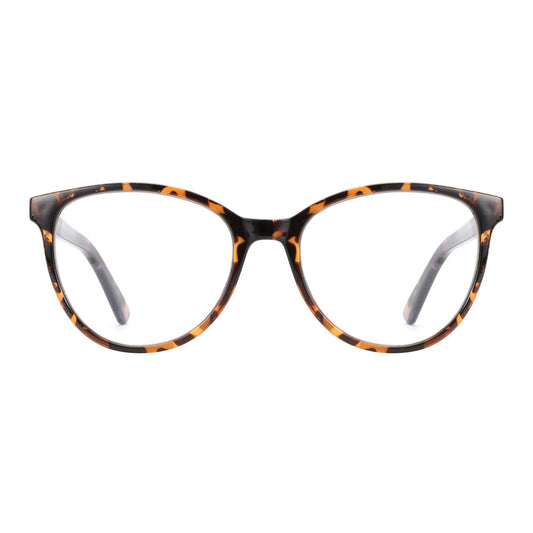
Acetate also offers greater durability and a wider variety of colors and patterns, which can further distract the eye from the lenses. In 2026, we are seeing a rise in 'architectural' acetate designs that use varying thicknesses within the frame itself to provide extra coverage where it's needed most—at the temporal edges.
Material Comparison Table for High Prescriptions
| Feature | Acetate Frames | Metal Frames | Rimless/Semi-Rimless |
|---|---|---|---|
| Thickness Masking | Excellent | Poor to Fair | None |
| Weight | Moderate | Light | Ultra-Light |
| Durability | High | High | Low |
| Style Flexibility | High | Moderate | Minimalist |
| Best For | -6.00 and above | Up to -4.00 | Up to -2.00 |
Logic Summary: This table assumes standard lens edging. High-index lenses can extend the range of metal frames, but acetate remains the safest choice for maximum thickness concealment.
The Role of High-Index Lens Technology
Frame selection is only half the battle; the lens material itself plays a pivotal role. High-index lenses are made from specialized polymers that refract light more efficiently than standard plastic or glass. This allows the lens to be significantly thinner and lighter for the same prescription power.
The Technical Guide to High-Index Lens Materials and Standards details how the MR™ series polymers (1.61, 1.67, 1.74) have revolutionized eyewear for high-prescription users. For prescriptions between -6.00 and -8.00, 1.67 high-index lenses are often the 'sweet spot' for value and performance. For prescriptions above -8.00, 1.74 super high-index lenses are recommended to achieve the thinnest possible profile.
ANSI Z80.1-2025 and Quality Standards
It is important to note that the latest ANSI Z80.1-2025 standards have introduced stricter tolerances for lens thickness and optical centering. These standards ensure that high-index lenses not only look good but also provide the precise vision correction required for high prescriptions. When ordering online, ensure your provider adheres to these updated manufacturing protocols to avoid distortions often associated with thinner lens profiles.
Strategic Frame Sizing: The 'Eye Size' Secret
The 'eye size' of a frame (the first number in the 50-18-140 sequence) refers to the horizontal width of the lens. For high prescriptions, smaller is almost always better. A smaller eye size means the lens doesn't have to extend as far from the optical center, resulting in a thinner edge.
A common mistake is choosing a frame that is too wide for the face, which not only looks disproportionate but also exacerbates lens thickness. Aim for a frame where your eyes are centered horizontally within the lens. This centering is crucial for both aesthetics and optical performance, as it minimizes peripheral distortion.
2026 Trends: Fashionable Options for High Prescriptions
The eyewear landscape in 2026 is embracing 'intentional' designs that favor bold, thick-rimmed aesthetics. This is fantastic news for high-prescription users. Styles such as 'Modern Retro' and 'Eco-Architectural' acetate frames are trending, both of which provide the necessary rim thickness to hide lenses.
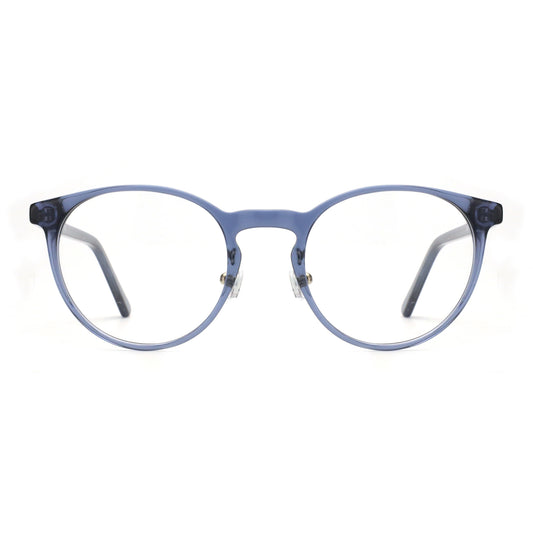
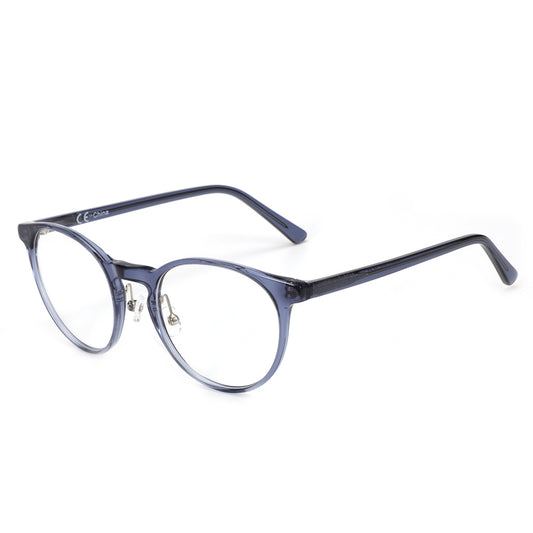
- Translucent Acetates: Clear or lightly tinted frames are popular and can make the transition between the frame and the lens edge appear more seamless.
- Geometric Rounds: A twist on the classic round, these offer a more modern look while maintaining the edge-thinning benefits of a circular shape.
- Mixed Media: Frames that combine thick acetate rims with metal temples offer the thickness masking of acetate with the lightweight feel of metal.
For those looking for a comprehensive overview of all options, the ultimate guide to high prescription eyewear provides further insights into balancing these trends with technical requirements.
FAQ
What is the best frame material for high prescriptions? Acetate is widely considered the best material because its thick rims can physically hide the edges of thick lenses. Unlike thin metal frames, acetate provides enough depth to encapsulate the lens, preventing it from protruding. This is especially beneficial for prescriptions over -6.00 where edge thickness becomes a significant aesthetic concern.
Can I wear rimless glasses with a high prescription? While technically possible with high-index 1.74 lenses, rimless glasses are generally not recommended for high prescriptions. Without a frame to hide the edges, the full thickness of the lens is visible, which can create a prominent 'ring' effect. Additionally, high-prescription lenses are heavier, which can put undue stress on the drill points of rimless frames, leading to durability issues.
How does frame size affect lens thickness? Frame size, specifically the 'eye size,' has a direct impact on lens thickness. In minus prescriptions, the lens gets thicker as you move away from the center. A smaller frame requires a smaller lens diameter, which effectively 'clips' the thickest part of the lens before it reaches the edge. Choosing a frame with an eye size under 52mm can significantly reduce the final thickness.
Are 1.74 high-index lenses worth the extra cost? For prescriptions above -8.00, 1.74 high-index lenses are usually worth the investment as they offer the maximum reduction in thickness and weight. However, for prescriptions between -4.00 and -6.00, the difference between 1.67 and 1.74 may be negligible to the naked eye. It is often more cost-effective to choose a 1.67 lens and pair it with a well-optimized frame shape.
Why do my eyes look smaller behind high prescription lenses? This is a phenomenon known as 'minification,' caused by the concave shape of minus lenses. While you cannot change the physics of the lens, choosing frames that sit closer to your eyes (a smaller vertex distance) can reduce this effect. Additionally, high-index lenses have a flatter profile, which can slightly mitigate the perceived shrinking of the eyes compared to standard lenses.
How do I know if a frame will hide my lens thickness? A good rule of thumb is to look at the 'rim depth' of the frame. If the rim is thicker than 3mm, it will likely hide most lenses up to -6.00. For higher prescriptions, look for frames with even deeper rims or 'hooded' designs. You can also use online thickness calculators provided by many retailers to get an estimate of your final lens profile before purchasing.
References
Government / Standards / Regulators
- ANSI Z80.1-2025: Prescription Ophthalmic Lenses - Recommendations
- ISO 8980-1:2017 Ophthalmic optics — Uncut finished spectacle lenses
Platform official docs & policies
Industry associations / research institutes / market reports
- The Vision Council: 2026 Eyewear Trends Report
- Optical Industry Association: High-Index Material Performance Study
