



The Complete Guide to Ordering Progressive Lenses Online
Ordering progressive lenses online can save hundreds of dollars compared to retail stores while delivering comparable quality, provided you supply accurate measurements and select compatible frames. In 2026, digital free-form lens technology has made remote ordering more reliable than ever, but success still depends on understanding pupillary distance (PD), frame suitability, and proper prescription entry. This guide walks you through every step to order with confidence and minimize adaptation issues.

What Are Progressive Lenses and Why Do They Require Special Care Online?
Progressive lenses, also known as multifocal or no-line bifocals, correct presbyopia by providing a seamless transition between distance, intermediate, and near vision within a single lens. Unlike single-vision glasses, they contain multiple optical zones that must align precisely with your eyes and line of sight. As this FTC consumer alert on the Eyeglass Rule explains, online progressive orders often require additional measurements such as pupillary distance and, for some prescriptions or frame choices, fitting height or segment height.
Your standard eyeglass prescription may not automatically include these details. According to regulatory guidance, a correct glasses prescription may not automatically include the measurements needed to order progressive lenses online. This distinction explains why many first-time online buyers encounter blurry zones or the "swim effect" if measurements are off.
Accurate pupillary distance is essential for aligning the lenses with the wearer’s eyes and optical centers, per research published in medical literature. Incorrect PD can shift the optical centers, leading to distorted vision, headaches, or dizziness.
How to Measure Your Pupillary Distance (PD) at Home Accurately
PD measures the distance between your pupils in millimeters and is critical for centering the lenses correctly. For progressives, both monocular PD (each eye separately) and binocular PD are often preferred.
You can measure PD using a ruler and mirror, a smartphone app, or a friend’s help. Our internal guide How to Measure Your Pupillary Distance (PD) at Home Fast provides step-by-step instructions with photos. Aim for accuracy within 1-2 mm; evidence suggests that for lower prescriptions, small errors of 1–2 mm may have limited impact, but larger errors affect progressive corridor alignment more noticeably.

Many online retailers now accept customer-provided PD, as supported by updated FTC rules promoting consumer access to this measurement. Always double-check your measurement at least twice and consider using a digital tool for verification.
Choosing the Right Frames for Progressive Lenses
Not every frame works well with progressives. Frame depth and shape can affect whether a frame is suitable for progressive lenses, especially for stronger prescriptions or larger lens corridors.
Look for frames with sufficient vertical lens height, often called the B measurement. Industry sources consistently recommend a minimum lens height of 28-30 mm for standard progressive lenses to accommodate the full corridor of distance, intermediate, and reading zones. Frames shallower than this limit the usable progressive area and increase adaptation difficulty.
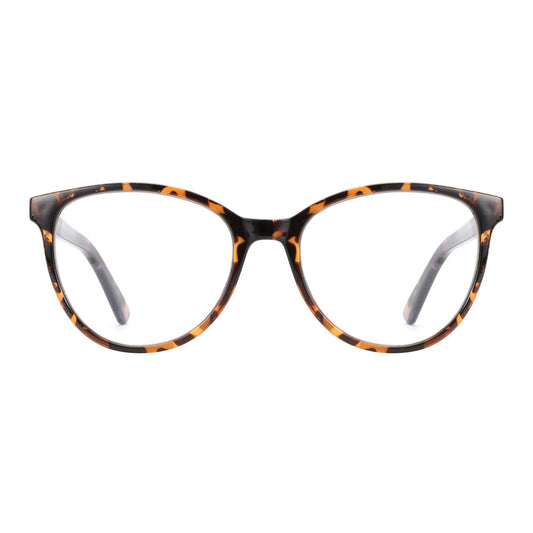
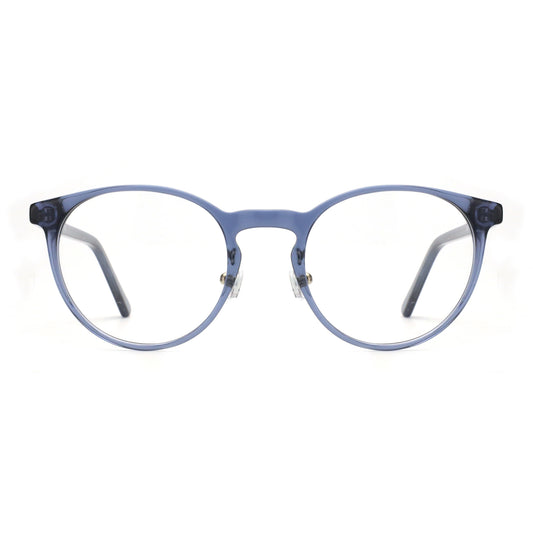
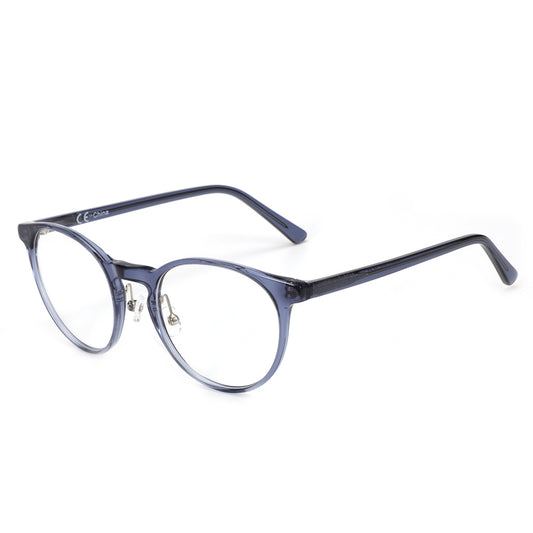
When shopping on Zenottic, review frame specifications carefully. Our Eyeglasses collection includes many styles suitable for progressives. Prefer frames with adjustable nose pads for better fit stability, as progressive lens fitting depends on vertical positioning, so the frame’s fit on the face matters, not just the lens prescription.
Quick Frame Checklist:
- Minimum B measurement: 28-30 mm
- Adequate lens width for your PD
- Stable fit that sits consistently on your face
- Avoid extremely curved or shallow fashion frames for your first progressive pair
How to Input Your Progressive Prescription Correctly
Start by understanding your prescription using our guide How to Read Your Eye Prescription: OD, OS, CYL, and AXIS. For progressives, you will typically enter the distance prescription plus the "ADD" power for near vision.
Key fields to watch:
- SPH, CYL, AXIS for each eye (OD/OS)
- ADD power (usually the same for both eyes)
- PD (monocular preferred when available)
- Fitting height or segment height if the retailer requests it
Some retailers offer "digital measurement" tools or will request a photo of you wearing the frame. Provide as much information as possible. Progressive lenses provide a seamless transition between distance, intermediate, and near vision, so alignment and fitting are critical.
If your prescription includes prism or other special parameters, consider consulting your optometrist before ordering online. Complex prescriptions raise remake risk.
Comparing Lens Designs, Materials, and Coatings
Online retailers offer various progressive lens designs, from basic to premium free-form digital lenses that customize the corridor to your specific PD and frame fit. Premium designs often reduce peripheral distortion and the swim effect.
Lens material choices include standard plastic, polycarbonate, Trivex, and high-index options like 1.67 or 1.74 for stronger prescriptions. Our Technical Guide to High-Index Lens Materials and Standards details performance differences.
Consider coatings for everyday use:
- Anti-reflective (reduces glare, especially for screen work)
- Blue-light filtering for digital device use
- Scratch-resistant and UV protection
Compare total cost including lenses, coatings, and shipping against in-store prices. Many buyers save 50-70% online, as outlined in our companion article Progressive Lenses Online: How to Save 70% vs Retail.
Reducing Risks: Avoiding Blurry Zones and Adaptation Problems
The most common complaints with online progressives involve misalignment leading to narrow clear zones or excessive swim in the periphery. Progressive lens wearers often need a short adaptation period because the lens contains multiple zones and the wearer must learn to use them correctly.
Practical Adaptation Tips:
- Wear the glasses consistently for at least 1-2 weeks
- Practice looking through the correct zones: distance straight ahead, intermediate lower, reading at the bottom
- Move your head rather than just your eyes initially
- Start with short wearing periods if dizziness occurs
Our dedicated guide Tips for Adjusting to Progressive Lenses Without the Dizziness offers more detailed strategies.
Persistent issues after two weeks often indicate a fitting problem rather than normal adaptation. In such cases, contact the retailer promptly about remake options.
How to Choose a Reliable Online Retailer for Progressives
Look for retailers that clearly explain measurement requirements, offer fitting guidance, and maintain transparent remake policies. Reliability is better judged by whether the seller checks the right measurements, explains compatibility limits, and has a workable remake or refund path.
Zenottic uses high-quality materials and supports accurate online ordering. Browse our Men Eyeglasses or Women eyeglasses collections to find progressive-ready frames. We recommend starting with popular models like the Zenottic Chloe or Morgan for their versatile fit.
Compare policies across retailers before purchasing. A successful online progressive order depends on accurate measurements, correct prescription entry, and a frame that fits properly on your face.
Common Mistakes to Avoid When Ordering Progressives Online
- Using only binocular PD when monocular is available
- Selecting frames with insufficient vertical height
- Guessing fitting height instead of measuring or using retailer tools
- Ignoring adaptation guidance and returning too quickly
- Choosing complex designs as a first-time progressive wearer
Myth: online progressives are fine as long as you have a PD number. Reality: PD helps, but it does not replace fitting height, frame position, and how the frame sits on the face.
Myth: if progressives are made correctly, they should feel instantly natural. Reality: even a correct pair can take some adaptation, but persistent blur or swim often points to a measurement or frame-fit problem.
Who Should Consider Ordering Progressives In-Store Instead?
Skip online ordering if this is your first pair of progressives and you have no chance to test comfort in person. Also avoid if your frame choice is uncertain, you lack reliable measurements, your prescription is complex, or the retailer’s remake policy is weak.
Individuals with motion sensitivity, history of adaptation difficulty, or specific eye conditions should consult their eye care professional first. This article only discusses comfort and setup advice; it does not constitute medical advice, diagnosis, or treatment. If you experience persistent discomfort or have existing eye conditions, consult qualified professionals.
Final Checklist Before You Order Progressive Lenses Online
- Obtain your full prescription including ADD power
- Measure and verify your PD (twice)
- Select frames with at least 28-30 mm lens height
- Confirm the retailer accepts your measurements and offers remake support
- Understand the adaptation process and set realistic expectations
- Start with a simple progressive design if new to multifocals
- Review the retailer’s return and remake policy carefully
By following these steps, most people can successfully order progressive lenses online and enjoy significant savings without compromising vision quality.
Ordering progressives online in 2026 offers convenience and cost benefits when approached with proper preparation. Focus on accurate self-measurement, frame compatibility, and retailer support to achieve clear vision across all distances. With careful selection, the process can be straightforward and reliable for many users.
Important Note on Vision Health: This guide provides setup and purchasing information only. Progressive lenses involve individual visual needs that may require professional fitting. This content is not a substitute for advice from an optometrist or ophthalmologist. Seek professional care for any vision concerns, symptoms, or before making changes to your corrective eyewear, especially if you have underlying eye conditions.
