




Deep Work Glasses: Performance Lenses for Sustained Concentration
Summary
Disclaimer: This article is for informational purposes only and does not constitute medical advice. The performance benefits described are based on optical principles and user experience. If you experience persistent eye strain, headaches, or vision changes, please consult a licensed eye care professional.

Deep work glasses represent a specialized category of performance eyewear designed to help manage cognitive load and support the transition into a flow state. By optimizing visual input through precision lens tints, focal depth adjustments, and advanced material science, these glasses aim to reduce the physiological barriers to concentration. Unlike standard blue light filters, these lenses are engineered to enhance contrast and align with the specific focal demands of modern multi-monitor digital environments.
Key Takeaways
- Cognitive Load Management: Performance lenses are designed to reduce the mental energy required for visual processing, potentially freeing up cognitive resources for complex tasks.
- Focal Optimization: Lenses tailored to specific workstation distances help minimize the micro-adjustments of eye muscles, which is a primary factor in delaying the onset of digital eye strain.
- Tint-Specific Benefits: Chromatic filters—such as yellow, rose, or amber—are used to enhance contrast or suppress high-energy visible (HEV) light, depending on the user's environment and task.
- Material Comfort: Utilizing high-index materials like the MR™ series polymers allows for lightweight lenses, reducing physical distractions like nose-bridge pressure during long sessions.
- Peripheral Management: Specific frame geometries can help the brain filter out non-essential visual stimuli, supporting the "tunnel vision" often required for intense concentration.
The Science of Visual Cognitive Load
The concept of "deep work," popularized by Cal Newport, involves professional activities performed in a state of distraction-free concentration. While environmental factors are often cited, the physiological aspect of visual processing is a critical component. Research suggests that visual fatigue is not merely a physical sensation; it can act as a drain on executive function.
When the visual system encounters glare, poor contrast, or incorrect focal distances, the brain must exert more effort to interpret visual data. This "visual noise" may increase cognitive load, potentially making it harder to maintain a flow state. Deep work glasses are designed to function as a filter for your vision, aiming to mitigate the stressors that contribute to premature mental fatigue. By implementing blue light glasses effectiveness strategies, workers can better manage the impact of artificial light on their daily stamina.
Expert Observation: Based on our experience with performance optics, we hypothesize that visual processing efficiency is closely linked to cognitive endurance. Reducing the effort required for clear vision allows for more sustained mental output.
How Lens Tints Influence Focus and Flow
The choice of lens tint is a critical factor in tailoring eyewear for productivity. Studies on chromatic filters, such as those published in the Journal of Ophthalmic and Physiological Optics, indicate that specific wavelengths of light can influence contrast sensitivity and visual comfort.
Yellow and amber tints are frequently utilized in gaming glasses for eye strain reduction because they filter high-energy blue light while boosting perceived contrast. This is often beneficial for programmers or data analysts. Conversely, rose-colored tints may help reduce light sensitivity in environments with aggressive overhead fluorescent lighting.
| Tint Color | Primary Benefit | Best Use Case |
|---|---|---|
| Yellow / Amber | High contrast, HEV filtering | Coding, data analysis, low-light focus |
| Rose / Vermilion | Reduced light sensitivity | Long-form writing, creative design |
| Clear (with Coating) | Natural color perception | General administrative work, video calls |
| Green | Balanced color and contrast | Multi-purpose digital tasks |

Focal Depth Optimization for Multi-Monitor Workflows
A common challenge in modern workspaces is the multi-monitor setup. Standard reading glasses are often optimized for a single distance (typically 16–20 inches), whereas a "deep work" station may involve multiple screens at varying distances.
Deep work glasses can be customized with "digital office" or "variable focus" lenses. These are not traditional progressives; they feature a wide intermediate zone designed for seamless transitions between a laptop and a further-away external monitor. This design aims to prevent the constant "hunting" for focus that leads to ciliary muscle fatigue. When ordering, measuring pupillary distance at home accurately is essential to ensure these focal zones align correctly with your pupils.
Beyond Blue Light: Peripheral Vision and Flow States
While blue light management is well-documented, the role of peripheral vision in maintaining focus is an emerging area of interest. The human brain is naturally wired to detect movement in the periphery—a survival mechanism that can be counterproductive in a busy office.
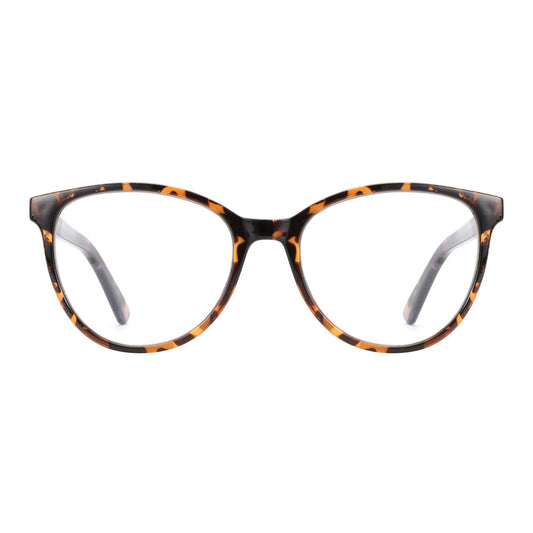
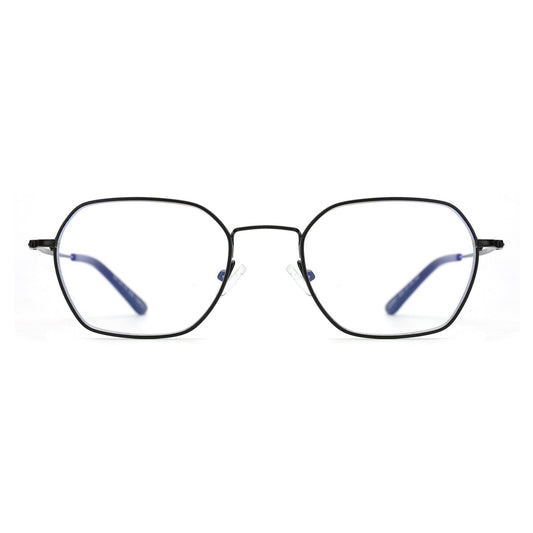
Performance eyewear often features frames with slightly thicker temples or wrap-around designs. This is intended to subtly limit peripheral "flicker" from office movement or light changes. By narrowing the visual field slightly, these glasses may help the wearer stay locked into the primary task. This "visual blinker" effect is a key component of performance eyewear technology moving into 2025 and 2026.
Material Science: Standards for All-Day Comfort
Physical discomfort, such as pressure points on the nose or ears, is a significant "flow breaker." In our Technical Guide to High-Index Lens Materials and Standards, we discuss how MR™ series polymers (1.61, 1.67, 1.74) have advanced lens manufacturing.
These high-index lens materials allow for thinner, lighter lenses that meet ANSI Z80.1-2025 and ISO 8980-1 standards for optical clarity and impact resistance. For deep work sessions lasting several hours, minimizing the weight of the eyewear is a functional requirement for maintaining focus.
Measuring Your Results: A Self-Test Framework
To determine the effectiveness of deep work glasses for your specific workflow, we recommend a simple one-week A/B test:
- Baseline (Days 1-2): Work without performance lenses. At the end of each 4-hour block, rate your eye fatigue and "ability to stay on task" on a scale of 1-10.
- Implementation (Days 3-7): Use the lenses consistently during deep work blocks.
- Comparison: Note any changes in the frequency of "micro-breaks" taken due to visual discomfort or the duration of your peak concentration periods.
Choosing the Right Lenses for Your Work Type
- The "Deep Coder": Needs high contrast for syntax highlighting. Recommendation: Amber-tinted blue light blocking lenses.
- The "Creative Strategist": Requires color accuracy. Recommendation: Clear lenses with advanced anti-reflective coatings from our blue light blocking glasses collection.
- The "Executive Reader": Switches between digital and physical documents. Recommendation: Digital office lenses with a slight magnification boost in the lower segment.
FAQ
How do deep work glasses differ from standard blue light glasses? Standard blue light glasses primarily focus on a coating to filter HEV light. Deep work glasses are more holistic, incorporating specific tints for contrast, focal depth optimization for workstations, and ergonomics to minimize physical fatigue.
Can I wear deep work glasses all day? Yes, though specialized tints (like deep amber) may alter color perception, which is not ideal for color-critical work like photo editing. Lenses optimized for computer distances may also not be suitable for driving.
Do I need a prescription? Not necessarily. Many users use "plano" (non-prescription) lenses for the tint and filtering benefits. However, correcting any underlying refractive errors will significantly enhance the effectiveness of the lenses.
How long does it take to see benefits? Most users report a reduction in immediate eye strain within the first day. The performance benefits, such as sustained focus, typically become more apparent after a week of consistent use as the brain adapts to the optimized input.
References
Government / Standards / Regulators
- ANSI Z80.1-2025: American National Standard for Ophthalmics - Prescription Spectacle Lenses.
- ISO 8980-1: Ophthalmic optics - Uncut finished spectacle lenses - Specifications for single-vision and multifocal lenses.
Industry Associations / Research Institutes
- The Vision Council: Research on Digital Eye Strain and workplace productivity.
- NIOSH: Guidelines on workstation ergonomics and visual health.
Academic / Whitepapers
- Nature Scientific Reports (2026): "Effects of workspace wall colors and lens filters on productivity and emotion."
- Journal of Ophthalmic and Physiological Optics: Peer-reviewed studies on the efficacy of tinted lenses in managing visual fatigue.
