


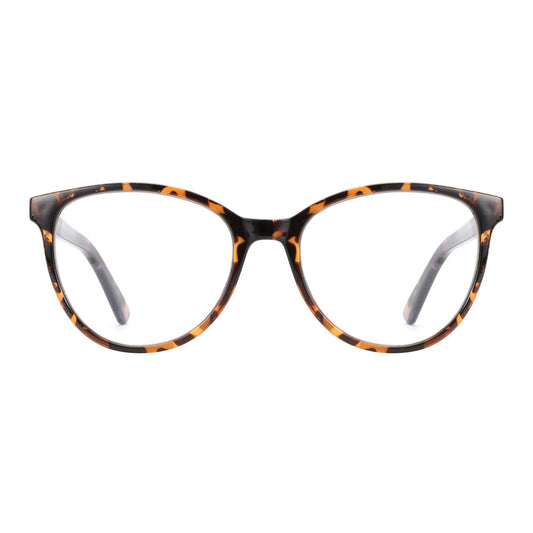

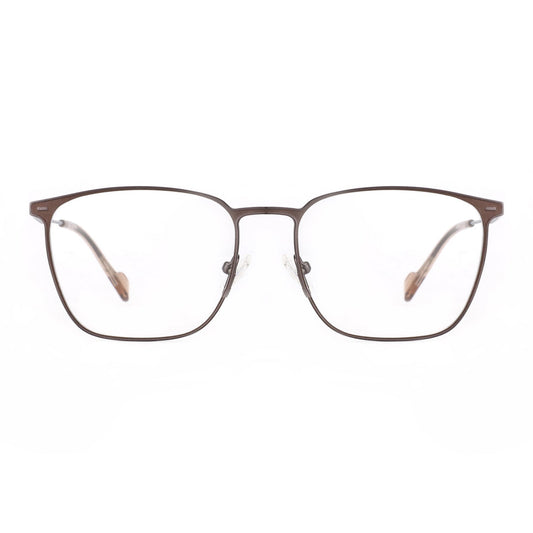
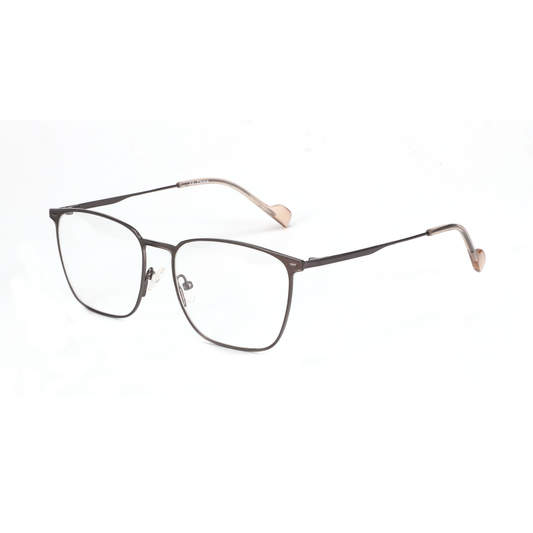
Geometric and Octagonal Eyeglass Frames: How Angular Lens Shapes Affect Edge Thickness
Whether geometric, hexagonal, or octagonal frames make strong prescription lenses look thicker depends on frame geometry and vertex placement rather than shape alone. An angular outline can make a high-minus lens edge look more noticeable when a vertex sits farther from the optical center than a round shape would, increasing what opticians call effective diameter. That is the main scenario to watch for, rather than a universal rule that applies to every wearer.

Asking whether geometric or hexagonal glasses frames make high prescriptions look thicker also comes down to prescription sign, finished lens size, optical centration, and material choice. A small, well-centered octagonal frame can look cleaner than a larger round one, while a poorly centered hexagonal frame can look thicker than expected even in a modest prescription. To manage visible thickness, check frame dimensions and centration first, compare high-index lens options second, and verify lab beveling compatibility third. The following sections break down how vertices affect optics, how the rules differ by prescription sign, and which adjustments yield the cleanest result.
Why Frame Vertices Change Effective Diameter and Edge Appearance
Effective diameter, often shortened to ED, is the key measurement connecting frame shape to how much lens material a lab must edge down. Understanding ED explains why an angular outline behaves differently than a round one at the same prescription.
Effective Diameter in Plain Language
Effective diameter is twice the longest radius of the lens shape, measured from the optical center to the farthest point on the outline. It describes finished lens geometry rather than a styling label. A round frame distributes edge distance evenly, while an angular outline pushes the farthest point out to a vertex. As that effective diameter increases, the optical lab must cut the shape from a larger lens blank, which directly increases finished edge thickness on minus lenses.
Why Vertices Can Expose Thicker Corners
A sharp or extended vertex increases the maximum distance between the optical center and the lens rim. This concentration means visible edge thickness often clusters at the corners rather than spreading evenly along the perimeter. Decentration also shifts which corner sits farthest from the pupil. If your eye sits inward from the frame center, the outer temple vertices require an even larger effective diameter, making corner thickness far more noticeable.
High-Minus vs. High-Plus Prescriptions: Which Thickness Matters?
Prescription sign determines where lens bulk sits, so minus and plus corrections require completely different evaluation rules.
High-Minus Prescriptions: Inspect the Angular Edge
When evaluating whether geometric or hexagonal glasses frames make high prescriptions look thicker, high-minus wearers must focus directly on the outer rim. Strong minus lenses are thinnest at the optical center and grow thicker toward the perimeter. Because an angular vertex creates a longer radius from the optical center, the corners of a minus lens naturally carry the most visible bulk. Choosing a smaller eye size and ensuring your pupils sit near the frame center significantly reduces this corner thickness.
High-Plus Prescriptions: Do Not Use an Edge-Only Rule
High-plus wearers should not judge an angular frame using edge thickness alone. Strong plus lenses are thickest at the center and taper down toward the perimeter. The lab must maintain a minimum edge thickness at the thinnest point so the lens can fit securely into the frame bevel, which in turn determines total center thickness and weight. Instead of worrying about corner edge flare, request a calculation that checks center thickness and minimum edge requirements for your chosen frame.
How to Reduce the Visible Effect in an Angular Frame
Minimizing lens thickness in an angular frame requires prioritizing frame fit first, lens material second, and edge treatments third.
Start with Frame Size and Centration
Compare the finished lens measurements rather than just the aesthetic shape in product photos. Selecting a compact angular frame where your eyes sit close to the horizontal and vertical centers yields the biggest reduction in edge bulk. According to optical industry technical guidance on lens thickness, frame shape and decentration act as primary drivers of finished thickness, on par with material index. In many cases, reducing frame width by a few millimeters reduces edge bulk more effectively than changing materials.
Compare 1.67 and 1.74 Conditionally
Upgrading to high-index plastic helps slim down strong prescriptions, but it works alongside proper frame sizing rather than replacing it. Our 1.67 high-index option and 1.74 high-index option are listed as progressively thinner than standard materials for high corrections. Before selecting an index, evaluate your exact power, frame dimensions, and lab edging capabilities to see if the reduction is worthwhile. Our lens thickness calculator can help you compare estimated edge profiles before ordering.
Ask About a Rounded Inner Bevel
A specialized edge treatment, such as a hide-a-bevel or modified bevel, can reduce visible corner reflection by placing the lens bevel closer to the front eyewire. However, bevel placement depends entirely on the frame groove depth and lab capabilities. Rather than assuming edge shaping will hide all thickness, confirm with your optician or lab whether your selected angular frame supports a modified bevel profile.
What to Verify Before Ordering an Angular Prescription Frame
Before ordering, verify these concrete optical specifications to ensure a comfortable and visually balanced fit:
- Finished lens dimensions, focusing on the longest radius or effective diameter of the chosen frame
- Pupil alignment within the frame to minimize decentration and corner bulk
- Prescription-specific requirements, separating edge thickness for minus powers from center thickness for plus powers
- Recommended lens index options, such as 1.67 or 1.74, suited to your power and frame shape
- Frame groove and bevel compatibility to ensure the lab can seat the lens cleanly
- The lab's expected edge or center thickness estimate for your specific order
If your pupillary distance centers well within the frame and the effective diameter remains compact, order your preferred geometric style with high-index lenses for a crisp, balanced profile. If decentration is substantial or the corners extend far beyond your pupils, choose a narrower frame size or request a lab thickness calculation before finalizing your purchase.
Sources
- Icare Labs (n.d.). Optics 101 Series Pt. 1 – Lens Thickness.
