



How to Eliminate Glasses Glare on Video Calls: A Guide
Summary
To eliminate glasses glare on video calls, you must combine strategic lighting placement with high-performance anti-reflective (AR) coatings that meet ANSI Z80.1-2025 standards. By positioning light sources at a 45-degree angle and utilizing multi-layer vacuum-deposited coatings, you can ensure your eyes remain visible and professional to your audience.

Key takeaways
- Angle Your Lighting: Position your primary light sources (key lights) at a 45-degree angle to your face rather than directly in front to minimize direct reflections.
- Invest in Premium AR: Modern multi-layer anti-reflective coatings, such as those discussed in our technical guide to high-index lens materials and standards, reduce light reflection to less than 0.5%.
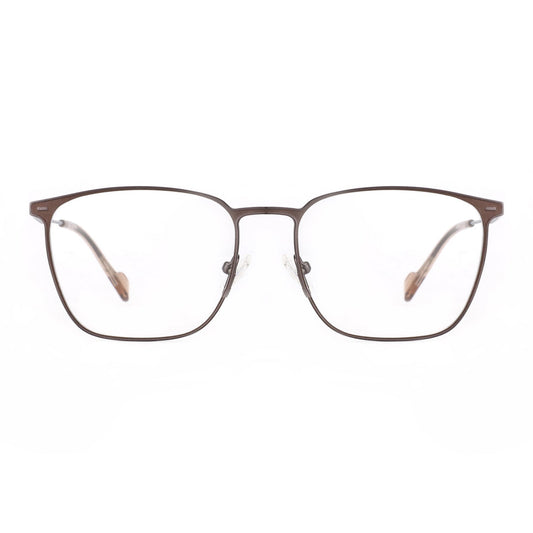
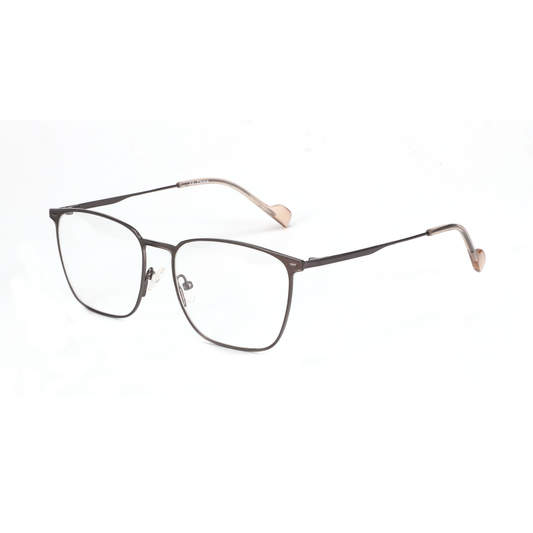
- Frame Selection Matters: Opt for matte finishes or thinner metal frames to reduce secondary reflections from the frame itself.
- Software Integration: Leverage 2026-era AI-driven video conferencing tools that can digitally suppress residual lens glare in real-time.
How to Optimize Your Lighting for Glare-Free Calls
The most immediate way to reduce glare is through the physical manipulation of your environment. According to ISO 9241-303 standards for electronic visual displays, the goal is to minimize luminance contrast between the screen and the surrounding environment. When your light source is directly in front of you—such as a ring light placed behind your camera—the light bounces off the flat surface of your lenses and directly back into the camera lens. This creates the "white-out" effect that obscures your eyes.
To correct this, move your light sources to the side. A standard "three-point lighting" setup is highly effective for professional presenters. Place your key light and fill light at roughly 45-degree angles from your nose. This ensures your face is well-illuminated while the reflected light bounces off your glasses at an angle that misses the camera lens entirely. If you use a single light source, try raising it higher than your eye level and tilting it downward, which directs the reflection toward your chest rather than the camera.
Logic Summary: This advice assumes a standard webcam setup. If you are using high-prescription lenses with significant curvature, the "angle of incidence equals the angle of reflection" rule still applies, but you may need a wider 50-60 degree angle to clear the lens periphery.
Understanding Anti-Reflective (AR) Coating Standards
While lighting adjustments are crucial, they cannot compensate for low-quality lens materials. In 2026, the industry standard for professional eyewear is defined by the ANSI Z80.1-2025 guidelines, which mandate specific performance metrics for light transmission and reflection. Standard plastic lenses without treatment reflect approximately 8% to 12% of incident light. In contrast, premium AR-coated lenses utilize a vacuum-deposition process to apply multiple microscopic layers of metal oxides, reducing reflection to as low as 0.2%.
This technology works through destructive interference. Each layer of the coating is calculated to a specific thickness so that the light waves reflecting off the front and back surfaces of the coating cancel each other out. For video calls, this is the "essential tool" because it allows nearly 99% of light to pass through the lens to your eyes, making them clearly visible to your colleagues. If you are curious about the material science behind these coatings, you can explore the relationship between refractive index and optical clarity in our guide to high-index lens materials, which details how MR™ series polymers interact with modern coatings.

Frame Material and Lens Geometry
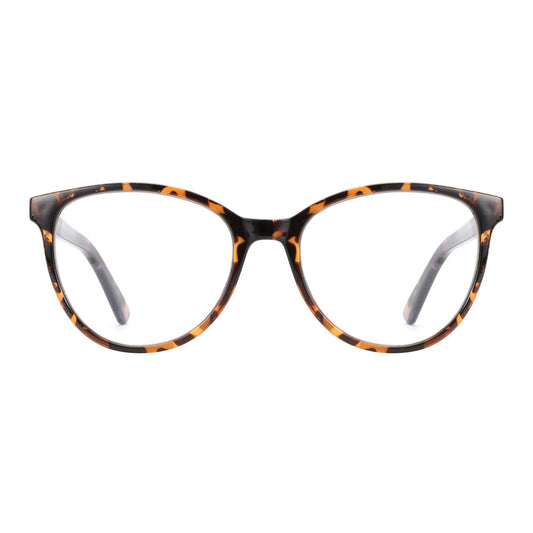
The physical structure of your glasses also plays a role in how glare is perceived on screen. Thick acetate frames, while stylish, can create secondary reflections along the inner rim of the frame. These "rim reflections" are often more distracting than lens glare because they flicker as you move your head. For professional presenters, thin metal frames or rimless designs are often recommended to minimize the surface area capable of catching light.
Furthermore, the thickness of your lenses—determined by your prescription and the refractive index of the material—affects how light travels through the lens. High-index lenses (1.61, 1.67, or 1.74) are thinner and flatter, which can actually reduce the "fish-eye" reflection effect seen in lower-index, bulkier lenses. When choosing the best eyeglasses frames for your face shape, consider how the frame's bridge and temple thickness might interact with your specific lighting setup.
Blue Light Filtering: Balancing Health and Aesthetics
Many remote workers opt for blue light blocking technology to combat digital eye strain. However, a common complaint is that these lenses often have a noticeable blue or purple "residual reflection" on camera. In 2026, the technology has shifted toward "clear-filter" blue light lenses. Unlike older generations that used a reflective coating to bounce blue light away (creating glare), modern lenses like the Zenottic Blue Light Blocking series incorporate the filtering molecules directly into the lens monomer.
This results in a lens that looks virtually identical to a standard clear lens on camera while still providing the necessary protection. If you are wondering how to select blue light blocking glasses that won't look "fake" or overly tinted during a presentation, look for those labeled as "in-mass" filtering rather than "surface-coated." This distinction is vital for maintaining a natural, professional appearance. You can read more about the trade-offs in our analysis of blue light glasses pros and cons.
Advanced Software and AI Solutions in 2026
As we move through 2026, software-based solutions have become a powerful secondary defense against glare. Major video conferencing platforms now include "Eye Contact" and "Glare Suppression" features powered by real-time AI. These tools use computer vision to identify the reflection on your glasses and replace those pixels with a reconstructed image of your eye based on previous frames or generative models.
While these tools are impressive, they are not a replacement for good hardware. AI reconstruction can sometimes look "uncanny" or unnatural if the glare is too severe. The best approach is to use anti-reflective coatings to minimize the work the AI has to do. This ensures that even if the software glitches, your professional image remains intact.
Professional Video Call Setup Checklist
| Element | Recommended Action | Why It Works |
|---|---|---|
| Light Position | 45° to the left and right of the camera | Moves reflections out of the camera's field of view. |
| Light Height | Slightly above eye level, tilted down | Directs reflections toward the floor/chest. |
| Lens Coating | ANSI Z80.1-2025 compliant AR coating | Eliminates 99%+ of surface reflections. |
| Screen Brightness | 50% - 70% (or use "Dark Mode") | Reduces the screen itself acting as a light source for glare. |
| Frame Finish | Matte or Satin | Prevents the frame from creating "sparkle" reflections. |
Logic Summary: This checklist is optimized for standard 1080p or 4K webcams. If using a DSLR as a webcam, you may need to adjust the "Screen Brightness" further, as larger sensors are more sensitive to subtle reflections.
FAQ
How do I stop my glasses from reflecting my computer screen? The most effective way is to use an anti-reflective (AR) coating on your lenses. This coating is designed to allow light to pass through the lens rather than bouncing off it. Additionally, lowering your screen's brightness or using "Dark Mode" in your applications can significantly reduce the amount of light available to reflect off your glasses.
Do blue light glasses cause more glare on Zoom? Older blue light glasses that use a reflective surface coating can indeed cause a distracting blue or purple glare. However, modern "in-mass" blue light filters are much clearer and do not add significant glare. To ensure you look professional, check out our guide on whether blue light glasses actually work and how to choose the right type for video calls.
Can I add anti-reflective coating to my existing glasses? Generally, AR coatings must be applied during the lens manufacturing process in a vacuum chamber. While some labs offer "aftermarket" coatings, they are often less durable and prone to peeling. It is usually more cost-effective and reliable to purchase a new pair of glasses with the coating already integrated into the lens design.
What is the best light for people who wear glasses? Large, diffused light sources are better than small, "point" light sources. A softbox or a diffused LED panel creates a much softer reflection that is easier for the eye (and the camera) to ignore compared to the harsh, circular reflection of a standard ring light.
Does the color of my frames affect video call glare? Yes, shiny or polished frames (especially clear or translucent acetate) can catch light and create distracting highlights. Matte black, tortoise shell, or brushed metal frames are generally better for video conferencing as they absorb more light and keep the focus on your eyes.
Are there specific lenses for professional presenters? Professional presenters often benefit from high-index lenses with premium AR coatings. These lenses are thinner and offer superior optical clarity. You can browse our collection of blue light blocking glasses which are specifically curated for digital professionals who spend hours on camera.
References
Government / Standards / Regulators
- ANSI Z80.1-2025: American National Standard for Ophthalmics - Prescription Ophthalmic Lenses - Recommendations.
- ISO 8980-1: Ophthalmic optics — Uncut finished spectacle lenses — Part 1: Specifications for single-vision and multifocal lenses.
- ISO 9241-303: Ergonomics of human-system interaction — Part 303: Requirements for electronic visual displays.
Industry Associations / Research Institutes
- The Vision Council: 2026 Market Report on Anti-Reflective Coating Adoption and Technology Trends.
- Optical Laboratories Association (OLA): Best Practices for Vacuum-Deposition Coating Durability.
Platform Official Docs & Policies
- Zoom Video Communications: "Optimizing Your Video Quality" Technical Documentation (2026 Update).
- Microsoft Teams: "Using AI-Powered Eye Contact and Background Blur" Feature Guide.
Academic / Whitepapers
- Journal of Ophthalmic Science: "Comparative Analysis of Destructive Interference in Multi-Layer Metal Oxide Coatings," 2025.
- MIT Media Lab: "Generative Reconstruction of Ocular Regions in Video Conferencing," 2026.
