
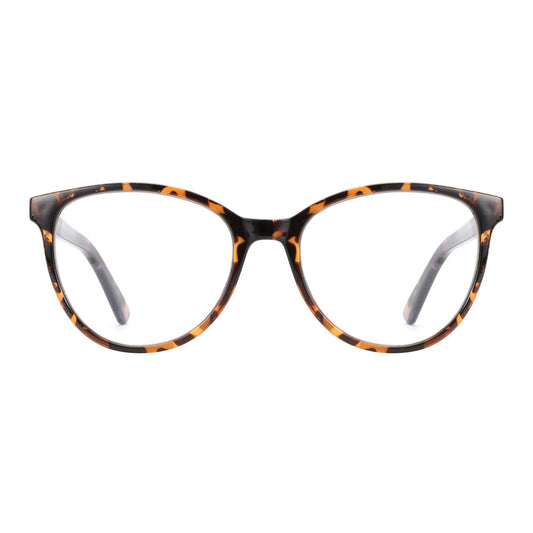

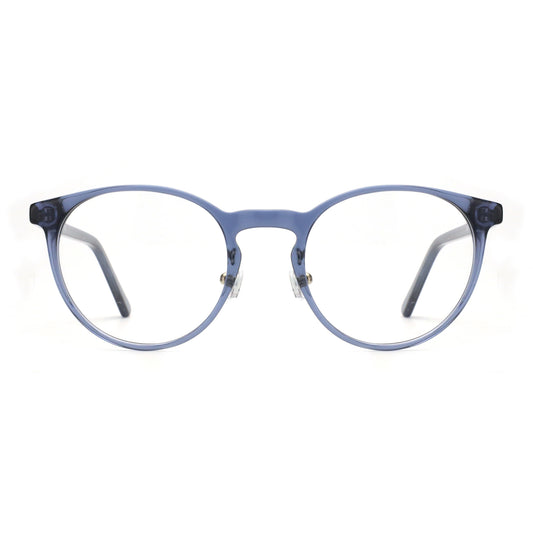
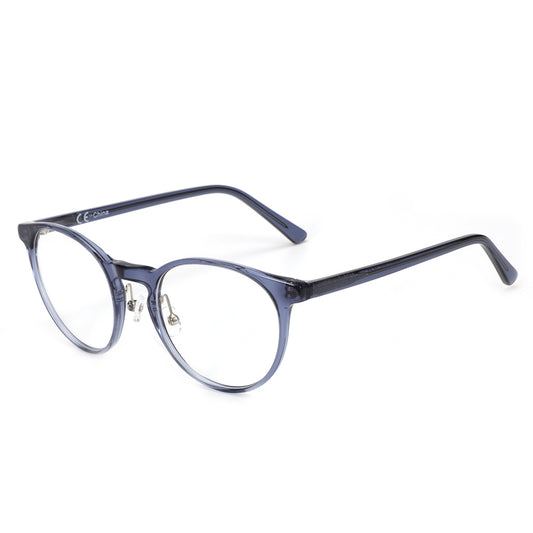


Low Visual Weight & High Prescriptions: Styling Delicate Frames with Thick Lenses
If you have delicate, low visual weight facial features but a strong prescription, you don't have to choose between minimalist style and functional optics. With the right combination of 1.74 high-index lenses, carefully selected frame dimensions, and attention to edge finishing, it is possible to wear delicate wire, rimless, or thin metal frames without the bulky "coke bottle" look that has traditionally forced many high-prescription wearers into heavier acetate styles.

This guide explains the practical levers that matter most when pairing low-visual-weight aesthetics with high prescriptions. It draws on sizing principles, lens material trade-offs, and real-world styling considerations to help you make choices that look refined rather than compromised.
Understanding Low Visual Weight Features and Prescription Challenges
Low visual weight faces tend to have softer contours, narrower proportions, or finer bone structure. Bold, chunky frames can easily overpower these features, creating a top-heavy appearance that many find unflattering. At the same time, strong prescriptions (typically -6.00 D and higher, or significant plus powers) produce thicker lenses at the edges when using standard materials. In slim frames, those edges become more noticeable, sometimes creating reflections, distortion, or an unbalanced silhouette.
The core tension is clear: minimalist frames expose more of the lens, while thick lenses demand more material at the periphery. Fortunately, modern high-index plastics and smarter frame selection can narrow this gap considerably.
Why Frame Size and Shape Matter More Than Style Alone
Many people assume that simply choosing the thinnest-looking frame will solve thickness problems. In practice, lens width and overall frame dimensions often have a larger impact on visible edge thickness than the material or rim style.
Smaller lens openings reduce the distance from the optical center to the edge, which directly limits how thick the lens must be. For high prescriptions, this is one of the most effective ways to maintain a delicate appearance. Shapes that follow natural facial curves—such as soft rounds, ovals, or gentle rectangles—tend to suit low visual weight faces better than sharp squares or oversized rounds that can exaggerate lens edges.
A useful planning rule is to prioritize frames with lens widths under 50 mm when possible. This keeps the lens area compact without forcing an overly tiny look that might disappear on the face. Bridge width and temple length should also align with your facial measurements to prevent the glasses from sitting too low or tilting, which can worsen perceived thickness.

Lens Index: How 1.74 High-Index Options Help in Minimalist Frames
The refractive index of a lens material determines how much it can bend light within a thinner profile. Standard plastic (index around 1.50) creates substantial edge thickness for strong prescriptions. Moving to 1.67 or especially 1.74 high-index materials measurably reduces that bulk and overall weight.
For many wearers with prescriptions of -6.00 D and stronger, 1.74 lenses make it realistic to consider wire or thin metal frames that would otherwise look unbalanced. These lenses are particularly effective in compact designs because the reduced center and edge thickness aligns better with the frame's slim profile.
However, higher index materials come with trade-offs. They can exhibit slightly more chromatic aberration (color fringing at the edges) and may reflect more light unless anti-reflective coatings are applied. Polished or beveled edges, combined with quality coatings, further minimize the visibility of any remaining thickness in delicate frames.
Internal resources at Zenottic explore these choices in depth. For example, their guide on the best frames for 1.74 lenses to minimize edge thickness offers specific sizing and shape strategies tailored to high prescriptions. Similarly, the ultimate guide to ultra-thin lenses for -6.00 prescriptions and above compares index levels and explains when the upgrade delivers noticeable aesthetic improvement.
Myth vs Reality: Common Misconceptions About Thin Frames and Thick Lenses
Several persistent myths can lead to disappointing purchases. Here are the most relevant ones for low visual weight faces and strong prescriptions:
Myth: Minimalist or wire frames automatically make any high prescription look thinner.
Reality: They can reduce visual bulk compared with heavy acetate, but lens edges may still show if the frame is too large or the prescription is very strong. Compact sizing and 1.74 lenses are usually required for the best outcome.
Myth: The thinnest possible frame is always best for low visual weight faces.
Reality: Extremely delicate frames can sometimes look too small or lack presence. A balanced frame that complements facial proportions often looks more harmonious than one that disappears.
Myth: 1.74 lenses completely eliminate thickness concerns.
Reality: They significantly reduce edge thickness and weight, but do not erase the effects of lens diameter, shape, or very high prescriptions. Edge finishing and coatings remain important.
Myth: Frame material matters more than actual lens dimensions.
Reality: Smaller lens widths frequently do more to control visible thickness than switching between wire and acetate alone.
These corrections shift the focus from chasing the "lightest" style to selecting combinations that work together practically.
Don't Buy If: When Delicate Frames Are the Wrong Choice
Delicate minimalist frames are not suitable for every high-prescription wearer. Consider avoiding them if:
- Your prescription produces noticeable edge thickness even with 1.74 lenses in small frames.
- You prefer the frame itself to hide lens edges rather than reveal them.
- You need durable daily wear that can handle rough handling or frequent adjustments.
- You are particularly sensitive to side-view lens visibility or reflections.
- The frame feels too fragile for your lifestyle.
In these cases, a slightly more substantial rim or a carefully chosen full-rim acetate style may deliver better long-term satisfaction. The guide on when 1.74 high-index lenses are actually worth the upgrade helps clarify these thresholds.
Hidden Trade-offs of Minimalist Styles with High-Index Lenses
Even with 1.74 lenses, wire and rimless designs carry practical compromises. The glasses may feel lighter overall, but very slim frames can transmit more temple pressure or feel less stable. Reflections can appear more prominent because there is less frame material to mask them. Lens edges, while thinner, remain more exposed from the side than in thicker rims.
Durability can also be a factor—thinner metal or rimless constructions may require more careful handling. For some wearers, these trade-offs are worth accepting for the refined aesthetic. For others, a modest increase in frame presence provides better everyday performance.
The authoritative technical guide on high-index lens materials and standards provides deeper context on how refractive index, Abbe value, and manufacturing standards influence these real-world outcomes.
How to Choose the Right Combination: A Practical Checklist
Use this step-by-step process when shopping for low visual weight frames with a strong prescription:
-
Measure your pupillary distance (PD) and frame dimensions accurately. Narrow PD combined with high prescription increases edge thickness risk if lenses are decentered. Review resources on best frames for high myopia and narrow PD for specific guidance.
-
Prioritize lens width under 50 mm for stronger prescriptions. Check the actual measurements rather than relying on style names.
-
Select 1.74 high-index lenses with anti-reflective and anti-scratch coatings. This combination minimizes reflections and improves clarity in minimalist frames.
-
Choose shapes that follow your facial contours—soft ovals, gentle rounds, or balanced rectangles usually harmonize better with low visual weight features than oversized or harshly angular designs.
-
Inspect edge finishing. Polished, beveled, or specially treated edges reduce the "lens line" visibility that can disrupt a delicate look.
-
Test the overall balance. The frame should complement your features without overpowering them or disappearing. Virtual try-on tools or detailed product measurements help before ordering.
Following these checkpoints reduces the chance of post-purchase regret. The article on how to order high-prescription glasses online without regrets expands on measurement and selection best practices.
Here is an illustrative chart showing relative risk of visible edge thickness for strong prescriptions across common lens width ranges. The scores are heuristic (1 = lower risk, 5 = higher risk) modeled from standard optical guidelines and internal sizing recommendations. Smaller widths consistently show lower risk, especially in wire or minimalist frames when paired with 1.74 lenses.
Frame Width and Shape Fit for Strong Prescriptions
Illustrative risk score for visible edge thickness with strong myopia (-6.00D and stronger)
View chart data
| Category | Wire/Minimalist frames | Acetate frames |
|---|---|---|
| <48 mm | 2.0 | 3.0 |
| 48-52 mm | 3.0 | 4.0 |
| >&52 mm | 5.0 | 5.0 |
Modeled comparison for planning only, based on standard optical guidelines summarized in the prompt: smaller lens widths generally control edge thickness better than frame material; 1.74 lenses reduce but do not eliminate edge visibility; oversized frames increase visible edge risk. Scores are relative risk levels (1 = lower risk, 5 = higher risk), not measured outcomes.
This visualization underscores why many successful combinations stay in the sub-50 mm lens width zone when using thin frames.
Recommended Frame Styles for Low Visual Weight and High Prescriptions
Several Zenottic styles pair particularly well with 1.74 lenses for this use case. The Zenottic Eyeglasses Edgar offers a thin black metal square profile that maintains lightness without overwhelming fine features. Its adjustable nose pads help achieve precise centering, which is critical for minimizing edge thickness.
For an even more minimalist approach, the Zenottic Eyeglasses Grayson rimless design lets the lenses themselves become the visual focus. When ordered with 1.74 high-index material and quality coatings, the result can look exceptionally refined on lower visual weight faces.
The Zenottic Eyeglasses Joanne and Catherine provide slightly more structure while still feeling delicate. These are often recommended for users who want a touch more presence without moving into chunky territory. Men seeking a classic yet lightweight option may prefer the Zenottic Eyeglasses Werner or Thomas, both engineered to accommodate high prescriptions gracefully.
Explore the full Eyeglasses collection or narrow by preference with Men Eyeglasses. Many of these frames are also available with promotional 20% off any lenses, making high-index upgrades more accessible.
For additional inspiration on balancing style with performance, read contact lens fatigue: why high-prescription wearers are switching to 1.74 glasses.
Final Thoughts on Achieving Refined, Balanced Eyewear
Low visual weight faces and strong prescriptions no longer require an all-or-nothing choice between fashion and function. By prioritizing compact lens dimensions, 1.74 high-index materials, proper measurements, and complementary shapes, you can achieve a polished, minimalist look that feels intentional rather than compensatory.
The key is treating frame and lens selection as an integrated system rather than separate decisions. What works best depends on your exact prescription, facial proportions, and lifestyle. Take time to review detailed measurements, consider coatings, and use available fitting tools. When these elements align, the result is eyewear that enhances rather than distracts from your natural features.
This article discusses comfort and styling considerations only. It does not constitute medical advice, diagnosis, or treatment. Lens and frame choices should be made in consultation with a qualified eye care professional. If you experience persistent discomfort or have existing eye conditions, consult an optometrist or ophthalmologist.
With thoughtful planning, delicate frames and high prescriptions can coexist beautifully—proving that refined aesthetics and strong optics are not mutually exclusive.
