



Can the Same Prescription Be Used for Regular Glasses and Sunglasses?
Yes. The correction in your regular glasses can usually be the starting point for a separate pair of prescription sunglasses. You don't need a special "sunglass prescription" to get tinted lenses made.

Still, the prescription is only one part of the order. Frame coverage, lens shape, and tint can differ between your clear pair and your sunglass pair. Ordering new lenses from your prescription is also not the same as moving your current lenses into a sunglass frame.
Can You Use the Same Prescription for Sunglasses?
According to the American Optometric Association (AOA), virtually any prescription can be made with sunglass-level tint, and that includes progressive addition lenses. Progressives are lenses that blend distance, middle, and near vision into one lens without visible lines. So if you wear single vision or progressive lenses every day, the same eyeglass prescription can generally carry over to a tinted pair.
Here is what that means in practice. The numbers on your prescription describe the correction your eyes need. A lab uses those same values to make a new set of lenses, then adds a sunglass-level tint. The correction stays the same. The lens color and darkness change.
That general rule has limits. It tells you the correction itself can be made dark enough for sunglasses. It does not confirm that every frame, lens design, or retailer setup will work with your specific numbers. Whether your written prescription is current enough for a particular order is also a separate question for your eye doctor or optical provider. Treat the same eyeglass prescription as your starting point, then check the setup you actually want.

How Frame and Lens Choices Affect the Pair
Matching prescription values does not settle how the sunglass pair should fit or look. Two areas need their own decision: how the frame and lens are shaped, and how the tint will perform where you plan to wear it.
Frame Coverage and Lens Shape
Sunglasses do a different job than clear glasses, so the frame matters more. The AOA advises that a sunglass frame should fully cover the eye area, extending to the brow and cheek. In plain terms, the "orbit" is the bony socket around your eye. A frame that reaches from brow to cheek leaves less room for light to come in around the edges.
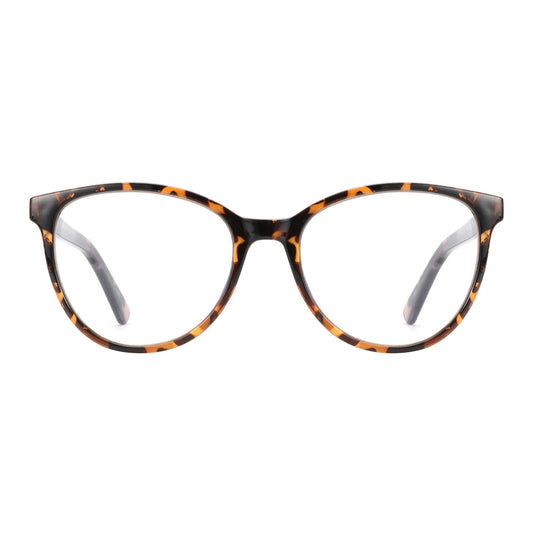
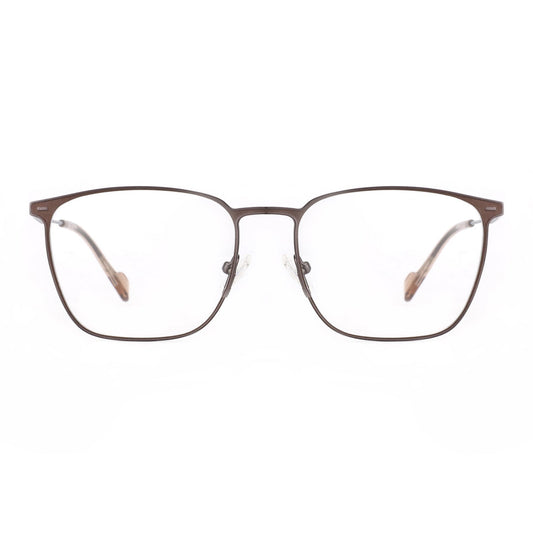
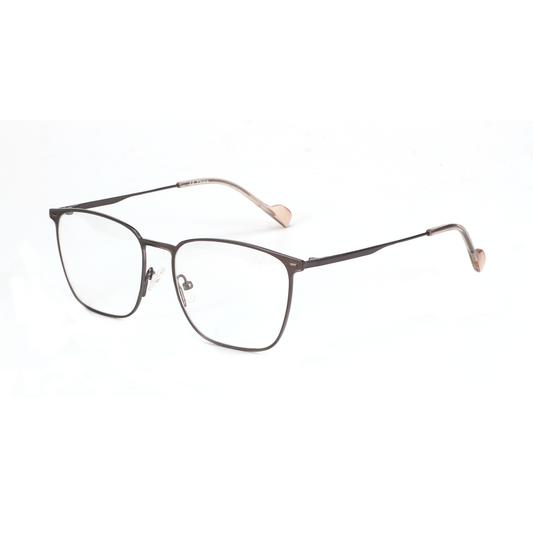
That is a good reason not to simply copy your everyday frame. A small or narrow clear frame may suit your face for reading or desk work, but a sunglass pair may call for a larger shape. When you compare our prescription sunglasses frames, look at how far each shape would reach toward your brow and cheek.
Lens shape is a separate question. Wraparound sunglass frames are curved to follow the face, and they need a curved lens to fit. The AOA notes that for some prescriptions, the correction may be possible in a highly curved lens that fits a contoured frame. "Some" is the key word. A curved design is not a given for every prescription, so a wrap style is the kind of choice to confirm before you order.
Tint for Lighting and Activities
Tint darkness is about comfort in real light. The AOA says the tint density should be dark enough to see comfortably in the lighting where you'll wear the glasses. A pair meant for bright beach days and a pair meant for an overcast commute may not need the same darkness.
Color matters too. The AOA also advises that tint should not interfere with color vision, especially if you'll wear the sunglasses while driving or doing other activities where seeing colors correctly matters. Think about traffic lights, brake lights, and road signs. If driving is a main use, choose a tint color that keeps those colors easy to tell apart.
Start with your main activity and the light you expect. Then compare prescription sunglass tint options against those two needs. If you're also weighing UV protection, polarization, and final cost, our Rx sunglasses buying checklist walks through those lens choices.
What to Confirm Before Ordering a New Pair
Before you order, confirm that your prescription works with the exact frame and lens design you picked. This takes one clear question to your optical provider and, if needed, a second question about your current lenses.
- Gather your prescription and your choices. Have your written prescription ready, along with the frame you selected, the lens type (single vision or progressive), and the tint you want. Our lens type ordering steps show where single vision and progressive options fit in an order.
- Ask about the exact combination. Use a direct question: "Can this prescription be made for this selected frame and lens design, and do you need any additional fitting information?" If the answer is yes with no extra details, you can move ahead with that setup. If the provider flags the frame or a curved lens design, ask which frame shape or lens option would work instead.
- Supply any missing fitting details. Some fitting numbers, such as pupillary distance, may not appear on every prescription. Before you try to measure anything yourself, check which prescription measurements at home are reliable and which ones should come from a fitting.
- Ask separately if you want to reuse your current lenses. Ordering new lenses from your prescription values and moving finished lenses into another frame are two different jobs. A finished lens is a physical object already cut and shaped for one frame. If transfer is your goal, ask about those specific lenses and the destination frame. Don't assume either answer.
Once the provider confirms the frame, lens design, and any needed fitting details, your sunglass order rests on the same correction as your clear pair, set up for its own job.
FAQs
Can progressive lens wearers get prescription sunglasses?
Yes, in general. The AOA states that virtually any prescription, including progressive addition lenses, can be made with sunglass-level tint. Progressive wearers should still mention the progressive design when confirming the frame, since the frame shape is part of the setup being checked.
Can I put my current clear lenses into a sunglass frame?
That depends on the specific lenses and the frame you want to use, so there is no general yes or no. Your current lenses were finished for your existing frame. Ask your optical provider about those exact lenses and the new frame. If transfer isn't an option, new lenses can be made from your prescription values instead.
What if my prescription does not list a PD?
PD, or pupillary distance, is the distance between the centers of your pupils. Some written prescriptions leave it out. Our guide on prescriptions without a PD explains how to read your form, get the measurement, and verify it before ordering glasses online.
Does my sunglass pair need the same frame as my regular glasses?
No. The prescription can carry over to a different frame. A larger sunglass frame may help meet the coverage guidance described above. Just confirm that your prescription works with the new frame before you order.
