



The Ultimate Progressive Lens Guide: Tech, Fit & Savings
Understanding Progressive Lenses: A Modern Vision Solution
Progressive lenses let you see clearly at near, intermediate, and distance ranges in a single pair of glasses without the visible lines found in traditional bifocals. For many adults entering their 40s and beyond, they offer a convenient upgrade, yet buying them online requires careful attention to measurements, frame choice, and realistic expectations about adaptation.
Related Guides
This guide explains how progressive lenses work, which frames support them best, how to take accurate measurements at home, and practical ways to shorten the adjustment period. It also addresses how to compare costs against retail optical shops while minimizing risks such as blurry zones or headaches. By following the right steps, price-conscious shoppers can access high-quality multifocal glasses online and potentially save significantly versus traditional stores.
How Progressive Lenses Work and Why Geometry Matters
Progressive lenses, also called progressive addition lenses (PALs), gradually change optical power from the top of the lens (distance vision) through a corridor (intermediate) to the bottom (near vision). This design is intended to eliminate the abrupt jump in focus that bifocals create. As this Cleveland Clinic overview explains, progressive lenses give three vision zones in one lens without visible lines.
The gradual power change means precise alignment is essential. A study on optical performance of progressive addition lenses notes that the smooth transition requires accurate centering so each zone matches your natural viewing habits. Misalignment by even a few millimeters can shift the sweet spots, potentially causing blurred areas or the need to adopt awkward head positions.
Lens geometry also includes a “fitting cross” — a reference point manufacturers use to position the lens correctly in the frame. Industry guidelines from The Vision Council help standardize these markings so labs can align the progressive corridor properly. Without correct fitting height and pupillary distance (PD), the intermediate zone may land too high or low for your typical computer or dashboard use.
Choosing the Right Frame for Progressive Lenses
Not every eyeglass frame works well with progressives. The frame must provide enough vertical lens height to accommodate the full progression corridor. Some designs typically need a minimum fitting height of around 18 mm or more, depending on the specific lens brand and technology.
As the Vision Council Progressive Identifier highlights, a frame must physically accommodate the required fitting height for progressive lenses. Small, narrow, or highly curved frames often lack sufficient lens depth, which may force the near zone too close to the bottom edge or cut off usable corridor length.
Look for frames with at least 28–30 mm of vertical lens height (B measurement) for most standard progressives. Larger rectangular or wayfarer styles generally perform better than small round or narrow cat-eye shapes. Before ordering, check the frame dimensions listed by the seller and compare them against your chosen lens type.
Proper frame fit also matters. Glasses should sit level on your face with the nose pads adjusted so the lenses rest at the correct height and tilt. Our guide on how glasses should fit walks through nose fit, temple length, and lens centering to help you evaluate frames at home.
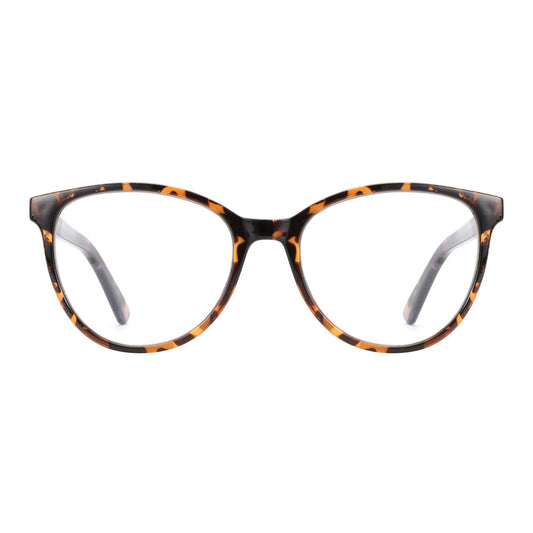
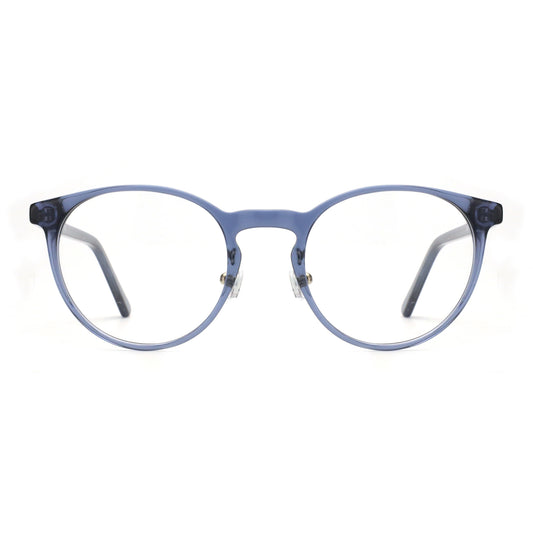
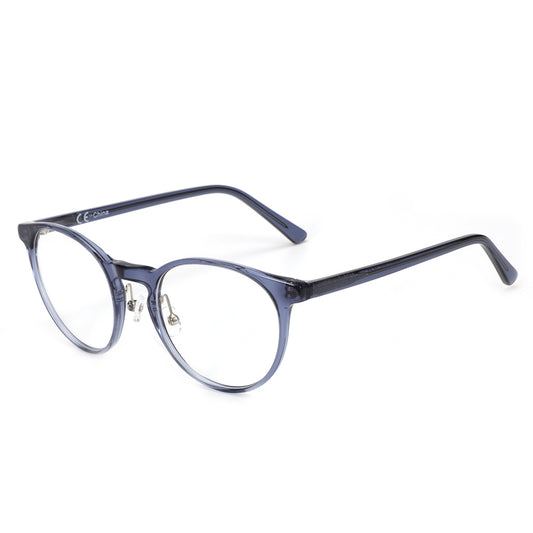
For affordable multifocal options, Zenottic’s high-index frames like the Cleveland or Roger collections pair well with progressive lenses and offer factory-direct pricing.
How to Measure Pupillary Distance and Fitting Height at Home
Accurate measurements are more critical for progressives than for single-vision lenses. Two key numbers are pupillary distance (PD) and fitting height (also called segment height).
PD is the distance between the centers of your pupils. Accurate pupillary distance is a first step in aligning the optical center correctly, according to research on prescribing and fitting spectacles. You can measure it at home with a ruler and mirror or use a mobile app that employs your phone’s camera. Our dedicated how to measure pupillary distance at home article provides step-by-step instructions and tips for 2026 tools.
Fitting height measures from the bottom of the frame to the center of your pupil when the frame is worn. Progressive lenses require fitting-height placement, and that measurement is tied to frame selection and fit. Many online retailers ask for this value because it determines where the progression corridor sits in your specific frame.
To measure fitting height yourself, wear the chosen frame, look straight ahead in a mirror, and have someone mark the pupil center on the lens or use a PD ruler while the frame is on your face. Repeat several times for consistency. If you feel uncertain, many opticians offer quick in-person measurement services for a small fee before you order online.
Progressive Lens Adaptation Tips to Reduce Dizziness and Strain
Most first-time wearers experience some adjustment period. Progressive lenses can feel strange at first because users must adapt to peripheral distortion and new eye/head movement habits. The brain needs time to learn which head and eye positions deliver clear vision in each zone.
Frequent wear helps adaptation, and first-time wearers often need to turn their head and point their nose toward the target while they adjust, notes guidance from the American Academy of Ophthalmology. Start by wearing the new glasses for short periods in familiar environments, then gradually increase wear time. Avoid switching back and forth between old and new pairs.
Practical tips include:
- Move your head rather than just your eyes when shifting gaze between zones.
- Keep the glasses clean and properly positioned on your face.
- Practice looking through the intermediate corridor for computer work by slightly lowering your chin.
- Give yourself 1–2 weeks of consistent use; most people adapt typically within 7–14 days, though some take longer.
If dizziness or headaches persist beyond two weeks, revisit your measurements or consult an eye care professional. Our adaptation guide offers more detailed strategies to minimize the “swim effect.”

Comparing Costs: Online Progressive Lenses vs Retail Pricing
Retail optical shops often charge $400–$800 or more for progressive lenses, including frame, lenses, and basic coatings. Online retailers using digital free-form manufacturing can offer similar technology at potential savings of up to 50–70% by eliminating showroom markups.
Savings are most noticeable when you already have a valid prescription and can provide accurate measurements. Digital progressives produced on modern equipment deliver smooth transitions comparable to many in-store options. However, fit errors and remakes can erase part of the price advantage if measurements are off.
Before purchasing, confirm the online provider’s lens technology, coating options (anti-reflective, blue-light filtering, scratch resistance), and return or remake policy. High-index materials such as 1.67 or 1.74 are often available at modest upcharges and make strong prescriptions thinner and lighter.
Is Buying Progressive Lenses Online Safe for Your Prescription?
Buying progressives online is more error-prone than single-vision glasses because height and fit depend on the exact frame and how it sits on the face. It works best for people with straightforward prescriptions, reliable self-measurement ability, and tolerance for a short adaptation window.
Consider professional fitting if you have a high or complex prescription, strong astigmatism, or previous adaptation difficulties. First-time progressive wearers may benefit from an initial in-person consultation to verify measurements and frame fit.
Important comfort and safety note: This article discusses setup advice, measurements, and adaptation tips for progressive lenses. It does not constitute medical advice, diagnosis, or treatment. Progressive lenses may feel more comfortable in some setups but results depend heavily on room conditions, device quality, prescription accuracy, and individual adaptation. If you experience persistent discomfort, headaches, dizziness, or vision changes, consult a qualified eye care professional promptly.
The chart below illustrates relative suitability for buying progressive lenses online across common scenarios. It is an illustrative decision map based on evidence patterns, not clinical data.
When Progressive Lenses Are a Good Online Buy vs. When to Avoid It
Illustrative decision map for online purchase suitability.
View chart data
| Category | Online-buy suitability | Prefer in-store / alternative |
|---|---|---|
| Low-complexity prescription, standard frame fit | 4.0 | 1.0 |
| Reliable PD/segment measurements available | 4.0 | 1.0 |
| First-time progressive wearer | 2.0 | 3.0 |
| High or sensitive prescription | 1.0 | 4.0 |
| Frequent face-to-face fitting needed | 1.0 | 4.0 |
| Uncertain measurements or frame geometry | 1.0 | 4.0 |
Evidence-based + bounded illustrative scoring. Directional basis: progressive lenses correct near/intermediate/distance vision in one lens; online buying is more plausible when measurements are reliable and the fit is straightforward; professional fitting is preferred when measurement uncertainty, adaptation sensitivity, or frame geometry makes online estimation risky. Scores are relative, not measured outcomes.
Checklist: How to Order Progressive Lenses Online with Confidence
Use this practical checklist before submitting your order:
- Confirm your prescription is current and includes add power for near vision.
- Measure PD and fitting height at least twice using consistent methods.
- Select a frame with adequate vertical height (typically 28 mm+ B measurement).
- Choose lens material based on your prescription strength — high-index options like those in Zenottic’s collections reduce thickness for stronger prescriptions.
- Read the retailer’s progressive lens policy, including remake and return terms.
- Start with shorter wear periods and practice proper head positioning during the first week.
Following these steps helps align the optics correctly and reduces the chance of costly adjustments.
Final Thoughts on Progressive Lenses in 2026
Progressive lenses remain a popular multifocal solution for adults who need correction at multiple distances. They can deliver smooth, line-free vision when the frame fits well, measurements are accurate, and the wearer allows time for adaptation. Online purchasing offers substantial savings, but success depends on doing the homework on fit and measurements rather than treating the process like ordering standard single-vision glasses.
If your lifestyle includes heavy computer use or you have a complex prescription, weigh the convenience of one pair against the potential need for fine-tuning. Many shoppers successfully transition to affordable multifocal glasses online each year by following the guidance above. Take accurate measurements, choose compatible frames, and set realistic expectations — then enjoy the freedom of clear vision at every distance without retail markups.

For more on reading your prescription and selecting the right lens materials, explore our eye prescription guide and high-index lenses overview.
