



The Ultimate Troubleshooting Guide for High-Prescription Glasses Issues
The Ultimate Troubleshooting Guide for High-Prescription Glasses Issues
High-prescription glasses often bring unique challenges like the fishbowl effect, peripheral distortion, noticeable lens thickness, and eyes that appear smaller. While these issues are inherent to strong optics, they can be managed through a combination of material science and precise fitting.
To resolve these issues quickly, follow this Priority Action List:
- Upgrade to High-Index (1.67 or 1.74) + Aspheric Design: This is the most effective way to flatten lens curves and reduce the "fishbowl" effect.
- Select Smaller, Centered Frames: Minimizing lens diameter significantly reduces edge thickness and peripheral "swim."
- Verify PD and Optical Center: Precise alignment of your pupils with the lens's optical center is critical for comfort.
- Apply Anti-Reflective (AR) Coating: This reduces the visibility of "power rings" and makes your eyes look more natural.
- Commit to a 14-Day Adaptation Period: Most neurological "distortion" resolves as the brain adjusts to new magnification levels.

Understanding Common Issues with High-Prescription Lenses
Strong prescriptions, typically above ±4.00 or ±5.00 diopters, require lenses that bend light more dramatically. This steeper curvature naturally leads to optical side effects. The fishbowl effect makes straight lines appear curved at the edges of your vision, while minification (for nearsighted prescriptions) can make your eyes look smaller when viewed by others. Power rings—those visible circular lines around the lens edges—often appear in thicker standard plastic lenses.
These problems stem from basic optics: lens power, refractive index, lens diameter, and how well the optical center aligns with your pupils. Adaptation plays a major role too—many new wearers notice distortion most in the first few days or weeks as their brain adjusts to the new visual input.
Why High-Prescription Glasses Cause Distortion and the Fishbowl Effect
Peripheral distortion occurs because light rays hitting the outer parts of the lens travel through varying thicknesses, creating prismatic effects. The fishbowl effect is particularly common with minus lenses, where the world seems to curve inward like looking through a bowl.

Higher prescriptions amplify this because the lens curve becomes more pronounced. Standard 1.50 index plastic lenses exacerbate the issue due to their greater thickness and curvature. Many users also experience a “swim” sensation when turning their head quickly.
Factors that worsen distortion include:
- Large Frame Sizes: These increase lens diameter and edge thickness.
- Incorrect Pupillary Distance (PD): Even a 2mm error can cause significant prismatic distortion.
- Vertex Distance: Frames that sit too far from your eyes increase the perceived "fishbowl" effect.
How to Reduce the Fishbowl Effect and Peripheral Distortion
The most effective way to minimize the fishbowl effect is switching to higher-index lens materials. These materials bend light more efficiently, allowing the same prescription to be achieved with flatter curves.
High-index lenses in the 1.67 or 1.74 range can significantly reduce edge thickness and curvature compared to standard plastic. Note on Estimates: While moving from 1.56 to 1.74 can reduce lens thickness by approximately 30-45% for strong prescriptions (e.g., -6.00D), actual results depend on your specific diopter, frame shape, and PD. These figures are illustrative and not a guaranteed outcome for every wearer.
Smaller frames help too. Choosing frames with a smaller lens diameter limits how much of the distorted outer lens area reaches your pupil. Aspheric lens designs flatten the front surface of the lens, reducing the magnification changes across the lens surface. Many modern high-index lenses come with aspheric shaping by default.
Minimizing the Appearance of Small Eyes (Minification Effect)
For nearsighted wearers, high minus prescriptions cause minification—your eyes appear smaller to others. This is an aesthetic byproduct of the lens's "minus" power.
Higher-index materials help here because thinner lenses require less steep curvature, which can subtly reduce the minification effect. A 1.74 index lens will generally make eyes look more natural than a 1.50 index lens of the same power, though it will not eliminate the effect entirely.
Pro Tip for Frame Choice: Darker frame colors and full rims can camouflage the "lens cut-in" (where the side of your face appears shifted inside the lens) better than thin metal or rimless styles. Avoiding oversized frames prevents drawing extra attention to the lens edges.
Reducing Power Rings, Lens Thickness, and Edge Bulk
Power rings are the visible concentric circles that appear in high-minus lenses due to abrupt changes in lens thickness. They become more obvious under certain lighting and with lower-index materials.
The best solution is upgrading to high-index lenses. The Technical Guide to High-Index Lens Materials and Standards explains how MR-series polymers in 1.67 and 1.74 indices achieve better performance while meeting ANSI Z80.1-2025 standards.
Comparing options, our 1.67 vs 1.74 High-Index Lenses guide shows that 1.74 provides the thinnest profile for prescriptions above -6.00 or -7.00.
Illustrative Comparison of Refractive Indices: (Note: The following data represents general optical trends and may vary based on frame geometry and prescription complexity.)
High-Prescription Lens Trade-off Guide
Illustrative comparison for strong prescriptions: higher index reduces thickness, but optical trade-offs and cost rise. Values are normalized from typical guide claims, not lab measurements.
View chart data
| Category | Relative Thickness Reduction | Relative Optical Distortion Risk | Relative Cost |
|---|---|---|---|
| 1.56 | 0.0 | 0.0 | 0.0 |
| 1.60 | 18.0 | 10.0 | 15.0 |
| 1.67 | 30.0 | 22.0 | 35.0 |
| 1.74 | 45.0 | 38.0 | 55.0 |
Illustrative normalization based on common high-index lens guides and 1.67 vs 1.74 comparison notes; 1.74 is commonly described as thinner than 1.67 for very strong prescriptions, while higher index tends to raise distortion risk and cost. Not a measured dataset.
How to Tell If the Problem Is the Prescription, Design, or Adaptation
If you are experiencing discomfort, use this Quick Diagnostic Checklist to identify the root cause:
- Is the distortion only at the far edges? This is likely a lens design issue. Consider Aspheric lenses or a smaller frame to cut out the distorted periphery.
- Does the vision clear up if you tilt your head or push the glasses closer to your face? This suggests the frame fit (Vertex Distance) or pantosopic tilt needs adjustment by an optician.
- Do you feel a "pulling" sensation or get a headache within minutes? This often indicates an incorrect PD (Pupillary Distance) or an error in the prescription's optical center alignment.
- Does the world "swim" only when you move your head? This is a classic adaptation symptom. If it persists beyond 10–14 days, the prescription may be too strong or the base curve of the lens may be too different from your previous pair.
Practical Checklist Before Buying High-Prescription Glasses
Use this checklist to ensure the best possible outcome:
- [ ] Verify your PD: Use a professional measurement or a high-accuracy digital tool.
- [ ] Select the right Index: 1.67 for moderate (-4.00 to -6.00), 1.74 for very strong (above -6.00).
- [ ] Check Frame Eye Size: Aim for 48mm or smaller to keep the lens thin.
- [ ] Request Aspheric Design: Essential for reducing the "fishbowl" effect.
- [ ] Add AR Coating: To minimize power rings and reflections.
- [ ] Plan for Adaptation: Allow 2 weeks of consistent wear before requesting a re-check.
When to Consider Professional Help or Upgrades
While many issues can be addressed through better choices, some situations warrant professional input. Persistent headaches, dizziness beyond the adaptation period, or significant vision changes should prompt a visit to your eye care provider.
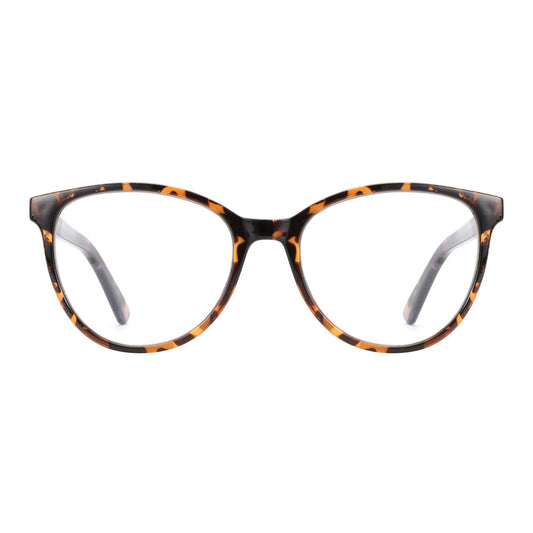
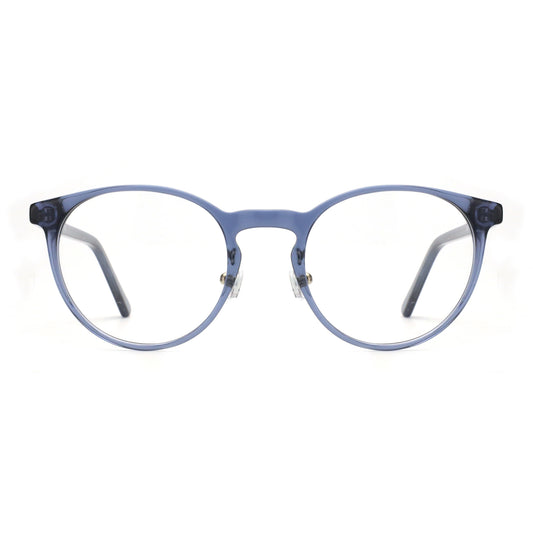
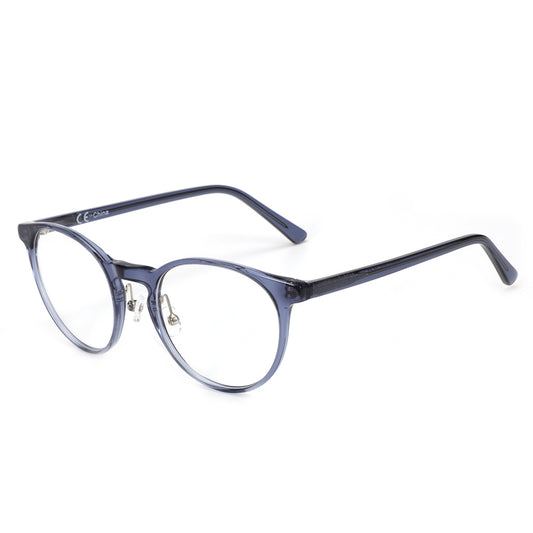
If you are upgrading from standard lenses, the difference with high-index options can be substantial. Frames like Zenottic Eyeglasses Constance or Zenottic Eyeglasses Yetta are designed to work well with thin 1.74 lenses.
Important Note on Vision Comfort: This article discusses optical comfort, adaptation, and eyewear setup considerations only. It does not constitute medical advice, diagnosis, or treatment. High-prescription glasses issues can sometimes relate to underlying vision changes. If you experience persistent discomfort, headaches, dizziness, or changes in vision, please consult a qualified optometrist or ophthalmologist for personalized evaluation.
