



Why Are Glasses So Expensive? The Online Eyewear Revolution
Summary
The high cost of traditional prescription glasses is primarily driven by a vertically integrated market structure, designer brand licensing, and significant retail overhead, rather than the raw cost of materials. Modern online disruptors have bypassed these legacy costs through direct-to-consumer models, offering high-quality eyewear at prices that reflect actual manufacturing and distribution efficiencies.
Key takeaways
- Vertical Integration: A few major corporations control everything from frame design and lens manufacturing to retail stores and vision insurance, allowing for significant price control.
- Licensing Fees: Up to 50% of the wholesale cost of designer frames can be attributed to brand licensing fees rather than material quality or craftsmanship.
- The Insurance Paradox: Vision insurance often mandates higher "list prices" at retail locations, which can lead to higher out-of-pocket costs compared to direct online purchases.
- Material Parity: Online retailers often use the same high-grade materials, such as TR90 and high-index polymers, as luxury brands but without the associated retail markups.
- Consumer Empowerment: Tools like digital pupillary distance measurement and virtual try-ons have removed the traditional barriers to purchasing high-quality, affordable glasses online.
The Anatomy of a $600 Markup: Why Traditional Glasses Cost So Much
For decades, consumers have accepted that a pair of prescription glasses should cost several hundred dollars. However, when you look at the raw materials—plastic, metal, and glass—the math doesn't seem to add up. The reality is that you aren't just paying for the glasses; you are paying for a massive, multi-layered infrastructure.
The traditional eyewear industry is dominated by a handful of massive conglomerates. The most notable is EssilorLuxottica, which, as of 2026, continues to hold a significant global market share. This company doesn't just make frames for brands like Ray-Ban and Oakley; they also manufacture lenses and own major retail chains like LensCrafters and Sunglass Hut. This vertical integration allows them to control the price at every stage of the journey. When one company owns the factory, the brand, and the store, the "market price" is essentially whatever they decide it should be.
Furthermore, designer frames carry a heavy "licensing tax." When you buy a pair of frames with a luxury logo, a significant portion of that price goes directly to the fashion house for the right to use their name. These fees can account for a substantial portion of the wholesale price. By the time these frames reach a boutique retail shelf, the rent, staffing, and expensive optical equipment of that physical location are added to the bill, leading to the 500% to 1000% markups that have become the industry standard.
Logic Summary: This analysis assumes that the consumer is purchasing from a traditional "brick-and-mortar" optical retailer. The markups described are industry averages based on historical financial reports and market analysis. These figures may vary depending on the specific brand and geographic location, but the structural inefficiencies remain consistent across the traditional retail sector.
The "Insurance Trap": How Vision Plans Can Actually Increase Out-of-Pocket Costs
One of the most misunderstood aspects of eyewear pricing is the role of vision insurance. Many consumers believe that their vision plan is saving them money, but the reality is more complex. In many cases, vision insurance providers are owned by the same companies that manufacture the glasses and own the retail stores.
This creates a closed-loop system where insurance companies "negotiate" prices with their own retail branches. To make the insurance "discount" look significant, the initial retail price is often set artificially high. For example, a pair of glasses might be listed at $500 so that an insurance plan can offer a "50% discount," bringing the cost down to $250. However, the actual value of those glasses might only be $100.
In this scenario, the consumer pays a monthly premium for the "privilege" of paying $250 for a $100 product. Many savvy shoppers in 2026 are finding that they can save more money by opting out of vision insurance for hardware and instead purchasing low-cost eye glasses directly from online providers. By cutting out the insurance middleman, the "list price" becomes the "real price," which is often lower than the co-pay at a traditional optometrist.
Breaking the Cycle: The Online Direct-to-Consumer Revolution
The rise of the online eyewear revolution has fundamentally changed the economics of vision correction. By moving the entire process online, companies have eliminated the single biggest cost in the industry: physical retail.
Modern online optical labs are highly automated. In 2026, precision robotics can cut and coat lenses with a level of accuracy that exceeds traditional hand-finishing, and they can do it at a massive scale. Because these companies sell directly to the consumer, they don't have to pay for expensive storefronts in high-traffic malls or maintain large inventories at hundreds of different locations.
Instead, they operate from centralized hubs. This "Direct-to-Consumer" (DTC) model allows online retailers to operate with significantly lower markups compared to the 1000% markups seen in retail. This isn't "cheap" eyewear in the sense of low quality; it is "efficient" eyewear. The savings come from a streamlined supply chain, not from cutting corners on the product itself.

Comparing Material Quality: Luxury Acetate vs. Online Alternatives
A common concern among consumers is whether affordable online glasses use inferior materials. To understand this, we must look at what glasses are actually made of. Most high-end frames are made from cellulose acetate—a plant-based plastic that is durable, hypoallergenic, and capable of holding deep, vibrant colors.
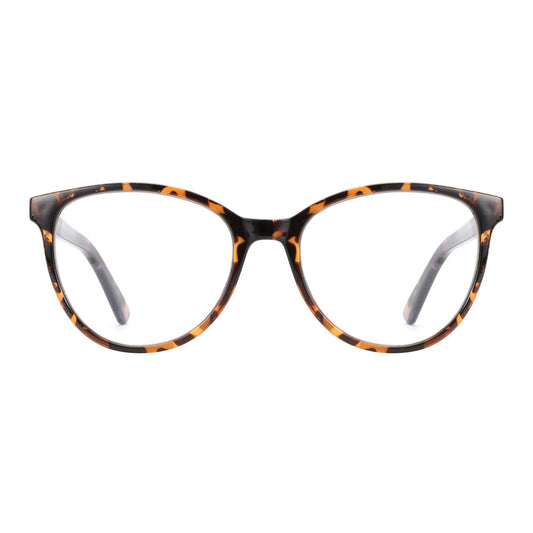
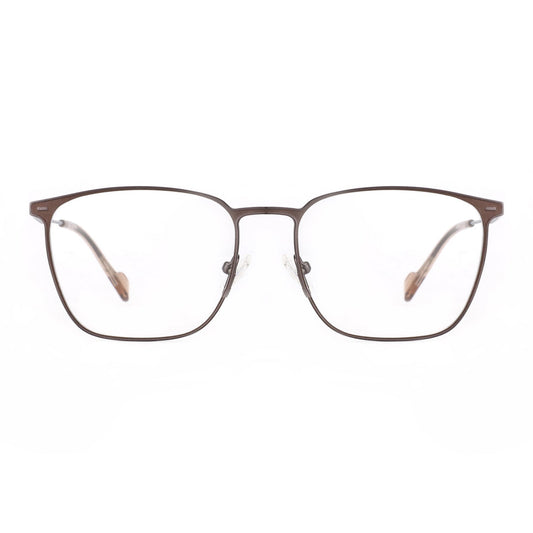
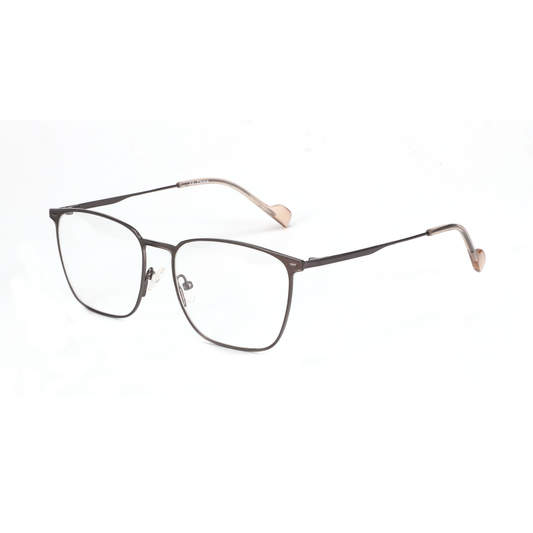
Interestingly, many online disruptors use the exact same Italian acetate sources as luxury brands. The difference in "feel" that some people report is often a result of weight and balance rather than the material itself. While some ultra-budget frames use injected plastics (which are cheaper to produce but more brittle), mid-range online frames often utilize TR90, a Swiss-developed thermoplastic that is incredibly lightweight and flexible—often outperforming traditional "luxury" materials in terms of daily comfort and durability.
When it comes to lenses, the standards are even more rigorous. All prescription lenses sold must meet specific impact resistance and optical clarity standards. Whether you buy them at a boutique or online, they are often made from the same polycarbonate or high-index resins. For those with stronger prescriptions, understanding the nuances of 1.67 and 1.74 high-index lenses is crucial for reducing thickness and weight without overpaying.
For a deeper dive into the science of these materials, you can consult the technical guide to high-index lens materials, which explains the relationship between refractive index and optical performance according to the latest ISO standards.
A Transparent Breakdown of Eyewear Manufacturing Costs
To truly understand the "Optical Arbitrage" opportunity, it helps to see where your money goes. The following table provides an estimated breakdown of the costs associated with a typical pair of mid-range prescription glasses in 2026.
| Cost Component | Traditional Retail (Estimated) | Online DTC (Estimated) |
|---|---|---|
| Raw Materials (Acetate/Metal) | $15 - $30 | $15 - $30 |
| Lens Blanks & Coatings | $10 - $25 | $10 - $25 |
| Manufacturing & Labor | $20 - $40 | $15 - $30 |
| Designer Licensing Fees | $50 - $150 | $0 |
| Retail Rent & Overhead | $100 - $200 | $5 - $10 |
| Marketing & Distribution | $30 - $60 | $20 - $40 |
| Total Cost to Business | $225 - $505 | $65 - $135 |
| Typical Consumer Price | $450 - $800+ | $95 - $195 |
Logic Summary: These figures are estimates based on 2025-2026 industry trackers and manufacturing data. "Traditional Retail" includes costs typical of high-end optical boutiques and mall-based chains. "Online DTC" assumes a vertically integrated online retailer with automated lab facilities. Prices for specialized prescriptions (e.g., high-add progressives) will be higher in both categories.

How to Transition to Online Eyewear Without Sacrificing Quality
If you are used to the "concierge" service of a local optician, moving to an online model can feel daunting. However, the tools available in 2026 make it easier than ever to get a professional fit from home.
The most critical step is obtaining an accurate Pupillary Distance (PD). This is the measurement of the distance between your pupils, and it ensures that the optical center of the lenses aligns perfectly with your eyes. While some doctors omit this from your prescription to discourage online shopping, you can easily measure your pupillary distance at home using simple digital tools or a specialized ruler.
Secondary to the prescription is the fit of the frames. A common mistake is choosing frames based solely on style without considering the dimensions. Understanding how glasses should fit on your nose and temples will prevent the slipping and pinching often associated with poorly chosen eyewear. Most online retailers now provide detailed frame measurements (lens width, bridge width, and temple length) that you can compare against a pair of glasses you already own.
Finally, use the technology at your disposal. Virtual try-on tools have become incredibly sophisticated, using AR to show you exactly how a frame will look on your face. To narrow down your choices, start by finding the perfect frames for your face shape to ensure the styles you are considering will complement your natural features.
FAQ
Why are glasses so much more expensive at my doctor's office than online? The primary reason is overhead. A local optician must pay for a physical storefront, specialized medical equipment, and a trained staff, all of which are funded by the markup on the frames and lenses they sell. Additionally, many independent doctors buy their frames from the same large conglomerates that own the retail chains, meaning they are paying a higher wholesale price than a large online retailer that manufactures its own products.
Is the quality of online lenses the same as retail lenses? In most cases, yes. The optical industry is highly regulated, and lenses must meet strict safety and clarity standards regardless of where they are purchased. Many online labs use the same high-quality materials, such as polycarbonate and high-index resins, and the same advanced coatings (anti-reflective, scratch-resistant) as traditional retailers. The main difference is the price, which is lower online due to manufacturing efficiencies and the lack of retail markups.
How can I be sure the glasses will fit if I buy them online? To ensure a good fit, you should look at the measurements of your current glasses, which are usually printed on the inside of the temple arm. Compare these numbers (lens width, bridge width, and temple length) to the frames you are considering online. Additionally, using virtual try-on tools and consulting guides on face shapes and proper fit can help you select a frame that will be comfortable and flattering.
Does vision insurance cover online glasses? Many vision insurance plans now offer "out-of-network" reimbursements for online eyewear purchases. While you may have to pay upfront and submit a claim for reimbursement, the total cost—even after the reimbursement—is often still lower than the "in-network" co-pay at a traditional retail store. It is always best to check with your specific provider to understand your out-of-network benefits.
What should I do if my online glasses don't feel right? Most reputable online eyewear companies offer a satisfaction guarantee or a return period. If the prescription feels off or the frames are uncomfortable, you can typically return them for a refund or a replacement. For minor fit issues, such as the frames being too loose or tight at the temples, many local optical shops will perform a professional adjustment for a small fee or even for free as a courtesy.
Are designer brand glasses actually better quality? While designer brands often use high-quality materials like Italian acetate, you are primarily paying for the brand name and the associated licensing fees. Many non-designer frames use the exact same materials and manufacturing processes but cost significantly less because they don't have a luxury logo attached. In terms of durability and optical performance, a well-made "generic" frame can be just as good as a designer one.
References
Government / Standards / Regulators
- Federal Trade Commission (FTC): The Eyeglass Rule: Your Right to Your Prescription
- ANSI Z80.1-2025: Ophthalmic Optics - Prescription Ophthalmic Lenses - Recommendations
- ISO 8980-1: Ophthalmic optics — Uncut finished spectacle lenses
Industry Associations / Research Institutes / Market Reports
- The Vision Council: 2025 Market Analysis and Consumer Trends Report
- Statista: Eyewear Market Share by Company Worldwide 2024-2026
Academic / Whitepapers / Labs
- Journal of Ophthalmic and Physiological Optics: A Comparison of Online vs. In-Person Spectacle Dispensing
Community
- Reddit r/glasses: Consumer discussions on online vs retail pricing (Intent discovery only)
