



Why Frame Size Matters: Matching Your PD to Your Glasses
When you order prescription glasses online, the frame width you choose directly affects how well the lenses align with your pupils. Selecting a frame that matches your pupillary distance (PD) helps minimize optical distortion, reduces the chance of eyestrain, and keeps high-prescription lenses from appearing unnecessarily thick or creating a 'bug-eye' look.

PD is the distance between the centers of your pupils and helps determine where the lenses should be centered in your frames. When the optical centers of the lenses do not line up with your pupils, it can lead to distortion and eyestrain. This alignment issue becomes more noticeable with stronger prescriptions, where even small mismatches can make the glasses feel or look off after they arrive.
What PD Actually Does in Your Glasses
Your PD measurement tells the lab exactly where to place the optical center of each lens. Proper centering ensures light passes through the lens at the intended point, delivering the clearest possible vision. A good frame choice helps minimize lens decentration, which is one reason frame width matters when you order glasses online.
Frames are not one-size-fits-all; size and PD need to work together so the lenses can be positioned correctly. Opticians use measurements like PD, bridge width, and temple length to help choose frames that fit properly. When ordering online without an in-store fitting, you become responsible for making this match yourself.

How Frame Width Influences Lens Centering
Most adult PD measurements fall between 54 mm and 74 mm. Frame width—the total distance across the front of the glasses—typically ranges from about 120 mm to 150 mm. The difference between these two numbers determines how far the lens centers must be shifted (decentered) to match your pupils.
When the frame is significantly wider than your face and PD, the lenses often end up decentered outward. This can thicken the inner edges of high-index lenses and increase peripheral distortion. Conversely, a frame that is too narrow can pinch the bridge or force the optical centers inward, creating a crowded appearance and potential discomfort.
The Vision Council’s dispensing guidance emphasizes minimizing decentration for optimal results. For most wearers, the goal is to keep decentration under 3–4 mm per eye when possible, though exact tolerances depend on your prescription strength and lens design.
Why High-Prescription Wearers Notice Mismatches More
Stronger prescriptions amplify the effects of poor centering. Higher lens power makes edge thickness changes and optical aberrations more visible. What might feel like a minor fit issue with a -2.00 prescription can become obvious lens bulging or a 'fishbowl' effect at -6.00 or higher.
Progressive lenses add another layer of precision. For progressive lenses, the fitting point needs to be placed very close to the prescribed monocular PD, which shows why accurate centering matters. Monocular PD (the distance from the center of the nose to each pupil) is often more important here than the total binocular PD.
Even after purchase, regular frame adjustment helps keep the optical centers aligned with your pupils. However, no amount of adjustment can fully correct a frame that is fundamentally too wide or too narrow for your PD.
Important note on vision comfort: This article discusses setup and fit considerations for better optical centering and perceived comfort. It does not constitute medical advice, diagnosis, or treatment. If you experience persistent discomfort, distorted vision, headaches, or have existing eye conditions, consult a qualified eye care professional.
Frame Size Guide: Matching Width to Your PD
Use these general guidelines when comparing frames on an online store:
- Measure or obtain your PD first (most adults are between 58–68 mm).
- Look at the product specifications for “frame width,” “lens width,” and “bridge width.”
- Add the two lens widths to the bridge width to approximate total frame width.
- Prefer frames where the total width allows your pupils to sit near the geometric center of each lens.
A practical rule of thumb: your PD should ideally be within about 4–6 mm of the frame’s “lens center distance” for low to moderate prescriptions. For higher prescriptions, aim for even closer alignment.
Here is an illustrative overview of relative fit risk based on PD category and prescription strength. These are heuristic risk scores (1 = lowest relative risk, 5 = highest) to show trends only—not clinical measurements.
Illustrative Frame-Width Fit Risk by PD Category and Prescription Strength
Use as a bounded, illustrative guide after explaining PD and frame width. Do not treat the scores as clinical measurements.
View chart data
| Category | Low Rx | Medium Rx | High Rx |
|---|---|---|---|
| Narrow PD (<58mm) | 1.0 | 2.0 | 3.0 |
| Average PD (58-68mm) | 2.0 | 3.0 | 4.0 |
| Wide PD (>68mm) | 3.0 | 4.0 | 5.0 |
Heuristic, illustrative-only mapping based on article guidance: PD usually 50-75mm; frame width often 120-150mm; narrower frame-width match reduces decentration risk. Scores are ordinal risk levels (1=Low, 5=High), not measured outcomes. High Rx is modeled as more sensitive to mismatch, so the same PD category carries a higher risk level at higher prescription strength.
When Frame Size Choice Flips: Scenario Matrix
The importance of frame width changes depending on your prescription and lens type. The frame-size decision tends to flip when prescription power and lens design make decentration more noticeable.
- Low prescription, single-vision lenses: A slightly wider or narrower frame is often still tolerable if the lenses can be centered reasonably well.
- High prescription, single-vision lenses: Prefer frames that keep your pupils close to the optical centers. Avoid very wide frames that force significant decentration.
- Progressive or multifocal lenses: Prioritize stable positioning and monocular PD accuracy. Narrow-to-medium frames are usually safer because they reduce the amount of lens shift required.
- Narrow PD (under 58 mm): Choose narrower frames to avoid excessive outward decentration and the resulting thick inner lens edges.
- Wide PD (over 68 mm): Look for wider frames or those with adjustable bridges so the lenses stay properly aligned.
For online ordering where frame choice and PD must be matched before delivery, higher prescription or progressive lenses make frame width a real decision factor.
How to Choose Frame Size Online – Practical Checklist
-
Get your PD measured accurately. Use a reliable method or ask your eye doctor. Learn how to measure your pupillary distance (PD) at home accurately using a ruler, mirror, or app.
-
Review frame specifications carefully. Compare total frame width to your face width and PD. Check lens width, bridge width, and temple length.
-
Calculate approximate decentration. Subtract your PD from the frame’s lens-center distance and divide by two. Lower numbers are better, especially for stronger prescriptions.
-
Consider lens material. High-index lenses (1.67 or 1.74) are thinner but can still show edge effects if decentered heavily. Our technical guide to high-index lens materials explains the relationship between refractive index and thickness.
-
Check return and remake policies. Choose retailers that make it easy to exchange frames if the first pair does not center properly.
-
Look for adjustable frames. Metal or adjustable nose-pad styles allow minor corrections after delivery.
Depending on the jurisdiction and provider, PD may be handled as part of the fitting or dispensing process rather than printed on the prescription. This is why many online buyers must measure PD themselves.
What to Do If Your New Glasses Feel or Look Weird
Common complaints after receiving online glasses include blurred edges, headaches, a “swimming” sensation, or eyes appearing too small or too large in photos. These symptoms often trace back to centering issues rather than the prescription itself.
First, verify that the PD on your order matches your measured value. Next, check whether the frame sits level on your face and whether the lenses are centered over your pupils when you look straight ahead. If the glasses still feel uncomfortable after a few days of wear and minor adjustments, the frame width may simply be mismatched to your PD.
Choosing the Right Frames at Zenottic
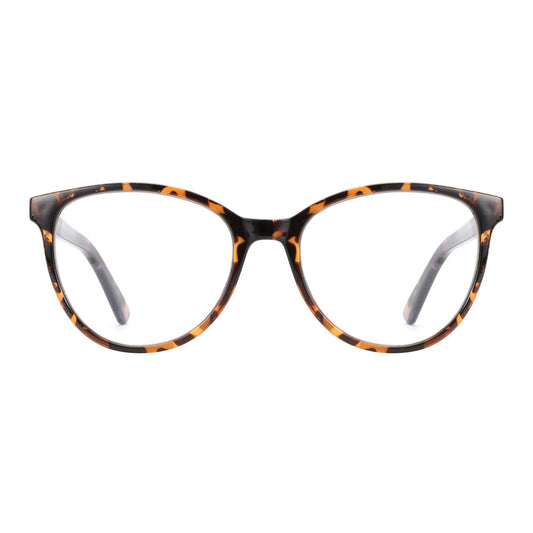
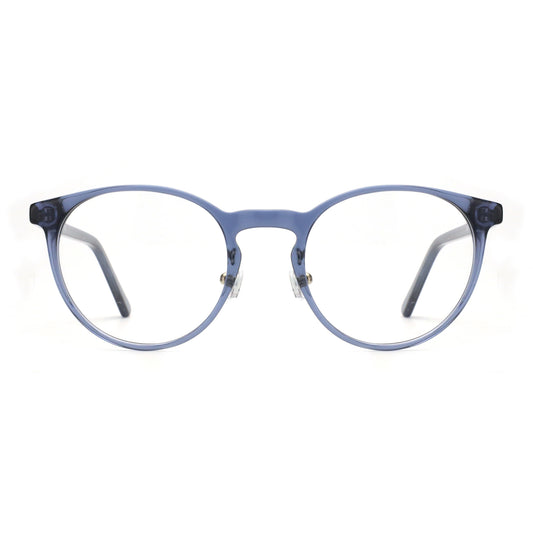
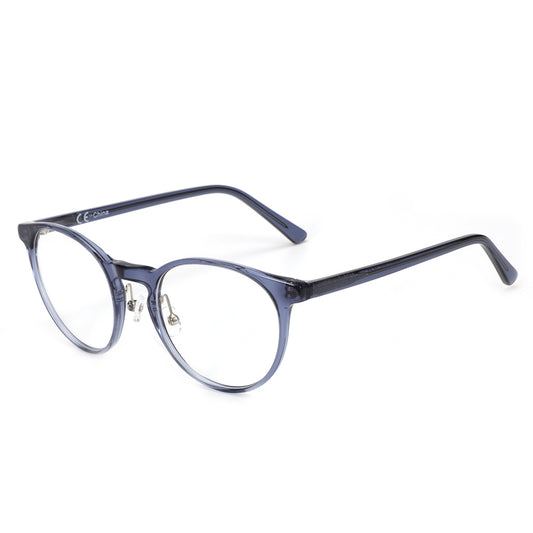
Many of our best-selling frames are designed with versatile widths that suit a wide range of PD measurements. For example, the Zenottic Eyeglasses Asa offers a balanced fit that works well for average PD ranges while accommodating high-index lenses that minimize thickness.
If you have a narrower or wider-than-average PD, consider styles from our acetate frames or semi-rimless glasses collections, which often provide more flexibility in bridge and temple adjustment.
For additional guidance on overall fit, read our article on HOW GLASSES SHOULD FIT?.
Final Takeaways for Online Glasses Buyers
Frame size is not just about style—it directly impacts how clearly and comfortably you see. By matching frame width to your PD, you reduce the risk of distortion, limit unnecessary lens thickness, and lower the chance of needing a remake or return.
Take time to measure your PD, study frame dimensions before checkout, and choose frames that allow the lenses to sit close to the center of your eyes. When in doubt, err toward frames that keep decentration low, especially if you have a higher prescription or wear progressives.
With the right measurements and a careful selection process, you can order glasses online with confidence and enjoy clear, comfortable vision from the first day you wear them. If you experience ongoing issues with your new glasses, reach out to your eye care provider for professional guidance.
This article only discusses comfort and setup advice. It does not constitute medical advice, diagnosis, or treatment. If persistent discomfort occurs or existing eye conditions are present, qualified professionals should be consulted.
