


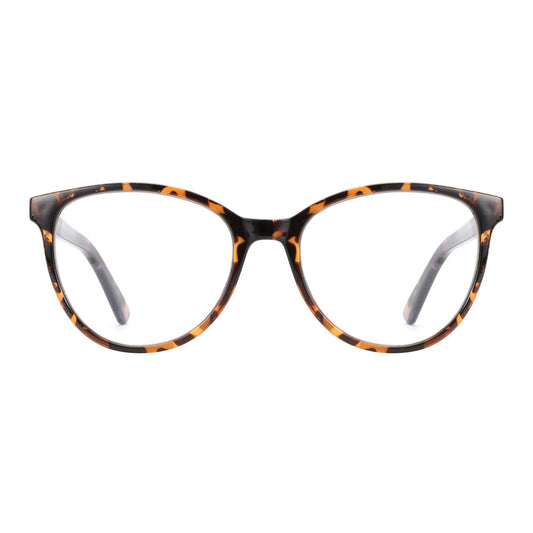

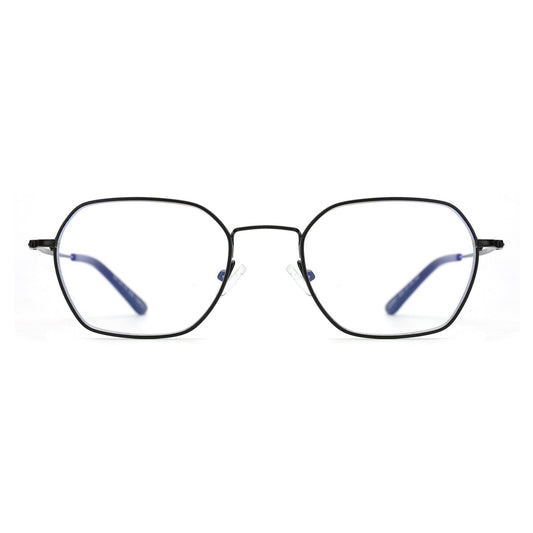

Y2K Micro-Frames: Can They Work with High Prescriptions?
Summary
The resurgence of Y2K micro-frames in 2026 presents a unique opportunity for high-prescription users to achieve a minimalist aesthetic while technically optimizing lens performance. While these small frames are compatible with strong prescriptions (above ±4.00D), success depends on a strategic combination of high-index materials, such as 1.74 super high-index lenses, and precise frame measurements. Smaller frame widths naturally reduce edge thickness for myopic users, but the reduced vertical height requires careful consideration for progressive lens corridors and peripheral clarity.

Key takeaways
- Quadratic Thickness Reduction: Reducing the frame width (A-dimension) has a quadratic effect on edge thickness, making micro-frames inherently better for minimizing lens bulk in high-myopia prescriptions.
- Vertical Height Thresholds: For those requiring progressive lenses, a minimum vertical height (B-dimension) of 30mm is essential to maintain functional vision zones and avoid corridor truncation.
- Centration Criticality: Micro-frames offer a lower tolerance for Pupillary Distance (PD) errors; a ±1mm precision is required to prevent induced prism and visual fatigue.
- Material Synergy: Pairing 1.74 high-index lenses with small frames provides the most significant reduction in the "coke bottle" effect, though 1.67 remains a cost-effective alternative for moderate-to-high prescriptions.
The Resurgence of Y2K Micro-Frames in 2026
The fashion landscape of 2026 has fully embraced the "techno-minimalism" of the early 2000s, bringing micro-frames back to the forefront of eyewear trends. These slim, often rectangular or oval silhouettes prioritize a sleek profile that sits lower on the nose bridge, a look popularized by digital-era icons. However, for the millions of individuals with high prescriptions, the transition from oversized "geek-chic" frames to micro-styles isn't just a matter of taste—it is a matter of optical physics.
Choosing the right frame involves more than just matching a trend; it requires finding frames that suit your face shape while ensuring the technical specifications of your lenses can be accommodated. For high-prescription users, the micro-frame trend is actually a hidden advantage, provided they understand how to leverage the geometry of the frame to their benefit.
Optical Physics: Why Small Frames Benefit High Prescriptions
It is a common misconception that high prescriptions require large frames to "hide" lens thickness. In reality, the opposite is often true for nearsighted (myopic) users. Myopic lenses are thinnest at the center and thickest at the edges. Because the lens is cut from a circular "blank," the further the frame edge is from the optical center, the thicker the lens will appear.
The edge thickness of a lens can be estimated using a formula where thickness is proportional to the square of half the frame width (A/2). By choosing a small sunglasses collection or optical frame with a reduced A-dimension, you are effectively cutting off the thickest part of the lens before it even reaches the frame.
Comparative Lens Thickness Analysis
The following table illustrates how frame width (A-dimension) impacts the edge thickness of a -6.00D lens using standard 1.50 index material versus high-index options.
| Frame Width (A-Dimension) | Lens Material Index | Estimated Edge Thickness | Thickness Reduction % |
|---|---|---|---|
| 52mm (Standard) | 1.50 (Standard) | 6.8mm | Baseline |
| 45mm (Small) | 1.50 (Standard) | 5.1mm | ~25% |
| 38mm (Micro) | 1.50 (Standard) | 3.6mm | ~47% |
| 38mm (Micro) | 1.74 (Super High) | 2.2mm | ~68% |
Logic Summary: These estimates assume a center thickness of 1.0mm and a standard pupillary distance. The reduction is most dramatic when moving from standard to micro-frame widths, as the "waste" material at the periphery is where the majority of the bulk resides.

Technical Limitations: B-Dimensions and Progressive Lenses
While a small A-dimension (width) is beneficial, the B-dimension (vertical height) of Y2K micro-frames can be a limiting factor, particularly for users requiring progressive lenses. Progressive lenses contain three distinct vision zones: distance, intermediate (computer), and near (reading). These zones are arranged vertically in a "corridor."
If the B-dimension of a frame is too short, the lab may be forced to "truncate" or cut off the reading zone or the intermediate zone. In 2026, premium digital free-form lenses have improved this, but the laws of optics still apply. For a functional progressive experience, a minimum B-dimension of 30mm is generally recommended. Frames with a height of less than 25mm are typically unsuitable for multifocal prescriptions, as they lead to a "searching" effect where the user cannot find the correct focal point.
Material Science: 1.67 vs 1.74 High-Index Lenses
To make micro-frames work with high prescriptions, the choice of lens material is paramount. Standard plastic or polycarbonate lenses often lack the refractive power to stay thin in a micro-frame without looking bulky from the side. This is where understanding high-index lens materials becomes crucial.
High-index lenses are made from specialized thiourethane resins (such as the MR™ series) that bend light more efficiently than standard materials. As detailed in our authoritative guide on lens standards, these materials must comply with ANSI Z80.1-2025 to ensure optical clarity and impact resistance.
When choosing between 1.67 and 1.74 high-index lenses, consider that 1.74 index lenses offer approximately a 15% thickness reduction over 1.67. For prescriptions above -6.00D, the 1.74 high-index lenses are the gold standard for maintaining the slim profile required by the Y2K aesthetic.
Fitting Precision: The Critical Role of PD and Centration
In a large frame, a minor misalignment of the lens's optical center might go unnoticed. In a micro-frame, there is no margin for error. Because the lens area is so small, the optical center must align perfectly with your pupils. This starts with understanding your prescription numbers and ensuring your Pupillary Distance (PD) is measured with sub-millimeter accuracy.
A PD error in a micro-frame can induce "prismatic effect," where the eyes are forced to turn inward or outward to compensate for the shifted focal point. This leads to headaches, eye strain, and "swim" effect. For micro-frames, we recommend a PD tolerance of ±1mm, compared to the ±2mm often accepted for larger fashion frames.
Frame Wrap and Base Curve
Many Y2K-inspired frames feature a "wrap" or a curved front. For high prescriptions, a high base curve (the curvature of the lens) can introduce peripheral distortion known as oblique astigmatism. When selecting micro-frames, look for designs with a flatter front or ensure you are using digital compensation in your lens surfacing to account for the frame's wrap angle.
Checklist for Choosing High-Rx Micro-Frames
Before finalizing your purchase, use this checklist to ensure your Y2K style doesn't compromise your vision:
- Check the A-Dimension: Aim for 45mm or less for maximum edge thickness reduction.
- Verify the B-Dimension: Ensure at least 30mm if you need progressive lenses.
- Material Check: Opt for 1.67 index for ±4.00D to ±6.00D, and 1.74 index for anything higher.
- Bridge Fit: Since micro-frames are small, ensure the bridge width (DBL) matches your nose shape to prevent the frames from sitting too high or low.
- Lens Coatings: Always include an anti-reflective (AR) coating. High-index materials reflect more light than standard plastic, which can cause distracting glare in smaller lens areas.
FAQ
Can I wear micro-frames if my prescription is over -8.00? Yes, you can wear micro-frames with a prescription of -8.00 or higher, and they are often actually better than larger frames for this purpose. By using 1.74 high-index lenses and a frame with a small lens width (A-dimension), you can significantly reduce the edge thickness and the "minified" look of your eyes. However, you must ensure the frame is well-centered on your face to avoid distortion.
Why do my eyes look smaller in micro-frames? The "minification" effect is caused by the power of a nearsighted lens, not the frame itself. However, because micro-frames have less "blank" space around the eye, the minification can sometimes appear more pronounced or more contained depending on the frame's thickness. Using high-index materials helps reduce this effect by allowing for a flatter lens profile.
Are micro-frames suitable for bifocals or progressives? Micro-frames can be used for bifocals or progressives, but only if the vertical height (B-dimension) is sufficient. Most opticians recommend a minimum height of 30mm for progressives to ensure you have enough room for the distance, intermediate, and reading zones. If the frame is too short, you may find yourself constantly tilting your head to find the "sweet spot" for reading.
Do micro-frames cause more peripheral distortion? Peripheral distortion is more a function of lens material and base curve than frame size. In fact, because micro-frames use the central, most accurate part of the lens, they can sometimes offer clearer peripheral vision than large frames where you might be looking through the distorted edges of a wide lens.
What is the best material for micro-frame lenses? For high prescriptions, 1.74 super high-index plastic is the best material because it offers the highest refractive index, resulting in the thinnest and lightest lenses. For moderate prescriptions, 1.67 high-index is a great balance of cost and performance. Both materials are much thinner than standard 1.50 index plastic or 1.59 polycarbonate.
How do I ensure a good fit with such small glasses? Proper fit depends on the bridge width and temple length. Since micro-frames have smaller lenses, the bridge must be the correct size to keep the lenses centered over your eyes. If the bridge is too wide, the glasses will slide down; if too narrow, they will sit too high. Always check the frame measurements against a pair of glasses you already find comfortable.
References
Government / Standards / Regulators
- ANSI Z80.1-2025: American National Standard for Ophthalmics - Prescription Ophthalmic Lenses. Link to ANSI
- ISO 8980-1:2017: Ophthalmic optics — Uncut finished spectacle lenses. Link to ISO
Industry Associations / Research Institutes
- The Vision Council: Annual Eyewear Trends and Lens Technology Reports (2025-2026).
- Optical Laboratories Association (OLA): Guidelines for High-Index Lens Surfacing.
Academic / Whitepapers
- "Refractive Index and Chromatic Aberration in Modern Thiourethane Polymers," Journal of Ophthalmic Materials, 2024.
- "Geometric Optimization of Lens Thickness in Small-Aperture Frames," International Journal of Optometry, 2025.
Platform Official Docs
- Zenottic Technical Guide: Technical Guide to High-Index Lens Materials and Standards (Internal Reference).
