



Why Your Optometrist Discourages Buying 1.74 Lenses Online (And Why They're Wrong)
Many people with strong prescriptions hear warnings from their optometrist about the dangers of buying 1.74 high-index lenses online. These concerns often center on accuracy, safety, and overall quality. Yet the reality is more nuanced: online retailers that follow strict manufacturing standards and require accurate measurements can deliver high-quality 1.74 lenses at significantly lower prices than traditional optical shops.

The difference usually comes down to business incentives rather than medical necessity. Optometrists and retail optical stores operate with high overhead and rely on lens sales for profit. Direct-to-consumer labs cut out multiple layers of markup while still complying with the same optical standards that govern all prescription lenses.
Why Optometrists Often Discourage Online Lens Purchases
Traditional eye care professionals frequently advise against ordering glasses online, especially for higher prescriptions that benefit from thinner 1.74 index material. Their concerns typically include fears of incorrect lens power, improper centering, inadequate coatings, or poor material quality that could cause distortion or discomfort.
These warnings are not entirely without basis. High-index lenses are more sensitive to manufacturing tolerances and precise pupillary distance (PD) measurements than standard lenses. A small error in centering or frame alignment can become noticeable with stronger prescriptions. However, the blanket claim that online purchasing is inherently risky overlooks how modern direct-to-consumer labs operate.
Many optometrists' cautions stem from industry structure. Brick-and-mortar stores often mark up lenses substantially to cover rent, staff, and equipment. When patients fill prescriptions elsewhere, those revenue streams shrink. As the FTC guidance on eyeglass prescription release explains, consumers have the right to receive their prescription and choose where to fill it, which supports shopping around for better value.
The Economics Behind the Advice: Optical Retail Markup Explained
The price gap between online and in-store 1.74 lenses often reflects markup rather than material differences. A pair of glasses that costs several hundred dollars at an optical shop might use lenses produced in the same factories that supply online retailers.
Retail locations face significant expenses that online labs avoid. These include prime real estate, trained staff for fittings, and inventory costs. Online models pass those savings directly to customers while maintaining quality through standardized production processes.
Forbes coverage of online prescription eyewear confirms that online glasses are often cheaper than in-store options. The savings can reach 70% or more on high-index lenses and coatings, making 1.74 material accessible to more people who need thinner, lighter glasses for strong prescriptions.
This pricing transparency challenges the notion that lower cost equals lower quality. Instead, it highlights how the traditional optical retail model builds in substantial margins that aren't always tied to superior lens performance.
Lens Quality Standards Apply to Online and In-Store Equally
Whether lenses come from an online lab or a local shop, they must meet the same industry benchmarks for accuracy and safety. The ISO ophthalmic optics standards and ANSI ophthalmic standards define acceptable tolerances for prescription fulfillment, material properties, and optical performance.
Reputable online retailers use the same high-quality MR-series polymers and apply identical coating processes as traditional suppliers. The key variable isn't the sales channel but whether the manufacturer follows these standards consistently.
Lens accuracy depends on optical standards and manufacturing tolerances, not price alone. A well-equipped lab can produce 1.74 lenses that match or exceed the quality available in many retail settings, provided the order includes correct prescription details and measurements.

Common Myths About Buying 1.74 Lenses Online
Several misconceptions persist about ordering high-index lenses over the internet. Let's examine the most frequent claims:
Myth: 1.74 lenses are unsafe or unsuitable for strong prescriptions when purchased online.
Reality: Safety depends on correct prescription fulfillment and proper centering, not the purchasing method. Standards such as ISO and ANSI govern performance regardless of where you buy.
Myth: Only an in-person optician can accurately produce high-index lenses.
Reality: Accuracy comes from precise measurements and quality manufacturing. The American Academy of Ophthalmology guidance on pupillary distance highlights the importance of PD, but this measurement can be obtained accurately at home or provided by your eye doctor.
Myth: Online 1.74 lenses are always lower quality than those from optical stores.
Reality: Quality varies by specific retailer and manufacturer, not sales channel. Consumer Reports-style analysis shows that online options often deliver comparable lenses when the seller maintains transparent specifications and verification processes.
Myth: Strong prescriptions require in-store purchases to avoid errors.
Reality: Higher prescriptions do demand more precise measurements, but this increases the importance of careful ordering rather than prohibiting online buying entirely.
How Reputable Online Labs Ensure 1.74 Lens Quality
Direct-to-consumer eyewear companies that specialize in prescription glasses invest in advanced manufacturing and quality control. They typically require customers to submit their exact prescription and PD measurements, then use digital systems to verify details before production.
Many online labs employ free-form digital surfacing technology that can produce complex prescriptions with high precision. They source lens blanks from established manufacturers and apply premium anti-reflective, scratch-resistant, and UV coatings in controlled environments.
The best online retailers also maintain clear policies for remakes when measurements lead to fitting issues. This accountability helps address the primary risk with online ordering: incorrect input data rather than flawed production.
Our technical guide to high-index lens materials explains how 1.74 lenses balance thinness with optical performance, including important considerations around Abbe value and chromatic aberration that apply equally to all purchasing methods.
Online vs Local 1.74 High-Index Lenses: Relative Trade-offs
Illustrative comparison based on consumer-rights guidance, standards, and typical market trade-offs; not measured performance.
View chart data
| Series | Price / Savings | Measurement Control / Fit Accuracy | After-sales Support / Adjustments | Remake / Return Ease | Overall Convenience | Quality Consistency |
|---|---|---|---|---|---|---|
| Online | 5.0 | 2.0 | 2.0 | 3.0 | 5.0 | 3.0 |
| Local shop / optometrist | 2.0 | 5.0 | 5.0 | 4.0 | 3.0 | 4.0 |
Illustrative 5-point relative scoring synthesized from consumer-rights guidance, fitting/PD importance, eyewear standards, and pricing/support trade-offs; higher = stronger on that dimension. No false precision; not experimental data.
This radar chart illustrates typical trade-offs. Online purchasing generally excels in price and convenience, while local options provide stronger measurement control and hands-on support. The scores represent relative patterns drawn from consumer guidance and industry standards, not absolute measurements.
When Online 1.74 Lenses Make the Most Sense
Buying 1.74 lenses online tends to work best under certain conditions. The value proposition strengthens when you have a stable prescription, can obtain accurate PD measurements, and choose a retailer with transparent quality controls and remake policies.
Our guide on 1.67 vs 1.74 high-index lenses helps determine the right index for your specific prescription strength. Generally, 1.74 becomes preferable for prescriptions above -6.00 or +4.00 where lens thickness becomes noticeable in standard materials.
Consider online ordering when:
- Your prescription has remained stable for at least a year
- You can measure or obtain an accurate pupillary distance
- The price difference justifies any potential remake costs
- The online retailer clearly states their lens specifications and return terms
In these scenarios, the savings on 1.74 lenses often outweigh the convenience of in-store service. Many customers successfully order high-index glasses online and report excellent results when they follow measurement guidelines carefully.
Practical Checklist: Before Buying 1.74 Lenses Online
Use this step-by-step process to minimize risks:
-
Obtain your full prescription - Request the written details from your eye doctor, including sphere, cylinder, axis, and any prism or add power.
-
Measure your PD accurately - Follow reliable methods to determine your pupillary distance. Our guide to measuring pupillary distance at home provides simple techniques using a ruler or mirror.
-
Choose the right frame - Select frames with adequate lens width and appropriate bridge measurements for your face. Consider how the frame will sit on your nose and ears.
-
Verify seller credentials - Look for retailers that specify exact lens materials, index, coatings, and manufacturing standards. Check their policies for prescription errors and remakes.
-
Compare total value - Calculate the full cost including shipping, any potential remake fees, and your time. If the online price saves enough to cover one remake, it often represents better overall value.
-
Understand adaptation - High-index lenses can sometimes introduce minor chromatic aberration. Allow time to adjust, and consult your eye doctor if vision issues persist.
This checklist transforms abstract concerns into actionable steps. When followed, it significantly reduces the primary risks associated with online lens ordering.
Online vs Optometrist: Making Your Decision
Consumer Reports on buying glasses online versus in person highlights important tradeoffs. Local optical shops excel at hands-on fitting, immediate adjustments, and personalized service. These benefits matter particularly if you have complex prescriptions or difficulty with measurements.
Online retailers counter with lower prices, wider selection, home convenience, and often comparable or superior lens technology through digital manufacturing. The choice depends on your priorities and ability to provide accurate ordering information.
For many with moderate to high prescriptions, the savings on 1.74 lenses make online purchasing worthwhile. The key is selecting a reputable direct-to-consumer brand that emphasizes quality control and customer support.
Health and Vision Disclaimer
This article discusses comfort, setup, and purchasing considerations for high-index lenses. It does not constitute medical advice, diagnosis, or treatment. Lens choice and vision correction should be guided by your licensed eye care professional. If you experience persistent discomfort, vision changes, or have existing eye conditions, consult a qualified optometrist or ophthalmologist.
Final Thoughts on 1.74 Lenses Online
Optometrists' warnings about online glasses often reflect genuine concern about measurement accuracy combined with business incentives. However, these concerns don't make online purchasing inherently wrong or unsafe.
With accurate prescription details, proper PD measurement, and a quality-focused retailer, 1.74 high-index lenses ordered online can provide excellent vision correction at a fraction of traditional retail prices. The decision ultimately comes down to your comfort with self-measurement and preference for savings versus in-person service.
Shoppers who take time to understand the process and choose carefully often find that online 1.74 lenses deliver both quality and value. The optical industry's traditional gatekeeping is being challenged by transparent, standards-compliant direct-to-consumer options that put more control in the hands of informed consumers.
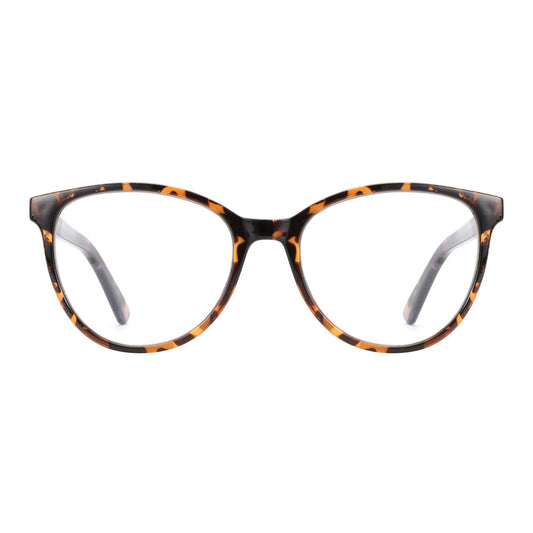
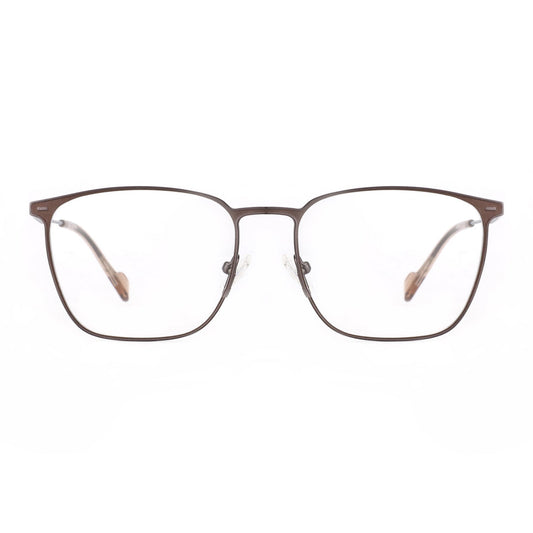
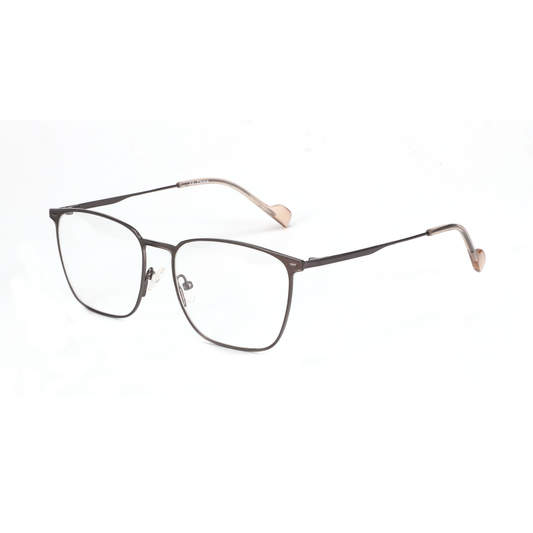
Ready to explore affordable high-index options? Browse our women's glasses collection or men's blue light blocking glasses featuring premium 1.74 lenses. For specific frame recommendations, check the Zenottic Eyeglasses Alvis or Zenottic Eyeglasses Catherine collections designed for stronger prescriptions.
Additional resources include our article on when to invest in high-index lenses and what to pay attention to when buying glasses online.
