



Can You Put High-Prescription Lenses in Cheap Frames? Structural Limits Explained
Yes, you can put high-prescription lenses in many budget frames, but structural limits matter more than price alone. High-index options like 1.74 lenses significantly reduce thickness and weight compared with standard plastic, yet the frame must still provide enough rigidity, lens depth, hinge quality, and bridge stability to maintain alignment and comfort over time. Frames that flex excessively, sit too shallow, or have weak hinges can cause the lenses to stress, the glasses to warp, or the fit to drift, even when the lenses themselves are thin.

For budget-conscious wearers with prescriptions stronger than roughly -6.00 or +4.00, the real question is not whether the frame is inexpensive but whether it passes a few practical structural checks. This guide explains those limits, common myths, red flags to avoid, and what to look for so you can confidently pair affordable frames with high-index lenses without risking breakage or poor vision.
Why High-Index Lenses Still Require Frame Support
High-index lenses, particularly 1.74 material, are popular for strong prescriptions because they cut edge thickness dramatically and reduce overall weight. However, they do not remove the mechanical demands placed on the frame. As this ZEISS Vision Care resource explains, high-index lenses can help reduce thickness and improve cosmetics for strong prescriptions, but frame fit and structural support still matter.
Lenses must sit securely in the frame groove without excessive pressure or movement. Strong prescriptions amplify any misalignment because the optical center must stay precisely aligned with your pupils. A frame that flexes under the lens weight or during daily wear can throw off that alignment, leading to headaches, distorted vision, or the need for frequent adjustments.
Eyeglass frames and lenses are also subject to safety and performance requirements. According to the FDA guidance on eyeglass lenses and frames, material choice and fit matter when pairing strong lenses with a frame. This is why even low-cost frames need sufficient build quality to avoid cracking the lens edge or deforming over months of use.

Common Myths About Cheap Frames and Thick Lenses
Many shoppers believe that ordering 1.74 high-index lenses automatically makes any inexpensive frame viable. This assumption can lead to disappointment.
Myth: “If the lenses are 1.74, the frame doesn’t matter much.” Reality: High-index material reduces bulk, but the frame must still hold alignment, resist flex, and fit the lens geometry securely. A thin lens in a weak frame can still experience edge stress or cause the glasses to sit crooked.
Myth: “Any cheap frame is good enough for strong prescriptions.” Reality: Stronger prescriptions tend to reveal weaknesses in poor frame design faster. Flimsy hinges, flexible bridges, or shallow rims increase the chance of lens pop-out, warping, or discomfort.
Myth: “Material only affects style, not performance.” Reality: Different frame materials offer varying levels of durability and impact resistance. As noted in general standards from ANSI, material choice influences how well a frame handles daily stress, especially when supporting heavier or thicker-edged lenses.
These misconceptions often push buyers toward the lowest-priced options without checking structural suitability first.
Structural Factors That Determine Frame Suitability
Four main elements decide whether a budget frame can safely support high-prescription 1.74 lenses:
- Rim depth and shape: Shallower or highly curved rims leave less room for lens edge thickness and make proper edging and mounting harder. Deeper, more rectangular openings generally provide better support.
- Bridge and nose pad design: A weak or overly flexible bridge allows the frame to sag or shift, decentering the lenses. Stable bridges that distribute weight evenly perform better with stronger prescriptions.
- Hinge quality: Cheap hinges that lack spring action or feel loose tend to loosen further over time. This leads to temple flare and loss of alignment. Spring hinges, even in budget models, improve long-term stability.
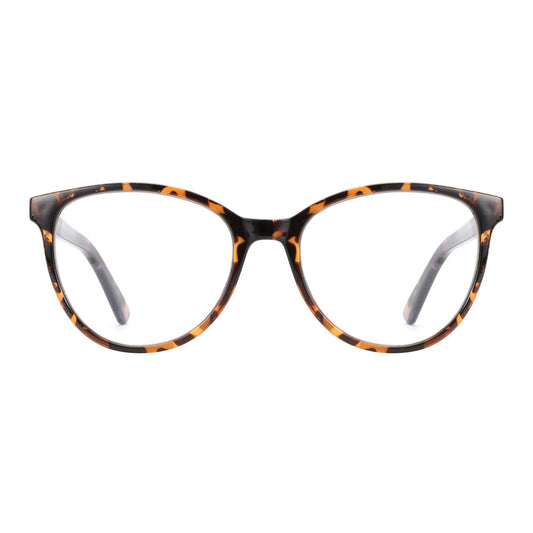
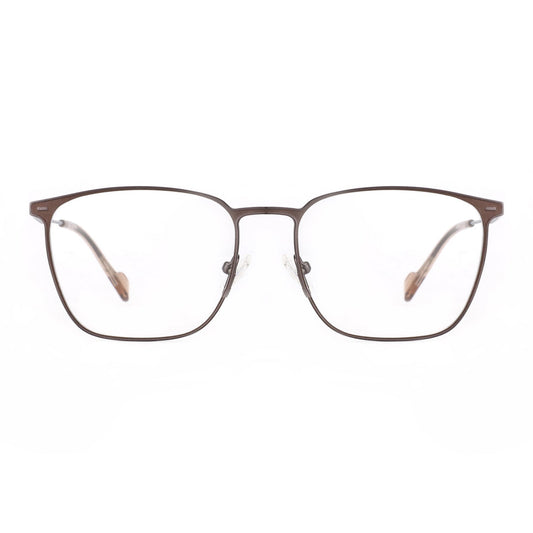
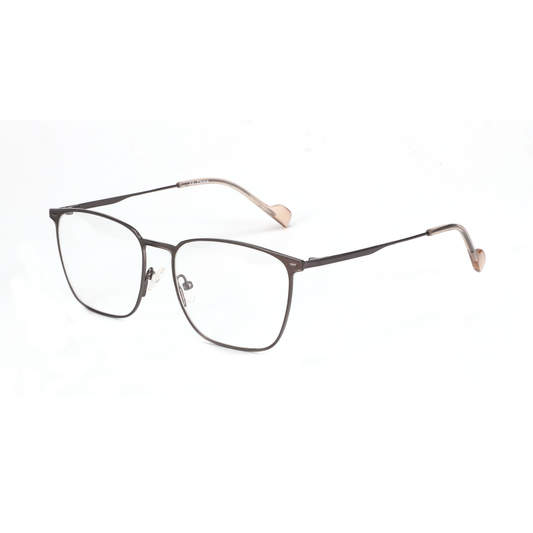
- Overall material rigidity: Acetate can feel stylish but may warp in heat or under lens weight. Metal frames often offer better rigidity at lower price points, though very thin metal can still bend.
Frame size and fit become more important as prescription strength increases, according to guidance from the American Optometric Association. A frame that is too large or too small for your face can force the lenses into suboptimal positions.
Illustrative Structural Suitability for High-Prescription 1.74 Lenses
The chart below shows buyer-guidance heuristic scores (1–10 scale) for common frame categories across key structural factors. These are illustrative estimates based on general principles of frame selection for strong prescriptions, not laboratory measurements or official test results.
Illustrative Structural Suitability for High-Prescription 1.74 Lenses
Buyer-guidance chart only: 1–10 heuristic scores, not lab measurements or medical performance claims.
View chart data
| Category | Rigidity | Lens Depth Support | Hinge Durability | Bridge Stability | Overall for High RX |
|---|---|---|---|---|---|
| Cheap Acetate | 5.0 | 4.0 | 4.0 | 6.0 | 4.0 |
| Cheap Metal | 4.0 | 6.0 | 5.0 | 7.0 | 6.0 |
| Quality Budget Metal | 4.0 | 7.0 | 6.0 | 8.0 | 7.0 |
| Premium Titanium | 5.0 | 6.0 | 5.0 | 8.0 | 8.0 |
Illustrative heuristic scores derived from general frame-selection principles for strong prescriptions: frame rigidity, deeper lens shape support, hinge/bridge robustness, and overall fit sensitivity matter more as RX strength rises. Values are bounded buyer-guidance estimates, not official test data or lab measurements.
The chart highlights that quality budget metal frames often strike a practical balance, offering better rigidity and hinge performance than basic acetate without jumping to premium pricing.
When to Avoid Cheap Frames for High Prescriptions
Certain scenarios make even the lowest prices a poor value. Do not choose a budget frame for strong prescriptions if it shows these red flags:
- Very shallow lens openings or extreme wrap styles that limit lens depth and centering
- Thin, flexible bridges that allow the frame to sag on the nose
- Flimsy hinges without spring action or that feel loose out of the box
- Oversized or highly curved frames that force the lenses far from the eyes or create tilt
- Materials that appear overly lightweight with no visible reinforcement at stress points
These issues become more pronounced with 1.74 lenses because any misalignment is optically noticeable. Strong prescriptions expose problems with shallow frames, weak hinges, and flexible bridges more quickly.
How to Choose Budget Frames That Work With 1.74 Lenses
Follow this practical checklist when shopping online for affordable frames:
- Measure your pupillary distance (PD) and verify the frame’s lens width and bridge size will allow proper optical centering.
- Look for frames with at least 28–30 mm vertical lens height for most high-minus prescriptions to accommodate edge thickness.
- Prefer metal or reinforced acetate frames over ultra-thin plastic for better rigidity.
- Check for spring hinges or adjustable temples that maintain fit without constant tightening.
- Read return policies carefully—many online retailers allow free remakes if the initial frame does not work with your lens order.
- Consider styles described as suitable for high prescriptions or that explicitly mention compatibility with high-index lenses.
Zenottic frames such as the Cornelia square frames are engineered with these considerations in mind, offering stable construction that pairs well with ultra-thin 1.74 lenses at factory-direct prices. Similarly, the Alice lightweight women's frames provide a good balance of style and support for higher prescriptions.
For more details on choosing the right lens index, read our guide on when to invest in high-index lenses. You may also want to compare 1.67 vs 1.74 high-index lenses to confirm which material best matches your prescription strength.
If you prefer acetate for style, review the pros and cons in our acetate vs metal frames comparison. Spring hinges can also improve daily comfort—see why they matter in this spring hinges guide.
Balancing Cost, Comfort, and Durability
Budget frames can work well with high-prescription lenses when they meet basic structural requirements. The goal is to avoid extremes: ultra-cheap fashion pieces that sacrifice rigidity, or unnecessarily expensive frames when a well-designed budget option suffices.
Prioritize fit and build quality over the absolute lowest price. A slightly higher-cost frame that holds its shape and alignment will ultimately save you money on replacements and remakes. Many Zenottic options, including the Marina frames for high prescriptions and Wyatt eyeglasses, deliver reliable performance with 1.74 lenses without premium markups.
Important note on comfort and vision: This article discusses setup and structural considerations for eyewear only. It does not constitute medical advice, diagnosis, or treatment. Lens and frame choices affect perceived comfort in setup-dependent ways. If you experience persistent discomfort, headaches, or vision changes, consult a qualified eye care professional.
When evaluating frames for all-day wear, commuting, or office use with strong prescriptions, test the fit virtually if possible and confirm the retailer’s lens compatibility policies. With the right combination of frame structure and high-index lenses, you can achieve clear vision, good cosmetics, and lasting durability on a budget.
Shop our current flash sale collection for limited-time deals on frames suitable for high prescriptions, or browse women's glasses and men's collections to find styles that balance price and performance.
For additional technical background, the technical guide to high-index lens materials and standards provides deeper information on lens chemistry and compliance standards that complement frame selection.
