




Men’s Eyeglass Styles With Beards: How to Balance Frames and Facial Hair
A beard changes more than your jawline. It also changes how bold your glasses look on your face. The best men’s eyeglass styles balance the visual weight of your frames with the length, density, and shape of your facial hair. Thick frames are not always better for a full beard, and thin frames are not limited to light stubble. The goal is balance, not a fixed matching rule.

Why a Beard Changes the Visual Balance of Your Eyeglass Frames
A beard adds visual weight to the lower half of your face, while glasses draw attention to the upper half. The fuller or longer the beard, the more noticeable that balance becomes.
Thin frames can keep the overall look lighter, while thicker frames can create a stronger, more structured appearance. Neither is automatically better. The goal is to make the glasses and facial hair feel proportionate rather than letting both compete for attention.
Match Frame Thickness With Short, Full, and Longer Beards
Frame thickness is one of the easiest ways to control visual balance. Compare the frame against the beard you actually wear most often, not a clean-shaven version of your face.
Short Beards and Stubble
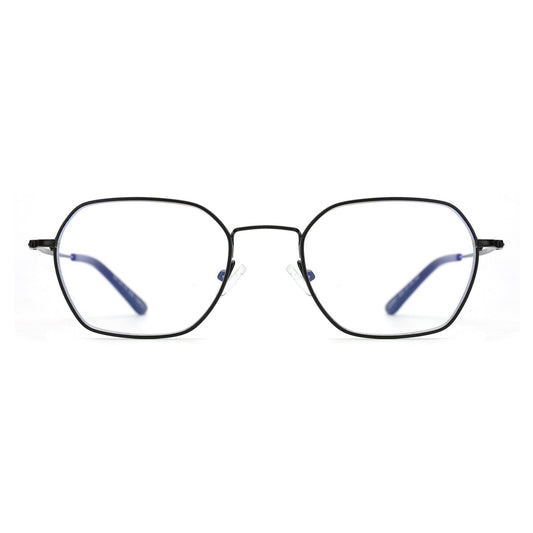
Short facial hair gives you the widest range of frame weights because it does not change the lower-face silhouette dramatically. Thin metal, semi-rimless, medium acetate, and thicker full-rim frames can all work depending on your face and wardrobe.
If your beard is closely trimmed but dark, a thick black frame can create a strong graphic look. If you want something quieter, gunmetal, brown, translucent acetate, or a slimmer rim can reduce contrast without making the glasses disappear.
Full Beards
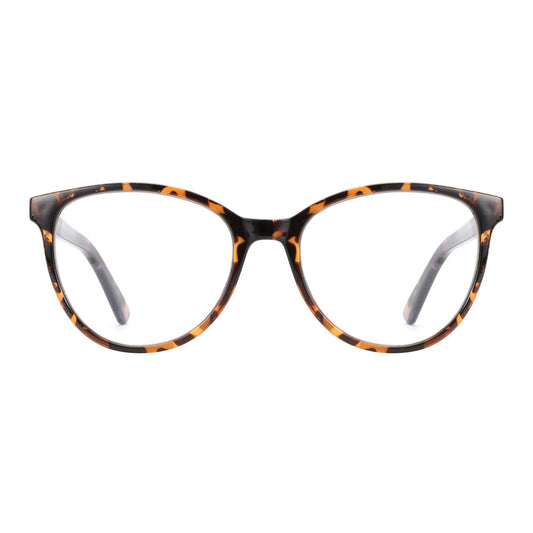
A full beard gives the lower face more presence, so frames that are too visually delicate can sometimes feel disconnected from the rest of the look. Medium-weight acetate, defined metal rims, browline-inspired shapes, and clear geometric frames can all provide enough structure around the eyes.
Bold frames can work too, especially if you like a strong style. The key is to avoid assuming that every element must be heavy at once. A dense dark beard, thick dark hair, and a very thick black frame create a much stronger effect than the same frame paired with a lighter or shorter beard.
Longer Beards
A longer beard extends the face visually, especially when most of the length sits at the chin. Frames can help bring attention back toward the eyes.
Look at frame width, lens depth, and brow line together. A frame with enough horizontal presence can help balance a beard that creates more vertical length, while excessively narrow glasses may make the face appear even longer.
Popular eyeglass frames for men include both thin metal and substantial acetate styles, so beard length does not lock you into one material. Use thickness to control how much attention the glasses receive rather than treating it as a rule tied to beard length.
Use Face Shape Alongside Beard Shape When Choosing Frames
Face shape is still useful, but a beard can change the outline people actually see. Use your natural face shape as a starting point, then consider how your beard adds width, length, or structure.
| Face and Beard Balance | Frame Direction to Consider |
|---|---|
| Round face with a short beard | Rectangular or angular frames can add definition |
| Round face with a full beard | Medium-width frames can add structure without making the look too heavy |
| Square face with a full beard | Rounder or softer frame shapes can balance strong jaw and beard lines |
| Long face with a longer beard | Wider frames can add horizontal balance and reduce an overly vertical look |
| Oval face with most beard styles | A wide range of frame shapes can work, so focus more on size and visual weight |
| Narrow face with a dense beard | Avoid frames that are much wider than the face; medium proportions usually look more balanced |
These are starting points, not fixed rules. Fit, frame width, and rim thickness still matter more than following a face-shape formula exactly.

Coordinate Frame Color With Dark, Light, Red, or Gray Facial Hair
Your frame does not need to match your beard color. In many cases, a small amount of contrast makes both features easier to see.
With a dark brown or black beard, black frames create a cohesive, high-contrast look. Brown, tortoise, gunmetal, navy, or translucent frames can soften the effect while still working with darker facial hair.
With a blond or light brown beard, lighter tortoise, warm metal, clear acetate, gray, or softer brown frames can create an easy transition between the glasses and facial hair. Dark frames are still an option when you deliberately want more contrast around the eyes.
With a red or auburn beard, warm browns, tortoise patterns, bronze tones, green-gray shades, and neutral metals can pick up the warmth without trying to match the beard exactly. A color does not have to be identical to feel coordinated.
With a gray or salt-and-pepper beard, silver, gunmetal, charcoal, black, navy, and translucent frames can all work. Warmer acetate can also create useful contrast if the rest of your coloring and wardrobe support it.
Skin tone and clothing matter too. If your beard and frame colors technically “match” but the combination feels disconnected from everything you normally wear, the frame may still feel wrong.
A better test is whether the frame color works with your facial hair, overall coloring, and the clothes you wear most often. The frame does not need to match your beard exactly. A color that connects naturally with your hair, skin tone, and wardrobe will usually look more balanced.
Keep the Overall Look Balanced Between Hair, Beard, and Glasses
Glasses and facial hair are only two parts of your appearance. Hairstyle, eyebrows, clothing, and frame color also compete for attention, so the strongest look usually has some hierarchy.
Start by deciding which feature you want people to notice first. A full beard can be the main feature while slimmer frames support it. Bold acetate glasses can lead the look while a neatly trimmed beard keeps the lower face cleaner. Neither approach is better.
A few practical checks make this easier:
- Pick one main focal point. Beard, hair, and glasses do not all need maximum visual weight.
- Repeat one design cue. A brown frame can echo warm beard tones, or a silver frame can connect with gray facial hair.
- Compare proportions from a distance. Close-up mirror checks can make individual features seem stronger than they appear in the full face.
- Check more than one outfit. Frames should work with your everyday wardrobe, not only the shirt you wore while trying them on.
This is useful when looking at both classic and trendy eyeglass frames for men. A current shape can still work with a beard when its scale, color, and rim weight make sense with the rest of your face.
When browsing different men’s eyeglass frames, compare thin metal, full-rim, acetate, and semi-rimless options against the beard style you wear regularly. The collection includes different shapes and frame weights, making it easier to compare the overall effect instead of deciding from one style alone.
The most useful test is not whether the frame follows a beard rule. It is whether your eyes, glasses, facial hair, and hairstyle still feel visually connected.
Build a Look That Feels Balanced
The best men’s eyeglass styles for beards do not come from matching one beard length to one frame type. Compare visual weight, face shape, beard outline, frame color, and the rest of your grooming together. Start with frames that fit properly, then decide whether you want the glasses to blend with your facial hair or create deliberate contrast. A balanced pair should support your everyday look without forcing you to change the beard style you already enjoy wearing.
FAQs About Men’s Eyeglass Styles and Beards
Q1. Can Round Glasses Work With a Full Beard?
Yes. Round frames can create a useful contrast with a full beard, especially when the beard has strong or angular lines. Pay attention to frame width and rim thickness so the glasses still have enough presence around the eyes.
Q2. Do Clear Frames Look Good With Beards?
They can. Clear or translucent frames keep the upper face visually lighter, which can work especially well when a beard already has strong color or volume. The frame shape and size still matter more than transparency alone.
Q3. Can a Mustache Change Which Glasses Look Best?
Yes, because a prominent mustache adds another horizontal feature near the glasses. Frames with a strong brow line, rectangular shape, or aviator-inspired proportions may echo that line, while softer frames can create more contrast.
Q4. Should I Change Frames After Growing a Beard?
Not automatically. Try your current glasses with the beard first and look at the overall balance rather than assuming the frames no longer work. A major change in beard length, density, or color may simply make a different frame weight or color more appealing the next time you shop.
Q5. Can Rimless Glasses Work With a Long Beard?
Yes. Rimless frames or very thin frames can create deliberate contrast with a long or dense beard and keep attention from becoming too concentrated on both halves of the face. If the glasses feel visually lost, a slightly stronger bridge, temple design, or lens shape can add definition without requiring a thick full-rim frame.
