




Eyelash Extension Friendly Glasses: Comfort for Long Lashes
Summary

Finding the right eyewear when wearing eyelash extensions requires prioritizing "vertex distance"—the space between the back of the lens and the front of the eye—to prevent uncomfortable brushing and lens smudging. By selecting frames with adjustable nose pads and specific bridge designs, wearers can achieve the 14mm to 18mm of clearance necessary for modern lash curls without compromising on style or optical clarity.
Key takeaways
- Prioritize Vertex Distance: Standard eyewear typically offers 12-14mm of clearance, but eyelash extensions often require 15mm or more to avoid lens contact.
- Look for Adjustable Nose Pads: Frames with metal nose pad arms allow for precise adjustments to push the lenses further away from the face.
- Consider Lash Curl Type: D-curl and L-curl extensions require more forward clearance than natural-looking C-curls due to their steeper trajectory.
- Lens Thickness Matters: High-index lenses can reduce the physical profile of the lens, potentially offering more room for lash movement within the frame.
- Professional Fitting is Essential: An optician can perform advanced "nose pad arm extensions" to customize the fit for extreme lash lengths.
The Challenge of Long Lashes and Lenses
For many beauty enthusiasts, the intersection of vision correction and eyelash extensions is a source of daily friction—literally. When eyelashes or extensions are long enough to brush against the back of eyeglass lenses, it causes more than just a tickling sensation. It leads to persistent oil smudges on the glass, potential damage to the delicate lash fibers, and even premature shedding of the extensions.
The fundamental issue lies in the design of standard optical frames, which are built around the average human anatomy where natural lashes rarely exceed 8mm in length. When you add extensions that can reach 12mm to 15mm, the standard "vertex distance" becomes insufficient. Understanding how to manipulate this distance through frame selection and professional adjustment is the key to a comfortable, smudge-free experience.
Understanding Vertex Distance for Lash Extensions
In optometry, vertex distance is the measurement between the surface of the cornea and the back surface of the lens. While a standard fit usually aims for 12mm to 14mm, this measurement is often too shallow for those with voluminous lash sets.
The specific curl of your extensions dictates exactly how much space you need. Extensions are categorized by their "curl profile," which determines the angle at which they extend from the eyelid.
Logic Summary: The following clearance recommendations are based on standard lash extension lengths (10-14mm). If you wear "mega volume" sets or lengths exceeding 16mm, you should aim for the upper end of these ranges or consider specialized frame modifications.
Clearance Requirements by Lash Type
| Lash Curl Type | Extension Trajectory | Recommended Vertex Distance |
|---|---|---|
| C-Curl | Natural, gentle curve | 13mm – 15mm |
| D-Curl | Dramatic, steep curve | 15mm – 17mm |
| L-Curl | Flat base, sharp upward lift | 14mm – 16mm |
| Natural Lashes | Minimal forward projection | 12mm – 14mm |

If your lashes are hitting your lenses, you are likely operating with a vertex distance of 11mm or less. This often happens with "low bridge" or "Asian fit" frames that sit closer to the face, or with thick acetate frames that lack adjustable nose pads.
How to Choose the Best Frames for Long Eyelashes
When browsing for your next pair of glasses, the most critical feature to look for is adjustability. While many people prefer the look of thick plastic frames, these often sit flush against the face, leaving little room for lashes.
The Power of Adjustable Nose Pads
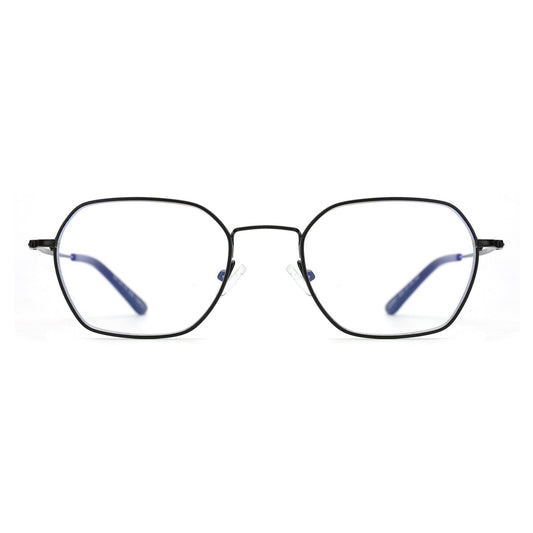
Frames with metal nose pad arms are the "gold standard" for lash extension wearers. These arms can be carefully bent by an optician to move the lenses further away from your eyes. This simple adjustment can often gain you the 2-3mm of extra space needed to clear a D-curl set.
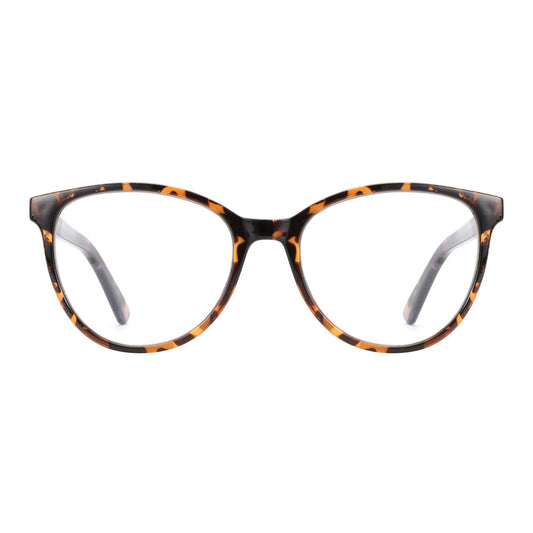
If you prefer the aesthetic of plastic frames, look for acetate frame styles that feature "built-up" nose bridges or those that have been retrofitted with metal nose pad arms. This provides the bold look of acetate with the functional clearance of a metal frame.
Frame Styles and Lash Compatibility
- Rimless and Semi-Rimless Designs: A rimless glasses collection offers significant advantages because there is no thick frame rim to interfere with the lash line. These frames are often lighter and can be positioned more flexibly on the nose. Similarly, semi-rimless glasses options provide a balance of style and clearance.
- Aviators and Large Squares: These styles often have a naturally wider bridge or sit higher on the nose, which can help in positioning the lenses further forward.
- Avoid Flat-Front Frames: Frames with a high "base curve" (meaning they wrap slightly around the face) tend to sit closer to the eyes at the edges, which can cause lashes to hit the lens specifically on the outer corners.
When selecting your frames, it is also helpful to consider choosing frames for your face shape to ensure the overall weight is distributed correctly, preventing the glasses from sliding down and causing the lashes to touch the top of the lens.
The Role of Lens Material and Thickness
It isn't just the frame that determines lash clearance; the lenses themselves play a significant role. The thickness and curvature of your prescription lenses can either help or hinder your lash comfort.
For those with high prescriptions, lenses can become quite thick at the edges (for nearsightedness) or in the center (for farsightedness). This bulk can eat into your precious vertex distance. Utilizing high-index lens materials and standards allows for much thinner lens profiles. As detailed in our technical guide, materials like 1.67 or 1.74 high-index resins significantly reduce lens volume, which can provide more "breathing room" within the frame.
Logic Summary: Thinner lenses (high-index) are recommended for lash wearers not just for weight, but because they allow the lens to be mounted more flush with the front of the frame, maximizing the internal space between the eye and the lens back-surface.
Professional Adjustments and "Nose Pad Extensions"
If you've found the perfect frames but your lashes are still brushing the lenses, don't give up. A professional optician has tools and techniques that go beyond standard home adjustments.
One advanced technique involves "extending" the nose pad arms. By using specialized pliers, an optician can change the angle of the arms to push the entire frame front forward. In some cases, they can even swap standard nose pads for "extra-thick" silicone versions, which act as spacers to hold the lenses away from your face.
Before committing to a pair, it is wise to review proper glasses fit guidelines to understand the baseline of a good fit. An optician will ensure that while the lenses are moved forward for lash clearance, the "optical center" of the lens still aligns correctly with your pupils to maintain clear vision.
Maintenance: Managing Lash Oil and Smudges
Even with the best fit, occasional contact may happen, especially when you blink deeply or look down. Eyelash extensions are often maintained with specific lash cleansers or may carry natural oils that transfer to the lens.
Cleaning Protocol for Lash-Friendly Lenses
- Daily Rinse: Use a dedicated, alcohol-free lens cleaner. Avoid using soaps with heavy moisturizers, as these can leave a film that attracts more lash oil.
- Microfiber Technique: Always use a clean microfiber cloth. If your lashes have been touching the lens, there may be tiny fibers or adhesive residue that can be abrasive if rubbed dry.
- Coating Protection: Be aware that oils from lash extensions can be more chemically complex than natural skin oils. If you have anti-reflective (AR) coatings, regular cleaning is vital to prevent the oils from "etching" into the coating over time.
Checklist: Shopping for Eyelash Extension Friendly Glasses
Use this checklist when trying on new frames to ensure they will accommodate your extensions:
- [ ] Does the frame have adjustable metal nose pad arms? (Highest priority for clearance)
- [ ] Is the bridge width comfortable? (A bridge that is too narrow will force the glasses to sit too high and close)
- [ ] When you blink, do your lashes touch the lens? (Test this with your most dramatic lash set)
- [ ] Can the lenses be upgraded to high-index? (To minimize lens thickness)
- [ ] Is the frame front relatively flat? (Avoid high-wrap "sporty" frames)
FAQ
How can I stop my eyelashes from hitting my glasses? The most effective way is to increase the "vertex distance" by adjusting the nose pads. If your glasses have metal nose pad arms, you can gently move them closer together, which pushes the frames further away from your face. If you have plastic frames without nose pads, you may need to use stick-on silicone nose pad spacers to create that necessary gap.
Are there specific glasses made for long eyelashes? While there aren't many brands that market specifically to "lash extension wearers," any frame with adjustable nose pads and a wide bridge can be considered lash-friendly. Look for "Alternative Fit" or "Low Bridge Fit" frames, as these are designed to sit further off the face to prevent the frames from resting on the cheeks, which naturally provides more lash clearance.
Do eyelash extensions damage eyeglass lenses? The lashes themselves are soft and unlikely to scratch the lens, but the oils and adhesive residues they carry can smudge the lenses and potentially degrade lens coatings over time if not cleaned regularly. Conversely, the constant friction of the lens against the extensions can cause the lashes to lose their curl or shed prematurely.
Can I wear oversized sunglasses with eyelash extensions? Yes, and in many cases, oversized sunglasses are better because they often have more "room" within the frame. However, ensure they have a sturdy bridge or nose pads. If the sunglasses are too heavy and slide down your nose, the top of the lens will tilt inward and hit your lashes.
Which lash curl is best for glasses wearers? If you want to minimize interference, a "C-curl" is generally the most compatible because it has a more natural, horizontal projection. "D-curls" are much more vertical and dramatic, making them more likely to hit the lens unless you have a frame with a very deep vertex distance.
Can an optician fix my glasses if my lashes are hitting them? Absolutely. An optician can perform a "nose pad arm extension" or adjust the "pantoscopic tilt" (the angle of the frame front) to create more space. They can also ensure that the glasses are properly tightened at the temples so they don't slip forward, which is a common cause of lash-to-lens contact.
References
Government / Standards / Regulators
- ANSI Z80.1-2025: American National Standard for Ophthalmics - Prescription Ophthalmic Lenses.
- ISO 12870:2016: Ophthalmic optics — Spectacle frames — Requirements and test methods.
Industry Associations / Research Institutes
- The Vision Council: Research on eyewear fit and consumer pain points.
- National Association of Lash Artists (NALA): Guidelines on lash extension safety and maintenance.
Platform Official Docs & Policies
- Zenottic Technical Guide to High-Index Lens Materials: Standards for lens thickness and refractive indices.
Community
- Reddit r/eyelashes and r/optometry: User experiences and professional advice on lash-friendly frame adjustments (Intent only; not authoritative).
