




The Frame Size Trap: Why Large Glasses Ruin High-Prescription Clarity
Summary
Selecting oversized frames for high-minus prescriptions (typically -6.00D and above) creates a technical "trap" where trendy aesthetics directly compromise optical performance. Large frames necessitate significant lens decentration, which exponentially increases edge thickness, introduces peripheral distortion known as the "fishbowl effect," and causes chromatic aberration that reduces visual clarity. To maintain optimal vision, high-prescription users must prioritize frame geometry—specifically matching the frame's optical center to their pupillary distance (PD)—and opt for smaller, rounder shapes that minimize the amount of lens material required.
Key takeaways
- Decentration is the primary enemy: The further your pupils are from the geometric center of the lens, the thicker the outer edges will be, regardless of the lens index used.
- Frame width dictates lens weight: Increasing frame width by just a few millimeters can significantly increase the volume and weight of a high-minus lens, leading to discomfort and "slipping" on the nose.
- Shape optimization matters: Round and oval frames naturally cut away the thickest portions of a minus lens (the corners), whereas square or rectangular frames preserve them.
- The "Fishbowl Effect" is physical, not just mental: Peripheral blur in large frames is caused by increased lens curvature and vertex distance issues that aspheric designs can only partially mitigate.
- Precision measurements are mandatory: Accurate Pupillary Distance (PD) and an understanding of "Frame PD" (A + DBL) are the only ways to mathematically guarantee a thin, clear result.
Understanding the Physics of Lens Decentration
For many eyewear enthusiasts, the "bigger is better" trend is a staple of modern style. However, for those with high myopia, this trend is a technical minefield. To understand why, we must look at how a prescription lens is actually made. Every lens begins as a "blank"—a thick disc of optical material. The lab grinds your prescription into this blank, centering the optical power at a specific point. When that lens is cut (edged) to fit into a frame, the lab must align that optical center exactly with your pupil.
If you choose a frame that is much wider than your face, your pupils will sit closer to the bridge than to the outer edge of the lens. This is called decentration. In a minus lens (used for nearsightedness), the lens is thinnest at the center and thickest at the edges. By moving the optical center inward to match your eyes, the lab is forced to include more of the thick outer edge of the blank in the final frame.
Logic Summary: This explanation assumes a standard "minus" lens geometry where thickness increases toward the periphery. While "plus" lenses (for farsightedness) are thickest in the center, they suffer from similar weight and magnification issues in large frames, though the edge thickness problem is reversed.
When you read your eye prescription, the "Sphere" (SPH) value tells you the magnitude of this challenge. At -6.00 or -8.00, the "slope" of the lens thickness is steep. Even 2mm of unnecessary decentration can add a visible millimeter of thickness to the edge of the lens.
The Hidden Cost of Oversized Frames: Edge Thickness and Weight
The most immediate consequence of the "Frame Size Trap" is the "Coke-bottle" effect. Even if you invest in the most expensive 1.74 high-index materials, an oversized frame will negate the benefits of that technology. The physics of a high-minus lens dictates that the edge thickness is proportional to the square of the lens diameter. This means that if you double the size of the frame, you don't just double the thickness—you quadruple it.
Beyond the cosmetic "rings of power" visible from the side, there is the issue of weight. High-prescription lenses are dense. When a lens is oversized, the center of gravity shifts forward, causing the glasses to constantly slide down the bridge of the nose. This doesn't just cause annoyance; it changes the vertex distance (the space between the back of the lens and your eye). If the glasses aren't sitting exactly where the optometrist intended, the effective power of the prescription changes, leading to eye strain and headaches.

Calculating Your Ideal Frame Width: The PD Connection
To avoid the trap, you need to move from "guessing" to "calculating." The goal is to find a frame where your eye sits as close to the geometric center of the lens opening as possible. This minimizes decentration and ensures you are looking through the "sweet spot" of the lens.
The most important metric here is the Frame PD. You can calculate this by looking at the numbers printed on the inside of your glasses arm (e.g., 52 [] 18 - 140).
- A (Lens Width): 52mm
- DBL (Bridge Width): 18mm
- Frame PD = A + DBL = 70mm
If your personal Pupillary Distance (PD) is 64mm, and the Frame PD is 70mm, your total decentration is 6mm (3mm per eye). In the world of high prescriptions, 3mm of decentration per eye is significant. Ideally, you want the Frame PD to be within 2-3mm of your actual PD.
If you haven't had your PD measured recently, you can measure your pupillary distance at home fast using a digital tool or a physical ruler. Knowing this number is the single most effective way to ensure your high-index lenses actually look thin.
The Impact of Frame Size on Edge Thickness (Estimated for -8.00D)
| Lens Width (A) | Bridge (DBL) | Frame PD | Patient PD | Decentration (per eye) | Est. Edge Thickness (1.74 Index) |
|---|---|---|---|---|---|
| 48mm | 20mm | 68mm | 64mm | 2mm | 4.2mm |
| 52mm | 18mm | 70mm | 64mm | 3mm | 5.8mm |
| 56mm | 18mm | 74mm | 64mm | 5mm | 7.5mm |
Logic Summary: These estimates are based on a standard -8.00D spherical power with a 1.74 refractive index. Actual thickness will vary based on the specific lens blank size, the "Effective Diameter" (ED) of the frame shape, and the presence of astigmatism (cylinder) correction.
Why Shape Trumps Style for High-Minus Prescriptions
While the size of the frame is the most critical factor, the shape is a close second. High-minus lenses are essentially "bowls." The thickest parts of the bowl are the furthest points from the center. In a rectangular or square frame, the furthest points are the corners.
When a lab edges a lens for a square frame, they must preserve those thick corners. However, in a round or oval frame, those corners are simply cut away. This is why a round frame with a 50mm lens width will almost always result in a thinner, lighter lens than a rectangular frame with the same 50mm width.
Furthermore, rounder shapes help with aspheric lens performance. Most high-quality high-index lenses today are aspheric, meaning the front surface is flattened to reduce magnification and distortion. Aspheric designs work best when the eye is centered. In a large, angular frame, the eye often sits in the upper-inner quadrant of the lens, forcing the wearer to look through the periphery where the aspheric compensation is less effective.
Combatting the Fishbowl Effect and Peripheral Distortion
The "fishbowl effect" is the sensation that the world is curving or moving at a different speed when you turn your head. This is caused by two main factors in high prescriptions:
- Peripheral Blur: As you look away from the optical center, the light hits the lens at an angle, causing "off-axis" aberrations.
- Magnification Changes: High-minus lenses make objects look smaller (minification). In a large frame, the difference in magnification between the center and the edge is more pronounced, creating a "warped" visual field.
Oversized frames exacerbate this because they provide a larger field of "bad" vision. By choosing a smaller frame, you effectively "crop" the visual field to the area where the lens performs best. This is particularly important if you are using 1.74 super high-index lenses, which are designed to maximize clarity but still face the physical limitations of light refraction at extreme angles.

The Role of High-Index Materials and Aspheric Design
To truly master high-prescription eyewear, you must combine proper frame selection with advanced material science. As detailed in our Technical Guide to High-Index Lens Materials and Standards, materials like the MR™ series (1.67 and 1.74) are engineered with higher refractive indices to bend light more efficiently. This allows the lens to be thinner for the same power.
However, a common trade-off with high-index materials is a lower Abbe value, which measures how much the material disperses light into its component colors (chromatic aberration). 1.74 lenses have a lower Abbe value than 1.60 or 1.67 lenses. This means that if you choose a large frame and look through the edges of a 1.74 lens, you are more likely to see "color fringing" or rainbows around light sources.
For a deep dive into which material suits your specific diopter range, you can compare 1.67 vs 1.74 high-index lenses to find the balance between thickness and optical purity.
Logic Summary: The recommendation for 1.74 index is typically reserved for prescriptions above -6.00D. For lower prescriptions, the optical benefits of a higher Abbe value in 1.60 or 1.67 materials often outweigh the negligible thickness savings of 1.74.
A Technical Checklist for High-Prescription Frame Selection
When browsing a collection of eyeglasses, use this checklist to ensure you aren't falling into the frame size trap.
- [ ] Check the "A" Measurement: For prescriptions over -6.00, try to stay under a 50mm lens width.
- [ ] Verify the Bridge (DBL): Ensure the bridge is narrow enough to center your eyes. A 16-18mm bridge is common for narrower faces; 20-22mm for wider.
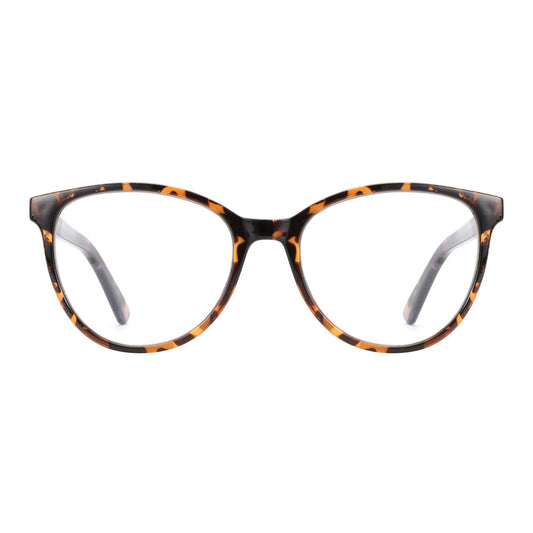
- [ ] Prioritize Acetate/Plastic: Thicker frame rims (like acetate) can physically hide the edge thickness of the lens, whereas thin metal frames will leave the edges exposed.
- [ ] Look for "Small Fit" or "Petite": Even if you don't have a small face, "small" frames often provide the best optical geometry for high prescriptions.
- [ ] Avoid Rimless or Semi-Rimless: These styles require the lens edge to be polished and exposed, which highlights thickness and increases the risk of chipping in high-minus lenses.
- [ ] Calculate Decentration: (Frame PD - Your PD) / 2. Aim for 2mm or less per eye.
FAQ
Why do my high-prescription lenses look thicker in my new large frames than my old small ones? This is due to the physics of decentration. In a minus lens, thickness increases as you move away from the optical center. Larger frames require the lab to use the thicker outer portions of the lens blank to fill the frame. Even if the prescription is the same, the larger "cut" of the lens will always be thicker at the edges.
Can 1.74 high-index lenses make any frame look thin? No. While 1.74 index material is the thinnest available in 2026, it cannot overcome the laws of geometry. A 1.74 lens in an oversized 56mm frame will still be significantly thicker than a 1.67 lens in a well-fitted 48mm frame. Material is a secondary factor to frame size and decentration.
What is the "fishbowl effect" and how do I stop it? The fishbowl effect is peripheral distortion caused by looking through the curved edges of a high-power lens. To stop it, choose smaller frames to minimize the peripheral area you look through, ensure your lenses are "aspheric," and have a professional check your "vertex distance" to ensure the glasses sit at the correct distance from your eyes.
Does frame shape really matter if the size is the same? Yes, significantly. A round frame "cuts the corners" off the lens blank, which is where the thickest part of a minus lens resides. A square or rectangular frame of the same width will always have thicker corners and more weight than a round or oval counterpart.
How do I know if a frame is too big for my prescription? A simple rule of thumb is to look at where your eyes sit in the lenses. If your eyes are in the inner third of the lens (closest to the nose), the frame is too wide. Your pupils should be as close to the horizontal and vertical center of each lens as possible for the best clarity and thinnest edges.
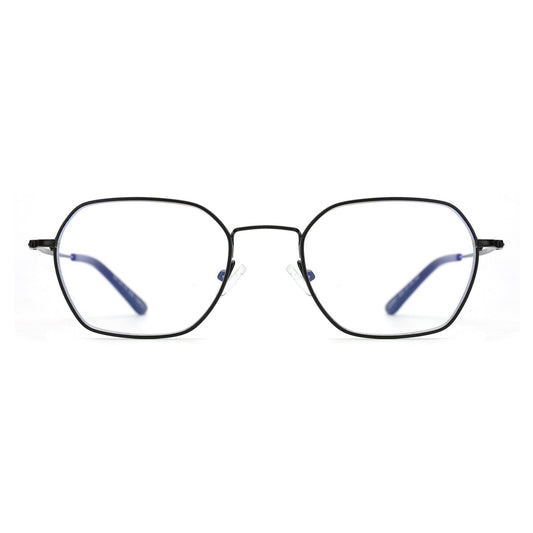
Are metal frames bad for high prescriptions? Not necessarily, but they are less "forgiving." Thin metal frames do nothing to hide the edge thickness of the lens. If you choose metal, look for "thick-rimmed" metal styles or ensure the frame size is perfectly matched to your PD to minimize the thickness that will be visible.
What is "Frame PD" and why does it matter more than my face size? Frame PD is the distance between the centers of the two lens openings (Lens Width + Bridge Width). It matters because it determines how much "decentration" is needed to align the lenses with your eyes. A frame might "fit" your face width but have a Frame PD that is much larger than your actual PD, leading to thick, distorted lenses.
References
Government / Standards / Regulators
- ANSI Z80.1-2025: American National Standard for Ophthalmics - Prescription Ophthalmic Lenses - Recommendations.
- ISO 8980-1:2025: Ophthalmic optics — Uncut finished spectacle lenses — Part 1: Specifications for single-vision and multifocal lenses.
Industry Associations / Research Institutes
- The Vision Council: Research reports on lens material trends and consumer eyewear preferences (2025-2026).
- American Optometric Association (AOA): Clinical guidelines for high-myopia correction and lens design considerations.
Academic / Whitepapers / Labs
- Journal of Ophthalmic and Physiological Optics: "The impact of lens decentration on peripheral aberrations in high-minus spectacle wearers" (2024).
- Mitsui Chemicals (MR™ Series): Technical specifications and thiourethane resin performance data for high-index polymers.
Platform Official Docs & Policies
- Zenottic Technical Guide: Technical Guide to High-Index Lens Materials and Standards.
