



High Astigmatism Glasses: Thin Lenses for Complex Eyes
Living with high astigmatism alongside a strong sphere prescription often means dealing with noticeably thicker, heavier lenses that can distort vision at the edges and feel uncomfortable for all-day wear. The good news is that choosing the right high-index lens material, such as 1.74, combined with strategic frame selection can meaningfully reduce edge thickness and weight for many wearers, though results depend heavily on your exact prescription, frame size, and fit.

High astigmatism is a common refractive error that requires different optical power in different meridians of the lens, making lens design more complex than a simple spherical correction. This cylinder component can increase edge thickness and visual distortion, especially when combined with high myopia or hyperopia. As the American Academy of Ophthalmology's Refractive Errors Preferred Practice Pattern explains, spectacle correction must account for the full prescription, including cylinder power, rather than treating it as a one-size-fits-all solution.
For those shopping online for astigmatism glasses, the primary goal is often finding a balance between thin, flattering lenses and affordable pricing without sacrificing optical quality. High-index materials like 1.74 can reduce lens thickness and weight compared with standard plastic, which is particularly helpful for stronger prescriptions. However, this official guidance from the American Academy of Ophthalmology and practical consumer advice from Consumer Reports on buying eyeglasses both emphasize that the exact improvement varies by prescription strength, frame choice, and lens design. High-index lenses do not eliminate thickness or distortion entirely.
Understanding High Astigmatism and Why Lenses Get Thick
Astigmatism occurs when the cornea or lens has an irregular shape, causing blurred or distorted vision at all distances. In a glasses prescription, it appears as cylinder power with an axis, requiring the lens to have varying curvature. Stronger cylinder values increase the complexity of the lens surface, which often leads to thicker edges, especially in larger frames or with higher overall power.
Standard lens materials (around 1.50 index) can result in bulky, heavy glasses that slide down the nose or create noticeable rings around the eyes. This is why many with high cylinder prescriptions turn to high-index options. At the same refractive power, higher-index materials bend light more efficiently, allowing the lens to be physically thinner, as outlined in this optics review from the University of Iowa.
That said, NCBI's overview of spectacle correction reminds us that lens performance depends on multiple factors beyond material, including frame geometry and accurate pupillary distance (PD) measurement. For high astigmatism, even the best lenses can show some edge distortion if the frame is too large or poorly fitted.
When 1.74 High-Index Lenses Are Worth the Upgrade for High Astigmatism
Many wonder whether jumping to 1.74 from 1.67 or lower indices delivers enough thinning to justify the cost. The short answer is that it often does for prescriptions around -6.00 sphere or stronger, or when cylinder reaches -2.00 or higher, particularly in medium-to-large frames. Below these levels, the additional thinning may be modest, and optimizing frame size first can provide better value.
This practical threshold comes from synthesizing guidance across sources: high-index benefits become more noticeable as total power increases, but the upgrade is not universal. Consumer Reports notes that the best index depends on your specific needs, frame size, and cosmetic priorities. For high cylinder, the lens must compensate across meridians, which can amplify edge buildup in non-ideal frames.
Here is an illustrative model showing relative edge thickness trends at a fixed -6.00 sphere as cylinder power increases. The chart compares 1.67 and 1.74 materials in medium versus large frames. Values are normalized for comparison (lower is thinner) and based on expected high-index behavior. Larger frames show higher overall thickness, and the advantage of 1.74 grows modestly with stronger cylinder.
When 1.74 Lenses Become More Worthwhile at -6.00 Sphere
Illustrative normalized edge thickness at fixed -6.00 sphere; lower values indicate thinner lenses and a larger 1.74 advantage.
View chart data
| Category | 1.67 Medium frame | 1.74 Medium frame | 1.67 Large frame | 1.74 Large frame |
|---|---|---|---|---|
| -1.0 cyl | 100.0 | 96.0 | 112.0 | 106.0 |
| -1.5 cyl | 104.0 | 99.0 | 117.0 | 110.0 |
| -2.0 cyl | 109.0 | 103.0 | 123.0 | 115.0 |
| -2.5 cyl | 115.0 | 108.0 | 130.0 | 121.0 |
| -3.0 cyl | 122.0 | 114.0 | 138.0 | 128.0 |
| -3.5 cyl | 130.0 | 121.0 | 147.0 | 136.0 |
Illustrative model only. Relative edge thickness is normalized to 100 at -1.0 cylinder for 1.67 in a medium frame, then conservatively scaled to reflect expected high-index thinning at fixed -6.00 sphere. The comparison incorporates the stated threshold guidance that 1.74 becomes more worthwhile around -6.00 sphere and/or -2.00 cylinder, with larger frames amplifying thickness differences. Values are for comparison, not measured specs.
This model highlights that the gap widens with higher cylinder and larger frames, supporting the heuristic that 1.74 often delivers more visible benefit above -2.00 cylinder in non-compact frames. Always remember this is for planning purposes; your optician's final calculation using your exact PD and frame measurements will determine the real outcome.
Myth vs Reality: High-Index Lenses for Astigmatism
A common misconception is that the highest-index lens (1.74) will always produce the thinnest, most distortion-free glasses for high astigmatism. In reality, while higher index generally allows thinner lenses, the improvement is not dramatic in every case, and trade-offs exist.
Myth: 1.74 lenses perfectly solve thickness and edge distortion for any high cylinder prescription.
Reality: Results vary significantly by frame size, exact cylinder power, lens design, and fitting accuracy. A compact frame with 1.67 may look better than a large frame with 1.74. Higher-index materials also tend to have a lower Abbe value, which can slightly increase chromatic aberration for some users, per technical discussions in optics resources.
Consumer Reports and the NCBI StatPearls on ametropia correction both stress that frame choice and overall design often influence final thickness and comfort as much as the material index. Do not assume the most expensive lens is automatically best; evaluate based on your priorities.
How Frame Choice Dramatically Affects Lens Thickness in High Astigmatism
Frame size and shape are among the most powerful levers for minimizing visible thickness with high cylinder prescriptions. Larger frames require bigger lens blanks, which exaggerate edge thickness for strong prescriptions. Smaller, more compact frames with rounder or shallower shapes keep more of the lens within the thinner central zone.
As this University of Massachusetts blog on ordering prescription glasses points out, frame size directly affects how thick lenses appear. For high myopia combined with astigmatism, narrow PD can further increase decentration and edge bulk if frames are too wide.
Our scenario matrix below summarizes when the best choice shifts:
- Small/compact frame + moderate-to-high cylinder: Start with good fit and 1.67 index; 1.74 may offer only marginal extra thinning.
- Large/fashion frame + strong cylinder (-2.00 or higher): Prioritize smaller frames if possible. If keeping the large frame, 1.74 becomes more justifiable but will not fully hide edges.
- High cylinder with myopia: Thickness pressure is greater; focus first on frames that minimize lens diameter.
- High cylinder with hyperopia: Edge distortion can be more apparent; accurate centering and compact designs help most.
- Budget-conscious or screen-heavy use: Optimize frame size and weight before upgrading index. Lightweight acetate or well-fitted frames reduce sliding, as covered in related comfort guides.
This matrix shows that frame geometry often flips the value of a lens upgrade more than index alone. For best results, measure your PD accurately and choose frames with lens widths under 50mm when possible for high prescriptions.

Selecting the right frame can be as important as the lens material. Check our guide on the best frames for 1.74 lenses to minimize edge thickness for specific shape and size strategies that work well with high astigmatism.
Practical Buying Checklist: Getting Thin Lenses for Your Astigmatism Prescription
To avoid regret when ordering high-prescription astigmatism glasses online, follow this step-by-step filter that puts frame choice before lens spending:
-
Know your full prescription — Note sphere, cylinder (aim for -2.00 or higher as a flag for considering 1.74), axis, and PD. Use resources like our guide to ordering high-prescription glasses online without regrets for accurate measurements.
-
Choose frame size first — Opt for smaller lens widths (ideally 48mm or less) and rounder or rectangular shapes with minimal height. Avoid oversized or very wide frames unless you accept some edge visibility. Our collection of acetate frames includes many compact options suitable for high prescriptions.
-
Evaluate index based on thresholds — If your sphere is around -6.00 or cylinder -2.00+, and the frame is not tiny, 1.74 often provides noticeable thinning and lighter weight. For milder cases, 1.67 may suffice and save money. Compare options in our 20% off any lenses collection.
-
Consider coatings and design — Add anti-reflective and scratch-resistant coatings to reduce glare and distortion. For computer use, explore blue-light filtering in frames like the Zenottic Eyeglasses Trevor.
-
Check fit and weight — Lightweight frames with adjustable nose pads help prevent sliding, especially with thicker lenses. See tips in how to stop heavy high-prescription glasses from sliding down your nose.
-
Verify with your optician or lab — Online retailers like Zenottic use lab-grade processing, but confirm calculations for your cylinder axis and PD.
This checklist translates abstract factors into executable steps, helping you prioritize spending where it delivers the most visible improvement.
Recommended Frames and Lenses for High Astigmatism at Zenottic
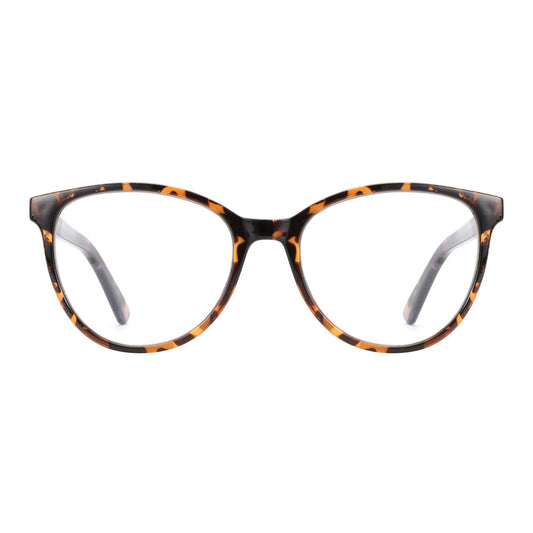
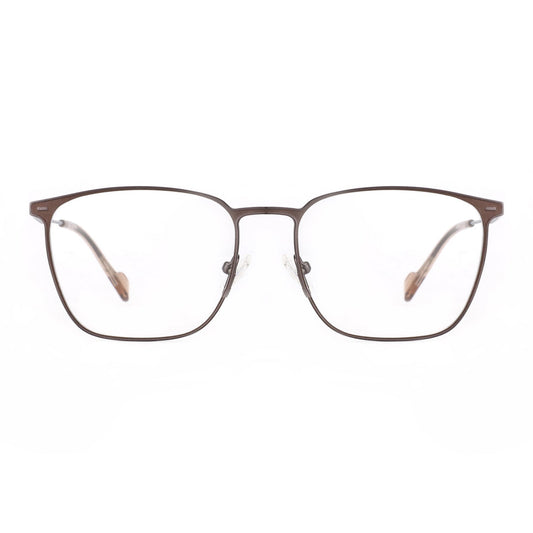
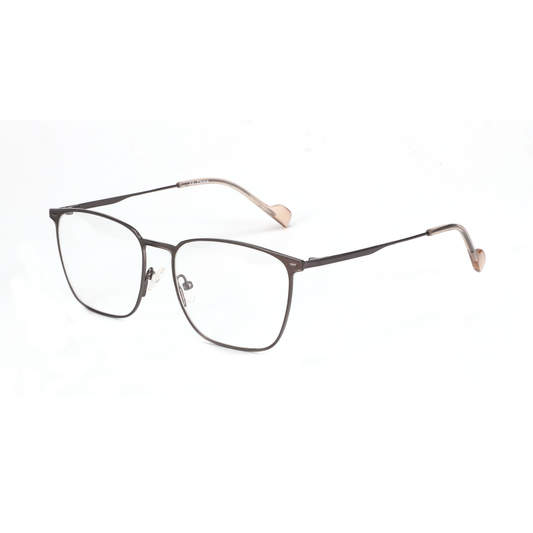
Zenottic offers affordable 1.74 high-index lenses paired with stylish, lightweight frames optimized for strong prescriptions. Popular choices include the Zenottic Eyeglasses Ferdinand for a classic look, the durable Zenottic Eyeglasses Thomas with spring hinges, or the versatile Zenottic Eyeglasses Gordon. For women seeking elegant style, consider the Zenottic Eyeglasses Catherine.
Browse the full eyeglasses collection or men's eyeglasses to find options that balance aesthetics with performance. Many best-sellers are in the best selling products and newest products sections.
For deeper reading on ultra-thin options, review our ultimate guide to ultra-thin lenses for -6.00 prescriptions and above or when 1.74 high-index lenses are actually worth the upgrade. The technical guide to high-index lens materials provides further details on MR series polymers and standards compliance.
Key Takeaways and Health Disclaimer
High astigmatism does not have to mean bulky, uncomfortable glasses. By selecting 1.74 high-index lenses when your prescription and frame choice indicate they will deliver meaningful thinning, and prioritizing compact frames, most wearers can achieve lighter, better-looking eyewear. The decision hinges on your specific numbers, so use the thresholds, scenario matrix, and checklist above to guide shopping rather than defaulting to the most expensive option.
This article discusses lens materials, frame strategies, and comfort/setup considerations for high astigmatism glasses. It does not constitute medical advice, diagnosis, or treatment. Lens performance varies by individual prescription, accurate fitting, and personal sensitivity. If you experience persistent visual discomfort, eye strain, headaches, or have existing eye conditions, consult a qualified optometrist or ophthalmologist for personalized care.
Results with high-index lenses are setup-dependent and may feel more comfortable in well-fitted compact frames, but they do not guarantee elimination of all thickness or distortion. Always verify your prescription and measurements before ordering.
