



My Glasses Keep Sliding Down: How Lens Weight Affects Frame Fit for High Rx
Constantly having to push your glasses back up can be more than an annoyance—especially for those with high prescriptions. The added weight from thicker lenses often shifts the frame's center of gravity forward, causing it to slide down your nose during everyday movement. Upgrading to lighter high-index materials like 1.74 lenses can reduce this front-heavy feel in many cases, but only when the frame itself is properly sized and adjusted.

High-prescription wearers frequently notice their glasses slipping during commutes, long work sessions, or in warm weather when sweat reduces friction. This isn't usually a simple adjustment issue. The physical mass of standard low-index lenses (around 1.50) makes the front of the frame heavier, pulling it downward over time. Understanding how lens weight interacts with frame geometry helps you decide whether a material upgrade, better frame choice, or both will deliver lasting stability.
Why High-Prescription Lenses Often Cause Glasses to Slide
For prescriptions stronger than -4.00D (and especially beyond -6.00D), standard plastic lenses become noticeably thicker and heavier at the edges. This extra mass moves the combined center of gravity of the lenses and frame forward and downward. As a result, even well-adjusted nose pads struggle to maintain position during normal head movements.
The effect compounds in humid conditions or with prolonged wear. Sweat and skin oils reduce the grip on the nose, while the constant forward pull creates fatigue on the bridge. Many people try repeated nose pad tweaks or temple bends, but these offer only temporary relief when the root cause is excessive lens weight.
Our guide on how glasses should fit explains that proper lens centering and bridge contact are essential, yet heavy lenses can undermine even a good initial fit. Similarly, the article on preventing red marks from heavy glasses highlights how lens mass contributes to both slipping and pressure discomfort.
How Lens Weight Affects Frame Balance and Stability
Lens weight doesn't just add overall heaviness—it specifically alters balance. Thicker edges on minus lenses concentrate mass away from the optical center, creating a lever effect that tips the frame downward. This is most pronounced with larger lens diameters or wider frames, where the distance from the nose bridge to the lens edges increases.
Standard CR-39 (1.50 index) lenses for a -8.00D prescription can weigh significantly more than higher-index alternatives. The added bulk also makes the glasses less comfortable for extended wear, leading to frequent readjustments that interrupt focus during office work or errands.
This chart illustrates the relationship:
Illustrative Lens Weight vs. Frame Slip Risk for High Rx
Illustrative only: higher prescription strength increases relative lens weight and forward center-of-gravity slip risk; higher-index lenses reduce both.
View chart data
| Category | 1.50 index (relative weight) | 1.67 index (relative weight) | 1.74 index (relative weight) | Slip risk: 1.50 | Slip risk: 1.67 | Slip risk: 1.74 |
|---|---|---|---|---|---|---|
| -4.00D | 100.0 | 78.0 | 70.0 | 25.0 | 18.0 | 15.0 |
| -6.00D | 145.0 | 113.0 | 102.0 | 45.0 | 32.0 | 26.0 |
| -8.00D | 190.0 | 149.0 | 134.0 | 68.0 | 50.0 | 40.0 |
| -10.00D | 235.0 | 184.0 | 165.0 | 88.0 | 70.0 | 58.0 |
Modeled/heuristic illustration only. Prescription points span typical high-Rx ranges from -4.00D to -10.00D; relative lens weight is expressed as a normalized score where 1.50 = 100 at -4.00D and higher-index lenses reduce relative weight at each prescription. Slip-risk scores are illustrative forward-CG proxies, not measured outcomes. The model encodes the general assumption that higher minus power increases weight and that 1.67/1.74 reduce that burden, with a larger stability benefit at about -6.00D and above.
As shown, the relative weight and associated slip risk increase sharply with stronger prescriptions when using lower-index materials. Switching to 1.67 or 1.74 can moderate this effect, particularly past -6.00D. Note that these values are illustrative models based on typical material properties and do not replace professional fitting.

When Upgrading to 1.74 High-Index Lenses Helps Most
Higher-index lenses bend light more efficiently, allowing the same prescription in a thinner, lighter package. For high Rx users, 1.74 index lenses often reduce edge thickness by 30-40% compared to standard 1.50 material, directly lowering overall frame weight and the forward pull that causes slipping.
This upgrade is most beneficial when:
- Your prescription is -6.00D or stronger
- Current lenses feel noticeably heavy on the face
- The frame already fits your facial geometry reasonably well
- You experience slipping primarily during normal daily movement rather than from poor adjustment
Our comparison of 1.67 vs 1.74 high-index lenses details how 1.74 provides additional thinning and weight savings for very strong prescriptions. The technical guide to high-index materials further explains the material science behind MR-series polymers used in these lenses, including compliance with current optical standards.
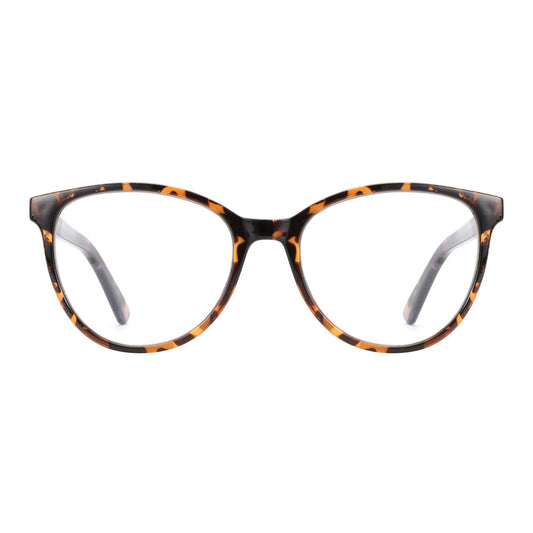
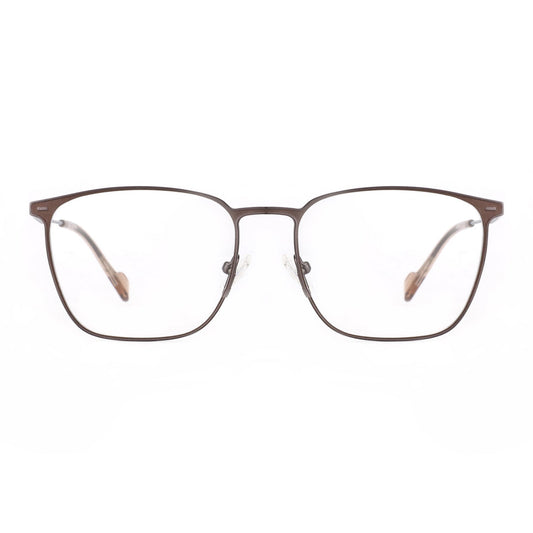
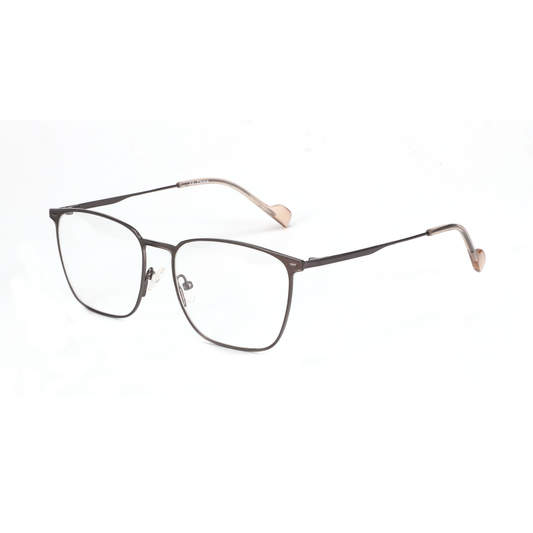
Many Zenottic frames pair beautifully with these advanced lenses. For example, the Zenottic Eyeglasses Roger offers a balanced design that works well with 1.74 lenses for high prescriptions. Similarly, the Zenottic Eyeglasses Phil provides a lightweight platform that maximizes the stability benefits of thinner lenses.
Common Myths About Glasses That Slide Down
A frequent misconception is that all slipping comes from loose temples or nose pads. While adjustments help, they cannot fully compensate for excessive lens weight in high prescriptions. Another myth suggests any high-index lens will automatically stop sliding—yet without proper frame selection, even 1.74 lenses may not deliver complete stability.
Some believe switching frames alone solves the issue, but pairing heavy lenses with oversized or poorly balanced frames often worsens the problem. The investment guide for high-index lenses debunks several myths around when thinner lenses provide meaningful benefits beyond cosmetics.
Scenarios Where Lens Material Matters Less Than Frame Fit
Lens upgrades won't resolve every slipping issue. If your frame is too wide for your face, sits too high or low on the bridge, or has unadjustable nose pads, lighter lenses provide only marginal improvement. Temple arms that are too loose or incorrectly angled remain a primary cause of movement regardless of lens weight.
In hot, humid conditions, reduced skin friction often dominates over lens mass. For these situations, frames with adjustable silicone nose pads or specialized bridge designs offer better results than material changes alone.
Don't upgrade to 1.74 lenses expecting a complete fix if:
- Your current frame is oversized for your features
- The bridge design doesn't match your nose shape
- Nose pads cannot be properly positioned or adjusted
- Slipping occurs mainly from sweat or oily skin rather than heaviness
- You haven't had a recent professional fitting
In these cases, prioritize frame geometry first. Our women's glasses collection includes many styles optimized for different facial structures, while the men's glasses collection features practical designs with good weight distribution.
How to Check Whether Lens Weight Is Your Main Problem
Perform this simple self-assessment before deciding on new lenses:
- Wear your current glasses for 30 minutes without touching them. Note how often they slide and under what movements.
- Have someone observe the frame position from the side—does the front appear to tip downward?
- Compare the weight by holding similar frames with demo lenses if possible.
- Check if your prescription exceeds -6.00D in either eye, as this is where weight differences become more significant.
- Evaluate whether your current frame has adjustable nose pads and properly angled temples.
If weight seems to be the dominant factor and your frame fits reasonably, 1.74 lenses can meaningfully improve day-to-day comfort and stability. Styles like the Zenottic Eyeglasses Claire combine elegant design with compatibility for thin high-index lenses.
Additional helpful resources include our rimless glasses collection for minimal weight and the semi-rimless glasses collection, which often pairs well with high-index materials for reduced overall mass.
Choosing the Right Combination of Frame and Lenses
The most reliable approach combines proper frame selection with appropriate lens material. Look for frames with these features for high prescriptions:
- Smaller lens dimensions to minimize edge thickness
- Adjustable nose pads for personalized contact
- Lightweight materials like titanium or high-quality acetate
- Bridge designs that distribute weight evenly
When shopping online, consider how different collections address these needs. The blue light blocking glasses collection includes options suitable for all-day wear with high-index lenses, while display collection offers various styles to test fit preferences.
For those with very strong prescriptions, the Zenottic Eyeglasses Ferdinand and Zenottic Eyeglasses Charles provide versatile options that perform well with 1.74 lenses.
Important Comfort and Health Considerations
This article discusses comfort and setup factors related to eyewear fit. It does not constitute medical advice, diagnosis, or treatment. Lens material choices may affect perceived comfort but results vary by individual facial structure, prescription, and usage habits. If you experience persistent discomfort, headaches, or vision issues, consult a qualified eye care professional. This is particularly important for those with existing eye conditions or specific visual needs.
Making the Decision for Your Next Pair
Glasses that constantly slide disrupt your day and can affect confidence in professional or social settings. By recognizing when lens weight contributes to the problem, high-prescription wearers can make more informed choices between frame adjustments, style changes, and material upgrades.
For many with strong prescriptions, moving to 1.74 high-index lenses offers a practical solution that reduces both thickness and weight-related slipping, provided the frame is suitable. Review your current fit using the checkpoints above, then explore options that match both your prescription needs and facial features.
The combination of proper frame selection and advanced lens materials can significantly reduce the frustration of constantly adjusting your glasses, leading to more comfortable all-day wear.
This article only discusses comfort and setup advice; it does not constitute medical advice, diagnosis, or treatment. If you have persistent discomfort or existing eye conditions, please consult qualified eye care professionals.
