



The Ultimate Face Shape Guide: How to Find Your Perfect Glasses in 2026

Summary
Finding the perfect glasses in 2026 involves balancing your natural facial geometry with frames that provide a pleasing contrast, ensuring that the eyewear enhances rather than overwhelms your features. By identifying your primary face shape—round, square, oval, heart, diamond, or triangle—and considering technical factors like nose bridge fit and pupillary distance, you can confidently select frames that offer both aesthetic harmony and long-term comfort.
Key takeaways
- Contrast is the primary rule: Angular frames add definition to round faces, while rounded frames soften the sharp lines of square faces.
- Proportion matters: The size of the frame should scale with the size of your face to maintain visual balance.
- Technical fit is critical: Beyond shape, the nose bridge design and pupillary distance (PD) are essential for optical clarity and physical comfort.
- 2026 trends favor intentionality: Current styles range from "Quiet Luxury" minimalist metals to "Expressive Futurism" with bold, geometric silhouettes.
Identifying Your Face Shape: The Geometric Approach
Before browsing the latest collections, you must determine your facial blueprint. While every face is unique, most fall into one of six categories based on the relationship between the forehead, cheekbones, and jawline. To find your shape at home, stand in front of a mirror with your hair pulled back. Trace the outline of your face on the mirror using a dry-erase marker or a bar of soap, or simply observe the widest parts of your face.
A round face is characterized by soft curves and similar width and length, with a less defined jawline. Conversely, a square face features a broad forehead and a strong, horizontal jawline. Oval faces are slightly longer than they are wide, with balanced proportions. Heart-shaped faces are widest at the forehead and taper down to a narrow chin. Diamond faces are rarest, featuring a narrow forehead and jawline with dramatic cheekbones, while triangle faces are narrow at the top and widest at the jaw.
Logic Summary: This classification system is a heuristic designed to simplify the selection process. While most people align with one primary shape, many possess hybrid features. The goal is to identify your most prominent characteristic to guide your initial frame search.
Choosing Glasses for Round Faces: Adding Definition
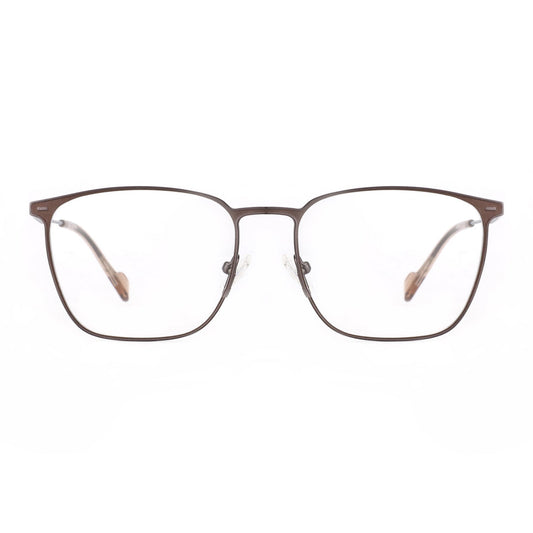
For those with round faces, the objective is to add structure and lengthen the appearance of the face. Angular frames are the most effective tool for this. Rectangular and square frames create a sharp contrast to the soft curves of a round face, making it appear thinner and longer.
In 2026, we are seeing a surge in "soft geometric" styles—frames that maintain a rectangular footprint but feature slightly beveled edges. These are particularly effective for choosing frames based on facial structure because they provide the necessary definition without looking overly harsh. Avoid small or round frames, as these can emphasize the fullness of the face rather than balancing it.
The Best Frames for Square Faces: Softening the Angles
If you have a square face, your strong jawline and broad forehead are your most defining features. To balance these "hard" lines, you should look for "soft" frames. Round and oval styles are the classic choice here, as they provide a visual counterpoint to the angularity of the face.
Aviator styles and rimless designs are also highly effective for square faces. By choosing frames that sit high on the bridge of the nose, you can draw attention upward and add length to the face. When exploring men's optical frames, look for acetate frames with rounded bottoms to provide a modern yet flattering silhouette.
Flattering Styles for Heart-Shaped Faces: Balancing the Brow
Heart-shaped faces are widest at the top and narrowest at the bottom. The styling goal is to minimize the width of the upper face and add volume to the lower half. Frames that are wider at the bottom, such as "bottom-heavy" frames or light-colored styles, can help achieve this balance.
Cat-eye frames are a perennial favorite for heart shapes, especially when they feature a subtle upward flick that follows the natural line of the cheekbones. For a more contemporary look, consider geometric frame styles that incorporate thin metal wires. These provide interest without adding excessive "weight" to the forehead area.
Frames for Oval Faces: The Versatile Standard
Oval faces are often considered the "universal" shape because they are naturally balanced. Most frame styles—from bold oversized squares to delicate round wires—will look proportional on an oval face. The key here is to maintain that natural balance by choosing frames that are as wide as (or slightly wider than) the broadest part of the face.
While you have the freedom to experiment, be mindful of oversized frames that might swallow your features. In 2026, the trend for oval faces is moving toward "intentional minimalism"—frames that use high-quality materials like titanium or premium acetate to highlight the face rather than distract from it.
Diamond and Triangle Faces: Highlighting Unique Features
Diamond faces benefit from frames that emphasize the eyes and soften the cheekbones. Top-heavy frames, such as browline styles or semi-rimless designs, are excellent choices. These draw the eye upward and balance the narrow forehead.
Triangle faces, which are narrow at the temples and wide at the jaw, require the opposite approach. You want to add width to the top third of your face. Look for frames with heavy color or detailing on the top half, or bold cat-eye shapes. This creates a visual "lift" that balances the stronger jawline.

The "Fit Factor": Why Nose Bridges and PD Matter More Than Shape
While face shape is a vital starting point, the technical fit of the glasses determines whether you will actually wear them. A common oversight in many guides is the role of the nose bridge. If the bridge is too wide, the glasses will slide down; if it is too narrow, they will pinch and sit too high, throwing off the visual alignment with your face shape.
Understanding proper frame fitment involves checking the bridge design. "Keyhole" bridges are excellent for those with broader noses, while "saddle" bridges provide a more uniform distribution of weight. Furthermore, your Pupillary Distance (PD)—the distance between the centers of your pupils—is critical. If the frame is too wide for your PD, your eyes may look "cross-eyed" or too close together within the lenses, regardless of how well the frame matches your face shape.
Logic Summary: Technical fit (Bridge/PD) takes precedence over aesthetic shape. A "perfect" shape that fits poorly will cause optical distortion and physical discomfort. Always verify your PD measurement before finalizing a purchase.
Color Coordination: Matching Frames to Skin Tone and Hair
The color of your frames can be just as impactful as the shape. In 2026, color theory in eyewear has moved beyond simple "black or brown" choices. When selecting frame colors, consider your skin's undertone:
- Warm Undertones: (Yellow, peach, or golden) Look for gold, copper, olive green, or warm tortoise shells.
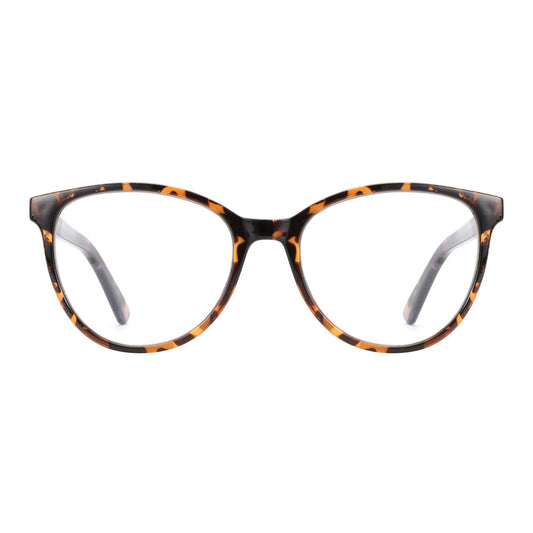
- Cool Undertones: (Pink, blue, or red) Look for silver, black, dark tortoise, blue, or plum.
- Neutral Undertones: (A mix of warm and cool) You can typically wear both palettes, though muted tones often look best.
Hair color also plays a role. Darker hair can support bolder, heavier colors, while lighter hair or grey hair often looks best with translucent acetates or thin metallic frames that don't "overpower" the face.
2026 Eyewear Trends: From Quiet Luxury to Expressive Futurism
The eyewear landscape in 2026 is defined by two contrasting movements. On one side is "Quiet Luxury"—a focus on ultra-high-quality materials like Japanese titanium and sustainable bio-acetates in classic, timeless shapes. These frames are designed for longevity and subtle sophistication.
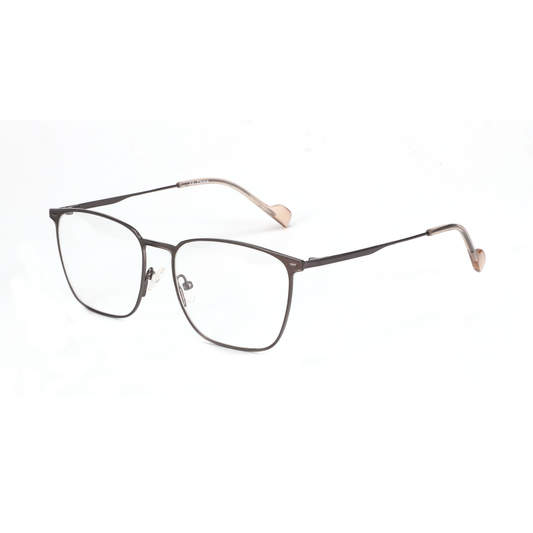
On the other side is "Expressive Futurism," which embraces bold geometric shapes, translucent neon acetates, and architectural silhouettes. This trend is particularly popular in women's eyeglass collections, where frames are treated as a primary fashion accessory rather than a medical necessity. We are also seeing a rise in "Hybrid Frames"—designs that mix materials, such as metal bridges with acetate rims, to offer the best of both worlds in terms of durability and style.
Frame Selection Checklist
Use this checklist to verify your choice before checking out:
| Feature | Check | Why it Matters |
|---|---|---|
| Contrast | Does the frame shape contrast with my face shape? | Creates visual balance. |
| Proportion | Is the frame width similar to my face width? | Prevents the "bug-eye" or "shrunken" look. |
| Bridge Fit | Does the bridge sit comfortably on my nose without gaps? | Ensures the glasses stay in place. |
| Eye Centering | Are my eyes centered in the lenses (check PD)? | Essential for optical clarity and aesthetics. |
| Color | Does the frame color complement my skin undertone? | Enhances your natural complexion. |
FAQ
How do I know if my glasses are too big for my face? Your glasses are likely too big if they frequently slide down your nose, if your eyes are not centered in the lenses, or if the temples (arms) do not touch your head before reaching your ears. Additionally, if the frames extend significantly beyond the widest part of your face, they may appear disproportionate. Proper fit ensures that the weight is distributed evenly across the bridge and the ears.
Can I wear round glasses if I have a round face? While the general rule suggests contrast (angular frames for round faces), you can wear round glasses if you choose a specific style, such as an oversized "70s retro" look or a very thin wire frame. However, be aware that round-on-round tends to emphasize the circularity of the face. If you prefer a rounded look, consider a "Panto" shape, which is rounded but has a flatter top to provide a bit of structure.
What is the best frame material for a strong jawline? For those with a strong, square jawline, lightweight materials like titanium or thin stainless steel are often preferred. These materials allow for thinner frame profiles that don't add more "bulk" to the face. If you prefer plastic, look for translucent acetates or "crystal" frames, which soften the overall appearance of the eyewear against the skin.
How does hairstyle affect which glasses look best? Hairstyle can significantly change your perceived face shape. For example, bangs can make a face appear shorter, while high-volume hair can make it appear longer. If you have a lot of hair volume, you can typically carry off larger, bolder frames. If you have a very short haircut or a shaved head, the frames become the focal point, so choosing a shape that perfectly aligns with your bone structure is even more critical.
Does my nose shape affect which frames I should buy? Yes, the shape and size of your nose are crucial for bridge fit. If you have a high nose bridge (the bridge starts above your pupils), you will likely find "saddle" bridges comfortable. If you have a low nose bridge (the bridge starts at or below your pupils), look for frames with adjustable nose pads or "Universal Fit" (sometimes called Asian Fit) frames, which have larger nose pads to prevent the frames from resting on your cheeks.
How often should I update my frames for style? While your prescription might change every 1-2 years, many people update their frames based on shifting fashion trends. In 2026, the move toward sustainable materials means many high-quality frames are built to last 5+ years. However, if you enjoy following trends, updating your frames is one of the most cost-effective ways to refresh your entire look, as they are the first thing people notice during a conversation.
References
Industry Associations & Research
- The Vision Council: Eyewear Trends and Market Research
- American Optometric Association (AOA): Guide to Ophthalmic Lenses and Frames
Standards & Policies
Community & Intent
- Reddit r/eyewear: Community discussions on face shape matching (Intent only)
- Optical Journal: 2026 Fashion Forecast for Independent Eyewear
