




How to Adjust Your Glasses at Home: A Step-by-Step Guide
Summary
Adjusting your glasses at home is a safe and effective way to resolve minor fit issues like slipping, pinching, or crooked frames by applying gentle heat to acetate or using precision tools for metal components. By following professional optician sequences—starting with temple alignment and moving to bridge adjustments—you can achieve a customized, comfortable fit that enhances both visual clarity and long-term wearability.

Key takeaways
- Material Matters: Always identify your frame material first; acetate requires controlled heat (60-80°C), while metal frames typically need precision pliers or manual pressure.
- Safety First: Protect lens coatings by avoiding direct heat above 70°C and never apply force to the hinges or the bridge of rimless styles.
- The Sequence: Follow the professional "Temple-Bridge-Tension" order to ensure adjustments are symmetrical and don't introduce new fit problems.
- Verification: Use a level surface and mirror alignment to objectively verify that your frames are straight and properly seated on your face.
Identifying Common Fit Issues Before Adjusting
Before reaching for any tools, it is essential to understand exactly why your glasses feel uncomfortable. A proper glasses fit guidelines ensures that the optical center of the lens aligns perfectly with your pupils, which is especially critical for those using high-index materials. If your frames sit too low, they may be sliding down your nose due to wide temples or loose nose pads. Conversely, if they pinch the bridge of your nose or the sides of your head, the frames may be too narrow or the nose pads too close together.
Crookedness is another frequent complaint, often manifesting as one lens sitting higher than the other. This usually indicates that the temples (the arms of the glasses) are not symmetrical. According to the ANSI Z80.3-2025 standards, frames are designed with specific flexibility ranges, but exceeding these can lead to permanent deformation. Identifying whether the issue stems from the bridge, the nose pads, or the temples is the first step in a successful home adjustment.
How to Adjust Acetate and Plastic Frames Safely
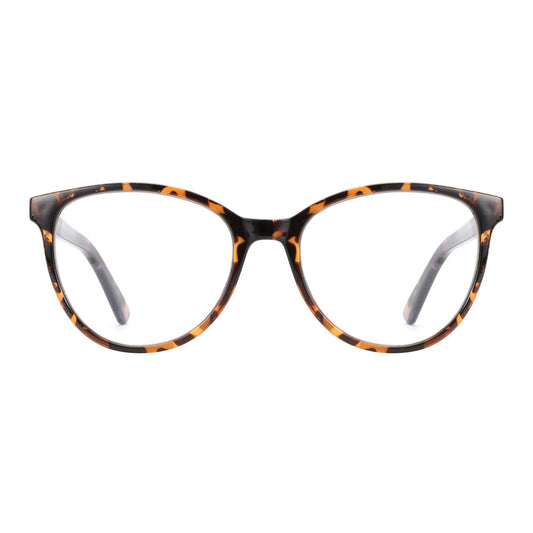
Acetate is a high-quality, plant-based plastic known for its durability and rich colors, but it is rigid at room temperature. To adjust different types of eyewear made from acetate, you must reach its glass transition temperature, typically between 60°C and 80°C (140°F to 176°F).
Logic Summary: Heating acetate makes the polymer chains pliable, allowing for permanent reshaping without snapping. We recommend a hairdryer over warm water to avoid thermal shock to lens coatings, which can occur if water temperature is inconsistent.
- Preparation: Use a hairdryer on a medium setting. Hold the frame about 6 to 8 inches away from the nozzle.
- Heating: Focus the heat on the specific area needing adjustment—usually the temple bend or the bridge—for 30 to 60 seconds.
- Bending: Once the material feels slightly warm and flexible, use your fingers to apply gentle, steady pressure. To tighten the fit behind the ears, bend the temple tip downward. To loosen a tight fit, bend it upward or slightly outward.
- Cooling: Hold the frame in its new position for 30 seconds, then let it air cool completely. Avoid cold water baths, as rapid cooling can cause the material to become brittle or the lens coatings to craze.

Precision Adjustments for Metal Frames
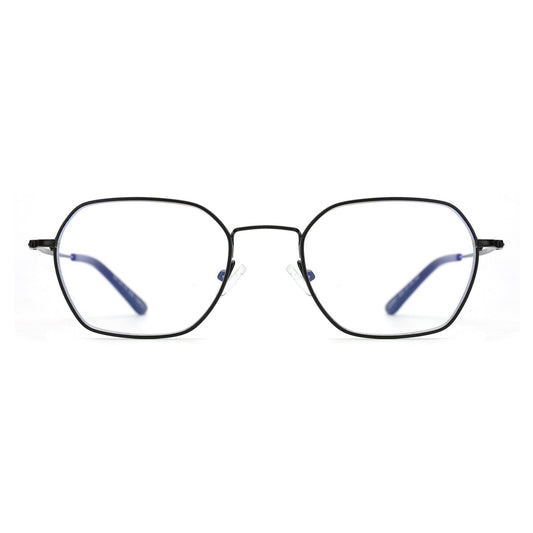
Metal frames offer more flexibility than acetate because they often feature adjustable nose pads and thinner, more malleable temples. However, they require a different approach to avoid scratching the finish or snapping the solder points.
| Adjustment Type | Tool Recommended | Action |
|---|---|---|
| Slipping Down Nose | Fingers or Needle-nose pliers | Gently squeeze nose pads closer together. |
| Pinching Bridge | Fingers or Needle-nose pliers | Gently push nose pads further apart. |
| One Lens Higher | Fingers | Bend the temple on the "high" side downward at the hinge. |
| Loose Temples | Optical screwdriver | Tighten the hinge screws (do not over-torque). |
When using pliers, always wrap the tips in a thin cloth or electrical tape to prevent marring the metal. For those wearing advanced lens designs, such as those detailed in the Technical Guide to High-Index Lens Materials and Standards, maintaining the correct vertex distance (the space between the lens and your eye) is vital for optical performance. High-index lenses (1.61, 1.67, 1.74) are thinner but can be heavier depending on the frame size, making nose pad adjustment crucial for weight distribution.
Verifying Your Adjustment Like a Professional
Once you have made your changes, you must verify the symmetry of the frames. A common mistake is adjusting by "feel" alone, which can lead to over-correction.
- The Table Test: Place your glasses upside down on a flat, level surface. Both temples should touch the surface simultaneously. If one side is lifted, the temples are uneven.
- The Mirror Check: Put the glasses on and look in a mirror. Ensure the bridge is centered and the lenses are level with your eyebrows.
- The Shake Test: Gently shake your head. The glasses should remain secure without sliding or causing pressure points at the temples.
If you find that home adjustments aren't solving the problem, it might be time to consider whether you are shopping for glasses online with the correct frame measurements. Sometimes, a frame is simply too large or too small for your facial structure, in which case choosing the right reading glasses or frames based on your specific PD (pupillary distance) is the better long-term solution.
Long-Term Maintenance and Care
After achieving the perfect fit, maintaining your glasses after adjustment is the key to ensuring they stay that way. Daily wear and tear, as well as the natural oils from your skin, can loosen screws and degrade the flexibility of acetate over time.
Always store your glasses in a hard case when not in use to prevent them from being sat on or bent out of shape. Clean them regularly with a microfiber cloth and a dedicated lens cleaner, avoiding harsh chemicals that can damage the lens coatings. By taking these small steps, you are not just maintaining a tool for vision, but also protecting your eyesight by ensuring your prescription is always correctly aligned.
FAQ
Can I adjust my glasses if they have high-index lenses? Yes, you can adjust frames with high-index lenses, but you must be extra cautious with heat. High-index materials like 1.67 or 1.74 are often paired with premium anti-reflective coatings that can be sensitive to thermal expansion. Ensure the heat is focused only on the frame material (acetate or metal) and kept away from the lenses to prevent "crazing" or cracking of the coating.
What should I do if my glasses are still sliding down after tightening the temples? If tightening the temples doesn't stop the sliding, the issue likely lies with the nose pads or the bridge fit. For metal frames, try moving the nose pads slightly closer together to create a more secure grip on the bridge of your nose. For acetate frames without adjustable pads, you may need to add adhesive silicone nose pads or consider a "Global Fit" or "Asian Fit" frame designed for lower nose bridges.
Is it safe to use boiling water to heat my plastic frames? No, using boiling water is not recommended for adjusting glasses at home. Boiling water (100°C) exceeds the safe glass transition temperature for most acetate frames and can cause the material to lose its finish or become permanently warped. Furthermore, the extreme heat can damage lens coatings and even the lens material itself; a hairdryer on medium heat provides much better control.
How do I know if I've over-adjusted my metal frames? You will know you've over-adjusted if the frames feel unstable, the metal shows signs of "stress whitening," or if the hinges no longer move smoothly. If the nose pads are pushed so far in that they leave deep indentations on your nose, or if the temples are bent so sharply that they pinch the back of your ears, you should gently back off the adjustment. Metal has a "memory," but repeated bending in the same spot can lead to metal fatigue and eventual breakage.
Can I adjust rimless or semi-rimless glasses at home? Adjusting rimless or semi-rimless glasses is significantly riskier than adjusting full-rim frames. Because the lenses themselves are part of the structural integrity of the frame, any pressure applied to the bridge or temples can put direct stress on the lens mounting points, leading to chips or cracks. It is generally recommended to have these adjusted by a professional who has the specific mounting tools required for these delicate styles.
What tools do I absolutely need for home adjustments? At a minimum, you should have a hairdryer (for acetate), a precision optical screwdriver set, and a microfiber cloth. If you are adjusting metal frames, a pair of needle-nose pliers with nylon-covered tips (or wrapped in tape) is helpful for moving nose pads without scratching the metal. A flat, level surface like a table is also essential for verifying the symmetry of your adjustments.
References
Government / Standards / Regulators
- ANSI Z80.3-2025: Ophthalmics - Nonprescription Sunglasses and Fashion Eyewear Requirements
- ISO 12870:2016: Ophthalmic optics — Spectacle frames — Requirements and test methods
Industry Associations / Research Institutes
- The Vision Council: Eyewear Care and Adjustment Best Practices
- College of Optometrists: Standards for Optical Appliances
