




How to Choose Glasses for Your Skin Tone and Hair Color: A Personalized Guide
Summary

This guide was developed by the Zenottic Style & Product Team, combining over a decade of optical design experience with practical color theory to help you navigate the nuances of eyewear selection.
Choosing the right glasses involves identifying your skin's underlying temperature—warm, cool, or neutral—and matching it with frame colors that either harmonize with or intentionally contrast your natural hair shade. By selecting frames that complement your unique features, you can create a cohesive "Wardrobe Effect" where your eyewear functions as a versatile accessory that enhances your overall aesthetic.
Note: To help you visualize these concepts, this article includes links to our curated product collections as illustrative examples.
Key Takeaways
- Undertone is Generally Stable: While your surface skin color (overtone) may change with sun exposure, your undertone typically remains constant, serving as the primary guide for frame selection. (Note: Rare medical conditions or significant hormonal shifts can occasionally alter skin perception).
- Hair Color Depth Matters: The saturation and "temperature" of your hair color should dictate the boldness of your frames; high-contrast pairings create a statement, while tonal matches offer a sophisticated, subtle look.
- Technical Factors Influence Perception: Lens coatings, such as anti-reflective (AR) treatments, and the refractive index of the material can subtly alter how frame colors appear against your face.
- Lighting and Environment: Frame colors shift significantly between natural daylight and artificial office lighting. We recommend evaluating your choice in the environment where you spend the most time.
The Science of Color Harmony in Eyewear
Selecting eyewear is more than a functional necessity; it is an exercise in color theory. The goal is to find a balance between the frames and your natural "canvas"—your skin, hair, and eyes. When frames harmonize with your features, they draw attention to your eyes and brighten your complexion. Conversely, a mismatch can make the skin appear sallow or the frames look like they are "wearing you."
This personalization framework is part of what we call the "Wardrobe Effect." Just as you wouldn't wear the same pair of shoes for every occasion, a curated collection of eyewear allows you to adapt your look. For those looking to expand their options, exploring stylish sunglasses shapes can provide inspiration for how different geometries interact with color.
Identifying Your Skin Undertone Beyond the Surface
In the optical industry, we distinguish between overtone (the skin's surface color, which fluctuates) and undertone (the muted colors beneath the surface). Most guides suggest a simple "vein test," but this is often unreliable for deeper skin tones.
The Limitations of Common Tests
The "jewelry test" (gold vs. silver) is a popular heuristic, but it can be subjective. A more robust method used by our style consultants is the "neutral fabric test."
Visual Comparison Tip:
- Cool Indicator: Hold a stark, optic-white cloth against your face in natural light. If your skin looks clear and vibrant, you likely have cool undertones.
- Warm Indicator: Hold an off-white or cream cloth. If this makes your skin "glow" while the stark white makes you look washed out, you are likely warm-toned.
- Neutral Indicator: If both look equally flattering, you possess neutral undertones.
Seasonal Shifts and Overtone Changes
While your undertone is generally stable, your overtone can shift significantly with the seasons. A person with a "cool" undertone might develop a "warm" tan in the summer. This is why many people find that their "winter glasses" look slightly off in July. When building your eyewear wardrobe, consider finding frames that complement your face shape while accounting for these subtle seasonal shifts in saturation.
Matching Frames to Your Skin Tone: A Detailed Guide
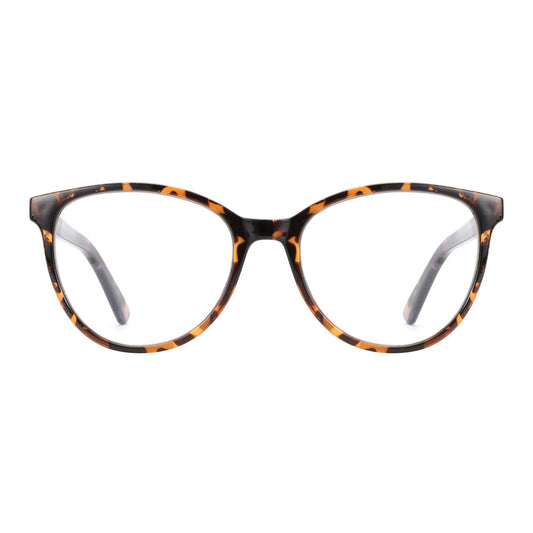
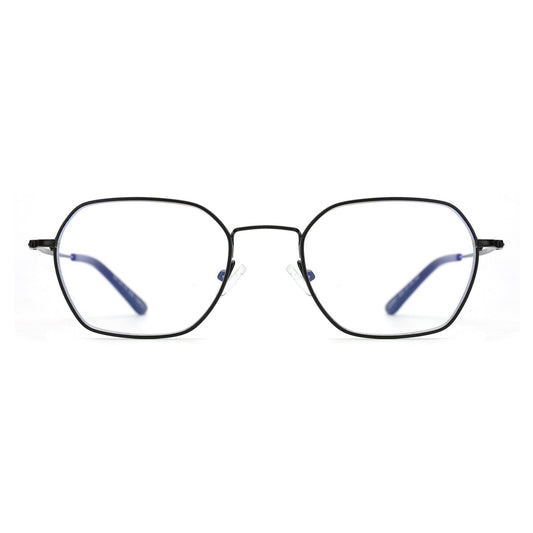
The following recommendations feature colorful acetate frame options from our collection to demonstrate how specific hues interact with different complexions.
Warm Skin Undertones
Warm skin tones typically have yellow, peach, or golden undertones.
- Recommended Colors: Camel, khaki, gold, copper, peach, orange, coral, off-white, fire-engine red, and warm blues like teal.
- Avoid: Stark blacks and "chilly" pastels, which can look harsh against warm skin.
Cool Skin Undertones
Cool skin tones have pink, red, or bluish undertones.
- Recommended Colors: Black, silver, rose-brown, blue-gray, plum, magenta, pink, jade, and "cool" blues like royal blue or navy.
- Avoid: Yellow-golds and muddy browns, as these can clash with the cool pigments in the skin.
Neutral Skin Undertones
Neutral skin tones are a mix of warm and cool, often appearing olive or simply balanced.
- Recommended Colors: Most colors work, but "universal" shades like true red, soft pink, and medium greens are particularly striking.
- Avoid: Extremely neon shades might overwhelm your balanced features.
Coordinating with Hair Color
Your hair serves as the frame for your face. Matching the "temperature" of your hair to your glasses is crucial for a polished look.
Blonde and Light Hair
- Warm Blondes (Honey, Strawberry): Look for warm tones like tortoise, gold, or peach.
- Cool Blondes (Platinum, Ash): Opt for black, silver, or cool pinks.
Brunette and Brown Hair
- Warm Browns (Golden Brown, Auburn): Rich browns, greens, and gold frames are ideal.
- Cool Browns (Ash Brown, Espresso): Black, dark blue, and plum frames provide a sophisticated contrast.
Red Hair
- Vibrant Red: Copper, reddish-browns, and warm greens (like forest or olive) are classic choices.
- Cool Red/Burgundy: Black or dark tortoise can look very elegant.
Black and Dark Hair
- Warm Black: Deep browns or tortoise.
- Cool Black: Navy, silver, or bright primary colors for a high-fashion look.
Grey and White Hair
- Silver/White: Bright colors like red, navy, or deep purple look fantastic. Avoid beige, which can look "muddy."
- Salt and Pepper: Darker frames like black or deep blue help define the face.

Technical Considerations: Lighting, Coatings, and Materials
The physical properties of your glasses can change how the color is perceived. According to the Technical Guide to High-Index Lens Materials and Standards, high-index lenses (1.61, 1.67, 1.74) are thinner, which reduces the "color distortion" often seen at the edges of thicker, lower-index lenses.
The Impact of Lens Coatings
Anti-reflective (AR) coatings often have a slight residual tint (usually green, blue, or purple).
- Pro Tip: A green AR coating might subtly neutralize a red frame or slightly alter the look of a transparent pink frame. When selecting a comprehensive guide to choosing sunglasses colors, remember that polarized lenses will also change the "visual weight" of the eyewear.
Practical Matching Matrix
Use this table as a quick reference when you browse our eyeglasses collection.
| Skin Undertone | Hair Color | Recommended Frame Colors | Colors to Approach with Caution |
|---|---|---|---|
| Warm | Golden Blonde | Gold, Peach, Warm Brown | Silver, Cool Blue |
| Warm | Auburn/Red | Copper, Olive Green, Cream | Black, Magenta |
| Cool | Ash Blonde | Silver, Cool Pink, Navy | Gold, Orange |
| Cool | Black/Espresso | Black, Plum, Royal Blue | Yellow, Camel |
| Neutral | Any | True Red, Teal, Dark Tortoise | Neon Yellow, Pale Beige |
The "Wardrobe Effect": Building a Versatile Collection
In 2026, eyewear is viewed as a modular component of personal style. We recommend having one "reliable" neutral pair and one "statement" colorful pair. When you explore our sunglasses selection, consider how those colors will interact with your summer wardrobe and potentially tanned skin overtone.
FAQ
How do I know if my skin tone is warm or cool? The most reliable way is the neutral fabric test: hold a piece of stark white fabric and a piece of cream fabric up to your face in natural light. If the white makes your skin look brighter, you are likely cool-toned.
Can I wear black glasses if I have a warm skin tone? Yes, but we suggest choosing a "warm" black or a very dark brown-black rather than a stark, blue-based jet black to avoid looking washed out.
What color glasses look best with grey hair? Deep reds, navy blues, and rich purples look particularly striking. Avoid beige or yellowish-browns, which can make the grey look dull.
Does my eye color matter? While skin and hair are primary, eye color is a great "accent" guide. Choose frames that match your eye color for harmony, or a complementary color (like purple for green eyes) to make them pop.
How do lens coatings affect the color? Most AR coatings have a faint green or blue reflex. While usually invisible to the wearer, it can subtly change the appearance of transparent frames to an outside observer.
Should my glasses match my eyebrows? They don't need to match exactly, but they should be in the same "temperature" family. Ideally, the frames should follow the line of your eyebrows without completely obscuring them.
References
Government / Standards / Regulators
- ANSI Z80.1-2025: Ophthalmics - Prescription Ophthalmic Lenses - Recommendations.
- ISO 8980-1: Ophthalmic optics - Uncut finished spectacle lenses.
Platform Official Docs & Policies
Industry Associations & Research
- The Vision Council: Annual Eyewear Consumer Trends Report (2025).
- Optical Industry Association (OIA): Color Trends in Ophthalmic Frames.
- Journal of the Optical Society of America: "Color perception and skin reflectance" (Methodology for spectral analysis).
