



How to Match a New Frame to Glasses That Already Fit
Start with the glasses that already feel right. Record the size numbers printed on the frame, or measure them in millimeters, and use them to narrow your choices. Then compare the new frame's full front, bridge shape, and temple bend with your current pair, because similar numbers can come on different shapes.
A match on paper gives you a shortlist. It does not promise the same eyeglass frame fit, so the visible checks below decide which frames stay on that list.
Use your current pair as a reference
Your comfortable pair gives you real numbers to compare against. The VA Portland Health Care System frame guide recommends using your current glasses as a benchmark when you choose a new frame.
Start with the size markings
Look over the frame, including the inside of the arms, for printed size numbers. Write them down exactly as shown, along with any labels next to them. That way you can line them up against new listings later.
If the markings are worn off, the VA guide describes measuring the frame yourself in millimeters. Measure only what you can read clearly and repeat the same way each time. A blank is more useful than a rough guess, because a guess can make a poor candidate look like a match.
Compare like-labeled dimensions
Three numbers do most of the work, and each one measures something specific. Using the VA guide's measurement definitions, lens width (the guide calls it eye size) runs horizontally across the lens at its widest points. Bridge width is the distance between the two lenses at their closest point. Temple length runs along the arm from one end to the other, including the bend.
Compare each number on a new frame only with the same number on your pair. Use these values to cut a long list down to a short one. They describe size, not shape, so a frame with close numbers still needs the front, bridge, and temple checks that follow.
Compare the full frame front
Lens width covers one lens, not the whole front of the frame. Two frames with the same lens width can differ in overall width and outline, so check the full front on its own.

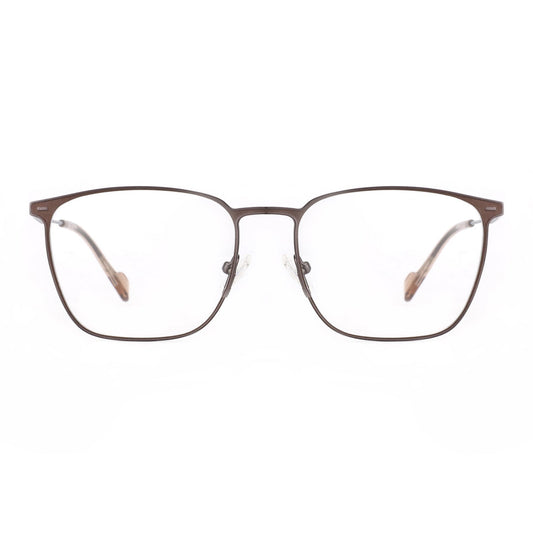
- Overall width: The VA guide's advice on front width is that the total width across the front, including the endpieces, should be similar to the width of your head. Endpieces are the outer corners where the front meets the arms. If a listing gives this total, compare it with your current pair.
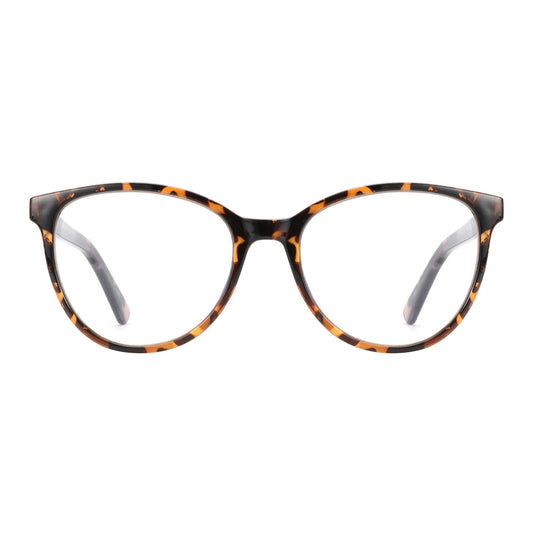
- Lens outline: Use a straight-on photo. Note whether the new lenses look taller, rounder, or more angular than yours.
- Outer edges: Check how far the frame extends past the lenses at each side. Wider endpieces add to the total width even when the lens width matches.
- Missing details: If the listing has no full-front width or front-facing photo, the width comparison is still open. Write it down as a question to answer before you choose.
Check the bridge beyond its width
A listed bridge width tells you one gap, not how the bridge sits on your nose. Because bridge width measures the gap between the lenses at their closest points, two frames can share that number and still have different shapes over the nose.
Start with your current pair. Notice what it rests on: adjustable nose pads, or a solid bridge that sits directly on the nose. Also note whether it stays in place and where you feel it touch.
Next, look at front and angled photos of the new frame. Compare its bridge construction and curve with what works on your current pair. If you are switching styles, our comparison of nose pads and saddle bridges explains how each design differs in adjustability and contact.
For a zyl frame without nose pads, 20/20 fitting guidance on bridge contact says the frame should sit well on the bridge. A photo shows the shape, but it cannot show how that shape meets your nose. If the bridge is hidden or blurry in the listing, ask for a clearer view instead of assuming it matches yours.
Compare temple length and bend
Temple length gives you a starting number, but the bend decides where the arm meets your ear. Work through these steps in order:
- Match the length figure. The VA guide's temple-length definition measures along the arm from end to end, including the bend. Compare that number with the one on your current pair.
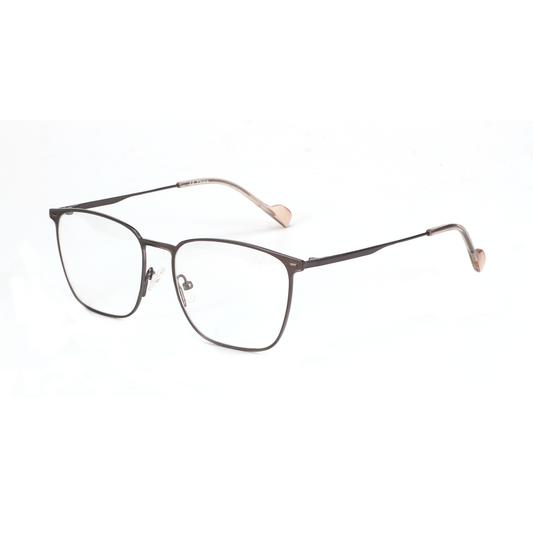
- Line up the side views. Set your current pair on a table in profile and compare it with a side photo of the new frame. Note how far each arm runs straight before it curves down, and how sharp that curve is.
- Check the path behind the ear. 20/20 guidance on temple fit says the temple should curve just above the ears, follow the line of the back of the ear, and avoid excessive pressure on the back or top of the ear. Ask whether your current pair does this, and whether the new arm's shape looks like it would follow the same line.
- Flag what you cannot see. If there is no side view, or the bend point is unclear, mark the temples as unverified. Equal lengths with an unseen bend still leave the fit behind your ears open.
Decide what the comparison tells you
Keep a frame on your list when its comparable numbers and visible features line up with what you like about your current pair. Pause on any frame where a key detail is missing, since the VA guide notes there is no one right size of glasses and no exact-match rule to fall back on.
- Keep comparing when lens width, bridge width, and temple length are listed and close to your pair, and the front, bridge, and side photos look consistent with the features you value.
- Verify first when a dimension is missing, the bridge is not shown clearly, or there is no side view of the temples. Ask for that specific measurement or photo rather than filling the gap with a guess.
- Rethink the choice when the frame changes the exact feature your current pair relies on, such as swapping a solid bridge for nose pads when the solid bridge is what keeps your glasses steady.

When you compare frames in our eyeglasses collection, keep your recorded numbers and notes beside you so every candidate gets the same checks. That consistency is what turns your current pair into a useful eyeglass frame fit reference.
FAQs
What if my current glasses fit well except for one spot?
Use them as your reference anyway and write down the problem area. Then look for a candidate that matches your pair where it works and differs where it doesn't. For example, if only the nose area bothers you, keep the other dimensions close and consider a different bridge style.
Are frame measurements listed in inches or millimeters?
Frame sizes are given in millimeters, even at US retailers. The VA guide also describes measuring a frame in millimeters when its markings are worn off. A ruler with metric markings lets you compare numbers directly, with no conversion.
Can a new frame be adjusted to feel more like my old pair?
Some fit details can be fine-tuned after you get the frame. Our guide on how to adjust glasses at home covers acetate and metal frames and issues like slipping, pinching, and crooked fit. Adjustment refines a frame but does not change its basic size, so start with a frame whose numbers are already close.
Does lens weight change how a new frame feels?
Size numbers don't account for weight, so it is worth thinking about separately if your prescription calls for thicker lenses. Our ergonomic eyewear guide covers heavy-lens fatigue and lens trade-offs, along with slipping and pinching.
