



The Best Computer Glasses for Designers & Creatives: Balancing Protection and Color Accuracy
Summary
Creative professionals often face a technical paradox: the need for high-energy visible (HEV) blue light protection to mitigate digital eye strain versus the absolute requirement for color accuracy in design workflows. For designers, illustrators, and editors in 2026, the optimal solution involves high-clarity, clear blue light filtering lenses that target specific harmful wavelengths (415–455nm) while maintaining a neutral white point and minimal Delta E deviation.
Key takeaways
- Targeted Filtering: Modern clear lenses filter harmful HEV light while allowing the broader blue-turquoise spectrum necessary for accurate color perception and circadian regulation.
- Color Neutrality: High-quality professional computer glasses aim for a Delta E (color difference) of less than 1.0, ensuring that shifts in the CIE 1931 color space remain virtually imperceptible to the human eye.
- Optical Precision: The Abbe value of the lens material is critical; higher Abbe values reduce chromatic aberration, which is essential for maintaining sharp edges and fine details in high-resolution design work.
- Calibration Synergy: Blue light filters should be used in conjunction with D65 (6500K) monitor calibration, with the understanding that even clear filters may require minor software-level white point adjustments for critical color grading.
Navigating the Technical Paradox of Digital Design
For the modern digital artist, the monitor is more than a screen; it is a canvas where precision is measured in pixels and color hex codes. However, extended exposure to the high-energy visible (HEV) light emitted by these displays—typically peaking between 415nm and 455nm—can lead to significant digital eye strain, also known as computer vision syndrome. The paradox arises because these same wavelengths are integral to the blue spectrum that designers must perceive accurately to balance color temperatures and gradients.
Traditional blue light glasses often utilized heavy amber or yellow tints to maximize filtration. While effective for sleep hygiene, these tints drastically shift the white point of a display, making them unsuitable for professional creative work. In 2026, the shift toward "clear" blue light technology has allowed designers to protect their long-term ocular health without compromising the integrity of their projects. These lenses use specialized substrates or coatings that selectively attenuate the most energetic blue light while maintaining a high light transmission rate for the rest of the visible spectrum.
Understanding Color Accuracy and Delta E in Eyewear
When evaluating glasses for graphic designers, the most critical metric is color deviation, often measured by Delta E (ΔE). Delta E represents the distance between two colors in a defined color space, such as CIE 1931. For professional design work, a ΔE of less than 1.0 is considered imperceptible, while a ΔE between 1.0 and 2.0 is acceptable for most non-critical tasks.
Logic Summary: These thresholds are based on industry-standard color management practices. A ΔE < 1.0 is the benchmark for high-end monitor calibration. When adding an optical filter (glasses) into the path, the goal is to keep the cumulative ΔE as low as possible. This recommendation may not apply to specialized medical imaging or high-end cinematic color grading where zero-deviation environments are required.
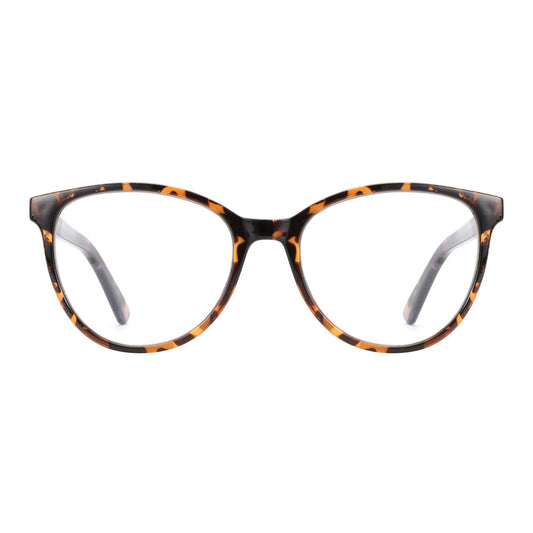
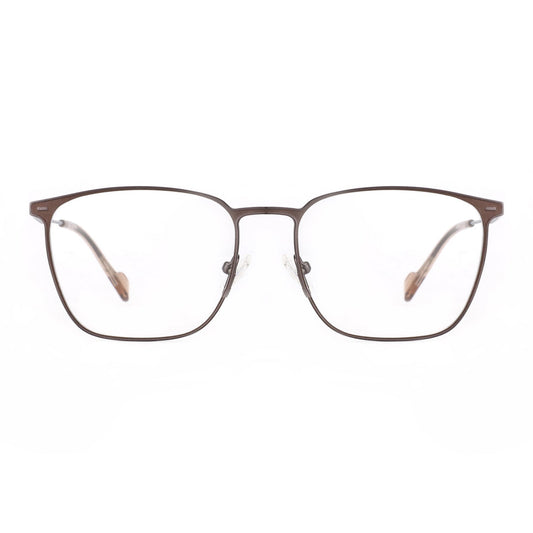
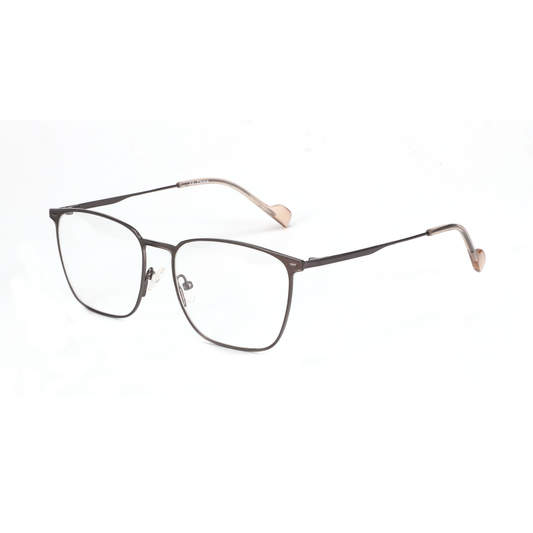
Clear blue light filters typically result in a slight shift toward the warmer end of the spectrum, but high-performance lenses like those found in Zenottic's blue light blocking collection are engineered to minimize this shift. By targeting only the narrow band of HEV light, these lenses ensure that the primary blue-turquoise wavelengths (above 465nm) remain untouched, preserving the S-cone photoreceptor's ability to process color accurately.
The Role of Abbe Value and Lens Material
Beyond color filtering, the physical properties of the lens material significantly impact visual clarity. The Abbe value is a measure of a material's dispersion; a higher Abbe value indicates lower chromatic aberration. For designers working with fine typography or intricate vector paths, chromatic aberration can cause "color fringing" around high-contrast edges, leading to perceived blurriness and increased eye fatigue.
As detailed in our technical guide to high-index lens materials and standards, materials like MR-8™ (1.60 index) offer an excellent balance of thinness and a high Abbe value (approx. 41). In contrast, polycarbonate lenses, while impact-resistant, have a lower Abbe value (approx. 29–30), which may introduce noticeable dispersion for sensitive creative tasks. Selecting a lens with a high Abbe value ensures that the "digital sharpness" of your high-PPI display is accurately transmitted to your retina.

Integrating Blue Light Filters with D65 Calibration
Most professional design workflows are built around the D65 white point, which corresponds to a color temperature of approximately 6504K. This standard ensures consistency across different devices and print outputs. When you introduce blue light glasses into this workflow, you are effectively adding a physical filter to your calibrated system.
For most designers, the slight warming effect of clear blue light glasses is easily compensated for by the brain's natural "chromatic adaptation." However, for color-critical work, it is a recommended heuristic to perform a "soft proof" check. Some professionals choose to calibrate their monitors while wearing their glasses to create a custom ICC profile that accounts for the lens's spectral transmission. This ensures that the color accurate blue light glasses work in harmony with the hardware.
Selecting the Right Lenses: A Comparison for Creatives
Choosing the right lens involves balancing protection, weight, and optical fidelity. The following table outlines the typical trade-offs for different lens configurations in a design environment.
| Lens Feature | Impact on Color | Eye Protection Level | Recommended Use Case |
|---|---|---|---|
| Clear BL Filter | Minimal (ΔE < 1.5) | Moderate (HEV 415-455nm) | Daily design, UI/UX, Illustration |
| Yellow/Amber Tint | High (ΔE > 5.0) | High (Full Blue Spectrum) | Late-night coding, non-color work |
| High-Abbe Material | None | N/A (Optical Clarity) | High-detail vector work, Typography |
| Anti-Reflective Coating | None | Reduces glare-induced strain | All digital professional work |
Checklist for Designers Choosing Computer Glasses
To ensure you select the best computer glasses for digital artists, consider the following technical checklist:
- [ ] Verify the Filter Range: Ensure the lenses specifically target the 415–455nm HEV range rather than just a generic "blue light" filter.
- [ ] Check the Abbe Value: Opt for materials like CR-39 or MR-8™ for superior edge-to-edge clarity.
- [ ] Prioritize Clear Substrates: Avoid "surface-only" coatings that can produce a distracting blue reflection on the front of the lens.
- [ ] Ensure Proper Fit: Frames that sit too far from the eyes can increase peripheral glare. Refer to our guide on how glasses should fit for optimal alignment.
- [ ] Consider Lens Longevity: Professional-grade coatings should be easy to clean and resistant to micro-scratches. Learn how to scientifically care for your glasses to maintain peak optical performance.

Long-Term Eye Health for the 'Digital Pro'
While blue light is a primary concern, it is only one component of blue light glasses and eye health. The "20-20-20 rule"—looking at something 20 feet away for 20 seconds every 20 minutes—remains a fundamental practice. Furthermore, ensuring your prescription is up-to-date is vital; even a minor uncorrected astigmatism can exacerbate the strain caused by digital displays.
For designers who also require vision correction, integrating blue light technology into a high-index prescription lens offers the best of both worlds. By reducing the effort required for the eye to focus on high-energy pixels, these glasses allow for longer, more productive creative sessions without the "heavy eye" feeling that often follows a ten-hour day at the workstation.
FAQ
Do blue light glasses affect color accuracy for graphic designers? Yes, all blue light filters affect color to some degree because they remove a portion of the visible spectrum. However, professional-grade clear lenses are designed to minimize this impact, typically resulting in a Delta E shift that is nearly imperceptible during standard design tasks. For critical color grading, many pros prefer to remove the glasses or use a custom-calibrated monitor profile.
What is the difference between clear and yellow-tinted computer glasses? Yellow or amber-tinted glasses block a much larger percentage of the blue light spectrum, including the "good" blue-turquoise light needed for color perception and mood regulation. Clear lenses use advanced technology to target only the most harmful high-energy visible (HEV) light (415-455nm), maintaining a neutral appearance that is better suited for professional creative environments.
Can I wear blue light glasses if I don't have a prescription? Absolutely. Many designers use "plano" (non-prescription) blue light glasses solely for their protective properties and to reduce digital eye strain. These glasses provide the same HEV filtering and anti-reflective benefits as prescription versions, helping to maintain ocular comfort during long hours in front of a screen.
How do I know if my computer glasses are actually working? While you cannot see the HEV light being filtered, you can often notice a reduction in screen glare and a slight "warming" of the display's color temperature. Technically, you can verify the performance by checking if the lenses meet standards such as ANSI Z80.3-2025. Many users also report a decrease in symptoms like dry eyes, headaches, and blurred vision after consistent use.
Should I use blue light glasses if my monitor has a 'Night Mode'? Software-based "Night Modes" or "Blue Light Filters" work by adjusting the display's output, often turning the entire screen significantly orange. While helpful, this doesn't address the physical glare from ambient light hitting your screen or the blue light from other sources in your environment. Combining a mild hardware-level filter (glasses) with moderate software adjustments often provides the most comfortable and flexible solution.
What lens material is best for high-resolution design work? For designers, the Abbe value is the most important material spec. Materials with a high Abbe value, such as 1.50 (CR-39) or 1.60 (MR-8™), provide the best optical clarity with minimal chromatic aberration. This ensures that fine lines, small text, and sharp edges in your designs remain crisp and clear.
References
Government / Standards / Regulators
- ANSI Z80.3-2025: American National Standard for Ophthalmics
- ISO 12312-1:2022/A11:2025: Eye and face protection
Industry Associations / Research Institutes
- The Vision Council: Digital Eye Strain Reports
- TÜV Rheinland: Low Blue Light Certification Standards
Academic / Whitepapers / Labs
- National Eye Institute (NEI): Color Vision Circuitry and Mood
- CIE 1931 Color Space and Delta E Metrics
