


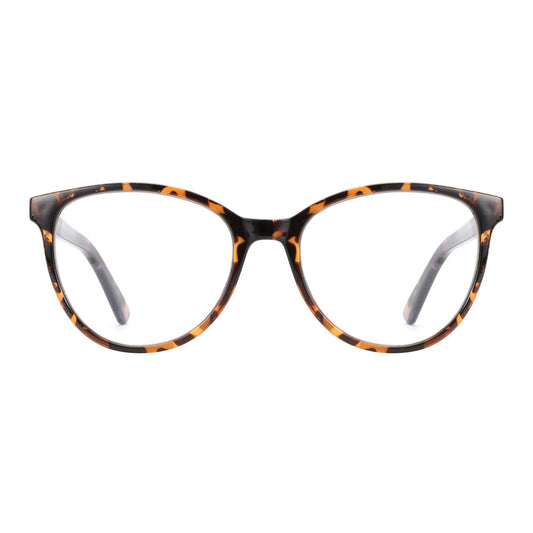

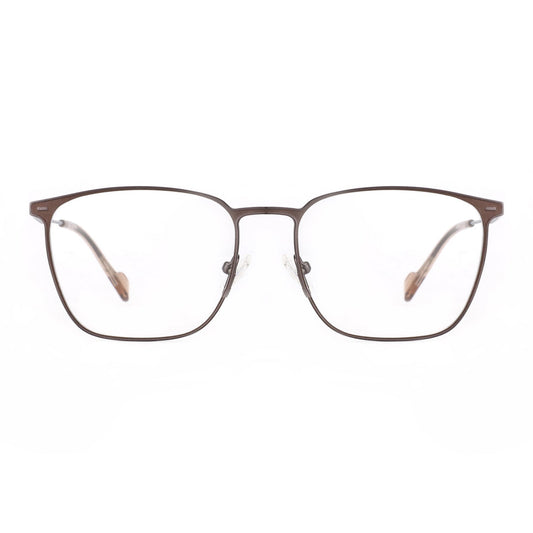
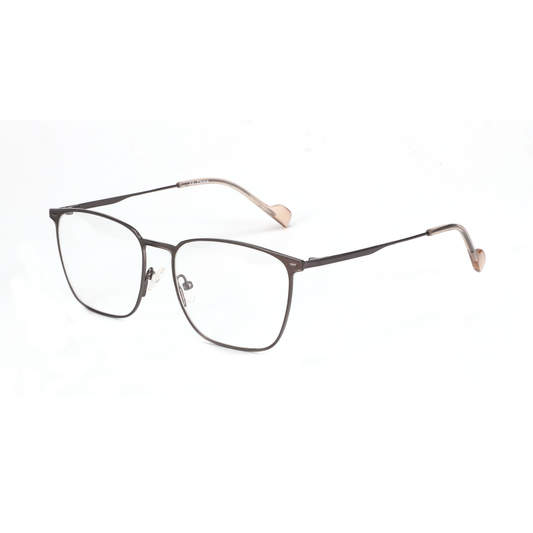
Wide-Fit Glasses: Finding Frames That Do Not Pinch
Start with the front, not the frame shape. When shopping for glasses for wide faces, compare the total front width with a pair you already wear comfortably, then check the bridge width, temple length, and hinge placement. These measurements address side clearance, nose contact, behind-ear reach, and pressure. No single millimeter cutoff defines a wide fit, but careful comparisons make online shopping less speculative.

How to Tell When Glasses Are Too Narrow
A frame may be too narrow when pressure persists after several minutes, the temples flare outward, or the front looks strained at the hinges. Treat these as fit warnings rather than a diagnosis: bridge slip, nose marks, behind-ear tension, and poor adjustment can create similar discomfort.
Use this quick check after wearing the frame normally for a few minutes:

- Persistent temple pressure: Do the arms press continuously against the sides of your head or leave marks? Temple pressure varies with frame design and individual head shape, so the sensation is a reason to investigate, not proof that width alone is the problem. Research on eyeglass temple design identifies clamping force as an important comfort factor. Excessive pressure can feel uncomfortable, while a frame that lacks stable contact may move during wear; assess these as separate fit problems.
- Flared or stressed temples: Do the arms angle sharply outward from the hinges instead of resting naturally? Compare the front width and hinge placement before assuming the frame simply needs to be stretched.
- Unstable positioning: Does the frame slide, sit crooked, or move when you look down or turn your head? That may point to bridge contact, temple angle, or adjustment rather than a narrow front alone.
- Bridge or ear symptoms: Nose marks, bridge slipping, or pressure behind the ears should be assessed separately. A frame can offer side clearance while still having the wrong bridge or temple length.
- Centered lenses are not enough: Lenses can appear centered while the front remains tight at the temples. Check the frame's overall clearance and how the arms contact your head.
If the frame is close but slightly misaligned, an optician's fit adjustment may help. Persistent pressure from an undersized front may call for a different frame. Do not force the frame wider at home.
Choosing Glasses for Wide Faces by the Numbers
Start with a comfortable current pair, then compare the complete size information on the new listing. Total front width is the clearest overall width check when provided; eye size, bridge width, temple length, and hinge placement help explain why a frame may feel tight, loose, or stable. Use these measurements as comparison tools, not universal wide-fit thresholds.
| Measurement | What it describes | Where to find it | Comfort question it answers |
|---|---|---|---|
| Total front width | The full span of the frame front, including endpieces | Product specifications or a measurement request to the seller | Is there likely to be enough side clearance compared with your current pair? |
| Eye size | The horizontal lens opening | Size line printed inside a frame or listing specifications | Does the lens opening offer a similar visual area without assuming the front is the same width? |
| Bridge width | The space and structure between the lenses | Size line, product specifications, or seller | Will the frame make stable, even nose contact? |
| Temple length | The arm's reach behind the ears | Size line or product specifications | Will the arms reach comfortably without ending too early or extending awkwardly? |
| Hinge placement | Where the temples begin in relation to the frame front | Product photos, specifications, or seller confirmation | Where might pressure begin, and does the arm spread naturally? |
Reading Front Width and Lens Measurements
A frame's eye or lens measurement describes the horizontal lens opening, not the entire front. Bridge width describes the space between the lenses, while total front width includes the front structure and endpieces. The Vision Council dispensing guide distinguishes eye size and bridge size as separate front measurements. A comfortable current pair is a useful comparison baseline, but it does not reveal every detail of a new frame's front width or hinge placement.
Do not add the lens and bridge numbers into a guaranteed formula. Use the listing's complete measurements to determine whether the front offers similar side clearance to your comfortable pair. If total front width or hinge information is missing, ask the seller before ordering rather than guessing from photos.
Matching Bridge Width to Nose Contact
Bridge width answers a nose-contact question, not the same side-clearance question answered by front width. A wider face may need more room across the temples without needing a wider bridge, depending on nose shape, nose pads, frame centering, and adjustment.
| Bridge situation | What to check | Warning sign |
|---|---|---|
| Even, stable contact | The frame stays centered without excessive pressure | The bridge shifts when you move normally |
| Bridge feels too narrow | Contact is concentrated at the nose or the frame sits high | Pinching, deep marks, or a frame that will not settle evenly |
| Bridge feels too wide | The frame slides or loses its center position | Frequent readjustment or lenses sitting off-center |
| Unclear listing | Ask about bridge design, pads, and adjustment options | Choosing only because the front looks wide in a photo |
This is where wide bridge eyeglasses may enter the comparison, but “wide” in the listing does not replace checking actual contact and centering.
Checking Temple Length and Hinge Placement
Temple length measures arm reach behind the ears; it does not establish overall front width. Check each feature against the problem you are trying to solve:
- Temple length: Do the arms reach behind your ears without ending too early or extending awkwardly far? A longer temple can improve reach without adding side clearance.
- Hinge placement: Where does the arm begin relative to your temples? A hinge positioned too far inward may start pressure earlier, while a different placement may change how the frame spreads.
- Temple angle: Do the arms leave the front smoothly, or do they flare outward immediately? Compare this with your current pair when possible.
- Flexibility: A flexible temple or hinge may distribute pressure differently, but it cannot compensate for a visibly undersized front.
For more wide-frame measurement examples, use the same comparison method: front width first, then the separate bridge, arm, and hinge checks.
Frame Features That Change Pressure and Stability
Features can refine a correctly sized frame, but they do not turn a narrow front into a wide fit. For shoppers comparing comfortable wide frame glasses, connect each construction detail to a specific problem—side pressure, slipping, behind-ear reach, or interference from headphones—then verify the actual specifications.
Spring Hinges and Flexibility
Spring hinges allow additional hinge movement, which may change how pressure is distributed when the temples open or when the frame moves during wear. That can be relevant if a rigid arm feels restrictive, but it is not a substitute for front width or temple clearance. Research links clamping force to both frame parameters and individual head geometry, so the same feature may feel different from one wearer to another.
Check whether the frame still sits naturally with the hinges at rest. A spring hinge should address the fit problem you actually have; it should not justify buying a front that visibly presses at the temples. See these spring-hinge comfort details for related construction context, not as a guarantee of a pinch-free result.
Temple Profiles for Daily Wear
Temple thickness, curvature, and edge profile can change contact points during long wear. Use this checklist:
- Side pressure: Look for a profile that does not create one concentrated contact point at the temple.
- Slipping: Check whether the arm maintains stable contact behind the ear without relying on excessive pressure.
- Behind-ear reach: Confirm that the curve begins and ends in a comfortable position rather than sitting directly on the ear's most sensitive area.
- Headphones: Try your glasses with the over-ear headphones you use most. A low-profile temple may reduce interference, but the front still needs adequate clearance. Our guide to temple comfort with headphones covers that specific situation.
Shape, Material, and Personal Preference
Shape should be a style filter after the measurements work. Rectangular, round, oval, and other silhouettes can all be worth considering if the front, bridge, temples, and hinges suit your measurements; no shape is automatically best for every broad face.
| Choice | What it may change | What you still need to verify |
|---|---|---|
| Larger-looking lens shape | Visual coverage and style impression | Actual front width and edge clearance |
| Thicker or thinner temples | Contact area and headphone interference | Side pressure, hinge position, and ear reach |
| Flexible material | How the frame responds to movement | Whether the front is correctly sized |
| Nose pads or a different bridge design | Centering and nose contact | Stability, marks, and adjustability |
Use product titles and photos as style clues only. They do not prove that a frame is wide fit. These details may help create glasses that don't pinch your temples, but no material, shape, or hinge can promise that outcome for every wearer.
Turn Measurements Into an Online Frame Choice
Use this six-step process before adding a frame to your cart:
- Choose a useful baseline. Start with a pair that feels comfortable after normal wear, not merely one that looks centered in a mirror. Record its printed eye-size, bridge, and temple-length numbers, and note whether you wear it with headphones or during long work sessions.
- Measure or find the complete front width. Prioritize the seller's total front-width measurement when available. If it is absent, measure a current pair across the full front, including the endpieces, and ask the seller for comparable information.
- Compare the front before the lens opening. Lens size can look similar while the front width differs. Check side clearance against your baseline instead of adding eye and bridge numbers as if they were a guaranteed total.
- Separate the bridge question. Compare bridge width, pad placement, and centering independently. More room at the temples does not automatically mean you need wide-fit glasses with a wider bridge.
- Check temple and hinge details. Confirm temple length, hinge location, temple angle, and any flexibility information. If a key measurement is missing, choose a better-documented listing or ask the seller before checkout.
- Verify prescription and purchase terms. If you wear prescription or progressive lenses, confirm pupillary distance, fitting measurements, lens options, and remake requirements with the seller or an eye-care professional. Frame position affects lens alignment, so width is not only a comfort issue. Then review shipping, returns, exchanges, and adjustment support. You can browse eyeglasses by measurements once you know which specifications to compare.
Measurements reduce online guesswork, but they cannot replace an in-person fitting. A strong return or adjustment policy is part of the fit decision, not an afterthought.
Final Checks Before Adding a Frame to Your Cart
Before checkout, confirm that the listing gives you enough information to compare the frame with your comfortable pair. After delivery, use a short try-on check and act on persistent pressure instead of hoping the frame will settle.
Before checkout
- Compare total front width, eye size, bridge width, temple length, and hinge details where available.
- Ask for any missing front-width or hinge information; do not infer it from the product title or photo.
- Confirm prescription or progressive-lens fitting requirements with the seller or your eye-care professional.
- Read the return, exchange, remake, and adjustment terms, including any time limits or customized-lens exclusions.
After delivery
- Wear the frame for several minutes and check temple pressure, bridge stability, behind-ear reach, level positioning, and movement.
- Confirm that your vision is centered as expected and that the frame does not shift during ordinary use.
- If the issue appears minor, use the seller or an optical professional for adjustment. Professional fit adjustment is preferable to heating, bending, or materially reshaping the frame at home.
- If pressure persists, key specifications were unclear, or returns are unavailable, keep comparing rather than assuming a wider frame or comfort feature will solve it.
When comparing glasses for wide faces, start with complete specifications, then verify the return or adjustment path before ordering. That measurement-first approach is more dependable than choosing a frame because it is labeled wide or appears large in a photo.
FAQs
These questions cover the main comparison points for wider frames, including size lines, bridge fit, adjustments, and prescription lens positioning.
Can I Use the Numbers Printed Inside My Current Glasses to Shop for a Wider Frame?
Yes. Use the printed eye-size, bridge, and temple-length sequence as a reference if the current pair is comfortable. It does not show every detail of total front width or hinge placement, so compare the complete listing and, when possible, measure the full front of the current pair.
Does a Wider Face Always Need a Wider Bridge?
No. Front width and bridge width address different fit problems. You may need more temple clearance while keeping a similar bridge, or a different bridge design because of nose shape or pad placement. Check centering and nose contact before choosing wide bridge eyeglasses based only on face width.
Can an Optician Adjust Glasses That Pinch at the Temples?
Sometimes. An optician may correct alignment, temple angle, or minor tension, but adjustment cannot reliably create room in a clearly undersized front. Ask whether the frame is adjustable, check the exchange window, and consider replacing it if pressure remains after a professional fit check.
Is a 150-Millimeter Temple Automatically a Wide-Fit Frame?
No. A 150-millimeter temple primarily describes arm reach behind the ears. It does not establish front width, bridge fit, or side clearance. Evaluate it with the other measurements and compare the frame's behavior with a comfortable current pair.
What If a Wider Frame Changes Where My Prescription Lenses Sit?
A different front shape, width, or position can change lens placement and fitting measurements. Prescription and progressive-lens shoppers should confirm pupillary distance, fitting height or other required data, lens options, and the seller's remake policy before ordering. Contact the seller or an eye-care professional if the frame sits differently after delivery; do not try to reposition it yourself.
