




Hypoallergenic Eyeglass Frames: Materials to Consider Beyond Nickel
Hypoallergenic eyeglass frames are not defined by one magic material. A better starting point is a frame whose full construction is documented: look first at disclosed titanium, compare disclosed nonmetal categories such as acetate or resin, treat stainless steel as conditional, and clarify—or pause—when the listing leaves out a detail that could change your decision. “Nickel-free” and “hypoallergenic” are useful starting labels, not guarantees that every component will suit every wearer.

Choose hypoallergenic eyeglass frames by the material details you can verify
The right choice is the material category you can verify, not the label that sounds safest. For glasses for sensitive skin, compare the front and temples, then check the finish, hardware, nose pads, and other skin-contact parts before adding a pair to your cart.
“Hypoallergenic” is a descriptive claim, not a material specification. Nickel is one important consideration when nickel sensitivity is suspected, but “nickel-free” does not identify every other material or mixed component. The American Academy of Ophthalmology describes titanium as strong, lightweight, corrosion-resistant, and hypoallergenic at the category level in its discussion of titanium frame materials. That general description does not establish the composition or tolerability of an individual frame.
Use this choice split:
- Disclosed titanium: Investigate it first when the alloy, finish, frame coverage, and relevant hardware can be clarified.
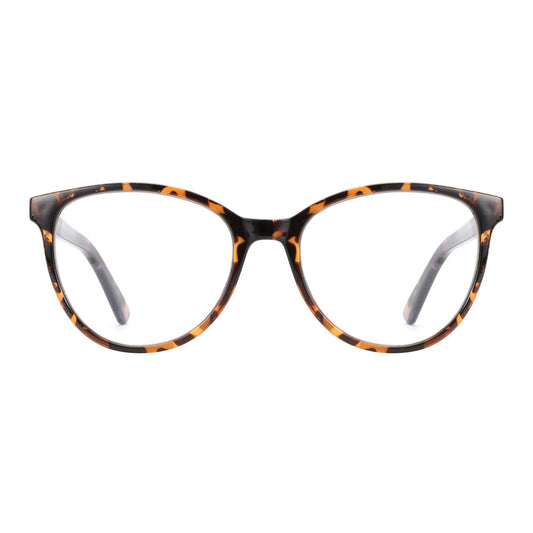
- Disclosed nonmetal categories: Compare acetate, plastic, resin, or bio-based labels when the listing explains which parts use the named material.
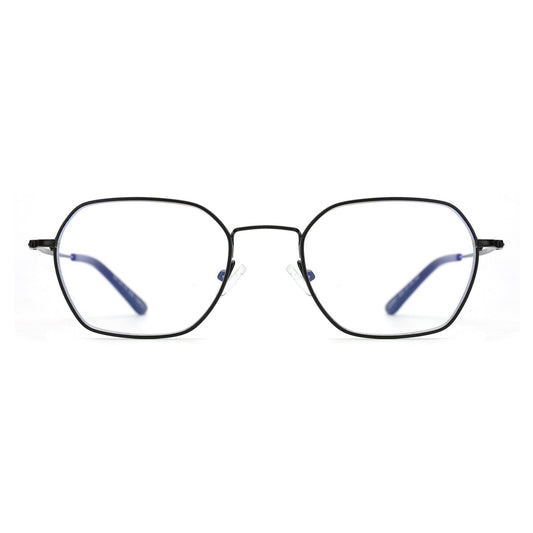
- Conditional stainless steel: Consider it only when composition, finish, and component details are available. Do not assume the label means nickel-free.
- Unspecified or mixed construction: Ask for clarification before buying. If a necessary answer is unavailable, pause and compare another listing.
| Frame-material category | What the label establishes | Next action |
|---|---|---|
| Titanium | A category worth investigating, not proof of complete construction | Clarify the alloy, finish, coverage, and relevant components |
| Acetate, plastic, resin, or bio-based | A named material category whose scope may be limited | Confirm which front, temple, core, reinforcement, and attached parts use it |
| Stainless steel | A metal category, not proof of composition or nickel-free construction | Request composition, finish, and component details |
| Unspecified or mixed construction | An incomplete material description | Clarify any detail that could change your decision, or pause the purchase |
Titanium: investigate the alloy, finish, and frame coverage
Titanium is a reasonable metal category to investigate for sensitive skin, but the word alone is not enough. Ask whether it describes the entire frame or only the front, a core, or another structural part. Also ask about the alloy, finish, plating, hinges, screws, and other hardware.
The caution is specific rather than diagnostic: published dermatology literature has reported allergic contact dermatitis involving titanium or palladium eyeglass frames, and some titanium frames may contain palladium. Take that as a reason to verify the construction—not as a claim about how often reactions occur or what is causing an individual reader’s irritation. Titanium is a candidate for further checking, not a universal reaction-free answer. The relevant dermatology review reports these material associations without establishing the composition of every titanium frame.
Acetate: confirm what “acetate frame” includes
Acetate can serve as a nonmetal comparison path, but “acetate frame” may not describe every attached or hidden part. Confirm whether the label covers both the front and temples, and ask what the frame uses for cores, reinforcement, hinges, screws, nose-area parts, and other skin-contact components.
If you are comparing acetate frame styles, use the category as a starting point for your questions rather than as evidence that every frame has the same construction. Base the buying decision on the disclosed material scope, not on comfort, lightness, or nonmetal wording alone.
Stainless steel: ask what the metal claim covers
Stainless steel remains a conditional option for anyone investigating nickel-sensitive eyewear. The label does not, by itself, establish the exact composition, finish, plating, hinges, screws, nose pads, or temple hardware. Ask whether the stainless-steel claim covers the complete frame and whether any other metal is used in exposed or skin-contact parts.
A listing that says only “stainless steel” provides a starting category, not a complete answer. Proceed when the details relevant to your concern are documented; otherwise, move the frame into the clarify-or-pause path rather than assuming all stainless-steel frames have the same material profile.
Plastic, resin, and bio-based labels: read past the category name
Plastic, resin, and bio-based labels create another nonmetal comparison path, but they do not establish universal suitability or a complete absence of metal. Confirm which parts use the named material and whether additives, coatings, cores, reinforcement, hinges, screws, or nose-area hardware differ.
Published reporting has discussed eyeglass-frame contact dermatitis involving materials beyond nickel, including palladium, titanium, and plastic dyes. That evidence supports broadening your questions, not declaring that acetate, plastic, resin, or a particular product will cause a reaction. Apply the same disclosure standard to newer or broadly marketed material terms.
Check every skin-contact and mixed-material component
The headline frame material is only one part of the inspection. Reactions involving eyeglass frames have been reported in connection with more than nickel, including palladium, titanium, and plastic dyes, as discussed in this eyeglass-frame dermatology report. The report does not identify the composition of every frame sold online, so use the component review below as a conservative way to check a listing.
- Nose pads and attachment: Ask what the pads are made from and how they attach to the frame. Include the pad arms or mounts rather than asking about the pad surface alone.
- Hinges and screws: Confirm whether hinges and screws use a different material from the front or temples. A “metal-free” or “nickel-free” headline may not explain each hardware component.
- Temple tips, cores, and reinforcement: Ask what sits inside or at the ends of the temples, especially when the listing names acetate, plastic, resin, or another nonmetal category.
- Coatings, plating, and finish: Request the finish or coating material and ask whether it covers the full frame or selected sections. A visible color or surface treatment does not verify its composition.
- Front-versus-temple differences: Confirm the material of the front and temples separately. A frame may use a combination of materials even when its title names only one category.
Photos can help you identify which questions to ask, but they cannot verify composition. A written specification or response from the seller or manufacturer is a stronger basis for a sensitive-skin buying decision.

Verify the listing before you add frames to your cart
A listing supports a more confident purchase when it documents every material detail relevant to your known or suspected sensitivity, including the scope of the headline material and the relevant skin-contact components. If one detail that could change your decision is missing, clarify it or pause rather than assuming the label covers it.
Before comparing prices or adding a pair to your cart, write down your material questions about the front, temples, finish, nose pads, hinges, screws, temple tips, cores, reinforcement, and any other part that may contact your skin. Then use this four-step path:
- Name the concern without self-diagnosing it. Write down whether you are checking a known or suspected nickel sensitivity, a prior frame-material concern, or general sensitive skin. Do not treat the location or appearance of irritation as proof of its cause.
- Inventory the construction. Record what the listing says about the front, temples, finish, coating, plating, nose pads, attachment, hinges, screws, temple tips, cores, and reinforcement. Mark each item as disclosed, unclear, or not mentioned.
- Compare the disclosure with your requirement. A disclosed titanium frame still needs alloy, finish, coverage, and component details. A disclosed acetate, plastic, resin, or bio-based frame still needs mixed-material details. Stainless steel needs composition and component clarification. If the listing answers only “yes, hypoallergenic” or “yes, nickel-free,” the construction may remain unresolved.
- Buy, clarify, or pause. Buy only when the written information covers the details necessary for your concern. If a relevant answer is missing, request it from the seller or manufacturer and save the response with the listing. You can ask about undisclosed frame materials when you need to contact the seller, but a contact page is not evidence of any frame’s composition. If the necessary answer remains unavailable, leave the frame unresolved and compare another listing.
For hypoallergenic eyeglass frames, this buy, clarify, or pause rule is more useful than relying on a headline label alone. If irritation is significant, persistent, or worsening, stop wearing the frame and seek appropriate medical guidance rather than testing additional materials on your own. This does not identify the cause of the irritation; it sets a practical boundary against repeated self-testing.
Frequently Asked Questions
These answers apply the same complete-construction standard to common material comparisons.
Are titanium eyeglass frames suitable for people with sensitive skin or a nickel sensitivity?
Titanium is a category worth investigating, not a universal guarantee. Ask whether it covers the front and temples, and request the alloy, finish, and hardware details before treating it as a match for a suspected nickel concern.
Are acetate eyeglass frames a good alternative for sensitive skin?
Acetate can be a useful nonmetal comparison category when its scope is disclosed. The key question is what the temples, cores, hinges, screws, nose area, and attached hardware use, not simply whether the product title says acetate.
Are stainless steel eyeglass frames safe for people who react to nickel?
The stainless-steel label does not resolve exact composition or the materials used in finishes, hinges, screws, or pads. Ask what the claim covers before relying on it for a suspected nickel reaction.
What should I ask an eyewear seller about hypoallergenic frame materials?
Ask for the front and temple materials, whether the frame is mixed-material, the finish or plating, nose-pad and temple-tip materials, hinge and screw materials, and the scope of any nickel-free or hypoallergenic claim. Request the answer in writing when it affects the purchase.
